
 Worksheets
Natural Selection and Adaptations Review Quiz
Total questions: 42
Worksheet time: 1hrs 17mins
Natural selection occurs during the lifetime of a single organism.
True
False
Adaptations can be:
camouflage
ability to survive cold weather
hunting skills
all of the above
What is NOT an example of an adaptation
Camouflage to hide from predators
Enlarged heart to help a cheetah run fast.
Building muscles throughout your lifetime to get strong.
Hibernating during the winter.

What is most likely to happen to moth populations in the picture shown?
Light moths--hunted easily, dark moths--population increase
Dark moths--hunted easily, dark moths--population increase
Light moths--hunted easily, light moths--population increase
Lights moths will change their color to match dark moths.
TRUE or FALSE: Natural selection will still occur if all individuals in a population are exactly the same.
TRUE
FALSE

Due to pollution, a pond becomes darker over time. Which trait variation became more common?
light fish
dark fish
Because the trait is an acquired phenotype.
Because they come from dominant alleles.
Because they come from recessive alleles.
Because they are more likely to survive and reproduce.
A trait that the organism can change when it wants.
A trait that helps an organism survive in its environment.
A trait that does not help the organism survive in its environment.
The place where an organism lives.
The strongest in the habitat
The fastest in the environment
The best adapted to the environment
The most domesticated (tamed)
What word describes a trait that helps an organism survive in its environment?
natural selection
mutation
camouflage
adaptation
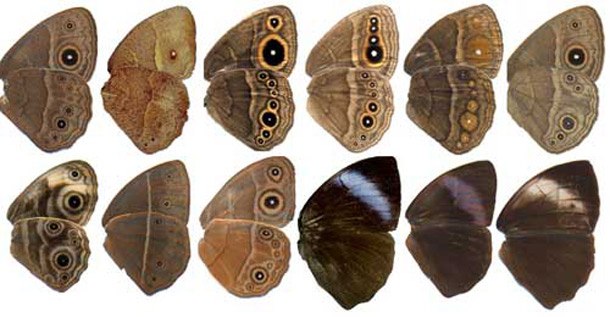
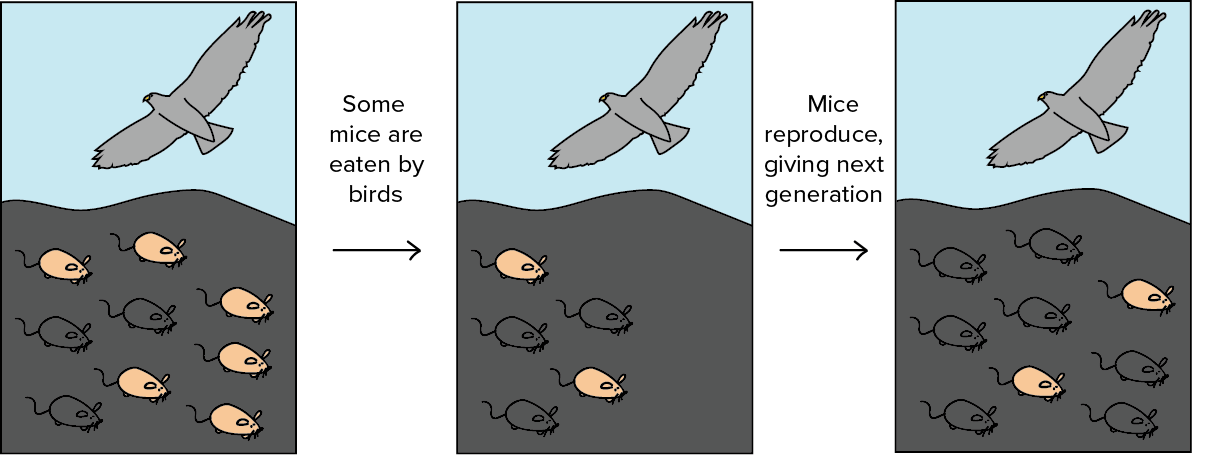
If a population can't adapt to a changing environment fast enough, what might happen?
They will hibernate until they can live in the environment.
The population will stay the same.
The species in the population will live longer.
The species will go extinct.
Show No Change
Become Extinct
Live Longer

Which of these describes the things that an organism does in order to survive? (It's the actions of the organism)
Physical Adaptation
Behavioral Adaptation
Which of these best describes the parts or structures of an organism to help it survive?
Physical Adaptation
Behavioral Adaptation
Bats are nocturnal and hunt at night.
physical adaptation
behavioral adaptation
Birds migrate to find food and warmer temperatures.
physical adaptation
behavioral adaptation
A polar bear has white fur to make it harder to see.
physical adaptation
behavioral adaptation
A giraffe has a long neck to reach the leaves on trees.
physical adaptation
behavioral adaptation
Black bears hibernate during the winter months.
physical adaptation
behavioral adaptation
A cat has a long tail to help it balance.
physical adaptation
behavioral adaptation
Some birds will make a warning sound to alert their flock if there is danger.
physical adaptation
behavioral adaptation
A lion has pointed teeth to help it tear meat off the bone.
physical adaptation
behavioral adaptation
An owl is mostly nocturnal, it hunts and is active at night.
physical adaptation
behavioral adaptation
Ducks have webbed feet to help them swim in water.
physical adaptation
behavioral adaptation
A penguin is white on its belly, and black on its back so it is harder to see underwater from above or below.
physical adaptation
behavioral adaptation
Natural selection occurs during an individual organisms lifetime. (if you're not sure, think about the moth example)
True
False
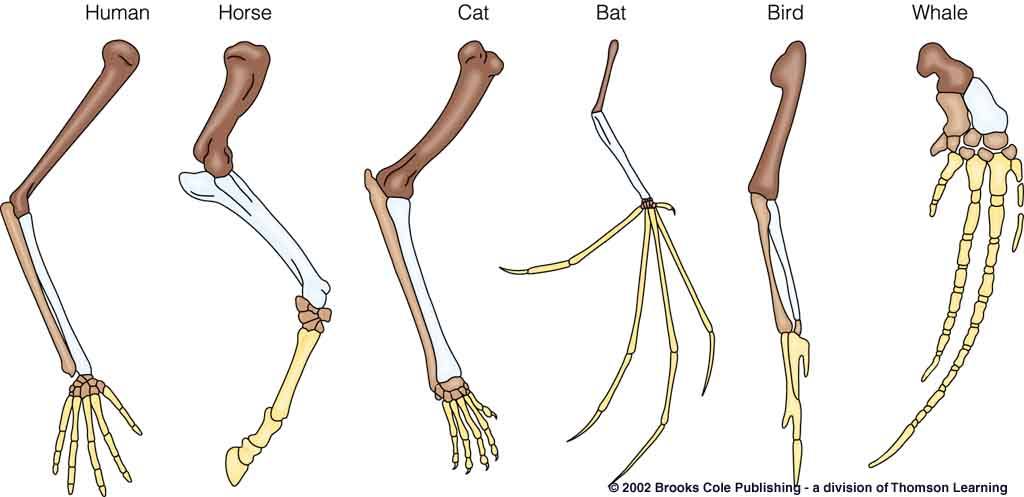

What
type
of structure?
Homologous
Analogous
Embryological
Vestigial
Analogous Structures are
Similar in structure and different in function.
Similar in function and different in structure.
Similar in structure and function
Different in structure and function.
Analogous Structures are
Different in structure and similar in function.
Similar in function and different in structure.
Similar in structure and function
Similar is structure and Different in function.
Homologous Structures are
Different in structure and function.
Similar in function and different in structure.
Similar in structure and function
Similar in structure and different in function.

