
Font size
 Worksheets
Urban
Total questions: 40
Worksheet time: 59mins
What is Ventilation?
Ways to stop a fire
(a)
Decomposition of material through the action of heat is called
(a)
The transfer of heat energy through a material by contact between its moving molecules.
Conduction
Convection
Radiation
Pyrolysis
(a) Is heat transfer by mass motion of a fluid such as air or water when the heated fluid is caused to move away from the heat source carrying energy
... is heat transfer by emission of electromagnetic waves that carry energy away from the emitting object.
Radiation
Convection
Conduction
Pyrolysis
Order from A at top to F
Stages of fire
Developing, flashover, fully developed, decay
Flashover, firepoint, decay
Initial/incipit, developing, fully developed, decay
Developing, flashpoint, fully developed, decay

(a) Extinguisher. Capacity is.. L.

Black and red (a) extinguisher
........ Of electricity.
Normally between 2 and 5kg.

(a) chemicals, oatmeal colour band.
Turns oil or fats to combustion resistant..... Like substance. For class _ fires.
Wet chemical capacity
5
7
2-5
9

Oatmeal colour one
C02
Foam
Wet chemicals
Vaporising liquid

Red with white
DCP
Water
Ç02
Wet chemicals

.... Extinguisher for class... Fires. ....L capacity.
(a)
When ARFFs operational foam is applied to a flammable liquid fire, it ...... The fuel, separates the fuel...... from the surrounding air supply, suppresses flame propagation and conceals the fuel vapours..... the foam blanket.
(a)
Where practicable, evidence of the cause of fire must be (a) . An indication that the fire has been deliberately lit might be uncovered during (b) . Signs may include the presence of an accelerant or an (c) device. In any such situation it is essential that you do not touch or move the evidence, but report it to the (d) .
Foam (a) whenever possible. Should not be blasted in a (b) into a flammable liquid fire.
Should be (c) onto the fire.
Can be (d) off a fixture back over the fuel.
Pencilling and painting are refined techniques of a.... .... to use minimal agent. May be made offensively or from a defensive position outside.
(a)
Indirect attack is a method of applying water ... onto super heated surfaces and ..... ...... in a compartment to create a mass of steam that displaces the oxygen to smother the fire. Water is applied in a ..... motion to hit as many heated surfaces as possible.
(a)
What are 4 signs of structural collapse?
Size up
What are the primary structural elements
C
B
W
C
F
(a)
Brick and masonry effects of heat
- Uneven (a)
(b)
Concrete Reactions under heating and cooling
- The (a) of reinforced concrete falls sharply once exposed to temperature above 400 degrees Celsius
Excessive heat can cause:
- Explosive (b) of surface area,
- loss of load bearing (c) ,
- Steel (d) being exceeded
- A (e) of the bond between the steel reinforcement and the concrete
Glass can ..... or ...... When exposed to heat
(a)
Plasterboard will become .... when heated and susceptible to collapse when exposed to ....
Brittle moisture
Melt too hot
Yes
Chalky hot
Plastic
Only require a small amount of (a) To ignite.
Burn with (b) heat and generate lots of dense toxic (c)
Some behave similar to flammable (d)
Tend to mould around objects they've contacted when cooled.
B-SAHF stands for
(a)
RECEO +VS is used for urban firefighting. It stands for:
Overhaul
Process to ensure fire is completely out.
Salvage
Actions taken during and immediately after a fire to minimise damage from fire and water
Horizontal ventilation
Heat and fire gasses being vented at the same level
Vertical ventilation
Heat and gases being vented at a high point external to the structure.
Overhaul also
Helps ID the cause. Look for initial fuel supply, source of heat. Eg v pattern
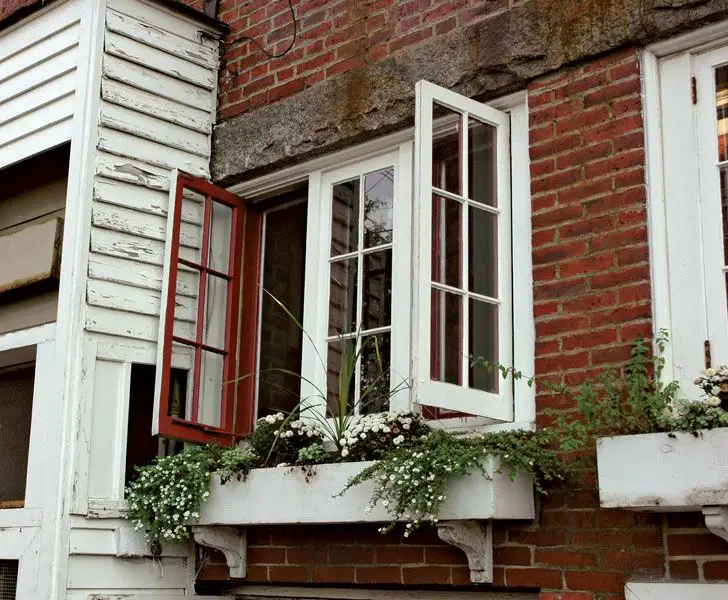
What is Natural Ventilation?
Incident Management system used by ARFFS/other agencies?
(a)
Any increase in ventilation can cause two things:
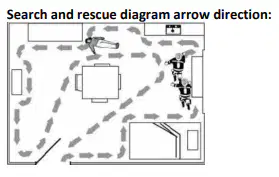
Describe what is happening in the image:
a rapid, systematic search of the structure, usually carried out simultaneously with a fire attack if fire conditions and crew response allow
Primary search
a slow and thorough search undertaken once the fire is under control.
Secondary search:
rely on a rapid internal attack, containing and extinguishing the fire and conducting search and rescue operations.
Offensive strategies:
are initiated by ARFFS when the fire conditions and/or the structural integrity of the building prevent the fire crews from adopting more aggressive internal firefighting strategies.
Defensive strategies:
is only adopted in a life-rescue situation. Teams must be withdrawn immediately if search and rescue ops are completed (fire still marginal), if conditions become too unsafe, if all persons at risk have been accounted for, or if remaining occupants cannot possibly be saved.
Marginal strategy:
What does BLEVE stand for?
Boiling ______ _________ ______ _________
(a)
What sources can be used to help identify HAZMAT?
Three actions to take when HazMat has been identified at a building fire incident: • Identify if (a) and (b) provide the required protection • Request a (c) HazMat response if it is above your crew's capability • Evacuate non-essential (d) to a safe distance for potential (e) incidents
Answer to question 37: Safety Officer

