
NEW
Font size
S
M
L
XL
 Worksheets
Ecology Review: Cycles, Succession, Populations, & Human Impact
Total questions: 20
Worksheet time: 10mins
Name
Class
Date
1.
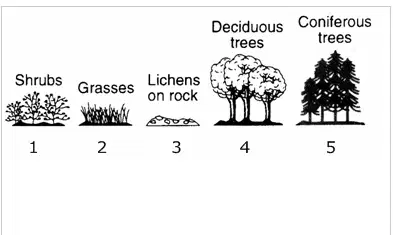
What is the correct order for succession?
a)
3 2 1 4 5
b)
3 1 2 5 4
c)
5 4 1 2 3
d)
3 2 1 5 4
2.
This type of succession starts with brand new land.
a)
Primary Succession
b)
Secondary Succession
3.
This type of succession occurs after a natural disaster.
a)
Primary Succession
b)
Secondary Succession
4.
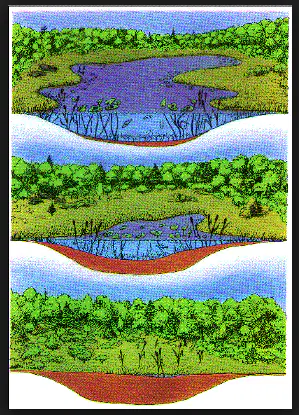
What type of succession is shown in this picture?
a)
Primary Succession
b)
Water Succession
c)
Land Succession
d)
Tertiary Succession
5.
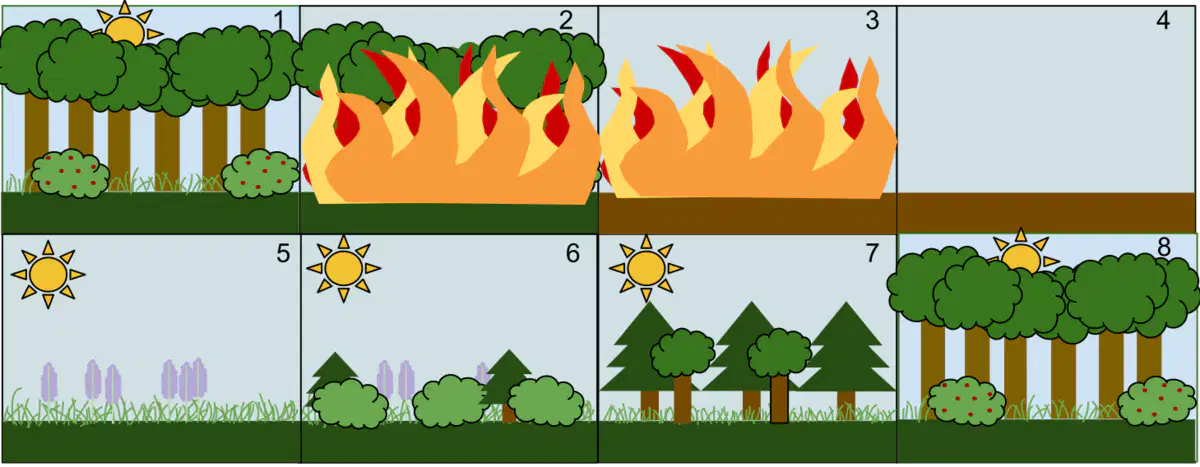
What type of succession is shown here?
a)
Primary Succession
b)
Secondary Succession
c)
Water Succession
d)
Tertiary Succession
6.
The erosion of rocks is associated with this cycle.
a)
Water
b)
Carbon
c)
Nitrogen
d)
Phosphorus
7.
Precipitation is part of this cycle.
a)
Water
b)
Carbon
c)
Nitrogen
d)
Phosphorus
8.
Bacteria are needed to fix this nutrient to make it usable by animals.
a)
Water
b)
Carbon
c)
Nitrogen
d)
Phosphorus
9.
The burning of fossil fuels adds more of this element into the atmosphere.
a)
Water
b)
Carbon
c)
Nitrogen
d)
Phosphorus
10.
Decomposers play an important role in all of the biogeochemical cycles except the _____ cycle.
a)
Water
b)
Carbon
c)
Nitrogen
d)
Phosphorus.
11.
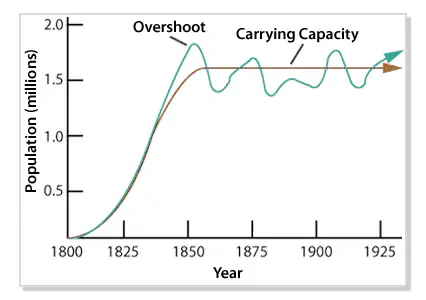
In what year was carrying capacity met for this population?
a)
1800
b)
1825
c)
1850
d)
1925
12.
Factors that affect a population because of its size are called
a)
density dependent factors
b)
density independent factors
c)
exponential factors
d)
logistical factors
13.
Which of these would be considered an abiotic factor?
a)
Competition
b)
Climate
c)
Predation
d)
Disease
14.
This type of growth will occur under ideal (perfect) circumstances with unlimited resources.
a)
Exponential Growth
b)
Logistical Growth
c)
Ecological Growth
d)
Sporadic Growth
15.
When animals leave one area to live in another, this is known as....
a)
carrying capacity
b)
emigration
c)
immigration
d)
niches
16.
When humans destroy habitats this causes
a)
water pollution
b)
air pollution
c)
loss of biodiversity
d)
climate change
17.
When heat is trapped in the Earth's atmosphere, this is known as
a)
climate change
b)
the greenhouse effect
c)
air pollution
d)
biomagnification
18.
Which of these were responsible for causing a hole in the ozone layer?
a)
DNAs
b)
DDTs
c)
TNTs
d)
CFCs
19.
What is the most environmentally friendly way to to prevent pests?
a)
pesticide use
b)
introduction of a natural predator
c)
Use alternative energy sources
d)
sustainable development
20.

Which part of this food chain would be most affected by biomagnification?
a)
Carrots
b)
Rabbits
c)
Fox
d)
Lion
Reset

