
 Worksheets
Composition and Inverse Functions
Total questions: 183
Worksheet time: 13hrs 32mins
If f(x)=2x and g(x)=2x2−1 find f(g(3))
34
71
35
142
If f(x)=2x and g(x)=2x2−1 find g(f(−1))
2
15
7
-9
If f(x)=2x and g(x)=2x2−1 find f(g(x))
4x2−1
4x2−2
8x2−1
16x2−1
If f(x)=2x and g(x)=2x2−1 find g(f(x))
4x2−1
4x2−2
8x2−1
16x2−1
If f(x)=x1 and g(x)=3x+2 find (f∘g)(2)
41
81
27
8
If f(x)=x1 and g(x)=3x+2 find (g∘g)(−4)
44
-40
-30
-28
If f(x)=x1 and g(x)=3x+2 find (g∘f)(x)
3x1+2
3x+2
x3+2
3x+21
If f(x)=x1 and g(x)=3x+2 find f(g(x))
3x1+2
3x+2
x3+2
3x+21
If f(x)=x2 and g(x)=x find g(f(x))
x4
x
x
x2
If f(x)=x2 and g(x)=x21 find (f∘g)(−1)
41
1
−1
−41
When f(x)=x2+9 and g(x)=x−9 , find f(x)−g(x)
x2+x+9
x2−x+9
x2−x
x2−x+18
When f(x)=9−3x and g(x)=5x−7 , find f(x)+g(x)
14x−10
−8x+2
2x+2
2x−2
If g(x)=x2+6 and f(x)=2x−4 , find f(g(x))
2x2−12x−4
2x2+12x−4
2x2+8
x3−2x2+1


g(f(2))
5
3
-1
2
If f(x)=2x+3 and g(x)=−3x−4 , find f(x)⋅g(x)
−6x2−17x−12
6x2+x−12
−x−1
5x+7

Find f(2).
-2
-18
24
6

Find g(5)
3375
375
25
45

f(x-2)
2x2 - 13x + 18
2x2 - 5x + 18
2x2 - 8x + 3
2x2 - 13x + 2

g(4x)
1728x3
12x3
192x3
36x3

Find f[g(5)]
30
242
92
2

f(g(x))
3x - 16
3x - 2
3x - 26
4x - 2
g(x) = x-9
Find f(x)-g(x).
g(x) = x - 2
Find f(g(0))
g(x) = x - 2
Find f(g(5))
g(a) = 4a + 1
h(a) = -3a + 2
Find g(h(1))
3
-3
21
-21
g(x) = x - 2
Find g(f(x))
h(x)=3x-1
Find g(h(x))
If f(x) = x-1 and g(x) = 2x,
what is and g(f(x)) ?
2x2-1
2x-1
2x-2
x-2
g(n)=3n
Find f(n)+g(n)
If f(x)=2x and g(x)=2x2−1 find f(g(3))
34
71
35
142
If f(x)=2x and g(x)=2x2−1 find g(f(−1))
2
15
7
-9
If f(x)=2x and g(x)=2x2−1 find f(g(x))
4x2−1
4x2−2
8x2−1
16x2−1
If f(x)=2x and g(x)=2x2−1 find g(f(x))
4x2−1
4x2−2
8x2−1
16x2−1
If f(x)=x1 and g(x)=3x+2 find (f∘g)(2)
41
81
27
8
If f(x)=x1 and g(x)=3x+2 find (g∘g)(−4)
44
-40
-30
-28
If f(x)=x1 and g(x)=3x+2 find (g∘f)(x)
3x1+2
3x+2
x3+2
3x+21
If f(x)=x1 and g(x)=3x+2 find f(g(x))
3x1+2
3x+2
x3+2
3x+21
If f(x)=x2 and g(x)=x find g(f(x))
x4
x
x
x2
If f(x)=x2 and g(x)=x21 find (f∘g)(−1)
41
1
−1
−41
When f(x)=x2+9 and g(x)=x−9 , find f(x)−g(x)
x2+x+9
x2−x+9
x2−x
x2−x+18
When f(x)=9−3x and g(x)=5x−7 , find f(x)+g(x)
14x−10
−8x+2
2x+2
2x−2
If g(x)=x2+6 and f(x)=2x−4 , find g(f(x))
2x2−12x−4
2x2+12x−4
4x2−16x+22
x3−2x2+1

Perform the indicated operation.
A
B
C
D
g(n)=2x-5
Find f(n)-g(n)
Find f[g(5)]
30
242
92
2
f(x)=2x-2
f(x)=2x-2
f(x)= x4 - 2

1st you replace f(x) with y
2nd switch the x's and y's
What do you do next?
f(x) = 1/4x - 7


f(x)=3x
Find f−1(x)
3x
x3
0.3x
x×3
f(x)=7x
Find f−1(x)
7x
x7
0.7x
x÷71
g(x)=8x
Find g−1(x)
x8
8x
81x
x÷8
g(x)=31x
Find g−1(x)
x3
3x
3x
x÷3
Select the two functions which are inverses of each other:
x+10
x−10
10x
x10
Select the two functions which are inverses of each other:
x−4
4x
4x
x4
f(x)=5x+1
Find f−1(x)
1x−5
5x−1
x−51
5x−1
f(x)=72x
Find f−1(x)
27x
72x
7x×2
2x×7
f(x)=6x−2
Find f−1(x)
2x−6
6x+2
2x+6
6(x+2)
f(x)=58x−3
Find f−1(x)
5(8x+3)
85x+3
85(x+3)
85x+3
f(x)=56x+3
Find f−1(x)
65x−3
65(x−3)
65x−3
65x+3
f(x)=73x+10
Find f−1(x)
7x−310
37x−10
37(x−10)
37x−10

If the equation of f(x) goes through (-1, 4) and (4, 6), what points does f-1(x) go through?
(1, 4) and (4, 6)
(-4, -1) and (-6, -4)
(-1, -4) and (-4, -6)
(4, -1) and (6, 4)

Which is the inverse of the table?


1st you replace f(x) with y
2nd switch the x's and y's
What do you do next?

What is the FIRST step I need to take to solve for x in the following equation?
Add 9 to both sides
Take the square root of both sides
Divide both sides by 49
Multiply both sides by 9

f(x) = 1/4x - 7

f(x)=3x
Find f−1(x)
3x
x3
0.3x
x×3
f(x)=5x+1
Find f−1(x)
1x−5
5x−1
x−51
5x−1
f−1(x)=31x+35 , find the original function and type it below using function notation.
(a)
g(x)=−7x5+7 Find the inverse of the function.
g−1(x)=57x−7
g−1(x)=−57x−7
g−1(x)=5−7x−7
g−1(x)=−57x−7
Given the inverse of a function. Using function notation, type the original function (Hint: Use the carat (^) symbol for the exponent).
f−1(x)=34−x
(a)
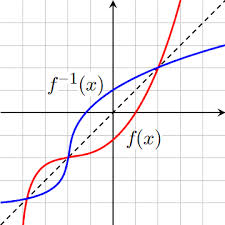
Which of the following is NOT TRUE about inverse functions?
Inverse functions are reflections of each other over the line y = x.
You find the inverse by switching x and y in the equation.
The domain of a function always becomes the domain of its inverse.
The domain of a function always becomes the range of its inverse.
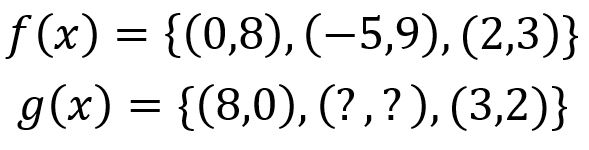
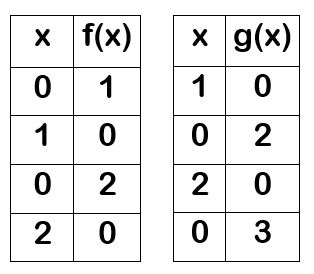
What is the best description?
They are both functions, but not inverse functions.
They are reflected over y=x, but they are not both functions.
They are not reflected over y=x, and they are not both functions.
They are inverse functions.
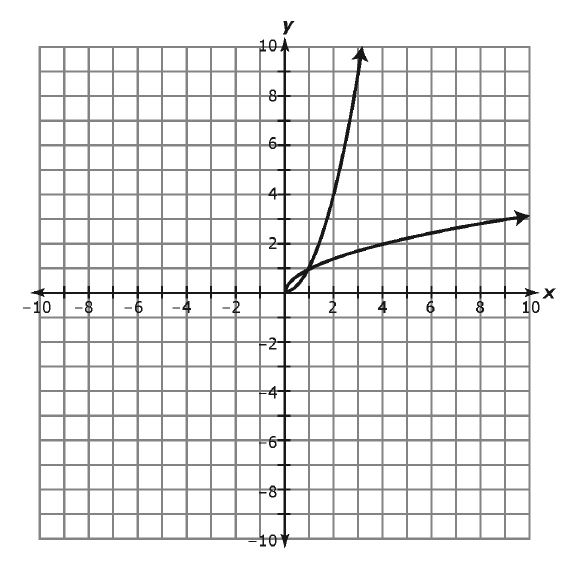
What's the best description?
They are both functions, but not inverse functions.
They are reflected over y=x, but they are not both functions.
They are not reflected over y=x, and they are not both functions.
They are inverse functions.
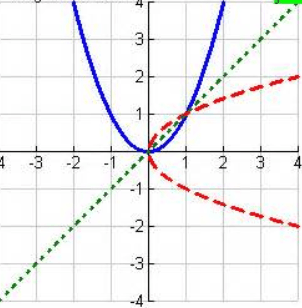
What's the best description?
They are both functions, but not inverse functions.
They are reflected over y=x, but they are not both functions.
They are not reflected over y=x, and they are not both functions.
They are inverse functions.
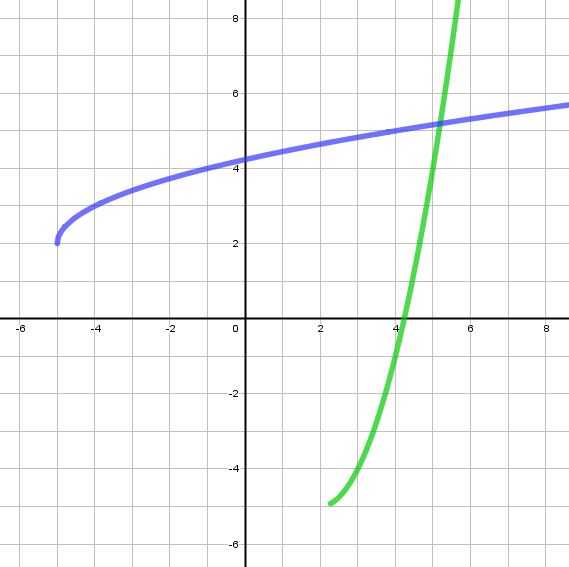
What is the best description?
They are both functions, but not inverse functions.
They are inverse functions.
They are reflected over y=x, but they are not both functions.
They are not reflected over y=x, and they are not both functions.
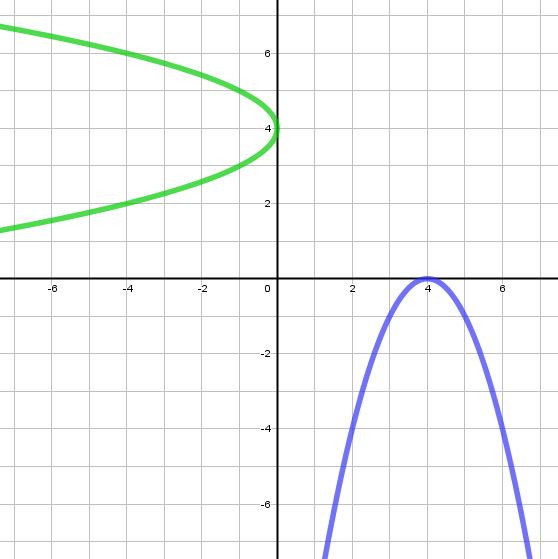
What is the best description?
They are both functions, but not inverse functions.
They are inverse functions.
They are reflected over y=x, but they are not both functions.
They are not reflected over y=x, and they are not both functions.
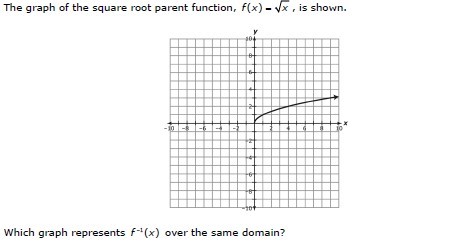
Which graph represents f-1(x) over the same domain?
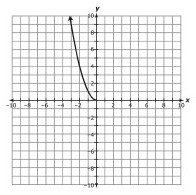
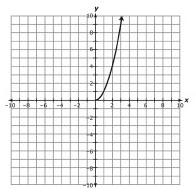
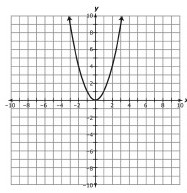
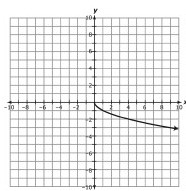
f(x) = -4x - 12
What is f-1(x)?
f-1(x) = 4x - 3
f-1(x) = -1/4x - 3
f-1(x) = 1/4x + 3
f-1(x) = -4x - 3
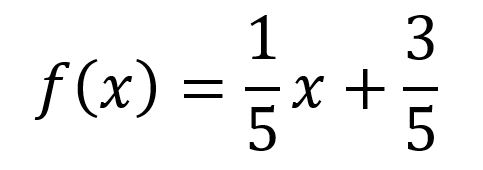
Which is f -1(x)?
f -1(x) = 5x + 3
f -1(x) = 5x - 3
f -1(x) = 5x - 15
f -1(x) = 1/5(x) + 3/5
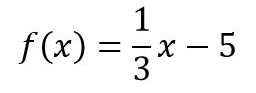
Which is f -1(x)?
f -1(x) = 3x + 5
f -1(x) = 3x - 5
f -1(x) = 3x - 15
f -1(x) = 3x + 15
Which graph represents the functions f(x) and f-1(x)?
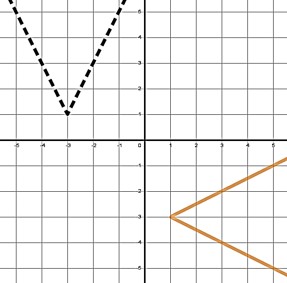
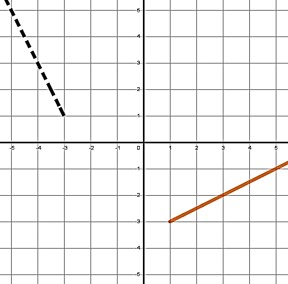
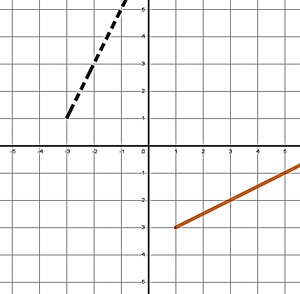
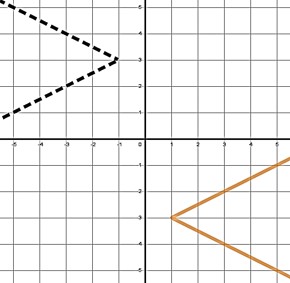

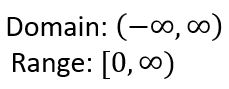
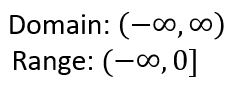
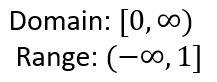
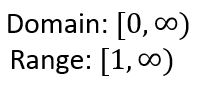

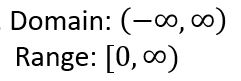
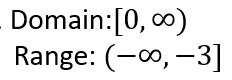
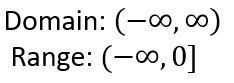
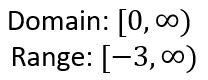
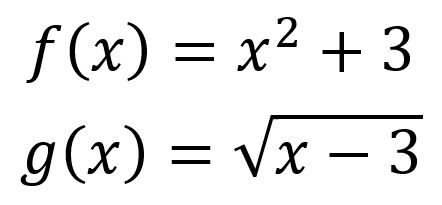
How must the domain of f(x) be restricted such that g(x)=f-1(x) ?
x ≤ 0
x ≥ 0
x ≤ 3
x ≥ 3
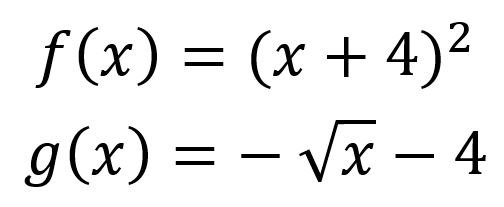
How must the domain of f(x) be restricted such that g(x)=f-1(x) ?
x ≤ -4
x ≥ -4
x ≤ 0
x ≥ 0

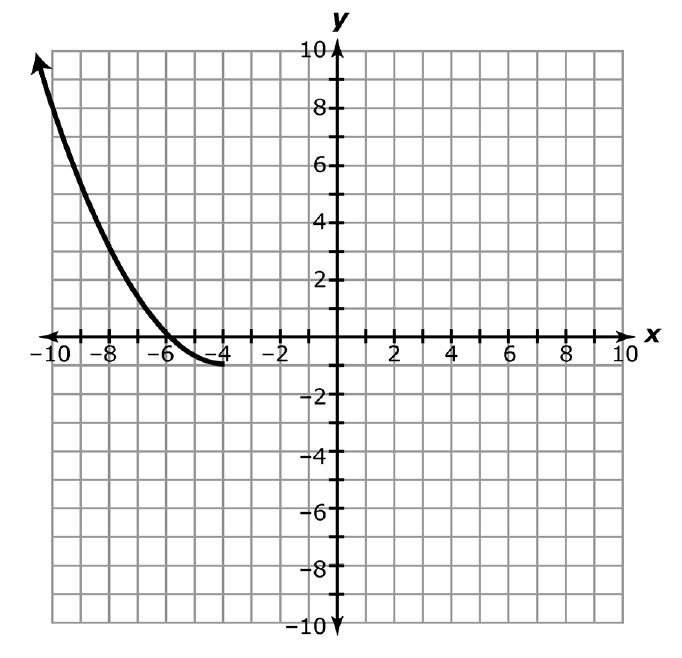
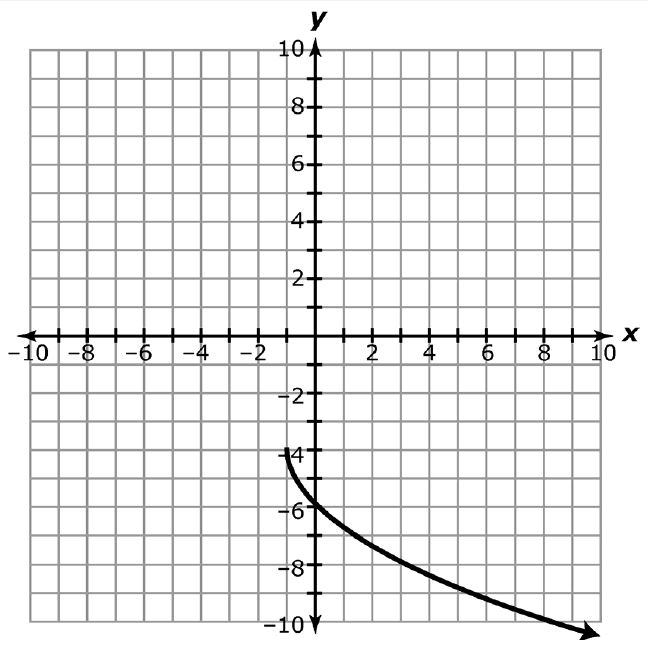
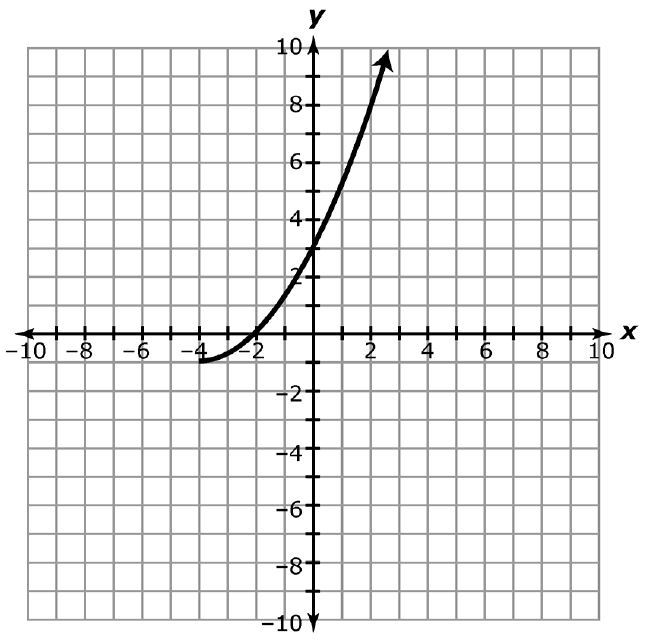
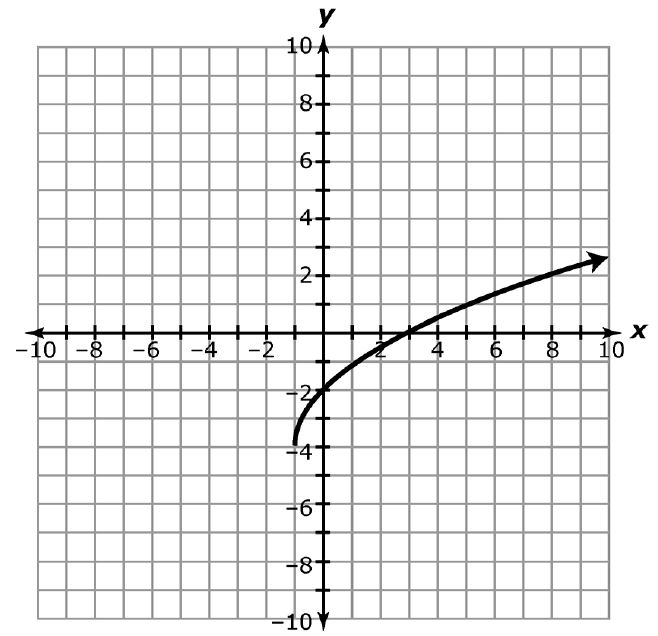
Which graph represents the functions f(x) and f-1(x)?
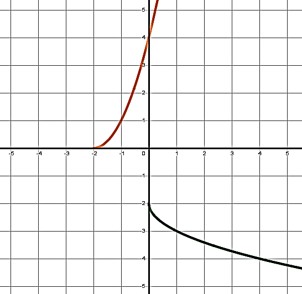
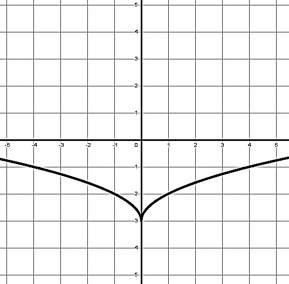
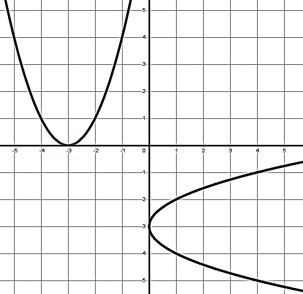
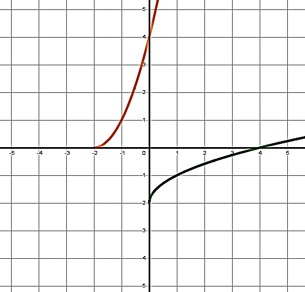
f(x) = 1/4x - 7
and
g(x) = 4x


its inverse, f-1(x) =
and
g(x) = 4x


f(x)= x4 - 2
1st you replace f(x) with y
2nd switch the x's and y's
What do you do next?
f(x) = 1/4x - 7
Are the following inverses of each other? Use composition of functions. fog(x) and gof(x)
True
False
f(x) = 3x + 10
g(x) = ⅓x - 3
Find g(f(x))
f(g(x)) = 1
f(g(x)) = x
f(g(x)) = 0
None of these.

Inverse Functions
Not Inverse Functions

Inverse Functions
Not Inverse Functions
What operation allows us to verify if functions are inverses?
Multiplying
Dividing
Adding
Composing
What does an inverse function do?
Nothing
Makes it bigger
Does the opposite of the original function
f(x)=6x−2
Find f−1(x)
2x−6
6x+2
2x+6
6(x+2)
f(x)=58x−3
Find f−1(x)
5(8x+3)
85x+3
85(x+3)
85x+3
f(x)=56x+3
Find f−1(x)
65x−3
65(x−3)
65x−3
65x+3
f(g(x))
3x - 16
3x - 2
3x - 26
4x - 2
g(x) = x - 2
Find f(g(5))
g(x) = x - 2
Find g(f(x))
Find f(2).
-2
-18
24
6
Find g(5)
3375
375
25
45
f(x-2)
2x2 - 13x + 18
2x2 - 5x + 18
2x2 - 8x + 3
2x2 - 13x + 2
g(4x)
1728x3
12x3
192x3
36x3
Find f[g(5)]
30
242
92
2
f(g(x))
3x - 16
3x - 2
3x - 26
4x - 2
g(x) = x-9
Find f(x)-g(x).
g(x) = x - 2
Find f(g(0))
g(x) = x - 2
Find f(g(5))
g(a) = 4a + 1
h(a) = -3a + 2
Find g(h(1))
3
-3
21
-21
g(x) = x - 2
Find g(f(x))
h(x)=3x-1
Find g(h(x))
If f(x) = x-1 and g(x) = 2x,
what is and g(f(x)) ?
2x2-1
2x-1
2x-2
x-2
g(n)=3n
Find f(n)+g(n)
If f(x)=2x and g(x)=2x2−1 find f(g(3))
34
71
35
142
If f(x)=2x and g(x)=2x2−1 find g(f(−1))
2
15
7
-9
If f(x)=2x and g(x)=2x2−1 find f(g(x))
4x2−1
4x2−2
8x2−1
16x2−1
If f(x)=2x and g(x)=2x2−1 find g(f(x))
4x2−1
4x2−2
8x2−1
16x2−1
If f(x)=x1 and g(x)=3x+2 find (f∘g)(2)
41
81
27
8
If f(x)=x1 and g(x)=3x+2 find (g∘g)(−4)
44
-40
-30
-28
If f(x)=x1 and g(x)=3x+2 find (g∘f)(x)
3x1+2
3x+2
x3+2
3x+21
If f(x)=x1 and g(x)=3x+2 find f(g(x))
3x1+2
3x+2
x3+2
3x+21
If f(x)=x2 and g(x)=x find g(f(x))
x4
x
x
x2
If f(x)=x2 and g(x)=x21 find (f∘g)(−1)
41
1
−1
−41
When f(x)=x2+9 and g(x)=x−9 , find f(x)−g(x)
x2+x+9
x2−x+9
x2−x
x2−x+18
When f(x)=9−3x and g(x)=5x−7 , find f(x)+g(x)
14x−10
−8x+2
2x+2
2x−2

f(g(3)) (just give the final value)
(a)

g(h(−4)) (just give the final value)
(a)

f(g(5)) (just give the final value)
(a)
If g(x)=x2+6 and f(x)=2x−4 , find g(f(x))
2x2−12x−4
2x2+12x−4
4x2−16x+22
x3−2x2+1
g(f(2))
5
3
-1
2
If f(x)=2x+3 and g(x)=−3x−4 , find f(x)⋅g(x)
−6x2−17x−12
6x2+x−12
−x−1
5x+7
g(g(−5))
1
-0.25
3
-1

