
 Worksheets
Geo Evo Quiz 2026
Total questions: 48
Worksheet time: 15mins
What did Alfred Wegener propose?
Continental Drift Theory
Theory of Plate Tectonics
Theory of Natural Selection
The Snowball Theory

Trilobites are especially useful as index fossils because...
They were alive for a brief time and distributed worldwide
They were alive for a brief time and found only in a limited area
They were alive for an extended time and distributed worldwide
They were alive for an extended time and found only in a limited area
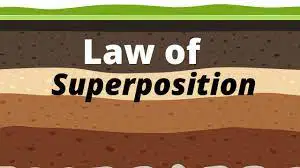
How does the Law of Superposition show geological evolution?
The youngest rock is on the bottom and the oldest layer is on the top
The youngest layer is in the middle and the oldest layer is on the top
The oldest layer is on the bottom and the youngest layer is on top
There is no difference in the position of the layers in regards to age
How long ago was the formation of the Earth and moon?
(a)
The Law of Superposition provides the ____ of the rocks and fossils while radioactive dating provides the ___ of rocks and fossils.
absolute age/relative age
relative age/absolute age
According to the geologic time scale, which part of Earth's history spanned the longest amount of time?
Cenozoic
Precambrian
Paleozoic
Mesozoic
A fossil found in a narrow time range, but widely distributed around the Earth is called a(n)
(a)
Theory that states that the gradual shifting of Earth’s plates causes continents to change their global positions
Theory of plate tectonics
Theory of continental drift
Law of Superposition
Theory of natural selection
This "activity" is responsible for creating new islands in Hawaii.
Unconformity
Hot Spots
Uniformitarianism
Mass Extinction
A gap in the rock record is called an
(a)
The order of the geologic time scale is: eon, era, period, epoch
True
False
Fossils form in igneous rock.
True
False
At divergent boundaries, two tectonic plates come together and push against each other.
True
False
Soft parts, like skin and hair, frequently become fossils.
True
False

What layer of rock in the picture is the oldest?
A
B
D
E
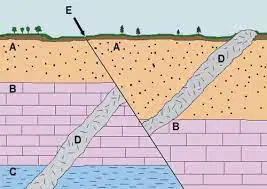
Which event happened the most recent?
A
B
D
E
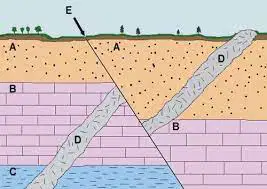
What event is considered an unconformity?
C
D
B
A
This era is the “Age of Mammals”
Precambrian
Paleozoic
Mesozoic
Cenozoic
This is the current era.
Precambrian
Paleozoic
Mesozoic
Cenozoic
What determines a new division on the geologic time scale?
A fixed amount of time
When the average temperature on Earth changes by 5 degrees
Major events on Earth
A preserved fossil can be found in ice, amber, or tar.
True
False
A cast is a 3D shape that is left in rock.
True
False
Original remains are actual body or body parts that became a fossil.
True
False
Knowing the order of events is what type of dating?
Relative dating
Actual dating
Radioactive dating
Guessing
When radioactive dating a fossil, what isotope is used?
Carbon-12
Carbon-14
Uranium-238
Uranium-382
What must be true for a fossil to be considered an index fossil?
Widely distributed
Lived for a short span of time
Easy to identify
All of the above
What is the most accurate method scientists use to predict the age of Earth
relative dating of rock layers
comparing the ages of different fossils
radioactive dating of rocks
investigating core samples from the arctic
Pangaea is/was a
supercontinent
greek god
tropical plant
A mass extinction is...
the emergence of a new life species
the loss of a large species
the emergence of a new, large species
the loss or death of many different species
This type of plate boundary creates mountains because the plates are pushing together.
Convergent
Transform
Divergent
At this type of plate boundary, new crust is created because the plates are moving away from each other.
Convergent
Transform
Divergent
What evidence supports the idea that mountains were once underwater?
The presence of volcanic ash
The discovery of dinosaur bones
The existence of glaciers
The presence of marine fossils on rock formations
The preserved remains of once living organisms are called...
(a)

The fish is YOUNGER than which fossil?
A
B
C
D

The fish is OLDER than which fossil(s)?
A
B
C
D

Which organism evolved first?
reptile
amphibian
insect
fish
According to the fossil record, dinosaurs and humans existed on Earth at the same time.
True
False
What evidence did Alfred Wegener use for his theory of plate tectonics?
continents and fossils fitting together/matching up
mountain ranges line up across continents
evidence of past ecosystems/climate
all of the above
Any rock that forms from another rock as a result of changes in heat or pressure (or both) is a:
chemical rock
igneous rock
sedimentary rock
metamorphic rock
Geologists have classified rocks into three major groups of rocks which are:
inorganic, organic and chemical rocks
igneous, sedimentary and metamorphic rocks
metamorphic, chemical and non chemical rocks
sedimentary, inorganic and igneous rocks

What are fossils?
the oldest layers of rock in a region
living creatures with habitats in or around rocks
preserved remains or traces of once living things
objects that people of long ago left behind as artifacts
Index fossils are used by geologists to
match rocks of the same age in different regions
determine the relative age of rocks in one place
identify organisms that did not leave fossil evidence behind
determine why some organisms became extinct
How does the law of crosscutting explain the age of a fault?
The fault is younger than the rocks above it.
The fault is younger than the rocks it cuts through.
The fault is older than the rocks above it.
The fault is older than the rocks it cuts through.

