
Font size
 Worksheets
Ecology Review #2
Total questions: 16
Worksheet time: 9mins
A food chain can go on for seven or eight levels. (a)
A food chain is a diagram that shows feeding interactions in an ecosystem through a single pathway.
True
False
The first trophic level always consists of
Producers
secondary consumers
tertiary consumers
primary consumers
A food web contains many intersecting food chains.
True
False
Which level is known as the producer level?
The first
The second
The third
The fourth
Energy is recycled in a food chain.
True
False
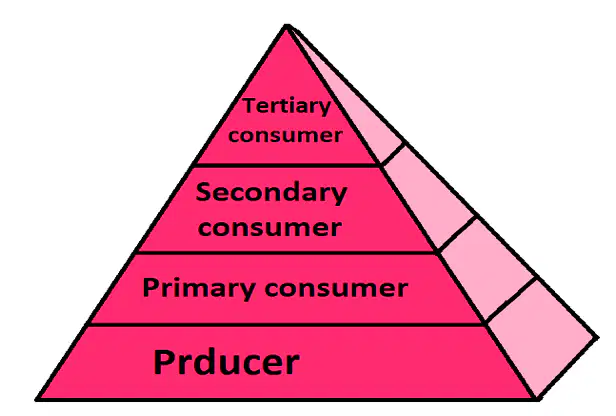
The ecological pyramid depicts how biomass and energy increase from lower to higher trophic levels.
True
False
When the niche of a species at the top of the food chain impacts multiple species in preceding levels this is called
succession
trophic cascade
evolution
a climax community
Select all that apply:
The wolves in Yellowstone National Park affect which of the following?
Biodiversity
Hydrology of the rivers and streams
The geography of the ecosystem
The size of the bear population
Anything that limits an organism's ability to survive in an ecosystem is referred to as a
limiting factor
community
population
symbiotic relationship
Lichens attach to bare rock and eventually break the rock down into soil. For these reasons lichens are considered to be:
Primary producers
Pioneer species
A climax community
Tertiary consumers
Both matter and energy are cycled between the biotic and abiotic systems on Earth.
False. Only matter is cycled.
True. Both matter and energy are cycled.
The Nitrogen cycle relies on the work of
plants
wolves
rocks
bacteria
When Nitrates and nitrites cause an abundance of algae to grow ultimately causing a reduction of oxygen.
Eutrophication
Erosion
Eukaryotic
Elephantiasis
Bacteria convert the nitrogen in the atmosphere into_______.
Usable Nitrogen
Glucose
CHONPS are
The environmental police force
The elements needed by all living things

