wayground logo

Free Printable Worksheets

Font size

S
M
L
XL
Worksheets

8th Grade End of Year Review

Total questions: 84

Worksheet time: 2hrs 46mins

Name
Class
Date
1.
Which of the following has the biggest impact on the seasons?
a)
Earth's rotation
b)
Tilted axis
c)
Moon's gravitational pull
d)
Pressure systems
2.
What causes the day and night cycle on Earth?
a)
Rotation of the Sun
b)
Revolution of the Earth
c)
Gravitational pull from the moon
d)
Rotation of the Earth
3.
In Which position would the Southern Hemisphere experience winter?
a)
Position A
b)
Position B
c)
Position C
d)
Position D
4.
What phase is illustrated here?
a)
1st Quarter
b)
Waning gibbous
c)
Waxing crescent
d)
New moon
5.

How long does it take for the Earth to orbit the sun? (Make a full revolution)

a)

365 days

b)

365 seconds

c)

24 hours

d)

60 seconds

6.
The line up for a solar eclipse is: 
a)
Sun-Earth-Moon
b)
Earth-Sun-Moon
c)
Sun-Moon-Earth
d)
Earth-Moon-Mars
7.
A lunar eclipse occurs when the line up is this:
a)
Sun -Earth-Moon
b)
Moon, Sun, Earth
c)
Earth-Sun-Moon
d)
Sun-Moon-Earth
8.
General term for any hydrocarbon that may be used as a fuel, including coal, oil, and natural gas
a)
Renewable resource
b)
Nonrenewable resource 
c)
Fossil fuel 
d)
Acid precipitation 
9.

Fossil

a)

the remains or traces of an organism from a past geologic age

b)

a type of fuel that forms from the ancient remains of decomposed plants and animals

c)

a resource that is found in nature that is useful to humans

d)

small bits of rock, soil, sand, and shells

10.

Which of the following statements shows a natural cause of desertification?

a)

Climates are changing.

b)

The population keeps growing.

c)

Overgrazing

d)

Deforestation

11.

As a part of the water cycle, water from Earth's surface enters the clouds and finally falls back to the ground in the form of rain. What is the correct sequence of processes water undergoes?

a)

Evaporation, Condensation, Precipitation

b)

Precipitation, Condensation, Evaporation

c)

Condensation, Evaporation, Precipitation

d)

Evaporation, Precipitation, Condensation

12.

Condensation occurs when water vapor_____________.

a)

heats up and becomes liquid water

b)

cools off and becomes liquid water

c)

freezes and becomes ice

d)

rains on the land

13.

The process when plants release water vapor from their leaves is called _____________.

a)

precipitation

b)

evaporation

c)

transpiration

d)

condensation

14.

Which best explains why runoff is important?

a)

It returns water to other locations on Earth

b)

It increases the chance of flooding

c)

It makes evaporation occur faster

d)

It increases condensation

15.
The order of the layers of the atmosphere from space to the earth's surface.
a)
stratosphere, troposphere, mesosphere, thermosphere
b)
troposphere, thermosphere, stratotosphere, mesosphere
c)
troposphere, stratosphere, mesosphere, thermosphere
d)
troposphere, stratosphere, thermosphere, mesosphere
16.
Energy transferred by circulation of a liquid or gas is
a)
Conduction 
b)
Convection
c)
Radiation
d)
Density
17.
Energy transferred by direct contact in the form of heat is
a)
Conduction 
b)
Convection
c)
Radiation
d)
Density
18.
At higher temperatures
a)
particles in an object have less energy
b)
particles in an object move faster
c)
a gas contracts
19.

The slower the particles in a substance move,

a)

the colder it is.

b)

the warmer it is.

c)

the more energy it has.

20.

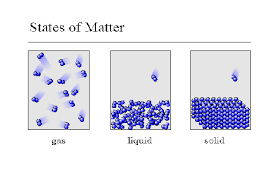
What state of matter does the picture below represent?

a)

solid

b)

liquid

c)

gas

d)

plasma

21.

In a density column, is the substance with the highest density on the bottom or the top?

a)

Bottom

b)

Top

22.

Which of the following is the correct definition of density?

a)

The amount of stuff in an object

b)

The amount of space an object takes up

c)

A measure of the force of gravity on an object

d)

The amount of matter (mass) packed into a space (object)

23.

Which of the following is the correct units for density?

a)

grams (g)

b)

Newtons (N)

c)

cm3

d)

g/cm3

24.

What is the density of an object if it has a mass of 6g and a volume of 3cm3? (Hint: Density = mass/volume)

a)

6 g/cm3

b)

3 g/cm3

c)

2 g/cm3

d)

1/3 g/cm3

25.

Which substance is the most dense in this picture?

a)

Vegetable Oil

b)

Dish Soap

c)

Honey

d)

Corn Syrup

26.

Above a continent, a warm air mass slowly passes over a cold air mass. As the warm air begins to cool, clouds form. What will most likely happen next?

a)

lightning will strike

b)

hail will form

c)

hurricanes will form

d)

rain will fall

27.

What type of weather will Florida expect when the front comes through?

a)

light rain or drizzle

b)

many days of rain, snow, or fog

c)

heavy precipitation or thunderstorms

d)

sunny, clear, and windy

28.
Which of the following are NOT found in animal cells
a)
chloroplasts and cytoplasm
b)
chloroplasts and cell wall
c)
cell wall and cell membrane
d)
mitochondria and nucleus
29.

Which of the following converts food into energy for the cell?

a)

vacuole

b)

mitochondria

c)

cytoplasm

d)

cell membrane

30.

Which organelle takes in "sun showers" and helps plants with the process or photosynthesis?

a)

Vacuole

b)

Mitochondria

c)

Cytoplasm

d)

Chloroplast

31.
If you were some bad guy trying to sneak into an animal cell, who would be there to stop you?
a)
nucleus
b)
mitochondria
c)
cell membrane
d)
cell wall
32.

What is NOT a part of cell theory:

a)

all cells come from existing cells

b)

all cells have a nucleus

c)

all living things are made of cells

d)

cells are basic unit of structure and function in living things
33.
All cells are produced ____________.
a)
From pre-existing and deceased cells
b)
from other pre-existing cells
c)
Cells can come from anywhere, as long as there is the sun.
34.
How are unicellular organisms different from multicellular organisms? 
a)
There are no differences.
b)
They are made of many cells. 
c)
They are only classified as prokaryotes.
d)
They are made of only one cell. 
35.
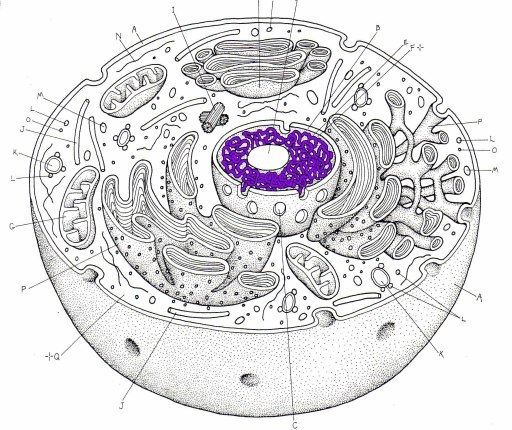
What kind of cell is this?
a)
Eukaryotic
b)
Prokaryotic
36.
What type of cell does not have a nucleus?
a)
eukaryotic 
b)
prokaryotic 
37.
In mitosis, the two resulting cells are
a)
different from the starting cell and identical to each other.
b)
different from the starting cell and different from each other.
c)
identical to the starting cell and different from each other.
d)
identical to the starting cell and identical to each other.
38.
a)
Prophase
b)
Interphase
c)
Anaphase
d)
Telophase
39.
a)
Cytokinesis
b)
Interphase
c)
Anaphase
d)
Metaphase
40.
a)
Cytokinesis
b)
Anaphase
c)
Telophase
d)
Prophase
41.
Which of the following is the correct order of organization in living things from most basic (simple) to most complex?
a)
a.  Organism, cell, tissue, organ, organ system
b)
a.  Organ system, organ, tissue, cell, organism
c)
a.  Cell, tissue, organ, organ system, organism
d)
a.  Cell, organ, tissue, organ, organism, organ system
42.
What is the difference between a cell and a tissue?
a)
cell is basic unit of life; tissue is group of cells that work as one
b)
cell is group of tissues; tissue is basic unit of life
c)
cell is basic unit of life; tissue is groups of different cells
d)
cell is group of organs; tissue is group of different cells
43.
Which process converts carbon in the form of sugar into carbon dioxide gas?
a)
Bioremediation
b)
Photosynthesis
c)
Respiration
d)
Transpiration
44.

Respiration is a process where living things (animals) inhale ______________ and exhale _____________________.

a)

Oxygen, Nitrogen

b)

Carbon Dioxide, Oxygen

c)

CO2, O

d)

Oxygen, Carbon Dioxide

45.
What is it called when plants give off water vapor as a waste product?
a)
condensation
b)
transpiration
46.

Which describes the relationship between plants and animals in the carbon cycle?

a)

Plants produce and release oxygen that animals need

b)

Plants produce and release carbon dioxide that animals need

c)

Animals produce and release oxygen that plants need

d)

Animals produce oxygen that plants turn into carbon dioxide

47.
How animals get the nitrogen they need
a)
from the air they breathe
b)
from the water they drink
c)
from the food they eat
d)
from the Sun
48.
Bacteria fix nitrogen on plant roots. Plant roots provide sugar to bacteria. This is an example of
a)
mutualism
b)
parasitism
c)
commensalism
d)
competition
49.

Which of these things is NOT a consumer

a)

Human

b)

Whale

c)

Tree

d)

Chicken

50.

What do the arrows show in this food chain:


plant → grasshopper → bird → snake → owl.

a)

The arrow points from the organism being eaten to the organism that eats it.

b)

The arrow points from the organism that eats it to the organism that is being eaten.

c)

The arrow points from biggest animal to smallest animal.

d)

The arrow points from the consumers to the producers.

51.

As you move through a food chain, the amount of energy stored....

a)

Increases

b)

Decreases

c)

Stays the same

d)

It depends on the ecosystem

52.

What is an example of an ecosystem?

a)

a deer

b)

a group of deers, the sun, rabbits, the lake, the soil, a bird, a tree

c)

a group of deers

d)

a group of deers, rabbits, a bird, and a tree

53.

Which of the following is an example of the community level of organization?

a)

a school of fish

b)

a school of fish, the ocean, a shark, the dirt, and seaweed

c)

a school of fish, a shark, and seaweed

d)

a fish

54.

Which of the following groups are abiotic?

a)

bird, fish, tree, frog

b)

shark, manatee, fly, lizard

c)

water, shark, tree, soil

d)

water, sun, 98 degrees, soil

55.
G = green, g = yellow
The genotype for a yellow plant is...
a)
GG
b)
Gg
c)
gg
d)
all of the choices result in yellow
56.
What you see, or the physical appearance.
a)
Genotype
b)
Phenotype
c)
Homozygous
d)
Heterozygous
57.
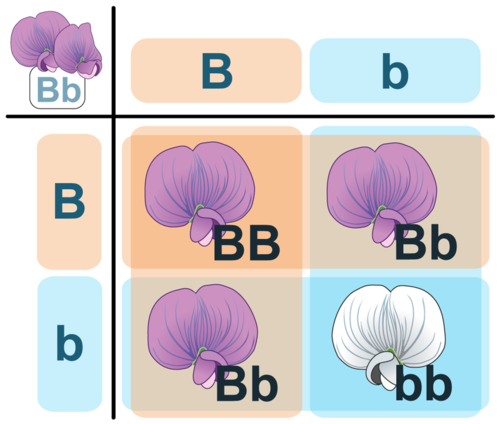
In this punnett square, which is the dominant trait?
The B stands for bud.
a)
purple flower bud
b)
white flower bud
c)
dominant
d)
recessive
58.
Which of the following would represent a sudden environmental change?
a)
Wildfire
b)
Global Warming
c)
Competition for food
d)
Desert encroachment 
59.
Survival of the Fittest and Evolution were proposed by what scientist?
a)
Charles Darwin
b)
Albert Einstein
c)
Steven Hawking
d)
Isaac Newton
60.
What is the advantage of having different shaped beaks?
a)
To look different from other species.
b)
To be able to eat the food readily available in the environment.
c)
To protect itself against predators.
d)
To protect itself against prey.
61.
Mutations are a change in what?
a)
DNA
b)
tRNA
c)
genotype
d)
phenotype
62.
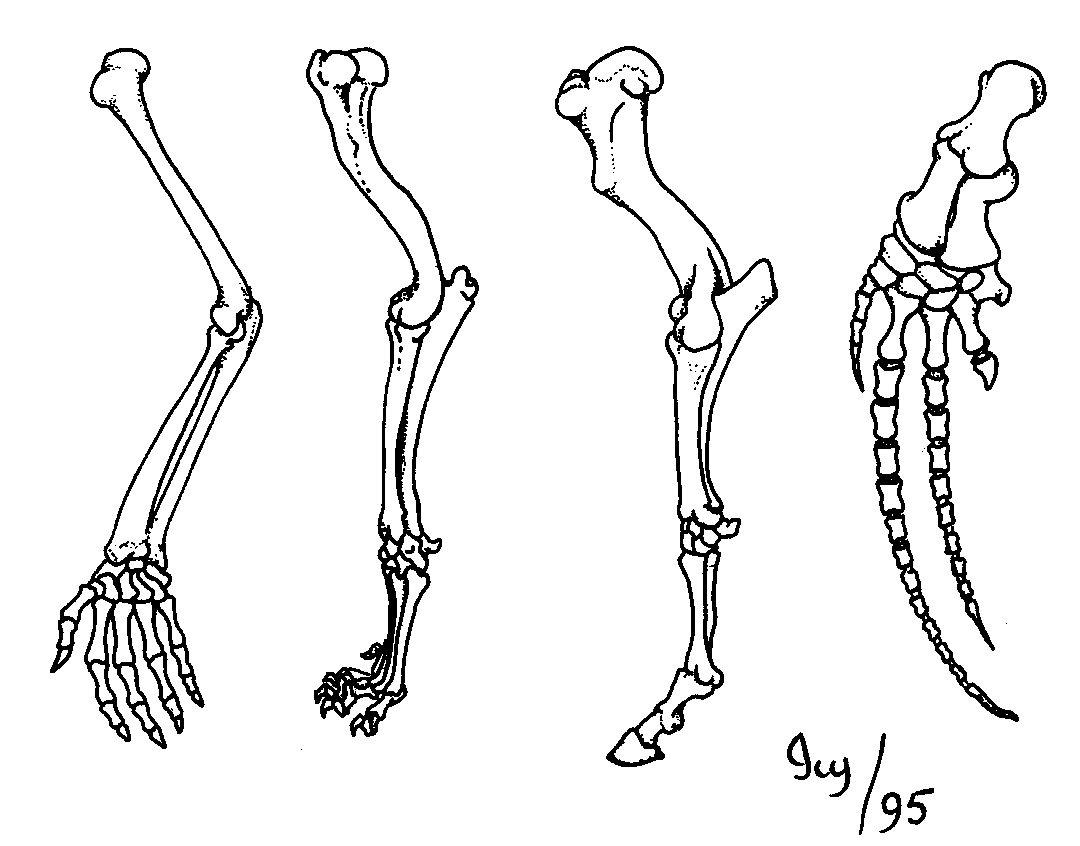
Structures with the same parts have different functions; suggests that organisms share a common ancestry
a)
vestigial structures
b)
homologous structures
c)
adaptive radiation
d)
fossil
63.
Study of embryos of various organisms to show a common ancestor because of similarities in development
a)
natural selection
b)
embryology
c)
speciation
d)
evolution
64.
A fossil of an extinct dinosaur is found and the anatomy of the fossil shows similarities to that of a bird. What could this mean?
a)
This is purely by chance and isn't significant
b)
The extinct dinosaur and modern bird share a common ancestor
c)
All dinosaurs evolved into birds and that's why there aren't any dinosaurs alive today
d)
Dinosaurs choose to fly, and evolved into birds to escape predation and capture food
65.
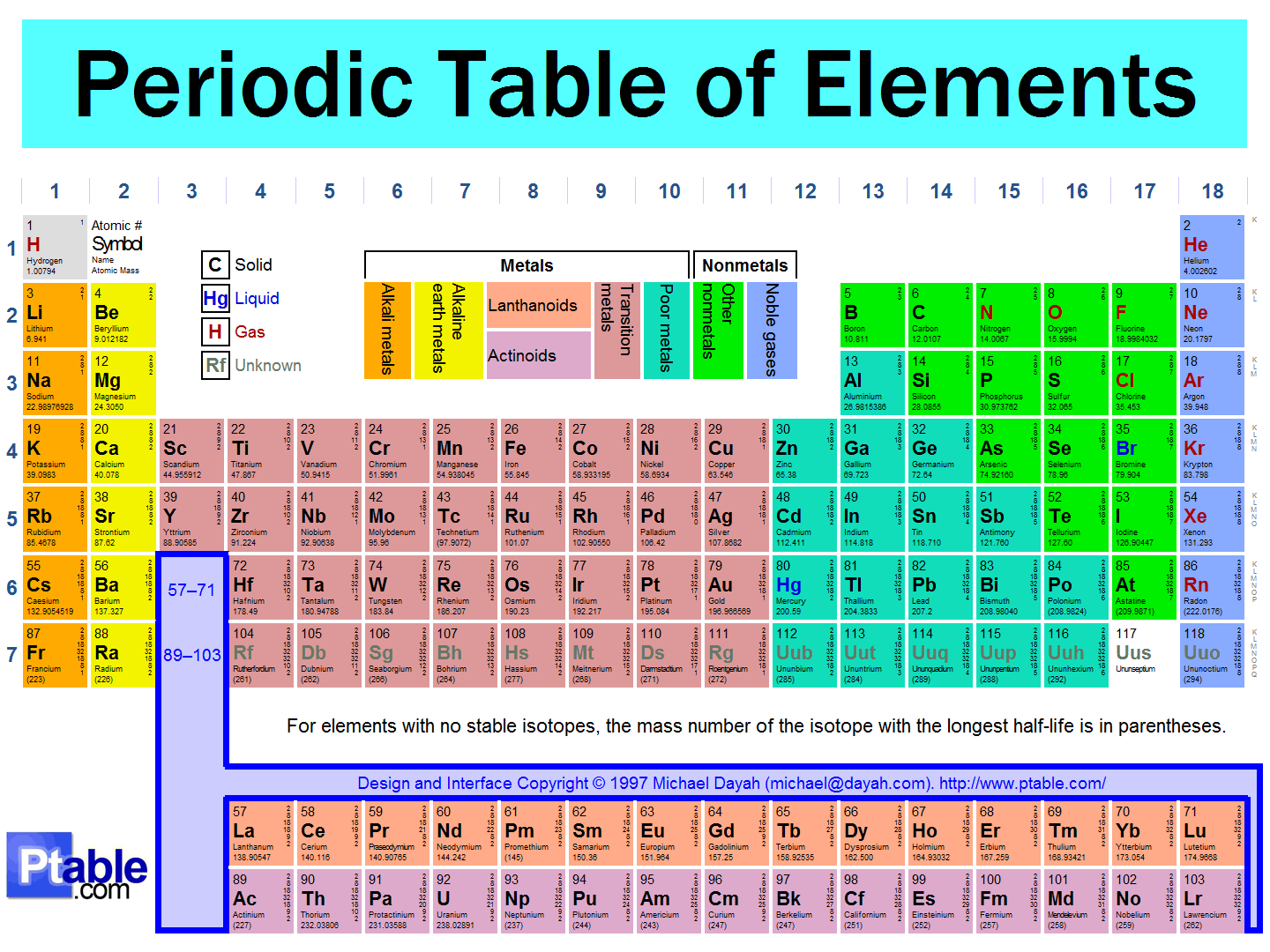
In the modern periodic table elements are arranged by:
a)
atomic mass
b)
atomic number
c)
valence electrons
d)
number of isotopes
66.
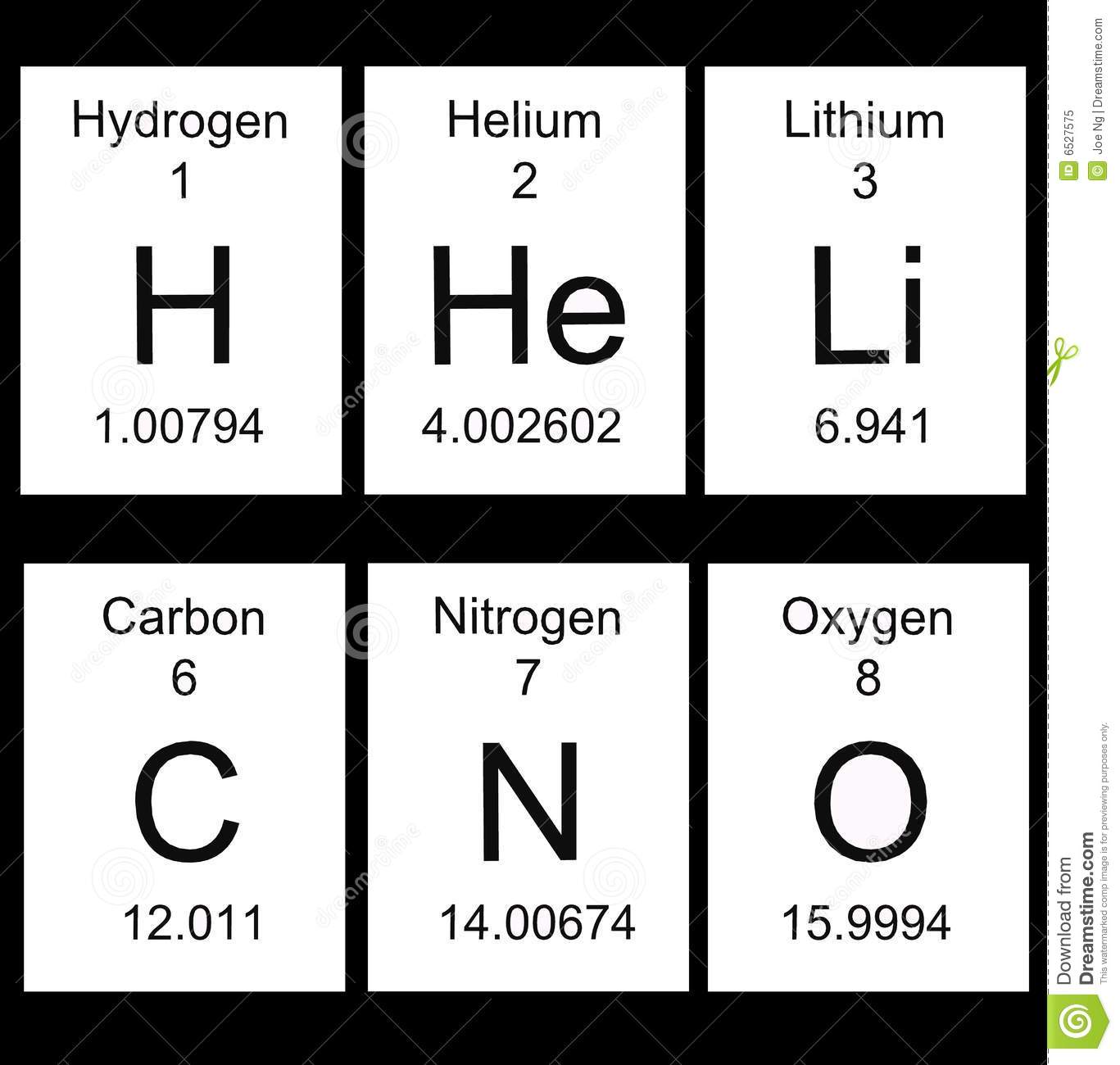
The number at the bottom of each square on the periodic table is the ...
a)
atomic number
b)
atomic mass
c)
chemical symbol
d)
element name
67.
The horizontal row on the periodic table is called a
a)
group
b)
family
c)
period
d)
atomic number
68.
The positively charged particles of an atom are the ________.
a)
electrons
b)
protons
c)
neutrons
d)
protons & neutrons
69.

__________ are negatively charged particles that are in the orbitals around the nucleus.

a)

protons

b)

nucleus

c)

neutrons

d)

electrons

70.
Which is an electron?
a)
A
b)
B
c)
C
71.

Which statement is true?

a)

Oranges contain Elastic Energy

b)

Food contains Chemical Energy

c)

Phone on the table doesn't contain Gravitational Energy

d)

Radiator contains Nuclear Energy

72.

What type(s) of energy does a fridge contain?

a)

Sound Energy

b)

Thermal Energy

c)

Mechanical Energy

d)

All of the above

73.

What is the definition of Elastic Energy?

a)

Energy stored in the nucleus of the atoms hold the nucleus together

b)

Energy stored in an object by the application of force

c)

Movement of objects or substances from one place to another

d)

The energy an object or substance has because of its position up high

74.
What law is best described by inertia?
a)
1st
b)
2nd
c)
3rd
d)
law of conservation of mass
75.
a)
1st
b)
2nd
c)
3rd
d)
law of motion
76.

What do all waves transfer?

a)

Matter

b)

Heat

c)

Electricity

d)

Energy

77.

What is the number of complete waves passing a fixed point in a given amount of time?

a)

Amplitude

b)

Intensity

c)

Wavelength

d)

Frequency

78.

Which type of waves have the longest wavelength?

a)

Visible light

b)

Radio waves

c)

X-rays

d)

Gamma-Rays

79.

Which one is a conductor?

a)

gold

b)

rubber

c)

plastic

d)

cotton

80.

Which one is an insulator?

a)

plastic

b)

penny

c)

metal

d)

magnet

81.

What does repel mean?

a)

When 2 opposite magnetic poles stick together

b)

When 2 opposite magnetic poles don't stick together

c)

When 2 of the same magnetic poles stick together

d)

When 2 of the same magnetic poles don't stick together

82.
What is a factor that is measured for change in an experiment?
a)
control
b)
constant
c)
independent variable
d)
dependent variable
83.
What is the factor that an experimenter changes on purpose?
a)
Dependent Variable
b)
Independent Variable
c)
Constant
d)
Control
84.
The part of the experiment that does not contain the independent variable. Used for comparison.
a)
Control Group
b)
Experimental Group
c)
Results
d)
Data