wayground logo

Free Printable Worksheets

Font size

S
M
L
XL
Worksheets

meiosis

Total questions: 65

Worksheet time: 48mins

Name
Class
Date
1.

In which phase does crossing-over happen?

a)

Prophase I

b)

Prophase II

c)

Metaphase I

d)

Anaphase II

2.

Mitosis is the same as which of the following?

a)

Meiosis I

b)

Meiosis II

c)

Meiosis III

d)

Crossing Over

3.

What phase is this?

a)

Prophase I

b)

Metaphase II

c)

Anaphase I

d)

Telophase II

4.

What phase is this?

a)

Telophase I

b)

Prophase II

c)

Metaphase I

d)

Anaphase II

5.

What phase is this?

a)

Metaphase I

b)

Prophase II

c)

Telophase I

d)

Anaphase II

6.

What phase is this?

a)

Metaphase II

b)

Prophase II

c)

Telophase I

d)

Anaphase I

7.

What phase is this?

a)

Metaphase II

b)

Prophase I

c)

Telophase I

d)

Anaphase II

8.

What phase is this?

a)

Metaphase II

b)

Prophase I

c)

Telophase I

d)

Anaphase I

9.

What phase is this?

a)

Telophase II

b)

Anaphase II

c)

Telophase I

d)

Anaphase I

10.

What phase is this?

a)

Metaphase II

b)

Prophase I

c)

Telophase II

d)

Anaphase I

11.

What phase is this?

a)

Anaphase II

b)

Telophase I

c)

Telophase II

d)

Anaphase I

12.

What phase is this?

a)

Prophase II

b)

Telophase II

c)

Telophase I

d)

Prophase I

13.

What phase is this?

a)

Prophase II

b)

Prophase I

c)

Anaphase II

d)

Anaphase I

14.

What phase is this?

a)

Prophase II

b)

Prophase I

c)

Anaphase II

d)

Anaphase I

15.

What phase is this?

a)

Prophase II

b)

Metaphase I

c)

Anaphase II

d)

Telophase II

16.

What phase is this?

a)

Telophase I

b)

Metaphase I

c)

Metaphase II

d)

Telophase II

17.

What phase is this?

a)

Prophase I

b)

Metaphase I

c)

Metaphase II

d)

Prophase II

18.

What phase is this?

a)

Prophase I

b)

Metaphase I

c)

Metaphase II

d)

Prophase II

19.
What phase is  shown in the picture?
a)
anaphase 1
b)
anaphase 2
c)
metaphase 1
d)
telophase 1
20.
The process of crossing over occurs in what phase of meiosis?
a)
anaphase 1
b)
prophase 1
c)
prophase 2
d)
telophase 1
21.
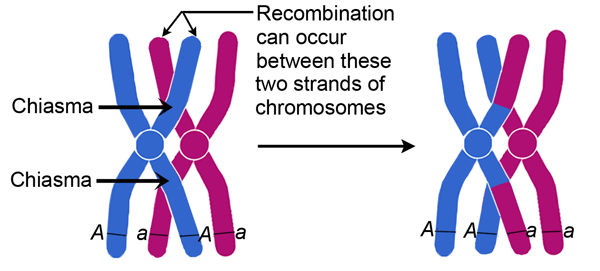
This image shows chromosomes during Prophase 1. Which of the following correctly describes the process shown?
a)
segregation of sister chromatids
b)
condensation and segregation of alleles
c)
mutationin which the DNA content of the gene is altered
d)
crossing - over in which alleles are exchanged
22.
What phase is  shown in the picture?
a)
anaphase 1
b)
anaphase 2
c)
metaphase 1
d)
telophase 1
23.
The nuclear membrane dissolves during
a)
Prophase
b)
Metaphase
c)
Anaphase
d)
Telophase
24.
The correct order of the phases of mitosis and meiosis could be abbreviated as:
a)
MAPT
b)
PAMT
c)
TPAM
d)
PMAT
25.
What phase is shown here?
a)
Prophase II
b)
Metaphase I
c)
Metaphase II
d)
Anaphase I
26.
What phase is shown here?
a)
Metaphase II
b)
Telophase I
c)
Telophase II
d)
Metaphase I
27.
What phases is shown here?
a)
Prophase II
b)
Prophase I
c)
Anaphase II
d)
Interphase I
28.
What phase is shown here?
a)
Anaphase I
b)
Prophase I
c)
Metaphase II
d)
 Metaphase I
29.
What phase is shown here?
a)
Telophase II
b)
Anaphase II
c)
Metaphase I
d)
Interphase I
30.
What phase is shown here?
a)
Telophase I
b)
Metaphase II
c)
Telophase II
d)
Anaphase I
31.
What phase is this?
a)
Interphase II
b)
Prophase I
c)
Metaphase I
d)
Anaphase II
32.
Meiosis results in the production of
a)
2 diploid cells
b)
2 haploid cells
c)
4 haploid cells
d)
4 diploid cells
33.
Which of the following is NOT a part of mitosis?
a)
prophase
b)
anaphase
c)
metaphase
d)
interphase
34.
The end of meiosis results in  ____ to each other.
a)
2 cells that are identical
b)
4 cells that are identical
c)
2 cells that are not identical
d)
4 cells that are not identical
35.
What is the name of the structure labeled X?
a)
Centriole
b)
Centrosome
c)
Chromatid
d)
Chromosome 
36.
Why would it be important to replicate DNA before a cell divides in mitosis or meiosis?
a)
In order for genetic information to be transferred into daughter cells.
b)
In order for the cell to be able to increase in size.
c)
In order for the DNA to be contained in the nucleus.
d)
In order for the cell to re-order the DNA sequencing in the new cells.
37.
The structure labeled A is a(n)
a)
chromatid
b)
centriole
c)
centromere
d)
chromophere
38.

Each chromosomes pairs with its corresponding homologus chromosome to form a tetrad

a)

Metaphase I

b)

Telophase I & Cytokinesis

c)

Prophase I

d)

Anaphase II

39.
What are chromosomes?
a)
different versions of genes
b)
condensed DNA 
c)
uncoiled DNA
40.

Identical halves of a chromosome are called?

a)

Cousins

b)

Chromatids

c)

Centromere

d)

Centrosome

41.
What does NOT happen during interphase?
a)
growth
b)
DNA replication 
c)
obtaining nutrients
d)
cell divison
42.

Cells of organisms must go through cell division for?

a)

growth

b)

repair of damaged cells

c)

replacement of dying cells.

d)

All of these

43.

DNA is replicated during ______ of the cell cycle.

a)

Gap 1

b)

Synthesis (S phase)

c)

Gap 2

d)

Gap 0

44.
What is cytokinesis?
a)
This is when two cells merge together to make one giant cell.
b)
The stage where chromosomes migrate to the opposite ends of the cell. 
c)
The stage of the cell cycle where the rest of the cell divides after mitosis is complete.
d)
The stage in which DNA condenses into chromosomes.
45.
What occurs during G1?
a)
Checkpoint after S phase
b)
Chromosomes line up at the equator.
c)
The cell grows and develops.
d)
Spindle fibers separate chromosomes to opposite poles of the cell. 
46.
True or False:
Normal cells grow and divide continuously.
a)
True
b)
False
47.

During most of interphase, DNA is found in a relaxed form called

a)

chromosome

b)

centromere

c)

centriole

d)

chromatin

48.

During mitosis, DNA is found in the condensed form called a

a)

chromosome

b)

centromere

c)

centriole

d)

chromatin

49.
During which part of the cell cycle is DNA copied?
a)
Mitosis
b)
Cytokinesis
c)
S phase
50.
During which parts of the cell cycle does the cell grow?
a)
G1 and G2
b)
G1 and S
c)
M phase and cytokinesis
51.
What is the purpose of the cell cycle?
a)
To create new daughter cells
b)
To prevent cancer from developing
c)
To help the body fight viruses and bacteria
52.

Uncontrolled cell division which usually leads to tumors and disease is called:

a)

Metaphase

b)

Cytokinesis

c)

Cancer

d)

Diabetes

53.

Which type of cell divides most frequently?

a)

Liver cell

b)

Skin cell

c)

Blood cell

d)

Nerve cell

54.

Which of these cells divides the least?

a)

Liver cell

b)

Skin cell

c)

Blood cell

55.

Which of these cells never divides?

a)

Skin cell

b)

Liver cell

c)

Nerve cell

d)

Blood cell

56.
Put the following stages of mitosis in order: anaphase, prophase, metaphase, and telophase. 
a)
prophase, metaphase, telophase, anaphase
b)
prophase, anaphase, metaphase, telophase
c)
prophase, metaphase, anaphase, telophase
d)
prophase, telophase, metaphase, anaphase
57.
Put the following stages of the cell cycle in order: G2, S, G1, M. 
a)
G1, S, G2, M
b)
S, G1, G2, M
c)
G1, M, G2, S
d)
M, G1, S, G2
58.

What is the purpose the the cell cycle checkpoints?

a)

To repair damaged cells before they enter cell division.

b)

To remove damaged cells from an organism.

59.

How many cell cycle checkpoints are there?

a)

1

b)

2

c)

3

d)

4

60.

What is the first checkpoint of the cell cycle?

a)

Mitosis checkpoint

b)

G1 checkpoint

c)

G2 checkpoint

61.
This is the cell cycle checkpoint that makes sure environmental conditions are ideal for cell survival.
a)
G1 Checkpoint
b)
G2 Checkpoint
c)
M Checkpoint
d)
I Checkpoint
62.
This is the cell cycle checkpoint that makes sure DNA has been replicated correctly during S phase.
a)
G1 Checkpoint
b)
G2 Checkpoint
c)
M Checkpoint
d)
I Checkpoint
63.
This is the cell cycle checkpoint that makes sure the correct number of chromosomes are present and attached to microtubules.
a)
G1 Checkpoint
b)
G2 Checkpoint
c)
M Checkpoint
d)
I Checkpoint
64.
The checkpoints that regulate the cell cycle can fail when ____ becomes damaged.
a)
DNA 
b)
Cell Membrane
c)
Mitochondria
d)
Ribosomes
65.

Name the 3 checkpoints of the cell cycle

a)

Anaphase checkpoint, mitosis/metaphase checkpoint, and telophase checkpoint

b)

Interphase checkpoint, S phase checkpoint, and M phase checkpoint

c)

G1 checkpoint, G2 checkpoint, and S phase checkpoint

d)

G1 checkpoint, G2 checkpoint, and mitosis/metaphase checkpoint