
 Worksheets
Mechanisms of Evolution
Total questions: 20
Worksheet time: 19mins
Mutations are always harmful to an organism's survival.
True
False
Over time natural selection can change how often a trait is seen within a population.
True
False
1. The process of choosing parent organisms for desired characteristics is called
natural selection
Artificial selection
random selection
genetic manipulation
What is an example of artificial selection?
Letting dogs choose their own mate
Letting plants pollinate on their own
Crossing a labrador and a poodle to create a labradoodle
Which statement is true comparing natural selection and artificial selection?
In natural selection, traits benefit humans and in artificial selection, the traits benefit the species
In natural selection, traits benefit the species and in artificial selection, the traits benefit humans
In natural and artificial selection, the process takes hundreds of years to occur
In natural and artificial selection, nature determines what traits will be passed down to offspring.
When humans select desirable traits to be passed down to offspring
natural selection
artificial selection

Mutations are important because they bring about
death of the organism in which they develop
genetic variation needed for a population to evolve
benefits for the individual, not for the population
Hardey-Weinberg equilibrium within a population

What does sexual selection mean?
Mating is not random
Organisms mate based on attractiveness
Organisms have the ability to compete for a mate
All of these are true
Organisms pass down their DNA to their offspring
True
False
Adaptations can be:
camouflage
ability to survive cold weather
hunting skills
all of the above
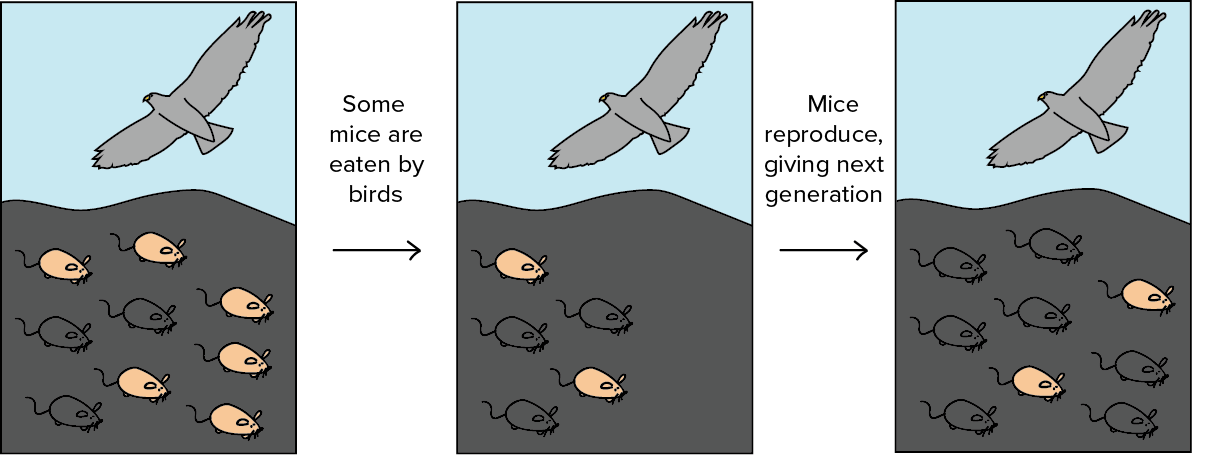
Genetic Drift
Sexual Selection
Artificial Selection
Mutation

Bats are common in Texas, especially in rocky regions. Bats with longer hang claws have demonstrated higher fitness because of their ability to cling to rock while resting. This adaptation is becoming more frequent in the population. What mechanism of evolution is this?
Natural Selection
Artificial Selection
Sexual Selection
Genetic Drift

