
 Worksheets
Habitat Review
Total questions: 18
Worksheet time: 54mins
A cactus is a plant that holds onto the water it takes in very well.
In which environment is a cactus most likely to live?
A swampy place.
A snowy place.
A rainy place.
A dry place.
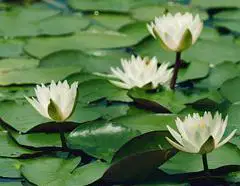
The plant above would best survive in which type of environment?
mountain
plain
lake
desert
Which of these lists includes only animals that would likely be found in the Piedmont region of Georgia?
sea turtles, alligators, and rainbow trout
wild turkeys, gray squirrels, and white-tailed deer
manatees, humpback whales, and crayfish
bats, cave salamanders, and scorpions
Which feature of the Georgia Coastal Plains explains why it has such unique plants?
nutrient-rich soil
caves
sandy soil
mountains
Oak trees, magnolia trees, black bears, trout, and hawks can all be found in which region of Georgia?
Coastal Plains
Atlantic Ocean
Valley and Ridge region
Blue Ridge Mountains
Large-flower skullcap is a kind of flowering plant. These plants grow best in wet, pine-hardwood forests. They cannot grow in cold places like on tall mountains. Which region of Georgia do large-flower skullcaps most likely grow best in?
Coastal Plains
Blue Ridge
Valley and Ridge
Appalachian Plateau
Zigzag salamanders and gray bats are two species that live in cave habitats. Which Georgia region would best support zigzag salamanders and gray bats?
Piedmont
Appalachian Plateau
Valley and Ridge
Coastal Plains
Some kinds of lizards have developed green skin. These lizards probably live
on beaches.
in trees.
in the ocean.
in deserts.
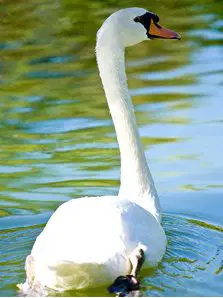
Some birds live in aquatic conditions and spend most of their time on the water. Which feature has helped these birds adapt to the conditions?
thick feathers
webbed feet
small wings
pointed beak
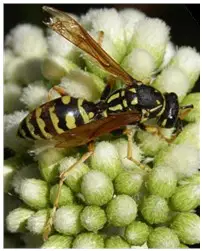
The below image is an example of a wasp, a kind of insect. Wasps have a sting that feels much like a bee's sting, but a wasp can sting many times in a row.
One type of wasp does not have a stinger, but it tricks other animals into thinking that it does by looking the same as a stinging wasp. When an animal defends itself from others by pretending to be something more dangerous, it is called
scaring
poisoning
mimicry
camouflage
When an opossum sees a predator, it rolls over on its back as if it is dead. How might this behavior help the opossum survive in its environment?
The behavior attracts a predator's attention.
The behavior makes a predator unable to see the opossum.
The behavior fools the predator into thinking the opossum is not a fresh source of food.
The behavior helps the opossum guard sources of food for itself.
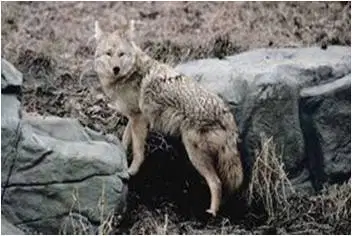
What physical feature helps a coyote to hide from its prey while it hunts?
the size of its ears
the color of its fur
the shape of its tail
the size of its teeth
Which of the following adaptations would be common to animals living in cold climates?
bright coloration
no fat
large ears
thick fur
Some animals, such as the walking stick shown in the picture below, have physical features that help them blend into their environments.
This adaptation makes survival easier for these creatures because
it provides them with food.
it keeps predators from finding them as easily.
it harms predators.
it allows the predators to find them more easily.
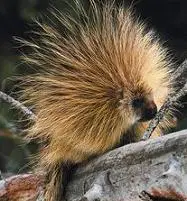
Porcupines are covered in sharp spines known as quills.
The quills of a porcupine most likely help it survive by
protecting the porcupine from predators.
keeping the porcupine dry in the rain
helping the porcupine find food.
helping the porcupine find shelter.

Unlike most animals, turtles move very slowly, making it hard for them to escape from predators.
What structure do turtles have that provides protection against predators?
a hard shell
sharp teeth
poisonous venom
sharp claws
Which feature of a lizard helps it to catch its food?
lizards have scaly skin
lizards have long, darting tongues
lizards are cold-blooded
lizards have tails that can regrow
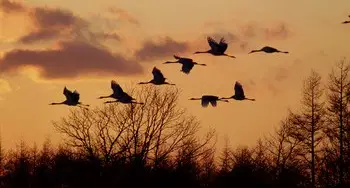
Many kinds of birds in the Northern Hemisphere fly south in the winter. They return to the north in the spring.Why do birds migrate like this?
to find mates
to avoid the cold winter
to build up strength
to avoid predators

