
 Worksheets
Unit K: Weathering & Erosion
Total questions: 14
Worksheet time: 17mins
Erosion and weathering are different processes that involve some of the same agents, such as wind, water, and ice. How is erosion different from weathering?
Erosion is slower than weathering.
Erosion is faster than weathering.
Erosion breaks rocks and weathering moves rocks.
Erosion moves rocks, and weathering breaks rocks.
Earth has a great variety of surface features that are caused by weathering and erosion. Which of the following describes a change due to weathering?
tree roots breaking rocks into smaller pieces of rock
ocean waves washing sand off the beach
rivers carrying soil and rocks through valleys
wind blowing sand and pebbles off of a sand dune
Landslides occur when large sections of the ground from the side of a mountain slide down to the bottom of the mountain, which can be dangerous for anyone in its path. Landslides are an example of what?
weathering caused by moving water
weathering caused by plants
erosion caused by wind
erosion caused by gravity
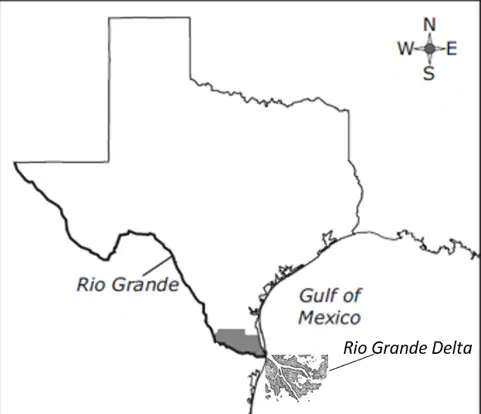
The Rio Grande delta is located at the southern tip of Texas at the end of a long river known as the Rio Grande. A delta is a landform created when sediment piles up at the end of a river and creates new land. How did the delta at the end of the Rio Grande most likely form?
Volcanic eruptions built up new land over time.
Large rocks grew from the bottom of the Gulf of Mexico until they broke the surface.
The river deposited large amounts of sediment that is eroded as the river flows over the surface of the land.
As water evaporates into the atmosphere, there is less water in the Gulf of Mexico. This caused new land to appear where there was once water.
Antonio noticed that the rocks on the bottom of a pond were sharp and jagged. He saw that the rocks on the bottom of a nearby river were smooth and round. What is most likely the reason for this difference?
The river froze during the winter.
Rushing water weathered the rocks in the river.
A glacier picked up the rocks and moved them into the river.
Winds blew sand, which caused abrasion of the rocks in the river.
Dunes are large piles of sand that shift slowly around in deserts and on beaches. What most likely causes the dunes to move from place to place?
rushing rivers
blowing winds
freezing water
weathering rock
Florida is a coastal state that experiences powerful, destructive storms called
hurricanes. During a hurricane, beaches are changed by erosion. Which statement below best describes what occurs on Florida beaches during a hurricane?
The freezing and thawing temperatures break rocks on the beach into smaller pieces.
Gravity pulls apart larger boulders on the beach into fragments.
Sand is carried away from the beach by strong waves and wind.
Plants' roots grow through and move sediments on the beach.
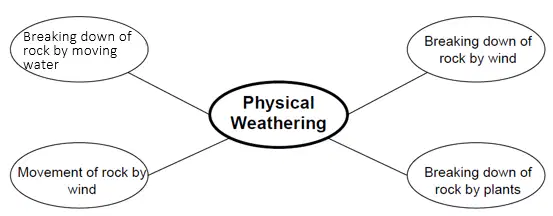
Sonya is studying for her science test. She has created a concept map to describe examples of physical weathering.
Movement of rock by wind
Breaking down of rock by wind
Breaking down of rock by plants
Breaking down of rock by moving water
A valley is the low area of land between two mountains. There are two main types of valleys, V-shaped and U-shaped. Both types are formed by weathering and erosion over many years. Rivers cause V-shaped valleys, while U-shaped valleys are caused by something else. What other source of weathering and erosion could have carved a valley between a mountain?
The eruption of a volcano
The movement of a glacier
An earthquake
Ocean waves
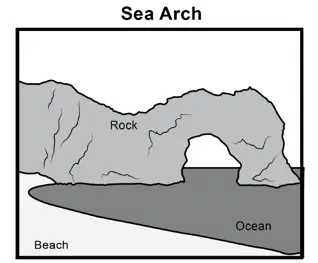
The Gutierrez family saw a sea arch at the beach while on vacation. How did physical weathering most likely create this landform?
the wind broke down a large boulder over a long period of time
waves from the ocean crashed into the landform
a tree growing in the rock broke it into smaller pieces over time
ice moved a large chunk of the landform

Shanika lives in Grand Rapids, Michigan, where the temperatures fall below freezing during the fall and winter. She has started to notice the cracks in the sidewalk near her house getting bigger year after year. What is most likely the cause of the change in the sidewalk near Shanika's house?
The force of the rain pushing down on the sidewalk made the cracks bigger.
In the summer, when temperatures were warm, the heat caused the cracks to get bigger.
The wind from passing cars pushed on the sidewalk causing the cracks to get bigger.
When the water in the cracks froze, it expanded and made the cracks bigger.
Which answer below is an example of a question that scientists could answer through investigations, experiments, or observations?
Is erosion good or bad?
How does the speed of moving water affect how much sediment is eroded?
Which cause of weathering creates nicer-looking land formations, wind or water?
What is more important, erosion or weathering?
Students in Mr. Walker's class conducted an investigation where the teacher set up three tilted trays filled with sediment. Each tray had a hole in the bottom and was filled with different size sediment ranging from the smallest sediment of sand and the largest sediment of big rocks. Mr. Walker then poured water on the top of each tray. Based on this information, which question are students MOST LIKELY trying to answer?
Which type of sediment is easiest to clean with water?
Which type of sediment is the most common on Earth?
How does the size of sediment affect erosion?
How does the size of sediment affect its ability to absorb heat?

Mr. Walker's class used a bucket placed under each tray and collected the sediment that fell out of the hole in each tray. They then drained any water in the buckets and found the mass of the sediment that fell out. Based on the data, what conclusion can students form?
More sand drained from the tray than any other sediment.
More gravel drained from the tray than any other sediment.
More large rocks drained from the tray than any other sediment.
An equal amount of each type of sediment drained from each tray.

