
 Worksheets
EOY Exam Review
Total questions: 30
Worksheet time: 15mins

How did Alexander the Great's conquest impact the world?
Hellenistic culture was introduced to the civilizations outside of Greece
He spread democracy throughout the world.
He forced conquered territories to speak Greek.
He spread Egyptian culture throughout the Persian empire.

How were early paleolithic humans influenced by migration?
Migration kept humans from finding shelter.
Migration prevented people from hunting and gathering.
Migration forced people to stay in one place.
Migration was used by early cultures to follow animals as a source of food.

• Trade routes linking West Africa and North Africa required the shipment of goods across the hot, dry Sahara Desert. It was difficult for the traders to carry these goods along these trade routes.
• Domesticated camels were brought to the Sahara. The camels could go for long stretches without drinking, survive extreme temperatures, and haul heavy loads.
How did the camels affect the transport of goods across the Sahara Desert?
Traders were able to use camels to stop trans-Saharan shipments of goods.
Traders were able to drink the milk from camels during their journey.
Camels made travel across the desert more reliable and safer.
Camels slowed transport by requiring frequent drinks of water.

In 711 CE, the Moors invaded Spain and established Islamic rule. During this period, philosophy, mathematics, and science flourished in the nation. For instance, Ibn Zuhr, a physician and surgeon, tested medical procedures on animals before using them on humans. His work was translated into Latin and Hebrew and had a significant impact on the medical field. Spain remained closely connected to Baghdad for 200 years before becoming independent. Spain was one of the wealthiest areas of Europe during the period of Moorish rule.
Based on the passage, how did the Moorish invasion of Spain affect civilization in the region?
It forbade the advancement of philosophy and emphasized religion.
It led to the development of new scientific and mathematical techniques.
It created an isolated area of economic development and trade.
It transformed Spain into a society primarily concerned with military power.

What physical feature influenced Egypt, Babylonia, and Harappa?
Mountains
Deserts
RIvers
Tundras

What is the difference between the Paleolithic and Neolithic era?
The invention of fire
Democratic leadership
The development of agriculture
The spread of monotheistic religion.
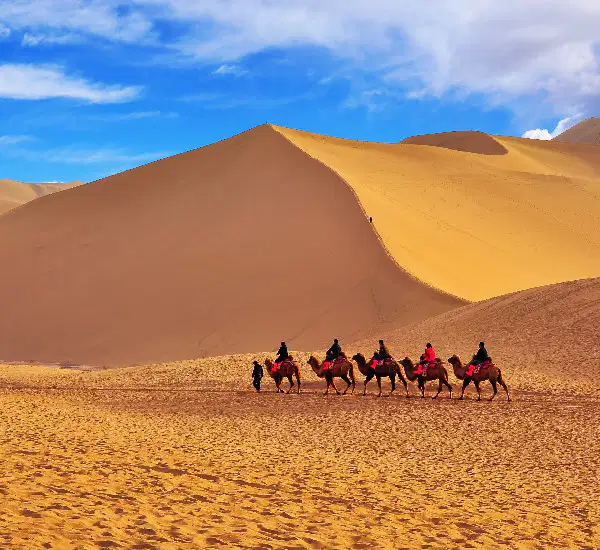
How was the silk road like the trans-saharan gold and salt trade?
They both traded mostly silk and spices.
Ideas spread as merchants traveled from place to place
Both roads were paved out of concrete.
Both roads used the same uniform currency.

How did the movement of people and goods affect Europe in the 1300s?
Sailors spread the Bubonic Plague as they returned from Asia.
Conquistadors brought the Bubonic Plague to Europe from South America.
Sailors brought the plague when they returned from the Americas.
Conquistadors brought the Bubonic Plague to China on the silk road.

How were the Samurai of Japan like the Knights of Europe
They both owed military service to the class above them in return for land
They both were poor and at the bottom of society
They were both military dictators with more power than the King
They were at the top pf the Social pyramid and had total control

The Magna Carta was an influence on the U.S. Constitution as they both...
limited the power of the ruler
set religious guidelines
made taxes illegal
created a democracy

What system of government was created when Sundiata took the title “Mansa”?
Monarchy
Theocracy
Oligarchy
Democracy

What was the impact of Roman trade?
Roman goods and influence were only in Europe and Africa.
Roman goods and influence were only spread through sea trade.
Roman trade was very limited in scope.
Roman goods and influence were spread throughout Africa, Europe and Asia.

How were Mayan kings like Egyptian Pharaohs?
Both rulers were thought to be gods.
Both were elected by the people.
Both received their power from their mother's family.
Both had to share power with the Senate.

How did Isam change Arabic culture?
As Islam spread more people became Muslims or Jews.
As Islam spread it became polytheistic.
As Islam spread more people became united through language and religion
Arabs restricted science and philosophy as Islam spread to their area.

"From that time on all went ill with the kingdom and the state was undone. Thieves and robbers rose up everywhere in the land. The nobles despised and hated all others and took no thought for the mutual usefulness and profit of lord and men. They subjected and despoiled the peasantry and the men of the villages. In no way did they defend their country from its enemies. Rather they did trample it under foot, robbing and pillaging the peasants’ goods."
What happened as a result of the battle?
The peasants started to profit from their hard work.
The nobles began stealing from the peasants.
The peasants overthrew the nobles and took their money.
The nobles finally became wealthy.

In what way did Rome modify its geography to meet its needs?
Rome built a network of roads to encourage trade with the Americas.
Rome built a network of roads to discourage trade.
Rome built a network of roads so that they could travel across the empire.
Rome built a network of roads so that invaders had easy access to the capital.

"Alas! our ships enter the port, but a thousand sailors hardly ten are spared. We reach our homes, our kindred and our neighbours come from all parts to visit us. Woe to us for we cast at them the darts of death! Whilst we spoke to them, whilst they embraced us and kissed us, we scattered the poison from our lips. Going back to their homes, they in turn soon infected their whole families, who in three days succumbed, and were buried in one common grave. Priests and doctors visiting the sick returned from their duties ill, and soon were numbered with the dead." - Istoria de morbo sive mortalitate que fuit de 1348
Based on the passage and map, how did the movement of people and goods affect Europe in the 1300’s?
Sailors brought the plague to Europe from South America.
Sailors brought the plague back from trading with Asia.
Crusaders brought the plague back from Jerusalem.
The plague was brought from the salt and gold trade in Africa.

How did the Egyptian irrigation systems and the shadoofs impact egyptian life?
Irrigation systems controlled the amount of water going to the fields.
The systems were used to put water into the Nile.
They used canals through the fields to improve the shipping trade.
Irrigation systems increased the amount of sunlight the crops received.

How were the Inca and Chinese similar in the way that they modified their environment to meet their needs?
They both built Chinampas.
They both used slash and burn framing.
They both built large irrigation basins to collect rain water.
They both used terrace farming.

One effect of the neolithic revolution was...
people began living in larger communities.
people became nomadic.
people began hunting.
people began electing governments democratically.

How was Rome economically impacted by conquest
Rome was negatively impacted because the army cost a lot of money.
Rome benefitted because it taxed the conquered territories.
Rome was hurt because it had to pay reparations for conquering other nations.
Rome was neither benefited or hurt by conquering other nations.

“[Islam] spread across Central Asia and into China via the Silk Road, as well as to what is now Malaysia, Indonesia, and the southern Philippines via the Indian Ocean trade routes. Arab and Persian traders were very successful in expanding Islam, due in part to their trade practices. Muslim merchants and suppliers gave one another better prices than they did for non-believers. Perhaps most importantly, they had an early international banking and credit system so that a Muslim in Spain could issue a statement of credit, similar to a personal check that a Muslim in Indonesia would honor. The commercial advantages of conversion made it an easy choice for many Asian merchants.
”How was life impacted for those who converted to Islam in sub-Sahran Africa?
Muslims were negatively impacted because they were expected to sacrifice for their religion.
Muslims got better prices from Islamic traders.
Muslims were not impacted in terms of trade when dealing with Islamic traders.
Muslims preferred to deal with Christian traders because they offered the best deals.

How did the Aztecs improve their economy through conquest?
They set up colonies in the new world.
They stole gold from the Spanish
They forced the Incas into slavery.
They made tribes they conquered pay taxes.

In 1215, a group of nobles decided to force the king to respect their rights. They made King John approve a document called the Magna Carta. The Magna Carta gave rights to individuals and required everyone to follow the law, even the king. It inspired the English to find more ways to limit the king's power. A council of nobles was created to advise the king. In time, the council developed into Parliament, the highest law making body in the land. This began to move England away from an absolute monarchy and toward a constitutional monarchy.
According to the passage, what caused England to move away from an absolute monarchy and toward a constitutional monarchy?
The Magna Carta gave the king divine right.
The Magna Carta gave individuals rights and made the king follow the law
The Magna Carta made the king follow the rules of the serfs.
The Magna Carta removed the King from power.

Life in Athens
“Our constitution is called a democracy because power is in the hands not of a minority but of the whole people…. Here each individual is interested not only in his own affairs but in the affairs of the state as well…. We do not say that a man who takes no interest in politics is a man who minds his own business; we say that he has no business here at all.”
-Pericles, Athenian politician
What summarizes what Athens valued most in society
participation in government
military dominance
privacy and minding your own business
trade and commerce

Hammurabi’s Code
LAW 196. If a man put out the eye of a nobleman, his eye shall be put out. [An eye for an eye]
LAW 198. If he puts out the eye of a freed man, or breaks the bone of a freed man, he shall pay one gold mina.
LAW 199. If he puts out the eye of a man's slave, or breaks the bone of a man's slave, he shall pay one-half of its value.
What can you determine about social class in Mesopotamia from Hammurabi's Codes?
In Mesopotamia everyone was equal.
Laws in Babylon stated the all men were the same.
There was a clear social hierarchy in Babylon
Slaves had the most rights in Mesopotamia

Based on the map, which best describes how the physical features of Egypt affected its development?
The Mediterranean Sea bordered the major cities.
Large cities were created in the Western Desert.
Many large cities developed along the Nile River.
The Red Sea provided Lower Egypt with a barrier from attack.

How did the arrival of the Spanish affect the Inca civilization?
It improved relations between Incan and Aztec tribes.
It increased the planting season.
It promoted Incan trade with outsiders.
It brought an end to the Incan Empire.

"All who die on the way, whether by land or by sea, or in battle against the pagans, shall have immediate remission of sins. This I grant them through the power of God which I am given. Let those who for a long time have been robbers, now become knights. Let those who have been fighting against their brothers and relatives now fight in a proper way against the barbarians. Let those who have been serving as mercenaries for small pay now obtain the eternal reward.
According to the Pope, how were Christians who fought and died during the crusades impacted by their choice?
Pope Urban II personally thanked them.
Pope Urban II granted them forgiveness of sins.
They became knights when they returned to Europe.
They were able to go back to the land they rented out.
What was the Caste System?
also called pariahs, lowest level of the Indian society; not considered a part of the caste system; did degrading jobs
a lifelong social group/class into which a Hindu is born
one of the most sacred animals for the Hindus
Farming that provides only enough for the needs of a family or a village

