
 Worksheets
MMR/FLU/DENGUE
Total questions: 30
Worksheet time: 15mins
The nucleocapsid protein of paramyxoviridae participates in viral envelope formation.
true
false
Classic CPE in paramyxovirus infection
cell lysis
syncytia
INCLUSIONS
Mumps is characterized by the suppurative enlargement of one or both salivary glands.
true
false
It is difficult to control mumps transmission due to the presence of virus in saliva before clinical symptoms occur.
true
false
Most sensitive method of detecting paramyxoviruses
ELISA
CELL CULTURE
RT-PCR

identify the structure
Henderson-Patterson
Cowdry A
Warthin-Finkeldy
Term used to described the rashes observed during rubeola.
vesicular
macular
exanthem
maculopapular
It is a pathognomonic symptom for rubeola that is seen on the buccal mucosa
herpangina
hand foot & mouth disease
forchheimer spots
koplik spots
It is the only member of the genus rubivirus.
mumps virus
rubeola virus
rubella virus
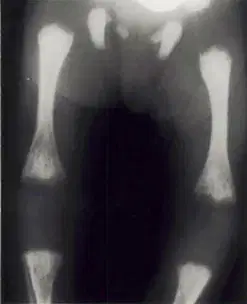
This condition belongs to which group of CRS symptoms :
GROUP A
GROUP B
GROUP C
It is the only influenza viral type known to cause flu pandemics
A
B
C
Hemagglutinin derives its name from its ability to agglutinate erythrocytes.
TRUE
FALSE
Cleavage of neuraminidase must occur so that the viral attachment is successful.
TRUE
FALSE
It is an abrupt type of change due to genetic reassortment with an unrelated strain.
ANTIGENIC SHIFT
ANTIGENIC DRIFT
Antigenically stable influenza serotype .
A
B
C
It is the surface antigen of influenza virus that facilitates release of virions from infected cell surfaces.
HEMAGLUTININ
NEURAMINIDASE
FUSION PROTEIN
Existing vaccines are continually being rendered obsolete as the viruses undergo antigenic drift and shift.
TRUE
FALSE
Antivirals can be used to treat flu?
true
false
Severity of flu illness and severity of flu season are the same and do not vary.
true
false
Changes in hemagglutinin and neuraminidase of the flu virus occur _________.
dependently
independently
interdependently
The chikungunya virus belongs to which group of viruses?
Arbovirus
Togavirus
Flavivirus
paramyxovirus
What role does Aedes aegypti and Aedes albopictus play in the replication of CHIKV?
major host
principal vectors
intermediate host
Alphaviruses have 3 or 4 major structural polypeptides, two of which are glycosylated.
true
false
CHIKV directly triggers the activation of an innate immune response.
true
false
The most specific serologic assays for CHIKV detect virus-specific _______ .
IgM
IgG
cytopathic effect
Mother to child transmission of dengue is impossible .
true
false
DENV viremia occurs within :
3-14 days
24 hours
5-7 days
immediately after mosquito bite
The rise and fall of body temperature during DENV infection is described as:
wave-like
crescendo
saddleback
A single alphavirus or flavivirus infection by one member of the group, antibodies to other members may also appear.
true
false
Flaviviruses are spherical, _______ in diameter with a positive-sense, single-stranded RNA, 11 kb in size.
140–160 nm
60- 140 nm
40-60 nm

