
 Worksheets
Nature Of Matter
Total questions: 66
Worksheet time: 1hrs 17mins
The particles of gases are free to move.
True
False
In this state of matter, particles are tightly packed and cannot move.
gas
solid
liquid
Which statement about liquids is correct?
They have a fixed shape and a fixed volume.
They have a fixed shape but not a fixed volume.
They have no fixed shape but they do have a fixed volume.
They have no fixed shape and no fixed volume.
The particles of solids ________________
vibrate about their fixed postions
are able to slide over each other
move about freely at high speeds and in random direction
do not move
The particles of liquids ________________
vibrate about their fixed postions
are able to slide over each other
move about freely at high speeds and in random direction
do not move
The particles of gases ________________
vibrate about their fixed postions
are able to slide over each other
move about freely at high speeds and in random direction
do not move
These particles are held together by very strong forces of attraction
Solid
Liquid
Gas
Plasma
What happens to particles of liquid when they are heated?
They slide over one another faster and move further apart
They slow down and compress
They stop moving
They slide over one another slower and move closer together

The diagram represent the arrangement of particles in ____________.
gas
liquid
solid

The diagram represent the arrangement of particles in ____________.
gas
liquid
solid
Why does solid has a fixed shape?
The particles are held by very strong forces of attraction. They can only vibrate about their fixed position. Hence, they have an orderly arrangement.
The particles are held by weak forces of attraction. They can move rapidly in all directions. Hence, they have an disorderly arrangement.
The particles are held by strong forces of attraction. They can slide over one another. Hence, they have an disorderly arrangement.
Matter has
mass
volume
atoms
all of the above
A ____ is the smallest particle of an element.
molecule
compound
atom
element
Examples of elements are (chose all that apply)
hydrogen (H)
sodium chloride (NaCl)
carbon (C)
water (H2O)
An element is a _______________
pure substance
mixture
comound
variety of atoms
Anything that takes of space and has mass.
matter
atoms
elements
compounds
These are 2 or more substances that are not chemically bonded together.
mixtures
compounds
elements
molecules
This is a chart that arranges all the known elements in order of increasing atomic number.
venn diagram
line graph
periodic table
circle graph
1. Melting crayons is an example of _____________.
physical change
physical property
chemical change
chemical property
While outside playing ball, Naisir slid on the ground and ripped a hole in his pants. Choose the statement that correctly identifies the type of change that occurred and the supporting evidence.
A chemical change happened because a new substance was created.
A chemical change happened because there was a permanent change to his pants.
A physical change happened because there is not a new substance being formed.
A physical change happened because he physically slid on the ground to cause the rip.
1. Which substance can be identified as a homogeneous mixture?
peanut butter sandwich
chocolate chip cookie
pepperoni pizza
chocolate milk
When a solid melts, what happens to the speed and arrangement of the molecules?
The particles speed up and are close together
The particles speed up and spread out
The particles slow down and are close together
The particles slow down and spread out
Which of the following examples represents a physical change?


Which of the following is evidence of a physical change?
new substance
shape change
light produced
gas released
A teacher is demonstrating physical and chemical changes to her class. Which action should they use to demonstrate a chemical change?
Cutting a piece of paper with scissors.
Folding a piece of paper into an airplane.
Ripping a piece of paper with their hands.
Burning a piece of paper with a match.
A physical change is
a change where the characteristics do not change the substance
a change where the characteristics do change the substance
a change where the chemistry changes
What is the definition of chemical change?
any change that results in the formation of one (or more) new chemical substance(s)
changing of only the appearance of the object
matter cannot be created or destroyed, only change form
changes affecting the form of a chemical substance, but not its chemical composition
Which example best illustrates a physical change?
iron rusting
charcoal burning
an ice cube melting
a marshmallow burning
A glass bottle that is shattered is a
Chemical Change
Physical Change
Baking soda and vinegar combining to make carbon dioxide is a
Chemical Change
Physical Change
Which of the following are examples of chemical changes? Select all that apply!
Iron Rusting
Gas Burning
Breaking a Glass
Boiling Water
Burning Wood
Sugar dissolving in water is a
Chemical Change
Physical Change

Identify the change shown in the picture.
Irreversible physical change
Irreversible chemical change
reversible physical change
reversible chemical change
Which one describes a physical change?
A change where the chemical makeup of an object changes.
A change where the characteristics do not change the substance.
A change where the substance turns into something new.
The composition of the object changes.
Which of the following is NOT an indicator of chemical changes?
Unexpected color change
Dissolving
Light production
Gas formation
To change from one state of matter to another state of matter is called?
phase change
potential change
kinetic change
thermal change
What is a mixture?
substances that are not chemically bonded and can be separated
substances that are chemically bonded and can be separated
substances that are not chemically bonded and can not be separated
substances that are chemically bonded and can not be separated
What is a chemical change?
Forming a new substance
When two or more substances combine to make a greater one
When two or more substances combine to make a new chemical substance
Combing substances
Which is an example of a physical change?
Cooking
Buring Wood
Ripping paper
Digesting Food
Does a physical change the substance itself?
yes
no
Which of the following isn't a chemical change?
digesting food
boiling water
fireworks
baking bread
Is this a Chemical or a Physical change?
Fireworks
Chemical
Physical
Both
Neither
Lucky Charms
Heterogeneous
Homogeneous
Freshly brewed black coffee
Heterogeneous
Homogeneous
Dirt
Heterogeneous
Homogeneous
M&Ms
Heterogeneous
Homogeneous


Homogeneous
Heterogeneous
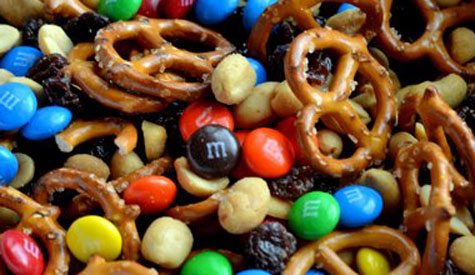
homogeneous mixture
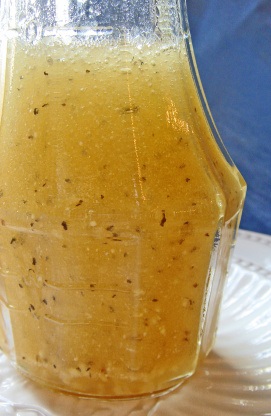

homogeneous mixture

Which of the following refers to the substance that is being dissolved in a solution?
solvent
solute
mixture

This is an example of a
Solution
Mixture

Which of the following will allow for more solute than normal to be dissolved in a solvent?
freezing the solution
shaking the solute
cooling the solution
heating the solution

