
 Worksheets
AP World Unit 5 Overview
Total questions: 156
Worksheet time: 2hrs 45mins
Which movement in the 1700s promoted reason, liberty, and self determination?
The Scientific Revolution
The Renaissance
The Enlightenment
The American Revolution
The Enlightenment created and advanced movements like
Feminism
Socialism
Nationalism
Abolitionism
Which philosopher believed people were born with unalienable rights and that the government should protect them?
Thomas Hobbes
John Locke
Robert Owen
Voltaire
What is the name of the movement that promotes the interests of a particular nation due to intense pride?
A revolution
Protestantism
Enlightenment
Nationalism
Which nations unified in the 1750s to 1900s due to nationalistic movements?
Italy
America
Germany
France
Which of the following revolutions were based on discontent with imperial and monarchist rule?
The American Revolution
The French Revolution
The Haitian Revolution
Ottomanism
Bolivar's "Letters from Jamaica" focused on gaining rights in Latin America for:
All landowning men
Creoles
Slaves
Which nation was the first to industrialize?
Britain
France
Germany
Japan
All of the following helped countries to industrialize except:
Access to waterways
Natural resources like coal
Access to foreign resources and markets
Being colonies of other nations
What effect did specialization of labor have on the workplace?
It led to more unskilled labor in factories
It led to more skilled labor in factories
How did industrialization affect colonies like India and Egypt?
It led to decline in these countries' share of global manufacturing
It led to increase in these countries' share of global manufacturing
The 1st Industrial Revolution focused on factories and steam power. The 2nd Industrial Revolution focused on all of the following except:
Oil
Electricity
The steam engine
Steel
After Britain industrialized, all of these nations followed suit, except:
Japan
America
Russia
India
Which of the following nations promoted their own industrialization in response to western industrialization?
Japan
China
The Ottoman Empire
Italy
As countries embraced Adam Smith's capitalism laissez faire policies, what new forms of business were promoted?
corporations
monopolies
socialism
transnational businesses
All of the following were reactions to industrialization's negative effects on workers except:
Labor unions
Communism
The invisible hand
Utilitarianism
Accurate effects of industrialization on society include
Poor working and living conditions for the lower class
Increased standard of living for middle and upper classes
Lower class families working closer together in their homes
More accessible and cheaper goods

Adam Smith in The Wealth of Nations describes
Utopian Communist communities
Democratic Republicanism
Laissez Faire Economics
Mercantilism as an ideal economic system
Toussant L'Ouverture
was a member of the Committee of Public Safety under Robespierre
rose to the rank of General under Napoleon
was a complete revolutionary failure
helped free slaves in Haiti

Bolivar envisioned
a Grand Columbia united all the liberate South American states
a united Portugal and Spain
a Spanish takeover of Portuguese Brazil
a loosely knit confederation of South American States
Mexico was liberated from
the United States
the Spanish
the Portuguese
the Spanish and later (after a brief take over) the French
The following is associated with the view of the Philosophes
man is created good
there should be no capital punishment
freedom of speech but not the press
all of the above
Industrialism leads to
rapid rural population expansion
an increase of power in landed investors
a shift in the measure of wealth
an demand for skilled craftsmen
Mary Wollstonecraft is associated with
the Industrial Revolution
the Enlightenment
the French Revolution
none of these
Italian unification had as its architect
Bismarck coupled with opportunity
Louis Napoleon Bonaparte
Giuseppe Mazzini
Count Cavour together with the support of Garibaldi

Who best represents a reasoned defense of monarchy
John Locke
Jean Jacques Rousseau
Thomas Hobbes
Rene Descartes
Jean Jacques Dessalines is best know for
his driving French forces from Haiti
his leadership in Latin America
creating the first commercial steam engine
as a Philosophe
Luddites
agitated for better wages for factory workers
were Utopian Socialist
adapted Marxism
hated machines

Commander Perry is connected to
the opening of Japan for trade
the attack on China during the Opium wars
Russia's rapid growth as a power
the defeat of the Napoleon

Russia's industrial process can best be described as
evolving organically by Russian middle class investors
directed by outside colonial powers
rapid because of the maintenance of serfdom
directed by the state through ministers like Sergei Witte
Socialism believes
that the means of production should be communally owned
that the move to a communal society is inevitable
that land should be the measure of wealth
that poverty will always exit
Classical Liberals believe
all of these
that the economy is a natural process
that population will always grow faster than food supply
that poverty will always exit in some form
A 19th century Conservative believes in
money as a measure of wealth
that there should me no attempt to help the poor
the status quo
in an eventual social revolution of the proletariat
Most 19th century liberals were likely
middle class
working class
upper class
peasants

Which of the following revolutions was impacted by Napoleon Bonaparte
French
Haitian
Latin American
All of these
Which movement in the 1700s promoted reason, liberty, and self determination?
The Scientific Revolution
The Renaissance
The Enlightenment
The American Revolution
Which philosopher believed people were born with unalienable rights and that the government should protect them?
Thomas Hobbes
John Locke
Robert Owen
Voltaire
What is the name of the movement that promotes the interests of a particular nation due to intense pride?
A revolution
Protestantism
Enlightenment
Nationalism
Which nations unified in the 1750s to 1900s due to nationalistic movements?
Italy
America
Germany
France
Bolivar's "Letters from Jamaica" focused on gaining rights in Latin America for:
All landowning men
Creoles
Slaves
Which nation was the first to industrialize?
Britain
France
Germany
Japan
After Britain industrialized, all of these nations followed suit, except:
Japan
America
Russia
India
All of the following were reactions to industrialization's negative effects on workers except:
Labor unions
Communism
The invisible hand
Utilitarianism
This philosopher wrote in The Two Treatises of Government that everyone has the right to life, liberty, and property.
Thomas Hobbes
Mary Wollstonecraft
John Locke
Baron Montesquieu
Laissez-faire means
more government involvement in business
government should stay out of business
government should control all of the prices
government should control workers salaries
Rotating different crops in and out of a field each year is called
urbanization
crop rotation
interchangeable parts
enclosure movement
Which movement in the 1700s promoted reason, liberty, and self determination?
The Scientific Revolution
The Renaissance
The Enlightenment
The American Revolution
Which philosopher believed people were born with unalienable rights and that the government should protect them?
Thomas Hobbes
John Locke
Robert Owen
Voltaire
What is the name of the movement that promotes the interests of a particular nation due to intense pride?
A revolution
Protestantism
Enlightenment
Nationalism
Which TWO nations unified due to nationalistic movements?
Italy
America
Germany
France
Which nation was the first to industrialize?
Britain
France
Germany
Japan
All of the following helped countries to industrialize EXCEPT
Access to waterways
Natural resources like coal
Access to foreign resources and markets
Being colonies of other nations
Select ALL of the following that characterized the Second Industrial Revolution.
Oil
Electricity
Steam
Steel
After Britain industrialized, all of these nations followed suit EXCEPT
Japan
United States
Russia
India
Select ALL of the accurate social effects of the Industrial Revolution.
Poor working and living conditions for the lower class
Increased standard of living for middle and upper classes
Lower class families working closer together in their homes
More accessible and cheaper goods
All of the following were reactions to industrialization's negative effects on workers EXCEPT
Labor unions
Communism
The invisible hand
Utilitarianism
As countries embraced Adam Smith's capitalism laissez-faire policies, what new forms of business were promoted? Select ALL that apply.
corporations
monopolies
socialism
transnational businesses
Mexico was liberated from
the United States
the Spanish
the Portuguese
the Brazilians
Bolivar envisioned
a Grand Colombia, which united all the liberated South American states
a united Portugal and Spain
a Spanish takeover of Portuguese Brazil
a loosely knit confederation of South American States
Toussant L'Ouverture
was a member of the Committee of Public Safety under Robespierre
rose to the rank of General under Napoleon
was a complete revolutionary failure
helped free slaves in Haiti

Some of the machines invented in the 18th and 19th centuries are:
telephones, geographic positioning system, radios, airplanes
steam engine, railroads, flying shuttle, phonograph, steam ships, light bulb
sailboats, automobiles, wheel barrels, clocks, word processors
automatic washer, hair dryer, rockets, space shuttles

Select ALL of the following that are considered an impact of industrialization during the 18th and 19th centuries.
Increased competition between industrialized nations
Rise of global inequalities
Transformation of society.
Decolonization of Africa

Capitalism is
An economic system in which the means of production are privately owned and money is invested to make profits.
An economic system in which the means of production are owned by the public (government) and operate for the welfare of all.
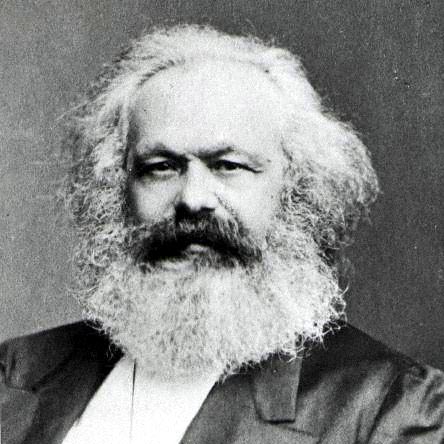
Which of the following scientific concepts had the greatest role in providing a justification for imperialism in the late 19th and early 20th centuries?
Louis Pasteur's germ theory of disease
Charles Darwin's theory of evolution
Albert Einstein's theory of relativity
Marie Curie's theory of radio activity
Which of the following was the most important cause of discontent among the French peasantry in the decades leading up to the French Revolution?
The failure of the government to encourage significant emigration to Canada
The efforts by many landowners to revive various kinds of taxes and feudal dues
The spread of Enlightenment critiques of organized religion
The drafting of large numbers of peasants to serve in the French army
The creation of large numbers of robe nobles by the French monarchy


Italian unification had as its architect
Bismarck coupled with opportunity
Louis Napoleon Bonaparte
Giuseppe Mazzini
Count Cavour together with the support of Garibaldi

Under the Tokugawa Japan was
a major trading nation
rapidly industrializing
bankrupt
isolated
Commander Perry is connected to
the opening of Japan for trade
the attack on China during the Opium wars
Russia's rapid growth as a power
the defeat of the Napoleon
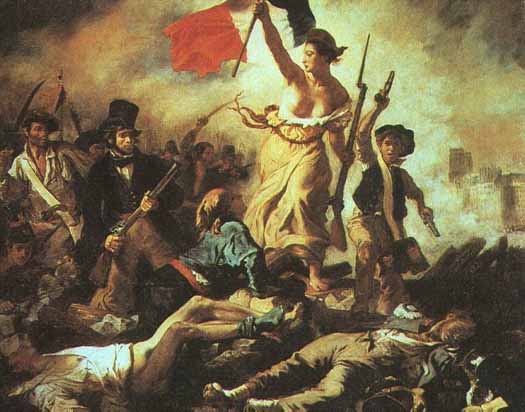
The Haitian Revolution was influenced mainly by which revolution?
French
American
Spanish American
Russian
Which of the following wars helped to inspire the French Revolution?
The American Civil War
The French and Indian War
American Revolution
The Seven Years War
Which document articulated the progressive demands of the National Assembly? ________________The National Assembly consulted with ________________ when writing it.
Declaration of the Rights of Man and the Citizen , Thomas Jefferson
Declaration of the Rights of Man and the Citizen , John Locke
Constitution of the French Republic , Thomas Jefferson
Constitution of the French Republic , John Locke


[p6] What important document did the National Assembly adopt on August 26, 1789?
Declaration of the Rights of Man and the Citizen
French Constitution
Declaration of Independence
Tennis Court Oath
Which of the following would best describe a "nationalist"?
A citizen who always votes
An employee of the federal government
A person who fights to establish an independent government for their nation
A person who wants to preserve a strong economy for their country
What did Equiano’s narrative help abolish?
the slave trade
slavery
cruelty from slave owners
none of the above
What year did the slave trade end in the British Territories
1787
1807
1833
1776
Which abolitionist gave a first hand account of his experience on the Middle Passage?
William Wilberforce
Granville Sharp
Olaudah Equiano
Thomas Clarkson


Elizabeth Cady Stanton wrote the Declaration of Sentiments which was presented at the First Women's Convention in Seneca Falls. Stanton changed the words in this document to say that
" all men are created equal"
"all men and women are created equal"
"all men and women can attend conventions from this day forward"
"all women have the right to vote"

Where was the first Women's Rights Convention held in 1848?
Dallas, Texas
Seneca Falls, New York
Philadelphia, Pennsylvania
Nashville, Tennessee
Elizabeth Cady Stanton wrote the ___ , which outlined the rights women should have as citizens.
Declaration of Independence
Seneca Falls Convention
Declaration of Sentiments
Underground Railroad
Father Jose Maria Morelos
took over leadership of the Mexican revolution when Hidalgo was executed
liberated Chile and Peru
lead the Italian revolutionaries
The Haitian Revolution was influenced mainly by which revolution?
French
American
Spanish American
Russian

"The aim of every political association is the preservation of the natural and imprescriptible rights of man. These rights are liberty, property, security and resistance to oppression."
-Declaration of the rights of Man and of the Citizen, 1789
Which philosopher best upholds the ideas expressed in the document above?
Montesquieu
Wollstonecraft
Locke
Hobbes
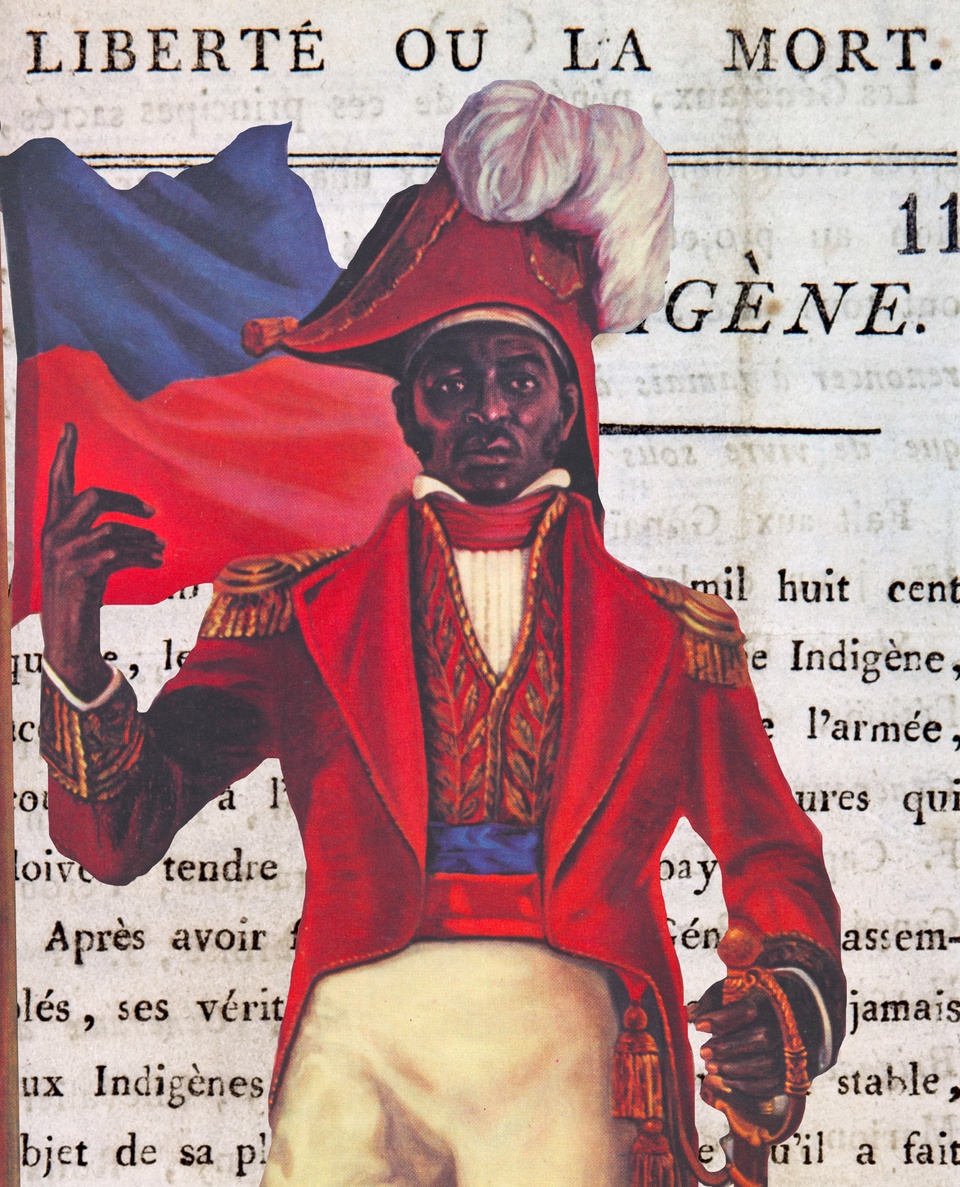
As a result of the Haitian Revolution, Haiti created the first ever
black monarchy
black dictatorship
black republic
black oligarchy
Locke argued that we had 3 main natural rights. What are they? (Select 3)
Life
Liberty
Pursuit of Happiness
Property
John Locke believed that all people had:
Natural Rights
Individual rights
Some rights
Man is born free and everywhere he is in chains.
Rousseau
Locke
Hobbes
Smith
"I may not agree with what you say, but will defend to the death your right to say it."
Voltaire
Montesquieu
John Locke
Rousseau
System of checks and balances should limit the governments power.
John Locke
Montesquieu
Rousseau
Voltaire
Power in the government should be divided so no one person or group gains too much power.
Voltaire
Montesquieu
Rousseau
John Locke

Who led the successful slave revolt on the island of Haiti in beginning in 1791 ending in 1804?
Toussaint L’Overture
Jose de San Martin
Father Miguel Hidalgo
Simon Bolivar
What was Simon Bolivar's nickname
The Colonizer
The Conquerer
The Liberator
The Freedom Fighter
writing which had the purpose of outlining Bolivar's philosophical and political ideals for Latin America
Jamaica Letter
Tanzimat Reforms
Franco Letter
Declaration of the Rights of Man and Citizen
Proclamation of 1763

Wollstonecraft's main goal in this passage is to
(A) Secure inheritance rights for surviving wives
(B) Secure female equality with males
(C) Allow men and women to marry based on love
(D) Encourage Britain to support the bourgeoisie in the French Revolution

Which of the following writers would least likely support the goals of Mary Wollstonecraft?
(A) A conservative
(B) A utopian socialist
(C) A classical liberal
(D) A Marxist

What part of the excerpt is connected most closely to the ideals of the Enlightenment?
(A) Its reference to equality in marriage
(B) Its mention of equitable laws
(C) Its appeal to reason
(D) Its rejection of tyrants

In which two revolutions was the growing power of the middle class a major cause of revolt?
(A) Creole and American
(B) French and American
(C) Haitian and French
(D) Haitian and Creole

Which revolution most directly addressed the unequal distribution of economic opportunity and resources?
(A) American
(B) Haitian
(C) French
(D) Creole

Which generalization applies to all the revolutions listed in the table?
(A) All resulted in newly independent countries
(B) All advocated racial equality
(C) All were reversed with the new generation of their completion
(D) All are inspired by Enlightenment ideals

Which of the following changes best explains one of the main causes of the trend shown in the chart?
(A) Increased use of cottage industries in Great Britain
(B) Increased migration from rural to urban areas in Great Britain
(C) Increased British demand for imports of coal
(D) Increased British demand for import from India and China

Which of the following changes explains one of the main effects of the trend shown in the chart?
(A) Increased supply of workers for factory jobs
(B) Increased protection for private property
(C) Decreased support for the British fleet
(D) Decreased reliance on the specialization of labor

Which was the most important part of the context in which the change shown in the chart was occurring?
(A) The Enlightenment was influencing how Europeans thought about religion and individual rights
(B) The idea of nationalism was spreading from country to country throughout Europe
(C) The rise of maritime empires changed the relationship between Europe and other regions of the world
(D) The shifts in political forces created both internal and external challenges to European governments

In the above passage, what policy is the Russian Minister of Finance urging?
(A) Maintaining current political and commercial relationships
(B) Supporting independent Russian industrial growth
(C) Relying on foreign industry for economic growth
(D) Using military strength to prevent foreign industrial domination

What shift in economic focus was enabled through the emancipation of the serfs?
(A) It created a labor pool not tied to agriculture
(B) It supported new methods of farming
(C) It encouraged population growth
(D) It established a new consumer base for manufactured goods

What was a critical strategy in the industrialization of Russia?
(A) building an infrastructure of canals
(B) controlling the settlement of Siberia
(C) expanding the national railroad network
(D) developing a free trade policy

Which statement provides the best context for interpreting this photo?
(A) Machines used in factories during the Industrial Revolution were similar to the ones used in cottage industries
(B) One effect of industrialization was that girls and boys worked side by side rather than in separate jobs
(C) As industrialization made production more efficient, employees had more control over their lives at work
(D) The Industrial Revolution transformed gender roles and family life by creating employment outside the home

Which reform movement emerged in response to the situation shown in the photo?
(A) measures to promote consumerism
(B) laws requiring students to attend school
(C) creation of anarchist and socialist
(D) support of measures to end employment

The photo can be best used as evidence for which of the following long-term effects of the Industrial Age
(A) Urbanization
(B) Pollution
(C) Labor reform
(D) Population increase

The main idea of this passage is that the government of Japan should
(A) persuade people in Japan to work more diligently.
(B) create a plan to encourage foreign investment in Japanese industry.
(C) avoid influencing private economic decisions
(D) encourage industrialization to enable Japan to compete economically.

Which possible government policy would most directly support the goal stated by the writer
(A) reforming the Japanese education system to increase training of workers and managers.
(B) improving the Japanese agricultural system to feed the foreign residents brought into Japan to work in the industrial factories.
(C) providing subsidies to the poor who would lose their traditional jobs as Japan industrialized.
(D) passing new laws that would reward people for working harder.

Which list of events related to the topic of the excerpt is in the correct chronological order?
(A) Perry's ships arrive in Tokyo Bay, the Meiji Restoration, the Shogunate collapses, Japan industrializes.
(B) Japan industrializes, the Meiji Restoration, the collapse of the Shogunate, Perry's ships arrive in Tokyo Bay.
(C) Perry's ships arrive in Tokyo bay, the Shogunate collapses, the Meiji Restoration, Japan industrializes.
(D) the Shogunate collapses, Perry's ships arrive in Tokyo Bay, the Meiji Restoration, Japan industrializes

Which individual would most likely have agreed with the views expressed by Rockefeller on business combinations?
(A) James Hargreaves
(B) James Watt
(C) Gugliemo Marconi
(D) Cecil Rhodes

Which statement summarizes an important difference between Rockefeller and Enlightenment thinkers
(A) The perspective that an action could be "forced upon us" by others
(B) The desire to end traditional practices that led to "wasteful conditions"
(C) The conclusion that an innovation could have impact "all over the world"
(D) The belief that "individualism is gone"

Which example provides support for the claims made by Rockefeller?
(A) The Krupp steel industry in Germany
(B) The decline of the Ottoman Empire
(C) The rise of cottage industries
(D) The support for the American Declaration of Independence

What segment of Chinese society seems to be the focus of this excerpt from the Reform Edict?
(A) the military
(D) the emperor
(C) civil servants
(D) peasants

Which concept best reflects the ideas advocated in the Reform Edict?
(A) the concept of concessions
(B) the principle of extraterritoriality
(C) the Open Door Policy
(D) the Self-strengthening movement

How did the Boxer Rebellion lead to the Reform Edict?
(A) The failure of the boxer rebellion persuaded many members of the Chinese government to support more extensive reforms.
(B) The Boxers were the "inept and mediocre officials" that the edict was trying to remove.
(C) The success of the Boxer Rebellion against the Qing opened the way for more significant reforms to be enacted.
(D) The boxers shifted their efforts from trying to drive foreigners out of China to serving as efficient government officials.

Which statement provides the best context for understanding the passage?
(A) Germany lagged behind Britain in enacting reforming reforms to improve the lives of industrial workers and the unemployed.
(B) The problems of urban industrial workers and the unemployed were much worse in Germany than in Britain.
(C) The United States led the way in enacting reforms to improve the lives of industrial workers and the unemployed.
(D) Industrialization caused greater economic insecurity in the lives of many urban workers.

Bismarck made the proposal in the passage because he believed that
(A) the end of capitalism would created an era of equality and justice for the industrial workers.
(B) if the government did not address worker problems associated with industrialization, socialists and other radicals might incite a revolt.
(C) he had to appeal to socialist and other radicals in order to get them to join his government and provide their input.
(D) the government needed to step in to reverse the environmental effects created by industrialization and urbanization.
Which reform was instituted by another government in response to the problems of industrialization?
(A) Britain expanded voting by reducing property-owning qualifications.
(B) The U.S. government encouraged the growth of labor unions.
(C) Russia adopted a form of utopian socialism.
(D) The United States allowed a women's rights movement to emerge.

