
Font size
 Worksheets
Dynamic Crust Regents Review
Total questions: 31
Worksheet time: 21mins
Compared to the oceanic crust, the continental crust is
less dense and more basaltic
less dense and more felsic
more dense and more granitic
more dense and more mafic
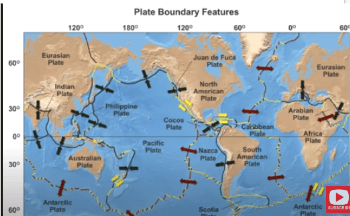
Which landmass is moving northward with Australia as part of the same tectonic plate?
India
Antarctica
North America
South America
Earth's internal heat is the primary source of energy that
warms the lower troposphere
melts glacial ice at lower altitudes
moves the lithospheric (crustal) plates
pollutes deep ground water with radioactivity
The arrival time of the first earthquake P-wave at a seismograph station was 10:11:20
(hours:minutes:seconds). If the epicenter of the earthquake is 8000 km away, what was the
approximate arrival time of the first S-wave from this earthquake?
10:02:00
10:09:20
10:20:40
10:32:00

At station A, the first P-wave arrives 11 minutes 40 seconds after the earthquake. How long after
the first P-wave arrives will the first S-wave arrive?
5 mins 00 sec
8 mins 40 sec
9 mins 40 secs
21 mins 20 secs
The Aleutian Islands extend westward from southern Alaska to form the northern boundary of the
Pacific Ocean. These volcanic islands were formed by the nearby
subduction of a continental plate
subduction of an oceanic plate
divergence of a continental plate
divergence of an oceanic plate
When the seafloor moves as a result of an underwater earthquake and a large tsunami develops,
what will most likely occur?
Deep-ocean sediments will be transported over great distances.
No destruction will occur near the origin of the earthquake.
The direction of the tsunami will be determined by the magnitude of the earthquake.
Severe destruction will occur in coastal areas.
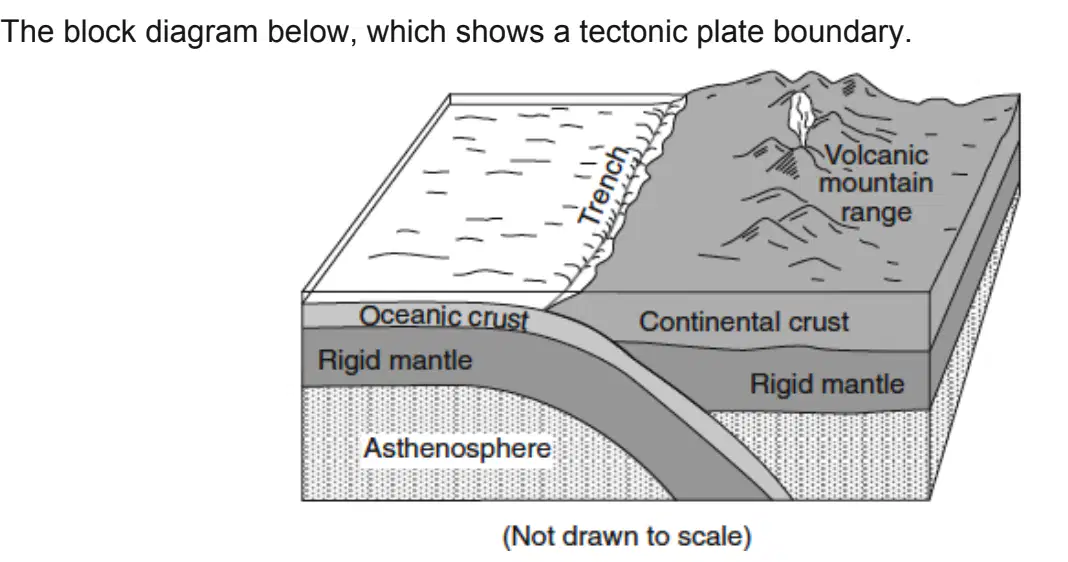
Which tectonic plate boundary is best represented by this diagram?
Nazca Plate and Pacific Plate boundary
Scotia Plate and South American Plate boundary
Juan de Fuca Plate and North American Plate boundary
Antarctic Plate and Indian-Australian Plate boundary

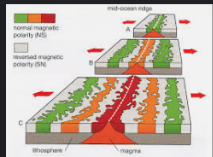
Which type of tectonic plate boundary is located at mid-ocean ridges?
Convergent
transform
divergent
complex

Which mantle hot spot is located closest to a mid-ocean ridge?
Canary Islands
Easter Island
Hawaii
Tasman

At which location is the temperature of the ocean floor bedrock most likely highest?
a
b
c
d

Which graph best represents the geologic age of the surface bedrock on the ocean bottom?


The Explorer Ridge is the boundary between the Explorer Plate and the
North American Plate
Pacific Plate
Juan de Fuca Plate
Gorda Plate
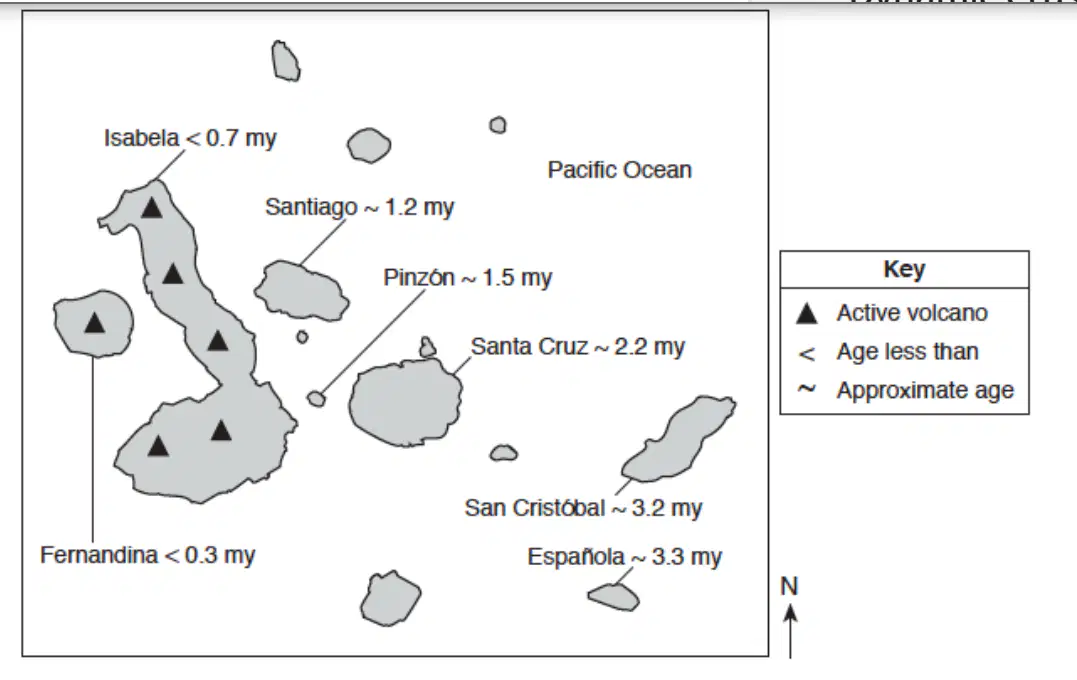
The Galapagos Hot Spot is located closest to what type of tectonic plate boundary?
Which statement most accurately compares Earth’s crust and Earth’s mantle?
The crust is thinner and less dense than the mantle.
The crust is thinner and more dense than the mantle.
The crust is thicker and less dense than the mantle.
The crust is thicker and more dense than the mantle.

The distance from each station to an earthquake’s epicenter is plotted. The epicenter is closest to point
D
E
F
G
What is the driving force behind the movement of the plates?
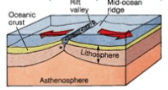
divergent
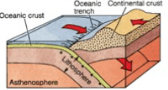
convergent
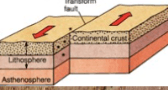
transform
At which plate boundary is new crust formed?
divergent
convergent
continental
transform
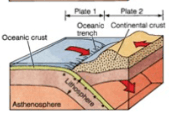
What is the WHOLE AREA called where the oceanic crust goes beneath the continental crust?
subtraction zone
section zone
secondary zone
subduction zone

What factor(s) change a mountain's shape from jagged and high to round and lower over long periods of time?
deposition
weather and erosion
movement of continents
collisions between continental plantes
When matter gains energy (gets hotter), how does that affect the density?
The matter becomes less dense.
The matter becomes more dense.
Density isn't affected.

This principle states that younger rocks lie above older rocks if the layers have not been disturbed.
Index Fossils
Compaction & Cementation
The Law of Superposition
The Law of Crosscutting Relationship

The process that wears down rock into smaller pieces is...
erosion
deposition
weathering
compaction
Which cross-section best represents the valley shape where a rapidly flowing stream is cutting into the bedrock in a mountainous area?


Which agent of erosion most likely produced this valley’s shape?
blowing wind
ocean waves
moving ice
running water

The diagram shows a process called frost wedging. Frost wedging is an example of
weathering
cementing
metamorphism
deposition
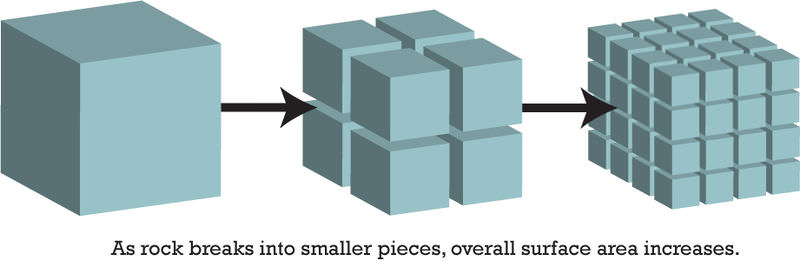
Which block will weather the fastest?
The left block
The middle block
The right block
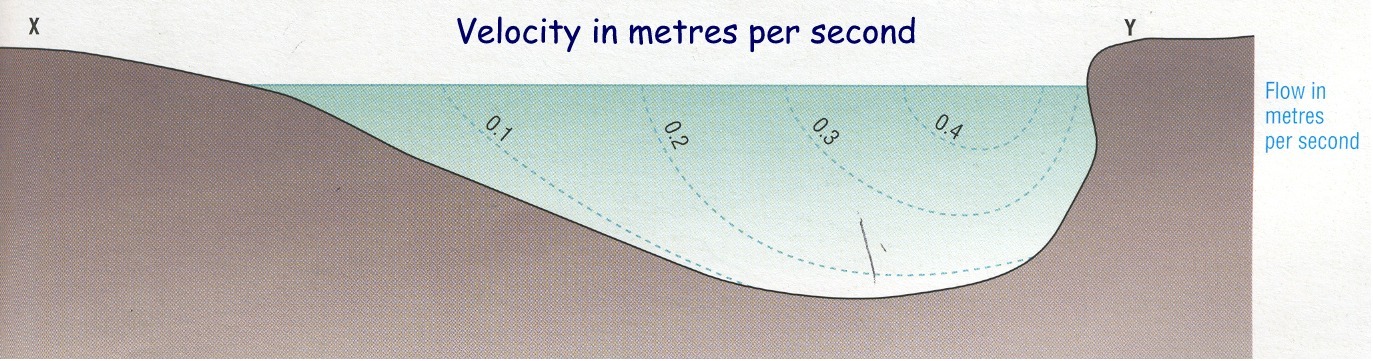
Which side of a meander has the greatest amount of erosion?
Inside
Outside
Upside
Downside


