
NEW
Font size
 Worksheets
Science Quiz Comptetion
Total questions: 20
Worksheet time: 20mins
Which adaptations in camels do not protect them from their sandy habitat?
A double row of long eyelashes
Bushy eyebrows
A long neck
Nostrils which can close

The picture shows a flounder. The flounder will lay on the sea floor to blend in and hide from predators. This is a good example of:
Mimicry
Hiding
Camouflaging
Blending
Plants in the mountains have waxy coated needle-like shaped leaves to
Prevent plant from insects
Reduce water loss
Prevent damage from snow.
All of the above
Some animals begin as an egg and then undergo changes in their life cycle, such as in appearance, color, shape, or growth of new structures. This is called _____________________.
Metamorphosis
Adaptation
Birth
Camouflage
Which of the following statements best describes the composition of air?
air is only made up of nitrogen
air is only made up of oxygen
air is only made up of carbon dioxide
air is made up of a mixture of different gasses
If animals cannot adapt to changes in their environment, what is likely to happen?
Extinction
Locomotion
Metamorphosis
Hibernation
In which characteristic does Earth differ from the other planets?
It has liquid water.
It has liquid water
It is dense and small
It is made up of rocky material
It is surrounded by atmosphere
Which of these is a dwarf planet?
Sputnik
Pluto
Kepler-22B
Sirius A
A girl found the skull of an animal. She did not know what the animal was, but she was sure that it preyed on other animals for its food. Which clue led to her conclusion?
The eye sockets faced sideways
Four of the teeth were long and pointed
The skull was much longer than it was wide
There was a projecting ridge on the front of the skull
What is the name of the Rover built by UAE for landing on moon?
The UAE Rover
The Al Maktoum
The Rashid Rover
None of the above
This organism draws its nutrients from dead organisms as it releases enzymes to cause the organisms to break down and break apart. Is it a...
Producer
Consumer
Decomposer
Predator
________________ are tissues that transport sugars to all parts of the plant.
Stem
Root
Phloem
Stomata
Water and _______________ combine in the presence of light energy to produce sugar and oxygen for the plant.
Soil
Stomata
Plasma
Carbon dioxide
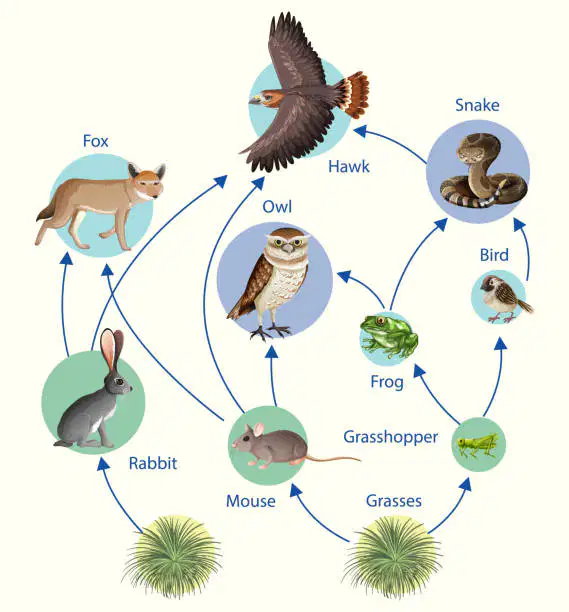
Which of the following would be the most likely effect, if there were a sudden increase in the grasshopper population?
There would be a decrease in the small bird population.
There would be a decrease in the mice population.
There would be a decrease in the grass/flowers population.
There would be an increase in the grass/flowers population.
To which kingdom do mushrooms and molds belong?
Plant
Animal
Fungi
Parasite
Plants in swamps have roots that grow above the soil. These are known as
Tap roots
Fibrous roots
Breathing roots
None of the above
What science tool advanced space exploration by allowing humans to see better and farther into space?
Microscope
Telescope
Camera
Hand lens
A force that tries to stop a moving object is known as?
Gravitational force
Frictional force
Mechanical Force
Electrical force
Which galaxy is nearest to our galaxy?
The Milky Way Galaxy
The Orion Galaxy
Andromeda Galaxy
The Astronomic Galaxy
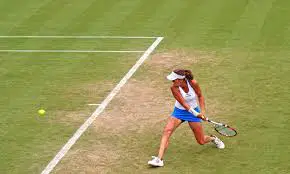
The picture shows an athlete hitting a ball with a tennis racquet. What is the athlete demonstrating in the picture?
Doing work by pushing the ball and changing its motion and position
Changing the position but not the motion of the ball
Doing work by pulling the racquet and changing the ball's position but not its motion
Changing the position and motion of the ball without doing any work.

