
 Worksheets
8th Grade Remediation Part 2
Total questions: 30
Worksheet time: 16mins
The interaction of waves combining and making the loudness of sound waves softer is called —
destructive interference
crest enhancement
constructive interference
frequency distribution
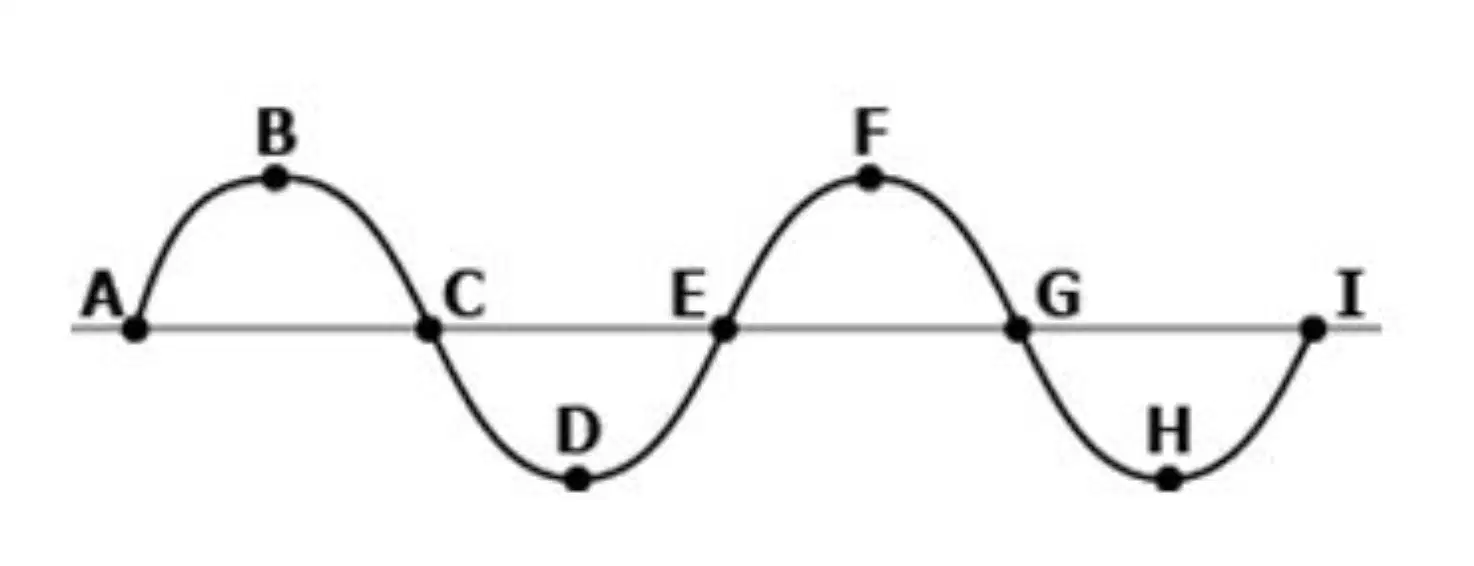
Which interval represents one full wavelength on the transverse wave?
Point A to Point I
Point C to Point E
Point E to Point I
Point F to Point H
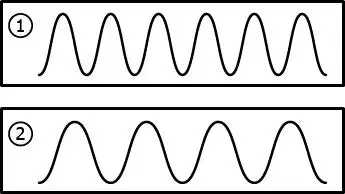
The frequency of a wave is observed twice over time. The frequency of this wave is —
decreasing
increasing
staying the same
fluctuating
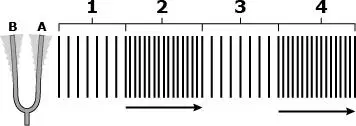
What numbers should be labeled rarefaction in the longitudinal wave?
2 & 4
1 & 3
1 & 2
3 & 4
If the amplitude of a sound wave was increased, what would happen to the sound made by this wave?
It would have a lower pitch.
It would have a higher pitch.
It would get softer.
It would get louder.

Which electromagnetic wave travels the fastest?
All travel at the same speed
Radio waves
Gamma Rays
Visible waves
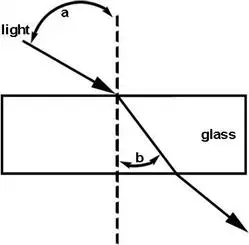
The wave interaction shown above is caused when the wave passes from one medium to another changing —
speed
amplitude
frequency
length
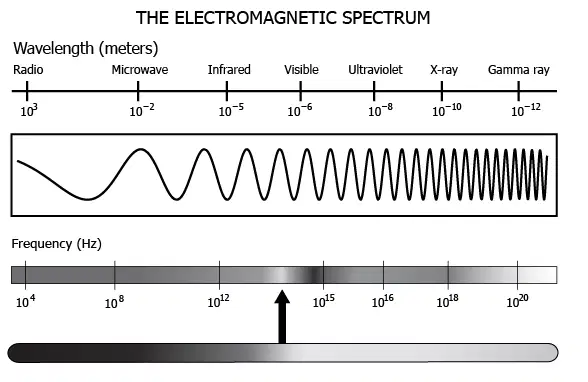
Which statements about the electromagnetic spectrum are correct?
Visible waves have a shorter wavelength than ultraviolet waves.
X-ray waves have a shorter wavelength than visible waves.
Ultraviolet waves have a higher frequency than infrared waves.
Radio waves have a lower frequency than infrared waves.
Gamma ray waves have lower frequency than x-ray waves.
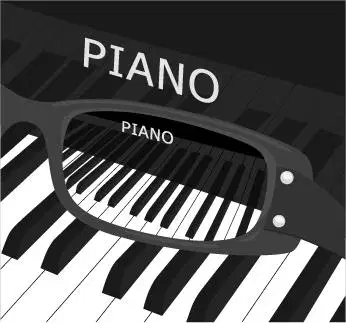
What type of lens creates the image seen in the eyeglasses?
Reflection
Concave
Convex
Plane
Which electromagnetic wave DOES NOT match its potential use?
Radio waves - To send communications, including video, to space
Microwaves- To cook food
Gamma Rays- To tan the skin in a tanning bed
Infrared Rays- To identify heat signatures of people lost in the wilderness
X-Ray- To produce an picture of the internal structure of the body
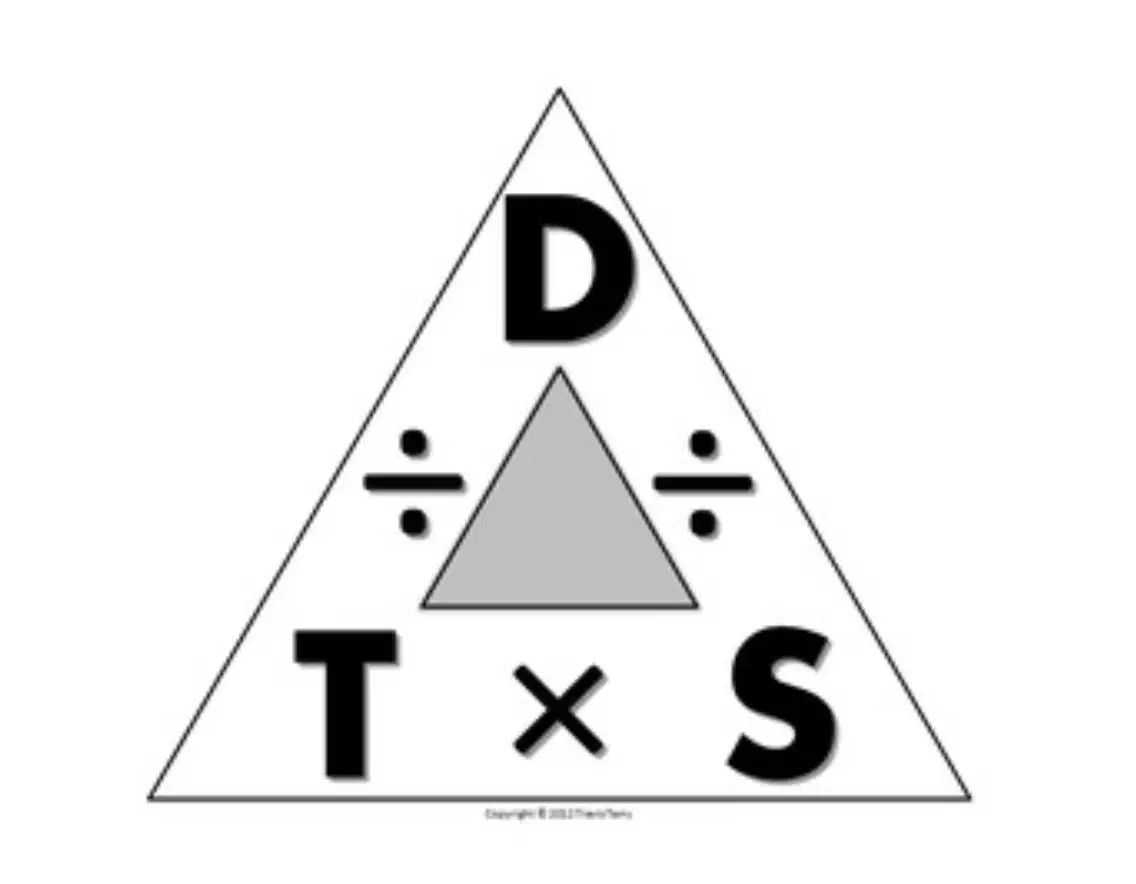
A plane flew 2000 kilometers, from Virginia to California, in 5 hours. What was the velocity of the plane during its flight?
10,000km/hr
10,000km/hr West
400km/hr West
400km/hr
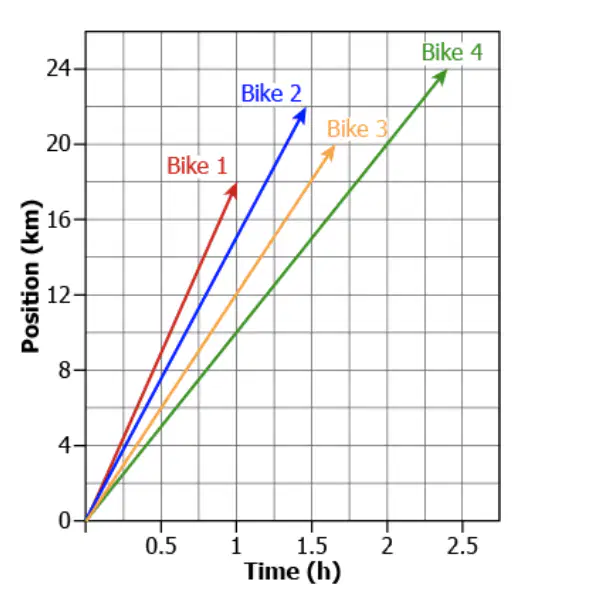
The position - time graph shows the motion of four bikes. Which bike is the fastest?
Bike 1
Bike 2
Bike 3
Bike 4
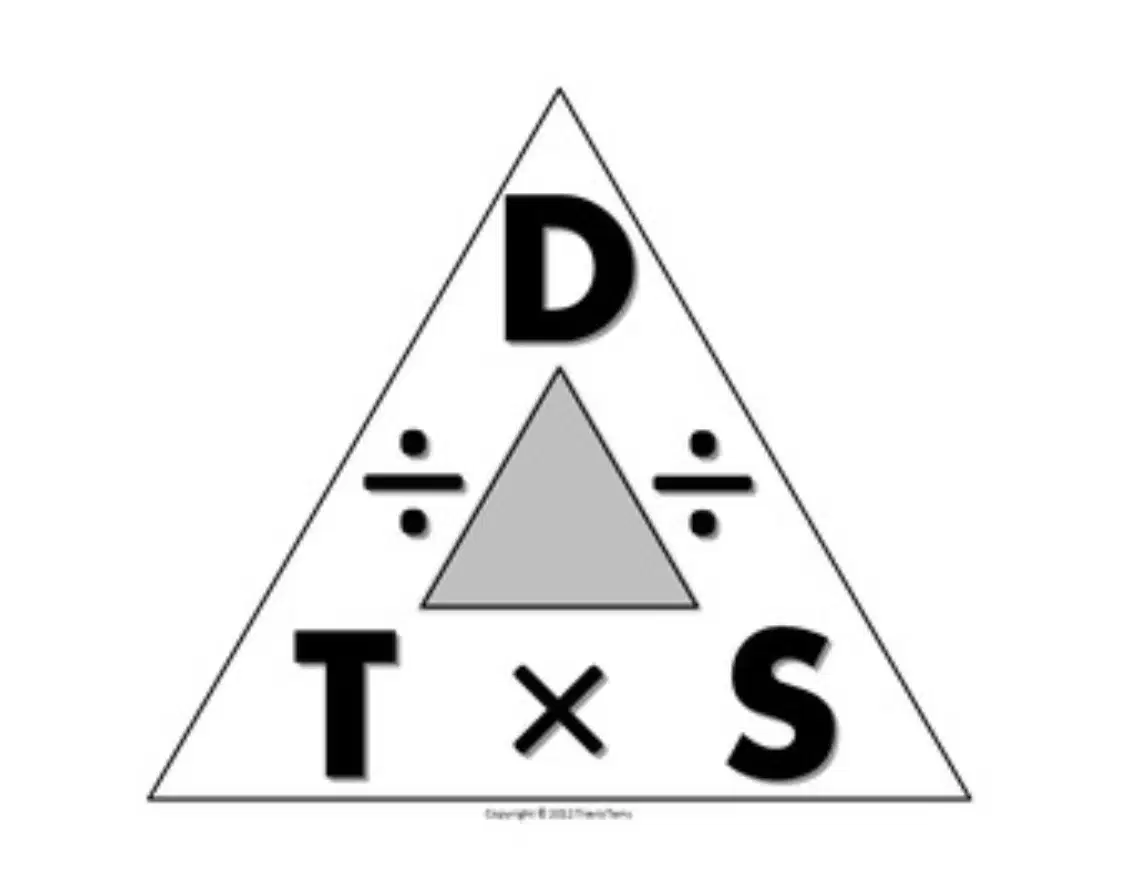
A student can ride his bicycle at an average speed of 6 mph. If he cycles for 4 hours, how far can he travel?
30 miles
1. 5 miles
24 miles
2 miles
The distance an object travels in a certain period of time is called —
acceleration
deceleration
speed
velocity
Speed in a specific direction is called —
velocity
length
acceleration
distance
Which example best shows friction?
A snow drift starts to fall down a mountain picking up more snow along the way.
For the first few seconds, the parachuter gains speed after jumping out of a plane.
Toddlers pedal fast in a tricycle race to see who will be the winner.
The brakes on the car heated up as they were pushed and the car slowed down.
The walking club slows down at the end of their walk to stretch.
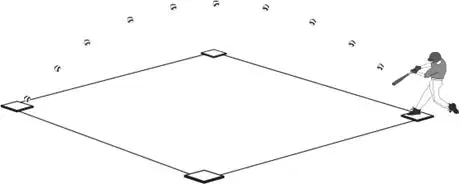
The baseball continues traveling upward until gravity forces it back to Earth. Which of Newton's Laws of Motion is illustrated in this example?
1st
2nd
3rd
4th
What is an example of Newton's third law of motion?
The equation for force equals mass multiplied by acceleration.The equation for force equals mass multiplied by acceleration.
A boy continues to travel forward when the wheel of his skateboard falls off.
A person pushes a car to a gas station at 0.05 m/s2.
A building applies a force on the Earth, and the Earth applies a force back.
Which of the following scenarios meets the scientific criteria for doing work?
A horse pulls a carriage down the street.
A person pushes a box that is up against a wall.
A waiter carries a tray across the room.
A car is parked with the engine running.
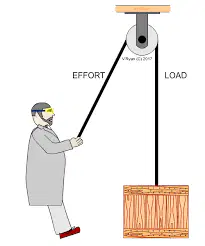
Identify two ways pulleys make work easier.
Pulleys change the direction of a force that is exerted.
Pulleys decrease the amount of work that is done.
Pulleys reduce the amount of input force needed to move an object.
Pulleys decrease the distance over which the input force is exerted.
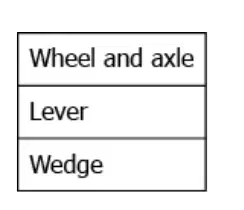
Select the compound machines that can be designed using ALL the simple machines listed in the table.


A light-emitting diode (LED) is considered a —
conductor
semiconductor
transistor
insulator
As the girl leaves her room, she flips the switch to turn off the light. Turning off the light makes —
a parallel circuit
a closed circuit
an open circuit
a series circuit
A science class is experimenting with electrical circuits. They connected two bulbs across two batteries to make a simple circuit. What could they do to make the bulbs dimmer?
Replace one of the batteries with wire.
Replace one of the bulbs with a wire.
Replace one of the batteries with a cork.
Replace one of the batteries with string.
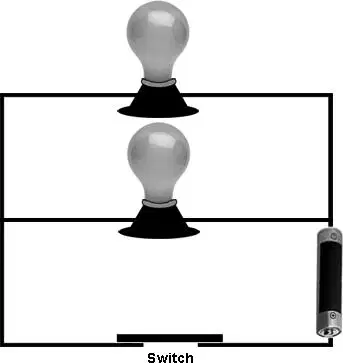
What would happen to the other light in this circuit if one light was removed?
The other light would stay lit, and be brighter.
The other light would go out.
The other light would stay lit, and not change.
The other light would stay lit, but get dimmer.
What happens when a magnet passes through a coil of insulated wire?
The magnetic properties of the magnet becomes stronger.
The magnetic properties of the magnet becomes weaker.
An electrical current is produced.
Heat is produced.
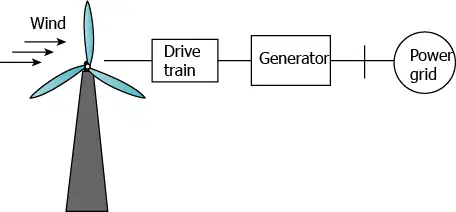
The image shows the working of a windmill. What explanation of the energy conversion shown in the image demonstrates the law of conservation of energy?
Conversion of the kinetic energy of the wind into mechanical and electrical energy
Conversion of the potential energy of the blades into mechanical energy
Conversion of the potential energy of the blades into electrical energy
Conversion of the electrical energy of the power grid into mechanical energy and kinetic energy
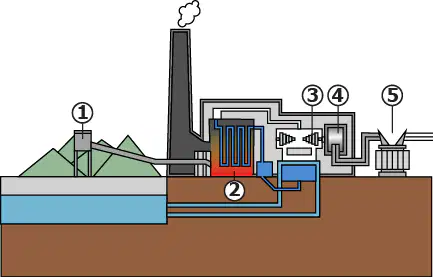
The diagram displays the transformation of coal in a power plant. Identify three of the correct energy transformations that occur in a coal power plant.
Step 2 = chemical → thermal
Step 3 = thermal → mechanical
Step 4 = chemical → electrical
Step 3 = chemical → mechanical
Step 4 = mechanical → electrical
Which chart correctly identifies the energy conversion within a generator and a motor?


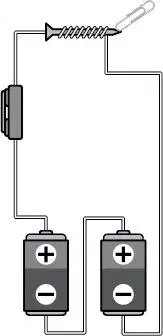
What would happen to the magnetism of the screw when the electric current is lost?
The screw would no longer be magnetic.
The screw would hold the same magnetic charge.
The screw would become a weaker magnet.
The screw would become a stronger magnet.

