
 Worksheets
Raes Ultimate Ap Rox Review
Total questions: 111
Worksheet time: 28hrs 45mins
The three layers that make-up the earth’s composition are
Crust, Lithosphere, Mesosphere and Core
Lithosphere, Asthenosphere, Mantle and Core
Crust, Mantle, Core
Mantle, Outer Core, Lithosphere and Crust
Correct Answers
Your Answers
PREVNEXT
Which would describe the upper mantle?
Solid basalt rock
Plastic basalt rock the consistency of toothpaste
Plastic basalt rock the consistency of jello
Molten (melted/liquid) basalt rock
Which two Earth layers are separated by the Moho boundary?
crust and rigid mantle
stiffer mantle and asthenosphere
outer core and stiffer mantle
rigid mantle and plastic mantle
Correct Answers
Your Answers
PREVNEXT
Where is the Lehman discontinuity?
Crust and Upper mantle
Mesosphere and Outer core
Outer core and inner core
Lithosphere and Asthenosphere
Correct Answers
Your Answers
PREVNEXT
Which layer of Earth is made up partly of crust and partly of mantle material?
asthenosphere
crust
lithosphere
mantle
Which type of tectonic plate boundary is found between the South American Plate and the Scotia Plate?
transform
convergent
divergent
unknown or complex
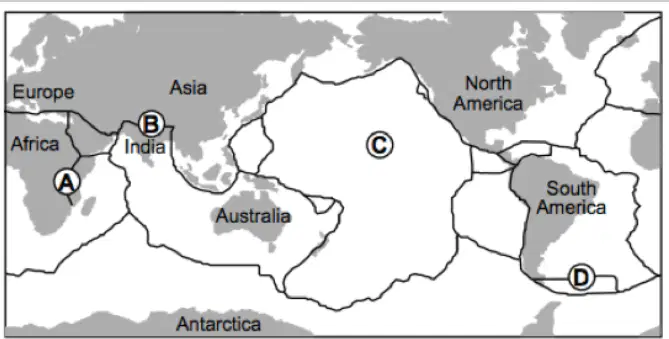
The world map below shows Earth’s major tectonic plate boundaries. Letters A through D represent four
surface locations. Which location is on a major rift valley?
A
C
B
D
Lithosphere is made of what two layers?
Crust
Upper mantle
Asthenosphere
A and B
A and C
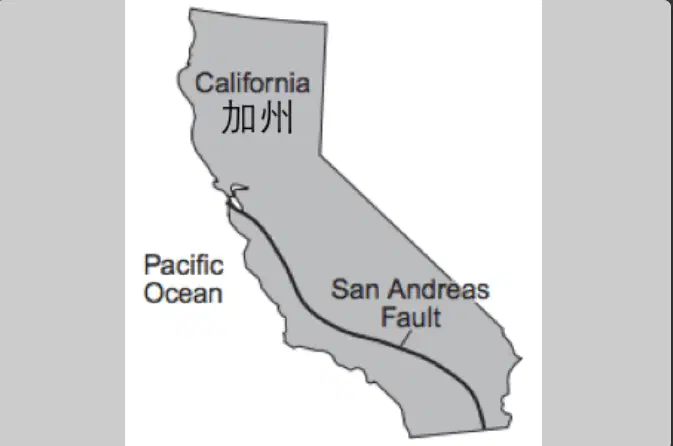
The map below shows California and a section of the San Andreas Fault. What is the primary geologic process occurring along the San Andreas Fault?
subduction zone
transform plate boundary movement
seafloor spreading
convergent plate boundary movement
The Earth separated into the three layers when?
during Earth's formation when the entire planet was liquid
during Earth's formation when the entire planet was solid
Many millions of years ago when the Earth was hit by a giant asteroid
All choices
Oceanic and continental convergence will be associated with what type of rock erupting from volcanoes?
Basalt
Andesite
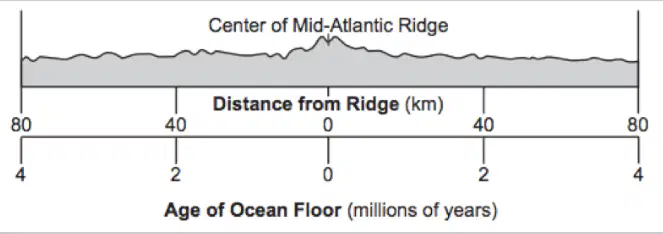
According to the cross section, every 1 million years, the ocean floor bedrock moves approximately
20 km away from the Mid-Atlantic Ridge
40 km away from the Mid-Atlantic Ridge
40 km toward the Mid-Atlantic Ridge
20 km toward the Mid-Atlantic Ridge
Correct Answers
Your Answers
PREVNEXT
The mantle is hot enough to be a liquid, but it is considered "plastic rock". Why isn't it a liquid (melted rock)
Too much pressure
Too hot
Too close to the radioactive core
All choices

What will occur on the East coast of South America?
Subduction, volcanic mountains, trench, and shallow to deep Earthquakes
Shallow Earthquakes
Ridge and shallow Earthquakes
Subduction, volcanic islands, trench, and shallow to deep Earthquakes
Nothing
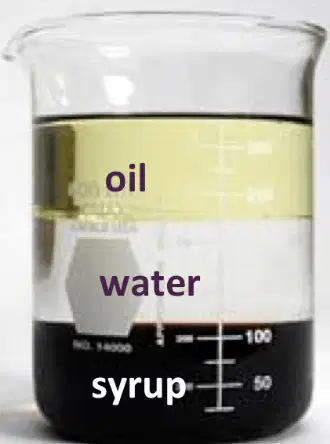
Which liquid has the lowest density?
Oil
Water
Syrup
Which would describe the upper mantle?
Solid basalt rock
Plastic basalt rock the consistency of toothpaste
Plastic basalt rock the consistency of jello
Molten (melted/liquid) basalt rock
The three layers that make-up the earth’s composition are
Crust, Lithosphere, Mesosphere and Core
Lithosphere, Asthenosphere, Mantle and Core
Crust, Mantle, Core
Mantle, Outer Core, Lithosphere and Crust
Correct Answers
Your Answers
PREVNEXT
What generates the heat within out Earth?
Radioactive decay of Uranium
The initial solidification of the iron in the inner core releasing heat
The initial formation of earth from the bombardment of space materials generate and trapping heat deep within
1 and 3
1, 2, and 3
Which forces would be at work at a ridge?
slab suction, ridge push
slab pull, ridge push
slab pull and mantle drag
ridge push and mantle drag
What layer will p waves decrease in?
Asthenosphere
Inner core
Lithosphere
Outer core
Most of the basalt that forms island arcs comes from the
asthenosphere
inner core
stiffer mantle
rigid mantle
Which model is accepted for mantle convection

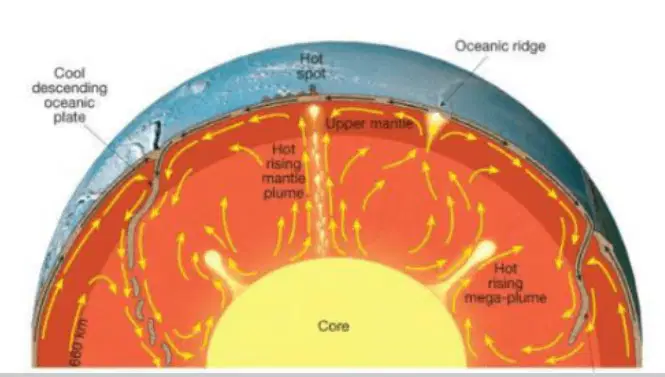
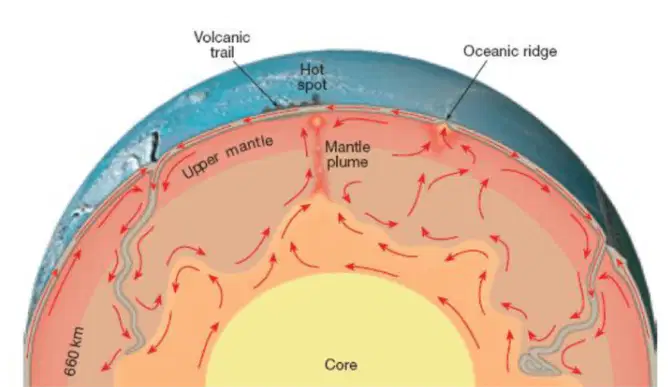
How was the Lehmann discontinuity identified?
S waves speed up through inner core
P waves speed up through inner core
P and S waves speed up through inner core
P waves slow down through inner core
Why does the mantle not heat up as much as predicted as you travel down?
Mantle mixing from convection
The lithosphere cools the mantle by conduction
The outer core heats the bottom of the mantle
Mantle mixing from conduction
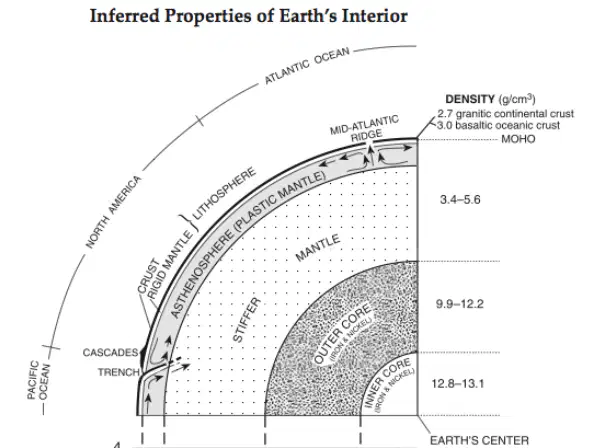
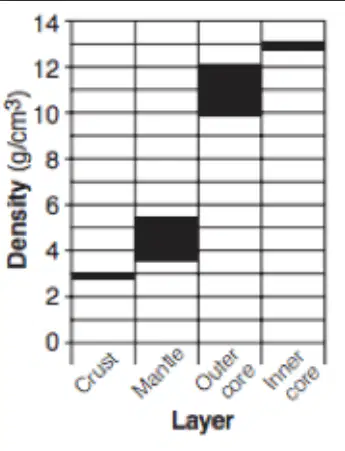
Which graph best shows the range of density in each of Earth’s layers?
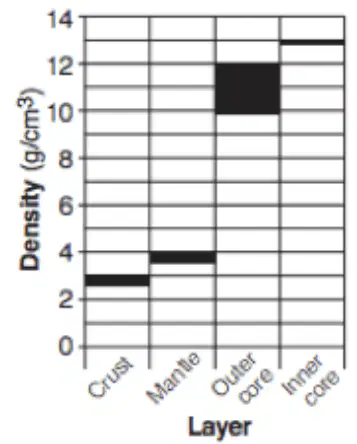
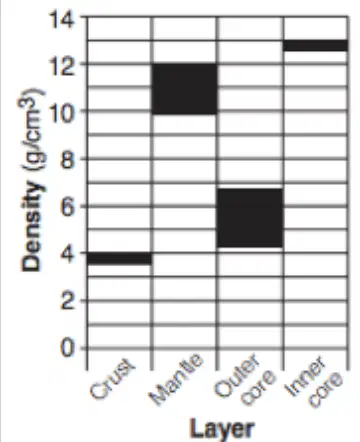
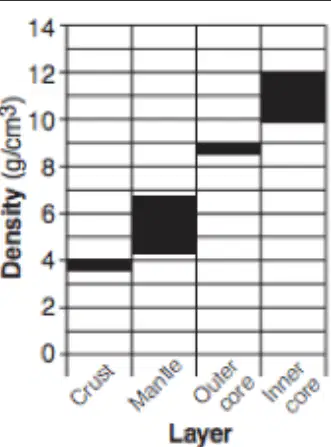
What forces would be at work at subduction?
Slab pull and ridge push
ridge push and slab suction
slab pull and slab suction
ridge push and slab pull
Describe the general relationship between distance from ridge and age of seafloor
As distance from ridge increases, age of seafloor increases
As distance from ridge decreases, age of seafloor increases
As distance from ridge increases, age of seafloor decreases
As distance from ridge decreases, age of seafloor stays the
Which discontinuity separates the mesosphere from the outer core?
Moho
Gutneburg
Lehman
Divergent boundaries contain
Shallow Earthquakes
Shallow-deep earthquakes
ridge
Trench
A and C
Copper and graphite are made of a single element. This makes them part of which mineral group?
Sulfides
Sulfates
Native elements
Oxides
Pyroxene is made of what type of silicate structure?
Single Tetrahedron
Single Chains
Double Chains
Sheets
Framework
The most common elements in the crust and mantle are
nickel and iron
Iron and oxygen
Oxygen and silicon
silicon and aluminum
A coarse grained felsic igneous rock
Gabbro
Granite
Diorite
Rhyolite
Which of the following minerals is NOT a silicate?
Quartz
Felsic
Muscovite
Gypsum
Felsic rocks will be made of which silicate minerals?
Olivine, Pyroxene, and calcium-rich Plagioclase
Amphibole, Biotite, and sodium-rich Plagioclase
Potassium (orthoclase) Feldspar, Muscovite, Biotite, and Quartz
What is the role of heat in metamorphism?
Promote crystallization of new minerals by causing present ones to be unstable
Provides the ability for rocks to fold and bend and minerals to align.
Provides a source for ions to migrate and recrystallize in new locations.
The last two minerals to crystallize in a andesitic magma would be?
Quartz and orthoclase (potassium feldspar)
Sodium-rich plagioclase and biotite
Amphibole and plagioclase
Pyroxene and plagioclase
Olivine and calcium rich plagioclase
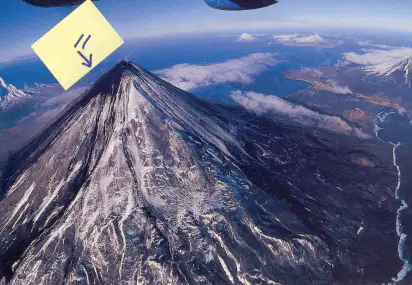
Cleveland volcano
is probably a:
Cinder Cone
Dome
Stratovolcano
Shield
Volcanic Neck
The rock erupted at
Cleveland is probably:
Andesite
Rhyolite
Basalt
Diorite
The material erupted at Cleveland is probably
mostly lava
lava and pyroclastics, roughly equal amounts
mostly pyroclastic
just gas, only gas, nothing but gas, nada
A silica-poor, iron- and magnesium-rich, fine-grained volcanic rock is
basalt
granite
gabbro
andesite
schist
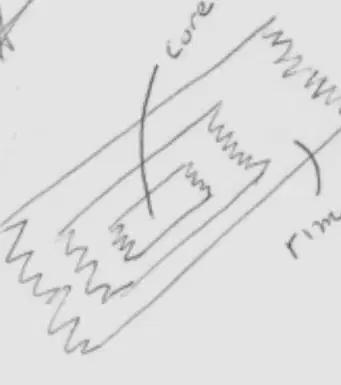
Assuming the plagioclase crystal shown
to the right grew as the magma cooled:
the core would sodium rich and the rim would be calcium rich
the core would calcium rich and the rim would be sodium rich
the core would sodium rich and the rim would be potassium rich
the core would potassium rich and the rim would be sodium rich
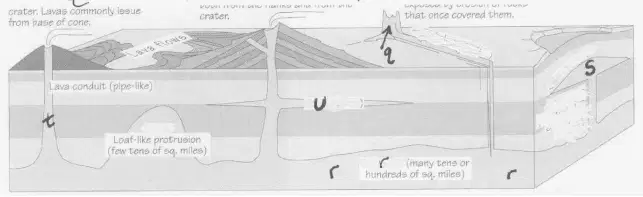
Assuming in the above diagram the layered rocks are sedimentary, which of the following rocks might form in the layer above location "r"?
andesite
gabbro
quartzite
diorite
gneiss
Which of these two minerals would indicate a higher grade of metamorphism:
Muscovite
Garnet
The best explanation for advances and retreats of glaciers within an Ice Age (periods of 100s to 1000s of years) is:
tectonic activity
meteorite impacts
variations in the amount of energy the Sun releases
changes in the Earth’s orbit around the sun
volcanic eruptions
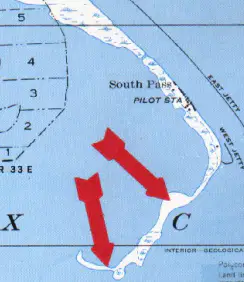
Between the two arrows, this feature
was moving mostly to the___ as it formed:
north is at the top
northwest
southeast
southwest
west
east

On the diagram to the right,
the feature at the tip of the arrow is a(n):
tombolo
barrier bar island
baymouth bar
spit
esker
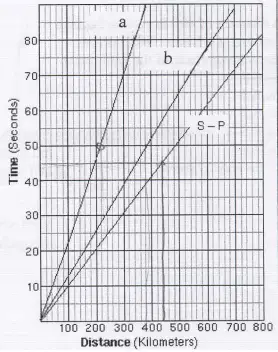
The diagram to the right shows the velocity
of P- and S-waves through the Earth. Curve “b”
is:
for the P-wave
for the S-wave
not enough information
The magnetic stripes on the ocean floor:
record the recent reversal history of Earth’s magnetic field
show a symmetric pattern on either side of a spreading ridge
are created as magma crystallizes at ridges
all of the above
a and b
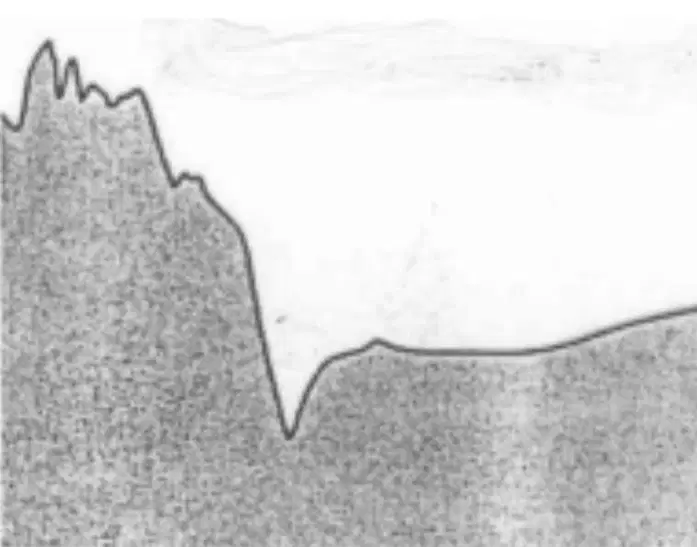
This profile would most likely be found in the:
Atlantic Ocean basin
between Antarctica and Australia
mid-ocean ridges
Pacific Ocean basin
none of the above.
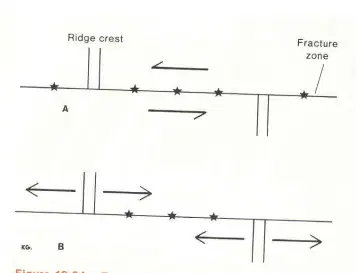
J. (for “Jumping”) Tuzo Wilson
developed a test for the seafloor spreading
hypothesis that involved earthquakes at
transform faults that offset mid-ocean
ridges. If seafloor spreading was a valid
model, geologists should see earthquakes
with which of these two possible
distributions:
A
B
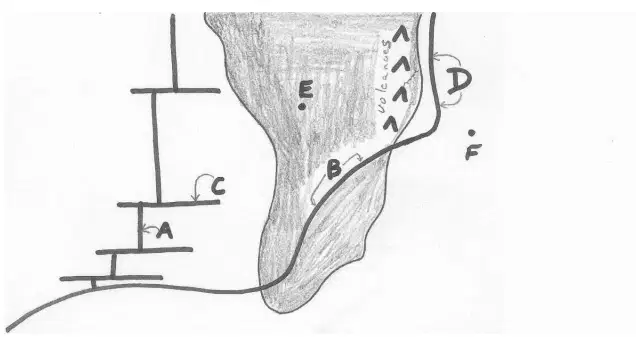
How many plates are shown on the map?
1
2
3
4
5
What is the composition of the rock erupted at the volcanoes at Location “A”?
andesite
basalt
gabbro
rhyolite
The best explanation for why there is no volcanism at Location “B” is:
mantle rocks are too dry, too cold, and at higher pressure
mantle rocks are too wet, too warm, and at higher pressure
mantle rocks are too dry, too cold, and at lower pressure
At what location is there a trench?
A
B
C
D
At what location is there an ocean ridge?
A
B
C
D
Which of the following rocks might give clues about climate conditions in Earth's past?
Sandstone
Gneiss
Absarokite
Rhyolite
Which igneous texture is classified by crystals you can't see with your eye?
Phaneritic
Pegmatite
Aphantic
Glassy
The diversification and increase in abundance of mammals marks the:
Precambrian
Mesozoic
Paleozoic
Cenozoic
Galena and pyrite are sulfides with the same cubic structure yet they are considered different minerals. This is because:
galena is synthetic
pyrite is formed by organic processes
they have different crystalline structures
iron substitutes for lead in the pyrite crystals
none of the above
A fine-grained, light-colored volcanic rock with a few scattered, small crystals of quartz and potassium feldspar is called:
Basalt
Granite
Gabbro
Andesite
Rhyolite
The volcano that erupts Pahoehoe lava is:
stratovolcano (composite volcano)
shield
caldera
lava dome
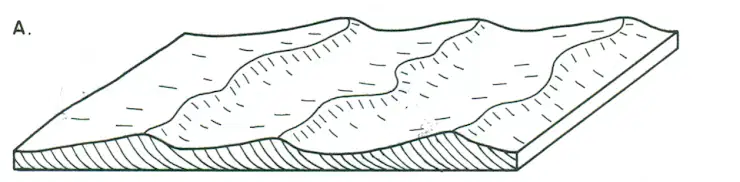
Which answer best describes the structures in this diagram and where they form:
mudcracks in a coastal environment
ripple marks in a coastal environment
till in a glacial environment
graded beds in a landslide deposit
none of the above
Desiree finds a coarse-grained, dark-colored rock with interlocking crystals. She hikes all day but the rock beneath her feet remains essentially the same. She concludes:
she is walking on a gabbro batholith
she is walking on basalt erupted from a volcano
the rock formed by chemical precipitation
contact metamorphism recrystallized the rock
she must keep walking to gather more information before identifying the rock.
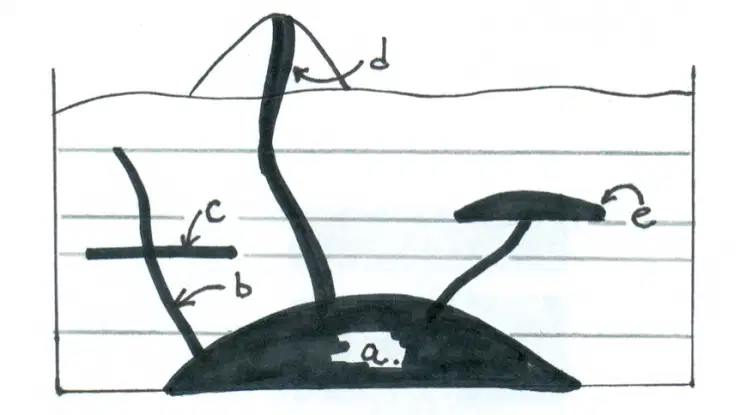
Structure “c” is a(n):
volcanic neck
batholith
laccolith
dike
sill
Which of these two minerals would indicate a lower grade of metamorphism:
Garnet
Muscovite
JimBob finds a foliated rock with alternating layers of light and dark minerals. He thinks he found:
argillite
schist
gniess
slate
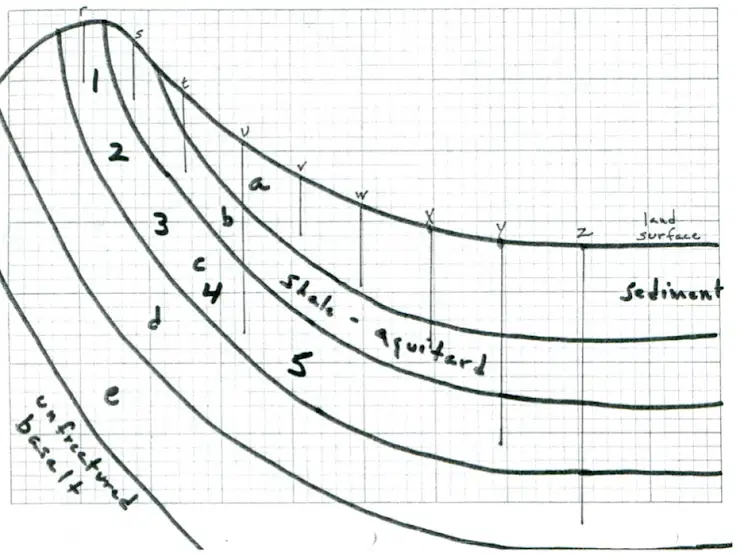
Use the cross-section below to answer questions 37-41. The cartoon below shows the folded rocks layers beneath a mountainside. Spend a minute thinking about the orientation of the layers and how groundwater would move through them. Layer a is sand and gravel. Layer b is shale. Layers c, d, and e are sedimentary rocks. The rock layers rest on unfractured basalt. A geologist needed to find water and drilled many wells. The wells are labeled r to z. You are probably better trained and smarter than the geologist. Use the information to circle the best answer. Assuming a climate like Michigan, which well or wells are likely to supply groundwater from the unconfined aquifer.
just v and w
u, y, and v
u, v, w, and x
t, v, w, x, y, and z
r, s, t, u, and v
Use the cross-section below to answer questions 37-41. The cartoon below shows the folded rocks layers beneath a mountainside. Spend a minute thinking about the orientation of the layers and how groundwater would move through them. Layer a is sand and gravel. Layer b is shale. Layers c, d, and e are sedimentary rocks. The rock layers rest on unfractured basalt. A geologist needed to find water and drilled many wells. The wells are labeled r to z. You are probably better trained and smarter than the geologist. Use the information to circle the best answer. Assuming layer c is a confined aquifer, it is probably made of:
sandstone
andesite
shale
diorite
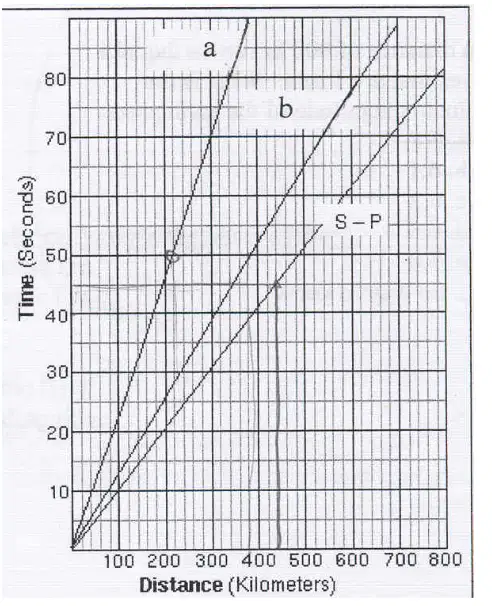
The diagram below shows the velocity of P- and S-waves through the Earth. Curve “a” is:
For the S-wave
For the P-wave
Not enough information
The diagram below shows the paths of S-waves through the Earth. This diagram illustrates how seismologist detected:
magma beneath Yellowstone caldera
the crust/mantle boundary
the presence of a solid inner core
the thickness of tectonic plates
the presence of a liquid outer core
Crustal shortening and thickening with intense folding and thrust faults indicate:
subduction
rifting
spreading at a mid-ocean ridge
continent-continent convergence
Offset mid-ocean ridges are examples of _______ plate boundaries:
convergent
divergent
transform
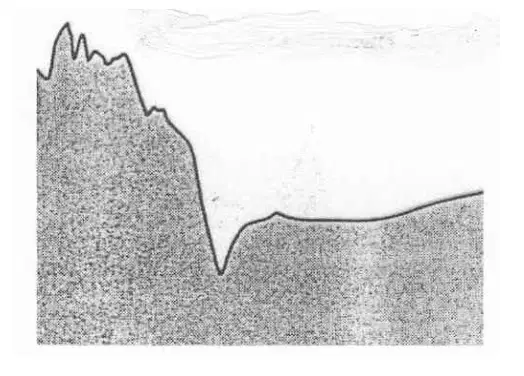
This profile would most likely be found in the:
Atlantic Ocean basin
Pacific Ocean basin
mid-ocean ridges
between Antarctica and Australia
The Andes volcanoes of the west coast of South America are being produced by:
continental rifting
volcanism above a subduction zone
continent-continent convergence
motion along a transform boundary
northward drift of the South American plate over a fixed hotspot
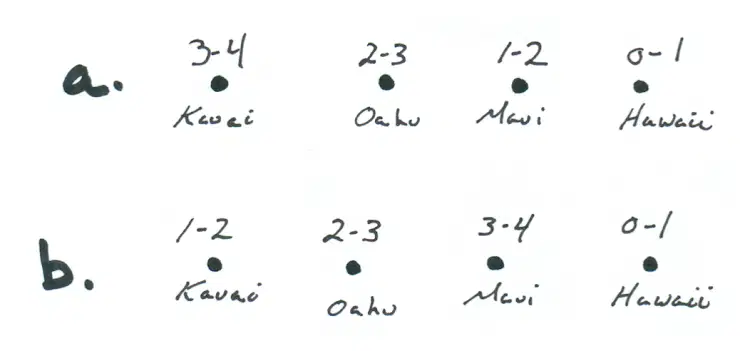
J. (for “Jumping”) Tuzo Wilson developed a test for the seafloor spreading hypothesis that involved the age of volcanic rocks in the Hawaiian islands (names below dots). If seafloor spreading was a valid model, geologists should see ages of rocks (in millions of years, above dot) with which of these two possible distributions:
A
B
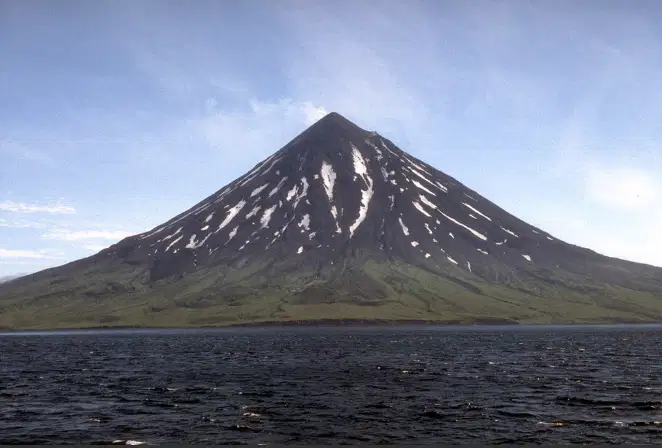
What type of volcano is this?
Cindercone
Strato
Dome
Sheild
Neck
A measure of the strength of an earthquake is known as...
Tsunami
Focus
Magnitude
Intensity
What scale is used to classify intensity?
Richter Scale
Modified Mercalli Scale
Steven's Scale
Basaltic volcanoes are associated with
Oceanic/oceanic convergence
Oceanic/continental convergence
Hot spots and rifts
1 and 3
2 and 3
A tracing of earthquake motion is called a what?
seismograph
seismogram
magnitude
focus
An area along a fault where relatively few earthquakes have occurred recently but where strong earthquakes are known to have occurred in the past is known as a...
seismic gap
fault zone
shadow zone
epicenter
A person hiking on a volcano notices lots of aa and pahoehoe lava flows.
Shield
Composite
Cinder Cone
Lava Dome
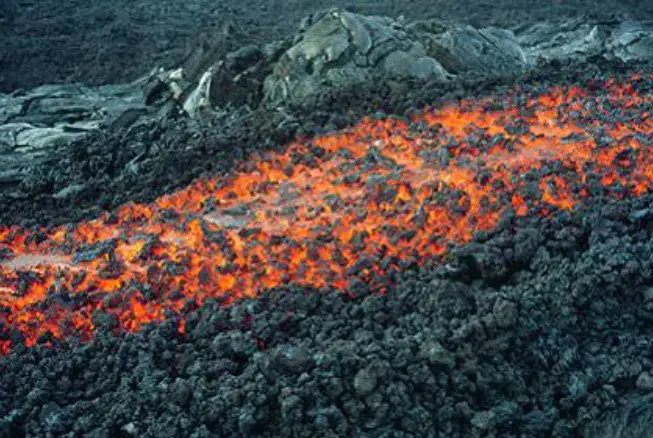
What type of lava is this
Aa
Pahoehoe
Pillow
Blocky
Usually found at subduction zones
Andesitic Magma
Basaltic Magma
Rhyolitic Magma
Which one of these does NOT affect the temperature at which magma forms?
Pressure
Composition of material
Water
Viscosity
Which of these magmas has the lowest viscosity?
Basalt
Andesite
Rhyolite
A broad, gently sloping volcanic cone constructed of solidified lava flows it
Caldera
Cinder Cone
Shield Volcano
Composite Volcano
What types of landscapes are featured near or with volcanoes?
Uplifts, Erosion, and Weathering
Hot Spots and Flood Basalts
Vents, Craters, and Calderas
Batholiths, Stocks and Sills
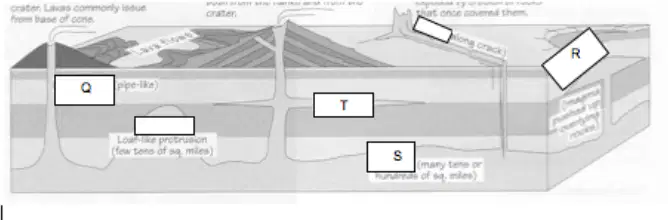
What is structure Q
Volcanic neck
Batholith
Laccolith
Dike
Pluton
A mountain like volcano with steep sides constructed of alternating lava flows and tephra (pyroclastic material) is:
Caldera
Cinder Cone
Shield
Composite
The modified Mercalli scale is based on?
Damage to structures
Energy of Earthquake
What type of magma has the most silica?
Basalt
Andesite
Rhyolite
The easiest way to tell a cinder cone from a lava dome is
Height
Width
Color
Lava Flow
The location within earth along a fault at which the first motion of an earthquake occurs is called the what?
seismic gap
fault zone
focus
epicenter
Stratovolcanoes are more dangerous than shield volcanoes because
They erupt at higher temperatures
Their magmas have a higher viscosity
Their magmas have a lower viscosity
they erupt more frequently
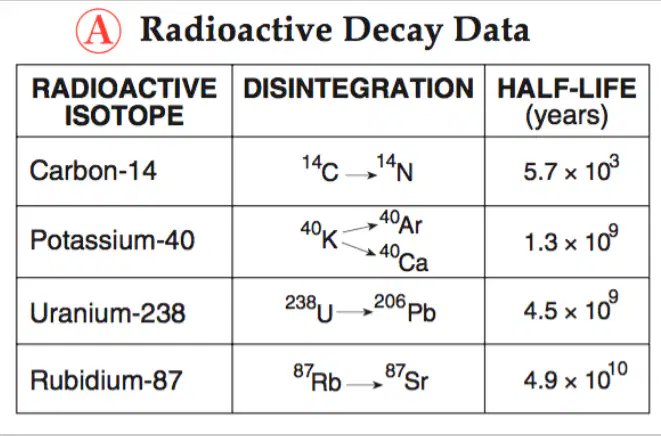
Using ESRT (A) [Radioactive Decay Data], what is the half-life in standard notation of carbon-14?
5,700 years
57,000 years
570,000 years
5,700,000 years
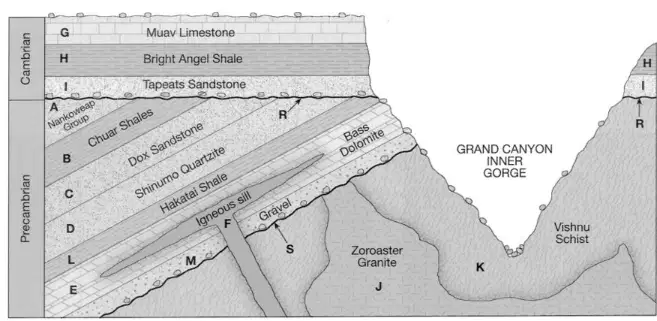
What is the correct order of events?
K,J,S,M,F,E,L,D,C,B,A,R,I,H,G
K,J,S,M,E,F,L,D,C,B,A,R,I,H,G
K,S,J,M,E,F,L,D,C,B,A,R,I,H,G
J,K,S,M,F,E,L,D,C,B,A,R,I,H,G
The worst mass extinction event in the history of the Earth wiping out 96% of all life was the?
Permian-Triassic (End of the Paleozoic)
Holocene (End of the Cenozoic)
Cretaceous-Tertiary (End of the Mesozoic)
Ordovician-Silurian (Middle of the Paleozoic)
When did the first birds appear?
Cambrian
Cenozoic
Paleozoic
Mesozoic
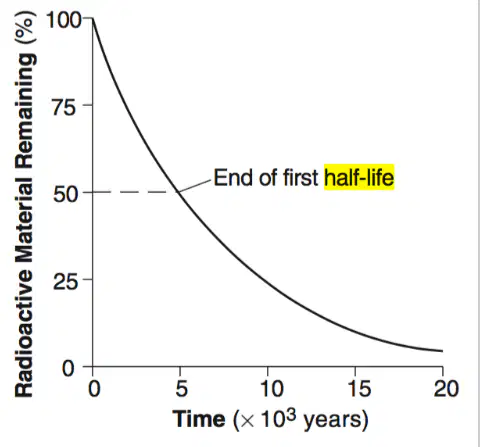
The graph shows the decay of a radioactive material over time.How long does it take for this radioactive material to decay through 2 half-lives?
1 x 10³ years
5 x 10³ years
10 x 103 years
40 x 103 years
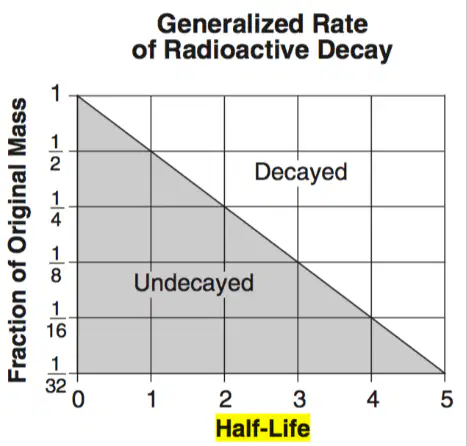
The graph shows the generalized rate of decay of radioactive isotopes over 5 half-lives.If the original mass of a radioactive isotope was 24 grams, how many grams would remain after 3 half-lives?
12
24
3
6
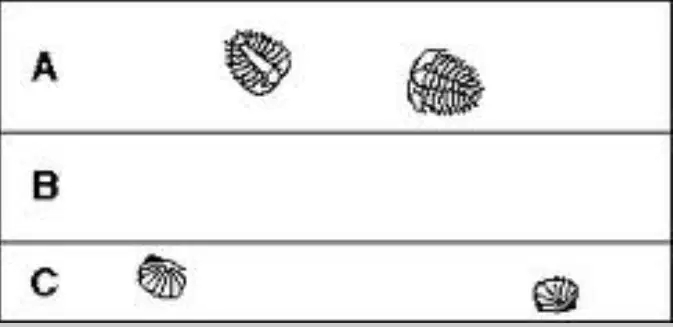
According to the law of superposition, which layer is the youngest?
A
B
C
States that younger rocks lie above older rocks if the layers have not been disturbed
Law of Crosscutting
Law of Super Position
Relative Dating
Unconformity

What is the last event to happen?
Deposition of Breccia
Igneous Intrusion
Faulting
Deposition of Limestone
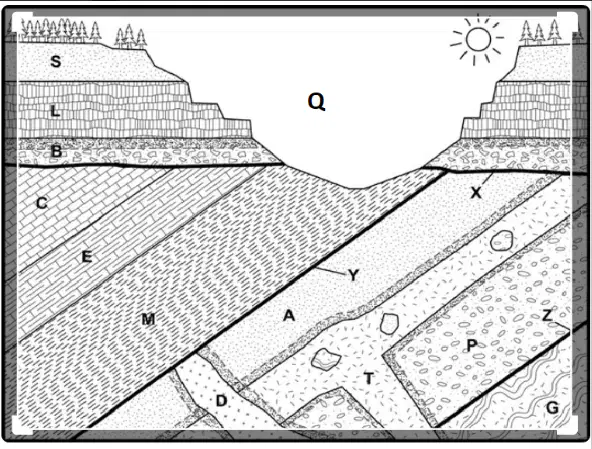
Which letter is the youngest event?
Q
S
G
L
The Devonian is a
Eon
Era
Period
Epoch
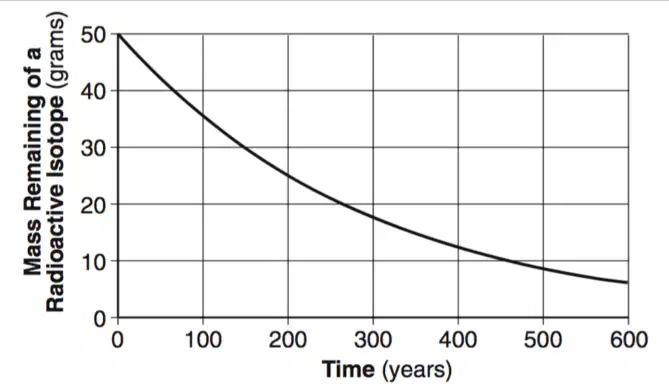
The graph shows the radioactive decay of a 50-gram sample of a radioactive isotope. According to the graph, what is the half-life of this isotope?
100 years
150 years
200 years
300 years
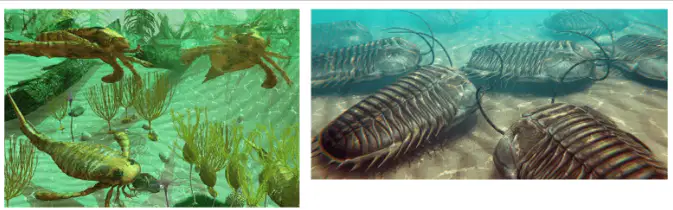
The period when trilobites and eurypterids appeared was the
Hadean (precambrian)
Cambrian (Paleozoic)
Holocene (cenozoic)
Jurassic (Mesozoic)
There have been how many major extinction events on planet Earth?
2
3
4
5
The time when mammals became dominant
Precambrian
Cenozoic
Mesozoic
Paleozoic

