
 Worksheets
Semester 2 Final Review
Total questions: 59
Worksheet time: 31mins

How many beats does this note get?
4 beats
2 beats
1 beat
1/2 beat

How many beats does this note get?
4 beats
2 beats
1 beat
1/2 beat

What is the duration (beats/counts) of this rest?
4 beats
2 beats
1 beat
1/2 beat
1/4 beat

What is the duration (beats/counts) of this rest?
4 beats
2 beats
1 beat
1/2 beat
1/4 beat

What is the duration of this note?
1/2 beat
1/16 beat
1/4 beat
1/8 beat

What does a sharp do?
LOWERS a note by a half step
RAISES a note by a half step
Makes the note disappear
All of the above

A flat (a) a note by a half step.

How does a double sharp effect a note?
It raises it an octave
It raises it two half steps
It raises it two whole steps
It raises the tone quality of the note

How does a double flat effect a note?
It lowers it 2 whole steps
It lowers it 2 half steps
It lowers it an octave
It lowers the volume of the note

What is the name of this symbol, which indicates that a note is neither sharp nor flat?
Double Sharp
Natural
Sharp
Flat

What is the name of the note?
A
B
E
C
Which note is an "E"


What is the name of the note?
Gb
Ab
Eb
Cb
Which note is a "G"


Which note is a "D"

What is the name of the note?
G flat
E
E flat
C flat
counting time
common time
counterpoint time
cooperation time

A time signature symbol that looks like a cent sign. It means there are 2 beats in every measure and the half note gets 1 beat of sound.
Dynamics
Time Signature
Key Signature
Cut Time

Which rhythm counts belong to this measure?
1(2)3+4+
(1)234+
(1)23+4+
(1)2+34+

Which rhythm counts belong to this measure?
1+23(4)
12+3(4)
123+(4)
12+3+(4)

Which rhythm counts belong to this measure?
1(2)3+4+
(1)23+4
1(2)34+
1(2)3+4
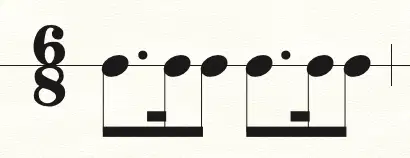
What is the correct counting for this rhythm?
1-2+3 4-5+6
1+2e+ 4+5e+
1e+a 2 3e+a 4

How is this rhythm counted?
1+ 2+ 3e+ 4
1 2+ 3e+ 4
1+ 2 3e+ 4
In slow 6/8 time, how many beats does a dotted quarter note get?
1
3
6
9
allegro
gradually faster
slow
quickly, cheerfully
walking speed
andante
gradually faster
slow
quickly, cheerfully
walking speed

sfzorando (sfz)
sudden, strong attack
rate of speed
system of reading notes with syllables
hold note for full value
tenuto
sudden, strong attack
rate of speed
system of reading notes with syllables
hold note for full value

tells to hold the note or rest longer then normal?
Fermata
Time Signature
Tempo
Repeat Sign
What is a tempo?
walking tempo
fast lively tempo
moderate tempo
returning to the beginning tempo
What tempo means "moderate"?
Presto
Andante
Largo
Moderato

Medium Quiet
Very Quiet
Quiet
Sort of Quiet

Try to sound like a piano keyboard
Quiet
Very Quiet
Slow
Perfect

Medium Loud
Medium Fast
Medium Slow
Medium Soft

Fast
Loud (Strong)
Gradually Louder
Play the note "F"

Medium Loud
Medium Fast
Very Fast
Very Loud
Gradually Softer
Dimiunendo
Decrescendo
Ritardando


Gradually Louder
Descrescendo
Crescendo


Which dynamic symbol is loud then immediately soft?
Crescendo
Diminuendo
Fortepiano
Sforzando

What is the ITALIAN name for this dynamic symbol?
Fortepiano
Sforzando
Pianoforte
Crescendo

A curved line that connects two (or more) notes of the same pitch is called a:
tie
slur

A SLUR connects two (or more) notes of different pitch (on different lines and spaces). The slur tells us to play these note:
short and detached
smoothly and connected
The Italian term for playing smoothly and connected is:
(a)

When singing, your jaw should be comfortably _______.
rigid
chewing
dropped
clinched
The larynx (or voice box) houses the ______ which produce our vocal sounds.
tongue
diaphragm
spine
vocal cords
How should you breathe when you sing?
Shoulders up; heave a breath in through your nose to expand your chest each time.
Shallow, quick breaths in the middle of phrases.
Shoulders down and relaxed, relaxed vocal cords, rib cage expanded, use diaphragm (muscle below lungs) to pull air in.
Hands behind body if standing, shoulders tight to begin, then raise shoulders and gasp.
Your diaphragm is: (select all that apply)
attached to your rib cage.
a sheet of muscle.
part of your heart.
what controls your breathing.
What is a diphthong?
a combination of two vowels sounds.
a combination of two letters representing one sound.
any part of a word.
Any word that has a silent e sound.
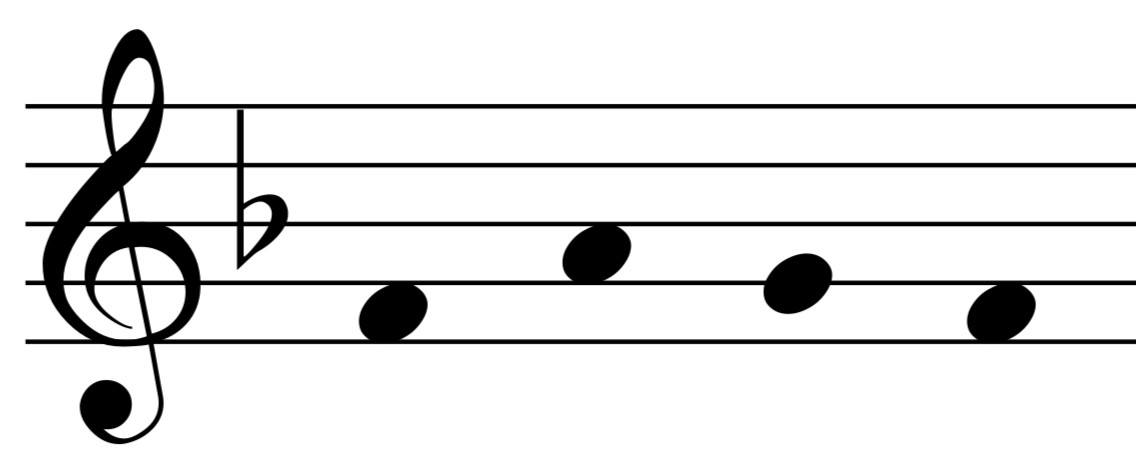
Identify the solfege syllables. "Do" is bottom space.
Do Mi Fa Mi
Do Re Mi Do
Do Mi Re Do
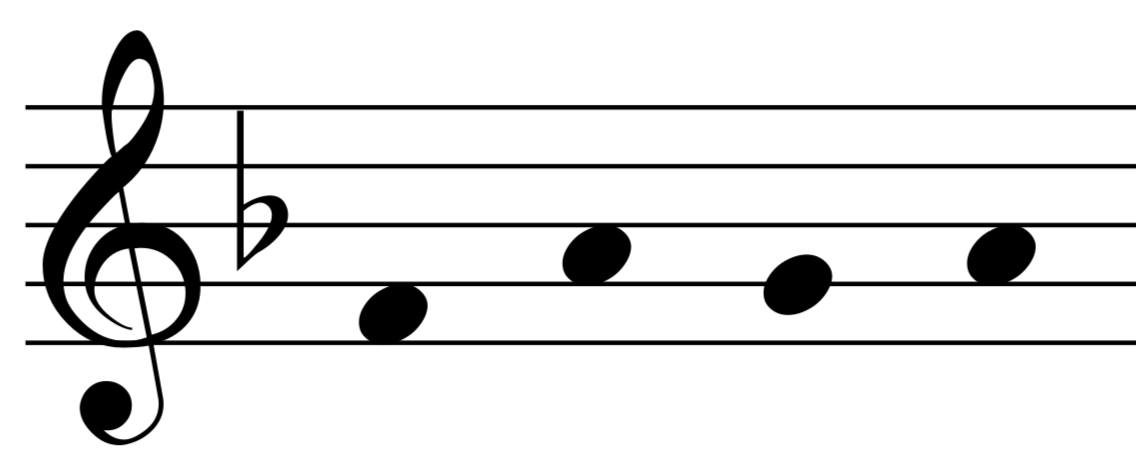
Identify the solfege syllables. "Do" is bottom space.
Do Mi Fa Mi
Do Mi Re Mi
Mi Do Re Mi

Label. The first pitch is "SO."

Label. The last pitch is "DO."

Identify the MAJOR KEY
G
F#
G#
C#

Identify the MAJOR KEY
B flat
E flat
A flat
C

Identify the MAJOR KEY
D#
F#
A
E

Identify the MAJOR KEY
Bb
D
F
Db

