
 Worksheets
Alg I CT Sem 2 Exam
Total questions: 238
Worksheet time: 60hrs 30mins
Which graph represents the solution to: y+7≥12 ?


Which graph represents the solution to: 28>m−4 ?


Solve: −3>4x
(a)
Solve: 8x<48
x<−6
x>−6
x<6
x>6
x - 2 < 5
12 ≥ 6w
-5m < 10
Match the inequality statement to the appropriate graph.
x>6.5


Match the inequality statement to the appropriate graph.
−21≥x
Match the inequality statement to the appropriate graph.
6.5>x
Evaluate whether the value makes a true or false statement.
k+6≥19 if k=11
This is a true statement.
This is a false statement.
Evaluate whether the value makes a true or false statement.
16<b+8 if b=22
This is a true statement.
This is a false statement.
Solve the inequality below. Type the answer without any spaces.
−2x>10
(a)
Solve the inequality below. Type the answer without any spaces.
x−12>12
(a)
8y < (-40)
When do we switch the inequality symbol?
when multiplying or dividing by a NEGATIVE
when adding and subtracting a NEGATIVE
we never switch the inequality
When there is a negative in the problem
The room can hold a maximum of 400 people. If there are already 134 people there, how many more can come? Identify the inequality that represents this situation.
x - 134 < 400
x + 134 < 400
x - 134 ≤ 400
x + 134 ≤ 400
What are two solutions to x < 8?
8.6, 7.9
11, 16
0.8, 5.9
12, 7.1

Solve the inequality.
x ≤ 6
x ≥ 6
x ≤ -6
x ≥ -6
Level 3.
Solve the inequality. Graph the solution.
y+5 ≥ 2


Level 3
Which number line shows the solution set to the inequality below?
x - 3 > -3
A
B
C
D
Does x≥5 have an open or closed circle?
Opened
Closed
Does the arrow for the graph of x≥5 go to the left or the right of 5?
Left
Right
Solve the inequality.
8<n
8>n
2>n
2<n
Solve the inequality.
y≤−2
y≥−2
y≤2
y≥2



(n/3) > -20
Is the given value a solution to the inequality?
x(x - 7) < 5 ; 4
Yes
No

a ≥ 4
a ≥ -4
a ≤ -4
No solution
Graph the solution set of the inequality.
–4n + 1 > –23


Graph the solution set of the inequality.
2n + 4 < 16


-8(x - 3) - 4x < 108
Solve. 5 - (x - 4) > -2
x > 11
x < 11
x > -11
x < -11
-4x + 9 - x < -3
x > 2.4
x < 2.4
x > -2.4
x < -2.4
3x − (2 + 6x) ≤ -32
x ≥ 10
x< -10
x ≥ -10
All real numbers
Solve:
14 < -2a + 6 - 2a
a > -2
a < -2
a > 5
a < -5
−5(2x+2)+5x>15
x<−5
x<5
x>5
x>−5
Solve:
3(x - 2) < 2(x + 9)
x<24
x>12
x<12
x>24
Solve: -8(x - 3) < 56
x > -10
x < -4
x > -4
x < -10

Solve the inequality
x ≥ -7
x ≤ -7
x ≤ -15
x ≥ -15
−4(x+3)≥3(x−4)
x≥0
No Solution
x≤0
Many Solutions
3(1−2x)>3−6x
Many Solutions
x>3
No Solution
x<3
−2(5+6x)<6(8−2x)
x<48
Infinitely Many Solutions
x>−10
No Solution
When solving inequalities, if you multiply or (a) both sides by a (b) number, you must (c) the (d) symbol.
Solve.
−8x+7<15
x>1
x<1
x>−1
x<−1
Solve.
17≤−2m−3
−10≥m
−10≤m
−7≥m
−7≤m
6x + 2 < 6x - 14
No Solution
Infinite Solutions
x < -1
x > 16

Which inequality has the solution that matches the given graph?
2x + 1 < 6
3(x + 4) - 2x > 15
4x + 7 < 3x + 4
5x - 3x + 4 > -2
Infinite Solutions occur when...
All of the variables cross out and you get a false statement
All of the variables cancel out
All of the variables cross out and you get a true statement
When x is greater than zero
Solve:
4x + 8 > 6x + 10
x < -1
x > -1
x < -2
x > -2
Solve:
30 > -(5x + 15) + 10x
x < 9
x < 3
x > 2
x > 5
Solve:
-(7x - 18) - 2x > 0
x > 2
x < 2
x > 2
x < 2
How do you graph an infinite solution inequality?
You shade the positive side of the number line.
You shade the negative side of the number line
You do not shade anything because no numbers make it true.
You shade the entire number line.
1340

1/49
-49
-14
1/14
Simplify: 3n5⋅5n10
15n5
8n15
15n50
15n15
Simplify: (2a3b4c3)2⋅(4a2bc3)
16a8b9c9
8a8b9c9
8a6b5c6
16a5b5c6
(877237646642375623646237)0
1
0
Simplify: 7p0
7
1
simplified
7p
Simplify the following: (4x3)4
16x7
44x7
256x12
16x12

y627x15z3
y69x15z3
27x8yz4
y27x8z4

y2816x16z32
y28−16x16z32
16y28x16z32
−8x−8y3z−12
Simplify so there are no negative exponents in the answer.
27n91
n9−27
n6−27
n6−9
Simplify so there are no negative exponents in the answer.
x5
x181
−x5
x151

Simplify
(2a2b4z)(6a3b2z5)
8a5b6z6
12a6b8z5
12a5b6z6
8a6b8z5

(3.4 x 10⁵)(1.2 x 10⁻³)
Solve: (2.1×10²)(3.0×10⁴)
5.1 x 10²
6.3 x 10⁶
5.1 x 10⁶
6.3 x 10⁸
(9.4 x 10⁶)(3.2 x 10⁵)
2.5 x 10¹²
2.5 x 10¹⁴
25 x 1012
25 x 1013
Simplify:
(3.51 ⋅103)5
1.755 ⋅ 1015
5.33 ⋅ 1015
5.33 ⋅ 1017
1.755 ⋅ 1017
Multiply (6m3n3 )(8m2n3)
48m5n9
48m6n6
48m5n6
none of the above
Simplify the following expression:
(7a2)(5a6b)2
35a14b2
175a12b2
175a14b2
35a14b

Identify the degree of the monomial: 8a11
8
1
3
11
polynomial
monomial
binomial
trinomial
x³-7x²+3
x2-2x+5
-27a3 + 9a2 - 45a
1 term
0 terms
2 terms
3 terms
(3x3 + 3x2 – 4x + 5) + (x3 – 2x2 + x – 4)
Classify by number of terms:
3x3 – 6x
Monomial
Binomial
Trinomial
4-Term Polynomial
Simplify (-4m3-m+9)-(4m2+m-12)
-4m3-4m2-2m-21
-4m3-4m2-2m+21
-8m3-2m+21
-4m3+4m2+2m+21
Simplify (8xy2+6xy) + (-12x2y+13xy2)
21xy2 +12x2y+6xy
21xy2 -12x2y-6xy
21xy2 +12x2y-6xy
21xy2 -12x2y+6xy

3x3 +8x
x3+3x2 +8x
2x2 +8x
x3-3x3 +8x2
Which are like terms?
3x2y3 and −5x2y2
2x3y4 and −3x3y4
5x2y2 and 5x3y3
2xy and 5ab
Add: (9x3+5x2−3x)+(4x3−8x2+7x)
5x3−3x2+4x
13x3−13x2+4x
13x3−3x2+4x
14x6
Subtract: (3r4+4r3)−(r4−5r3)
2r4−r3
2r4−5r3
2r4+9r3
11r7
Subtract: (6x4−5x3+2x2−8x) − (4x4+5x3+3x2+12x)
10x4−10x3−x2−20x
2x4−10x3−x2−20x
2x4−x2−20x
2x4−20x
2(x+3)=
2x+3
2x+5
2x+6
x + 6
2x2(x+5)
2x2+5
2x2+10x2
2x3+5
2x3+10x2
10x(2x2+3x+4)
20x3+30x2+40x
20x2+30x+40
12x3+13x2+14x
12x2+13x+14
3x3(2x2 + 9x + 6)
56a3-8a
2n3+16n+12
x2 - 5x
8n3 + 2n2
What is the GCF? x3+5x2−22x
1
x
5x
22
What is the GCF? 6x2+9x−12
6x
6
3x
3
What is the GCF? 8x3−12x2+8x
4x
8x
2x
4
What is the GCF? 7x5+8x4+3x3
x
3x
3x3
x3
What is the degree of this monomial?
−4xy4
1
4
5
-4
What is the degree of the monomial?
2x2y3z
2
3
1
6
What is the degree of the monomial?
2x2y3z
2
3
1
6
Name the expression based on it's degree and number of terms:
5x2−2x+3
trinomial
degree 2
binomial
degree=3
monomial
degree = 1
polynomial
degree =3
What is the x-intercept of the equation shown below?
(47,0)
(0,47)
(7,0)
(0,7)

1340
0
134
1
6x7y10
6xy32
8x12y21
8x7y10

214 z13
z722
z7214
22 z7

m9
m4
m-9
-m9
491
-49
-14
1/14
3−3
27
−27
−271
271
2−5
−32
32
321
−321
Simplify: 3n5⋅5n10
15n5
8n15
15n50
15n15
Simplify: 10x8⋅9x
90x8
19x9
90x9
19x9
Simplify: h3⋅g2⋅h5
g2⋅h8
gh10
g2⋅h15
h8
Simplify: m5n9⋅m2n3
m10n12
m7n27
m7n12
m12n27
Simplify: a2b7a17b10
a34b70
a15b17
a19b3
a15b3
(z4xy3)2
z8xy6
z16x2y9
z8x2y6
z16xy9
Simplify: (6x53x2y3)3
8x9y9
y98x9
2x151x6y9
x82x5y6


(3.4 x 10⁵)(1.2 x 10⁻³)
(6.9 x 10⁷) / (2.3 x 10⁻³)
(2 x 10³) x (1.9 x 10²)
------------
2 x 10⁶
----------
8 x 10²

5⁷
5⁻¹
5¹²
5
c45
3c11
c11
3c45
x⁸
x⁶
x²
8
18x7
-18x7
18x7
3x7
x13
x5
x36
x-5
(a5)(a4)
a20
a9
a1
6x7y10
6xy32
8x12y21
8x7y10
214 z13
22/z7
214/ z7
22 z7
True
False
True
False
Simplify: 3n5⋅5n10
15n5
8n15
15n50
15n15
Simplify: 10x8⋅9x
90x8
19x9
90x9
19x9
Simplify: (2a3b4c3)2⋅(4a2bc3)
16a8b9c9
8a8b9c9
8a6b5c6
16a5b5c6
Simplify: 2629
13
03
23
215
Simplify: 2x9y12x5y4
6x−4y3
x46y3
2x412y3
y36x−4
Simplify: (3x5)6
18x30
729x11
36x30
729x30
Simplify: (4y)−3
64y31
64y−3
−12y−3
y364
Simplify: (2m)5
10m5
32m5
25m5
2m51
Simplify: 2m−1
2m1
2m
m2
2m

A
B
C
D

A
B
C
D

A
B
C
D

A
B
C
D
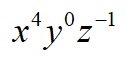
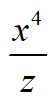

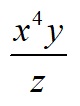


2x318x10
9x7
9x13
18x7
2x13
(2x2y3)3(x4y)2
Multiply (6m3n3 )(8m2n3)
48m5n9
48m6n6
48m5n6
none of the above
16q5m6p6
256q4m8p8
16q4m6p6
256q5m6p6
Simplify: (−3y)(−2x2y)3
216x6y6
18x5y4
18x6y4
24x6y4

A
B
C
D

A
B
C
D
Given the point-slope form equation y - 6 = 23 (x - 2),
what is the equivalent equation in slope-intercept form?
y = 32 x + 2
y = 23 x + 3
y = −23 x + 3
y = −32 x - 3
What is the equation of a line, in point-slope form that
passes through the point (3, 2) with slope of 41 ?
y + 2 = 41 (x + 3)
y + 2 = - 41 (x + 3)
y - 2 = 41 (x - 3)
y - 2 = 14 (x - 3)

In this graph, what is the slope of the line?
- 21
-2
2
21
Convert the point-slope equation y - 12 = 3(x - 9),
to Slope intercept form.
y = 3x -9
y = 3 x - 15
3x - 12y = -27
y = 3

Slope-Intercept Form?
(y = mx +b)

Slope-Intercept Form?
(y = mx +b)

Slope-Intercept Form?
(y = mx +b)
Write a linear equation in slope-intercept form give the point and slope. (-6, -11); slope = 1/2
y+6=21(x+6)
x−2y=16
y=21x−8
y=21x−11
Write a line equation in standard form given the point and slope: (3, -8); slope = -3
3x+y=1
y=−3x+9
y+8=−3(x−3)
y=−3x+1
Write an equation in slope-intercept form given the point and slope: (-4, -7); slope = 1
y+7=x+4
y=x−3
y=x−7
x−y=3
Which equation represents the graph of the function with point (-2, 5) and slope of 3?
y=3x+5
y−5=3(x+2)
3x−y=11
y−5=3(x−2)

