
 Worksheets
Gas Laws
Total questions: 102
Worksheet time: 4hrs 36mins
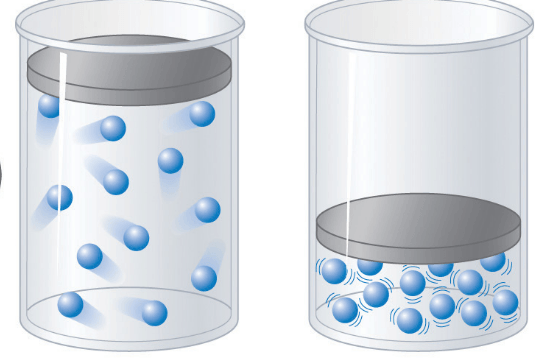
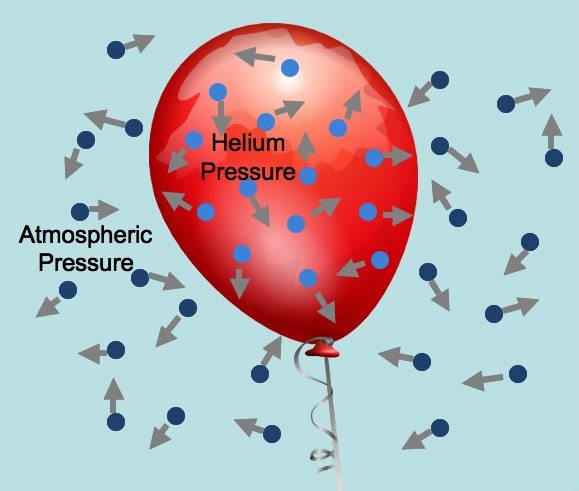
A student measures the pressure and volume of an empty water bottle to be 1.4 atm and 2.3 L. She then decreases the pressure to 0.65 atm. What is the new volume?
2.1 L
5.0 L
8.2 L
3.9 L
What is the pressure of a car tire that had an initial pressure of 1.8 atm but was heated from 38°C to 123°C?
0.9 atm
2.1 atm
1.6 atm
3.4 atm
Three gases are mixed together in a container with a total pressure of 4.8 atm. If two of the gases have pressures of 1.2 atm and 1.5 atm, what is the pressure of the third gas?
2.5 atm
1.8 atm
2.1 atm
1.3 atm
If a hairspray can is heated, what can be expected of the pressure of the gas inside the can?
The pressure will increase
The pressure will decrease
The pressure will remain constant
The pressure will equalize
A sample of gas with a volume of 30.0 mL at 25.0oC is heated to 50.0oC. What is the new volume of the gas?
60.0 mL
15.0 mL
27.5 mL
32.5 mL


What is the pressure of a car tire that had an initial pressure of 1.8 atm but was heated from 38°C to 123°C?
0.9 atm
2.4 atm
1.6 atm
3.4 atm
A sample of gas with a volume of 30.0 mL at 25.0oC is heated to 50.0oC. What is the new volume of the gas?
60.0 mL
15.0 mL
27.5 mL
32.5 mL
What is the pressure exerted by 5.00 moles of nitrogen gas contained in a 30.0 Liter container at 25.0 °C?
3670 atm
0.245 atm
4.08 atm
605 atm
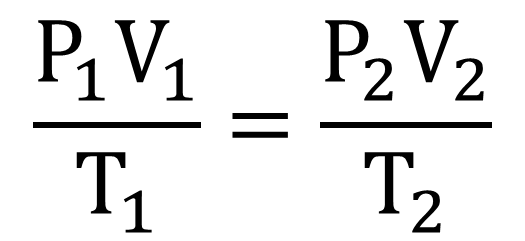
What is the temperature of 3.45 moles of a gas at a pressure of 5.60 atm and a volume of 12.0 liters?
237 mL
237 K
237 L
237 atm
A 20.0 gram sample of hydrogen gas has a volume of 40.55 L and a tempeature of 67.00C. What is the pressure of the gas? (hint--don't forget to convert mass to moles!!)
2.71 mm Hg
2.71 atm
6.88 mm Hg
6.88 atm
Which formula would you use to answer the following problem?
At what temperature will 0.654 moles of neon gas occupy 12.30 liters at 1.95 atmospheres?
PV=nRT
P1V1/T1=P2V2/T2
Not enough information is given.
A gas at 928 kpa, 129 C occupies a volume of 569 L. Calculate the volume at 319 kpa and 32 C.
1256 L
418.18 L
1100 L
1400 L


If 22.5 L of nitrogen at 748 mm Hg are compressed to 725 mm Hg at constant temperature, what is the new volume?
23.2
21.8
0.0431
0.0459
A balloon is filled with 35.0 L of helium in the morning when the temperature is 20.0 degrees Celsius. By noon the temperature has risen an additional 25 degrees. What is the new volume of the balloon?
38L
79L
44L
36L
6.0 L of gas in a piston at a pressure of 1.0 atm are compressed until the volume is 3.5 L. What is the new pressure inside the piston?
1.7 atm
0.6 atm
21 atm
1 atm
A gas occupies 900.0 mL at 150 kPa. What is the new pressure when the gas is compressed to only 500.0 mL?
270 kPa
270 atm
83 kPa
83 atm
If a gas is cooled from 323.0 K to 273.15 K and volume is kept constant, what final pressure would result if the original pressure was 750.0 mmHg?
634 mmHg
887 mmHg
887 atm
634 atm
How many moles of helium are in a gas
sample that has a volume of .5 L at a
pressure of 3.00 atm and a temperature of
298 K?
6.13 moles
0.613 moles
0.0613 moles
61.3 moles
How many moles of helium are contained in a 5.00L canister at 101kPa and 30.0oC?
2.02 moles
0.201 moles
0.494 moles
4.99 moles
A water bottle at STP is cooled to -155°C. What is the new pressure?
3.2 atm
0.43 atm
1.8 atm
0.27 atm
A student inflates a balloon with helium then places it in the freezer. The student should expect
the balloon's volume to increase
the balloon's volume to decrease
the balloon's moles to increase
the balloon's moles to decrease
Pressure is
defined as the mass that an object exerts when at rest.
not a measurable in gases.
defined as the number of moles of substance divided by the mass of the substance.
created by the force of the gas particles impacting the walls of the container.
Which answer shows the correct Combined Gas Law
T2P1V1=T1P2V2
T1P1V1=T2P2V2
T1P1V2=T2P2V1
T1P2V1=T2P1V2
A real gas differs from an ideal gas because the molecules of a real gas have
A) Some volume and no attraction for each other
B) Some volume and some attraction for each other
C) No volume and no attraction for each other
D) No volume and come attraction for each other
What does R stand for
Ideal gas constant
Real gas constant
Temperature constant
Ideal gas law

this is a graph representing Boyle's law
this is a graph representing Charles' law
this is a graph representing Avogadro's law
this is a graph representing ideal gas law

this is a graph representing Boyle's law
this is a graph representing Charles' law
this is a graph representing Avogadro's law
this is a graph representing ideal gas law

What is happening as you move from volume 1 to volume 2?
The pressure is held constant
There are the same number of molecules in a smaller container, so volume 2 will have a higher pressure because the molecules are hitting the sides more often.
There are more molecules in volume 2, which would cause them to be hotter and move faster, therefore pressure is increased.
Volume 1 would have a higher pressure.
Which formula would you use to solve the following equation?
If I have 23 L of Ar at a pressure of 12 atm and a temperature of 200 K, and then I increase the pressure to 14 atm and the temperature to 300 K, what is my new volume?
PV=nRT
Not enough information is given.
P1V1/T1 = P2V2/T2
As pressure increases, volume decreases. Describe the relationship:
Direct Relationship
Inverse Relationship
No Relationship
As temperature increases, volume increases. Describe the relationship:
Direct Relationship
Inverse Relationship
No Relationship
As pressure increases, temperature increases. Describe the relationship:
Direct Relationship
Inverse Relationship
No Relationship
Which equation would you use to solve the following problem:
"The volume of of 300 mL of gas at 1 atm is decreased to 100 mL. What is the new pressure?"
P1V1 = P2V2
V1/T1 = V2/T2
(P1V1)/T1 = (P2V2)/T2
None of the above
Which equation would you use to solve the following problem:
"A gas occupies 2 L of space at 0 C. What will its volume be at 100 C?"
P1V1 = P2V2
V1/T1 = V2/T2
(P1V1)/T1 = (P2V2)/T2
None of the above
Which equation do you use? "A 4L container at 298K contains 25 grams of carbon dioxide gas. What pressure is the container?"
P1V1=P2V2
P1 / T1=P2 / T2
V1 / T1=V2 / T2
PV=nRT

