
 Worksheets
Physical Science SOL review TEI practice
Total questions: 35
Worksheet time: 32mins
Label the seasons for the northern hemisphere.

Label 1 represents (a) and label 2 represents (b)
Which statement best describes how coal primarily provides energy when burned?
Kinetic energy is released as potential energy.
Chemical energy is released as thermal energy.
Mechanical energy is released as electrical energy.
Electrical energy is released as chemical energy.
Which of these is an example of managing renewable resources?
Using wind turbines to generate electricity
Capturing carbon pollution while producing gasoline
Making coal a cleaner energy source
Recycling aluminum cans
Identify all the parts of an animal cell.
A newly discovered single-celled organism was found living in 113°C water near an ocean vent. The organism is autotrophic and requires sulfur, hydrogen, and carbon dioxide. Scientists most likely classified this organism as a type of Archaea because many organisms within Archaea —
can survive in extreme environments
are able to reproduce by binary fission
produce sugars by photosynthesis
contain chitin in their cell walls
Click on the organisms that belong in phylum Arthropoda.
Label the water cycle.

How many 1st order consumers?
(a)
The allele in rabbits for short hair (H) is dominant to long hair (h). What are the probable offspring phenotypes from a cross between parents that are both Hh?
25% HH; 50% Hh; 25% hh
50% HH; 50% hh
50% short hair; 50% long hair
75% short hair; 25% long hair

Which statement correctly compares Sample 2 and Sample 4?
Each sample performs its own specific functions, but they have different levels of organization.
Both samples perform the same functions, and they have the same level of organization.
Each sample is made of a specific type of cell, and each type of cell performs different functions in an organism.
Both samples are made of the same type of cell, and the cells perform the same functions in an organism.

Which three levels of organization are represented by the samples?
cell
tissues
organ system
organ
organism

Which statement correctly describes the main difference between Sample 5 and Sample 2?
Sample 5 is a eukaryotic cell, whereas Sample 2 consists of prokaryotic cells.
Sample 5 depends on another source for energy, but Sample 2 can create its own energy.
Sample 5 can change shape to perform specific functions, but Sample 2 remains the same shape.
Sample 5 carries out all its life functions in one cell, whereas Sample 2 is a specialized group of cells.
Select all that belong to an animal biological classification.
A student studying sodium chloride (NaCl) makes a list of its properties. Which observations are physical properties?
Which of these compounds contains covalent bonds?
CaBr2
FeS2
ZnF2
CO2

Which set of coefficients will balance this equation?
1,4,2,1
1,2,1,1
2,2,1,2
4,3,2,4
Balance the chemical equation using the lowest possible coefficients.
(a) Fe2O3 + (b) C --> (c) Fe + (d) CO2
Select all the non-metals
Label the wave.

The separation of the light waves shown results from which difference between the light waves as they pass through the prism?
Mass
Temperature
Velocity
Amplitude
A student applies a force to a stone block as shown. Which diagram best represents the reaction force provided by the block to the student?

A forklift exerts a force of 12,000 N to lift a box 4 meters in 3 seconds. What is the power produced by the forklift?
hints: 2 step math problem
9,000 J/s
16,000 J/s
36,000 J/s
144,000 J/s
A diode is a semiconductor that is used to —
amplify electrical signals
create a magnetic field
allow current to flow only in one direction
turn the flow of electricity on and off

Which bar magnet will experience the greatest magnetic attraction?
Magnet 1
Magnet 2
Magnet 3
Magnet 4
Which illustration correctly shows how the spheres will behave?


Which diagram shows the gymnast's potential energies?


In which direction will the box move?
A. in the direction arrow P is pointing
B. in the direction arrow Q is pointing
C. in the direction arrow R is pointing
D. in the direction arrow S is pointing

Which person has gained the most gravitational potential energy ?
a. a 50kg person who lives on the second floor
b. a 50kg person who lives on the third floor
c. a 100kg person who lives on the second floor
d. a 100kg person who lives on the third floor

What happens to Box X and Box Y as a result of the forces?
A. Box X starts moving, speeding up, and Box Y remains at rest.
B. Box X starts moving at constant speed, and Box Y remains at rest.
C. Box X starts moving at constant speed, and Box Y starts moving, speeding up.
D. Box X starts moving, speeding up, and Box Y starts moving at a constant speed.
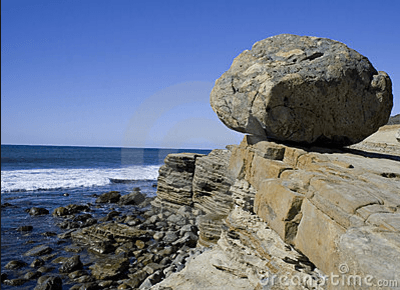

Above a continent, a warm air mass slowly passes over a cold air mass. As the warm air begins to cool, clouds form. What will most likely happen next?
lightning will strike
hail will form
hurricanes will form
rain will fall
Why is the temperature lower at night than during the day?
There are more clouds at night to block the sun's rays
Winds blow harder at night
The temperature depends on energy from the sun
There is less water in the air at night

