wayground logo

Free Printable Worksheets

NEW

Font size

S
M
L
XL
Worksheets

Biology Final Exam Review Part 4

Total questions: 55

Worksheet time: 53mins

Name
Class
Date
1.
The disappearance of a species.
a)
Evolution
b)
Extinction
c)
Migration
d)
Mutation
2.
According to the law of superposition, which layer is the youngest?
a)
A
b)
B
c)
C
3.
All the individuals of a species that live in a particular area are called a
a)
variation
b)
population
c)
fossil
d)
group
4.
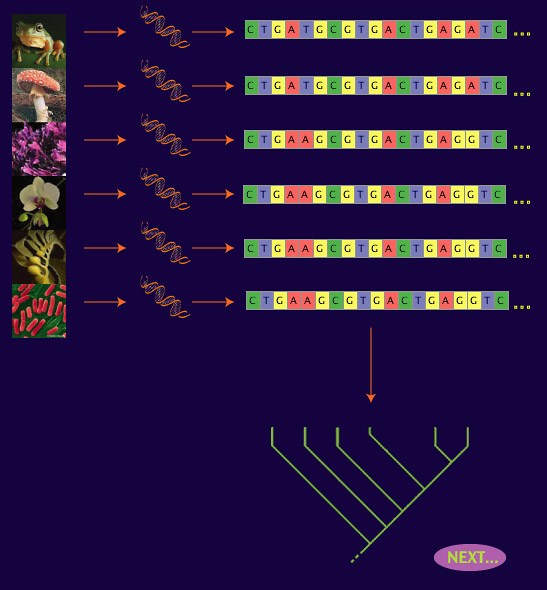
Two organisms that are closely related would have
a)
very similar DNA sequence
b)
exactly the same DNA sequences
c)
no proteins in common
d)
completely different DNA sequence
5.
The environment around Manchester, England, changed during the Industrial Revolution.  How did this change affect peppered moths living in the area?
a)
Natural selection favored moths with dark wings because predators could not see them on the soot-colored trees.
b)
Natural selection favored moths with white wings that were easy for predators to see.
c)
Natural selection favored moths with white wings because predators could not see them on the soot-colored trees.
d)
Natural selection caused moths with white wings to become extinct.
6.
What is embryology?
a)
the age of organisms
b)
the oldest stage of development
c)
the life span of an organism
d)
the earliest growth stage of development
7.

What do we call a change in a species over time?

a)

Adaptation

b)

Evolution

c)

Extinction

d)

Environmental influences

8.
The diagram shows fossils in different rock layers. Which of these statements about the age of these fossils is most likely correct?
a)
Fossil A and C are the same age
b)
Fossil B is older than fossil C
c)
Fossils A is older than fossil B
d)
Fossil D is older than fossil C
9.
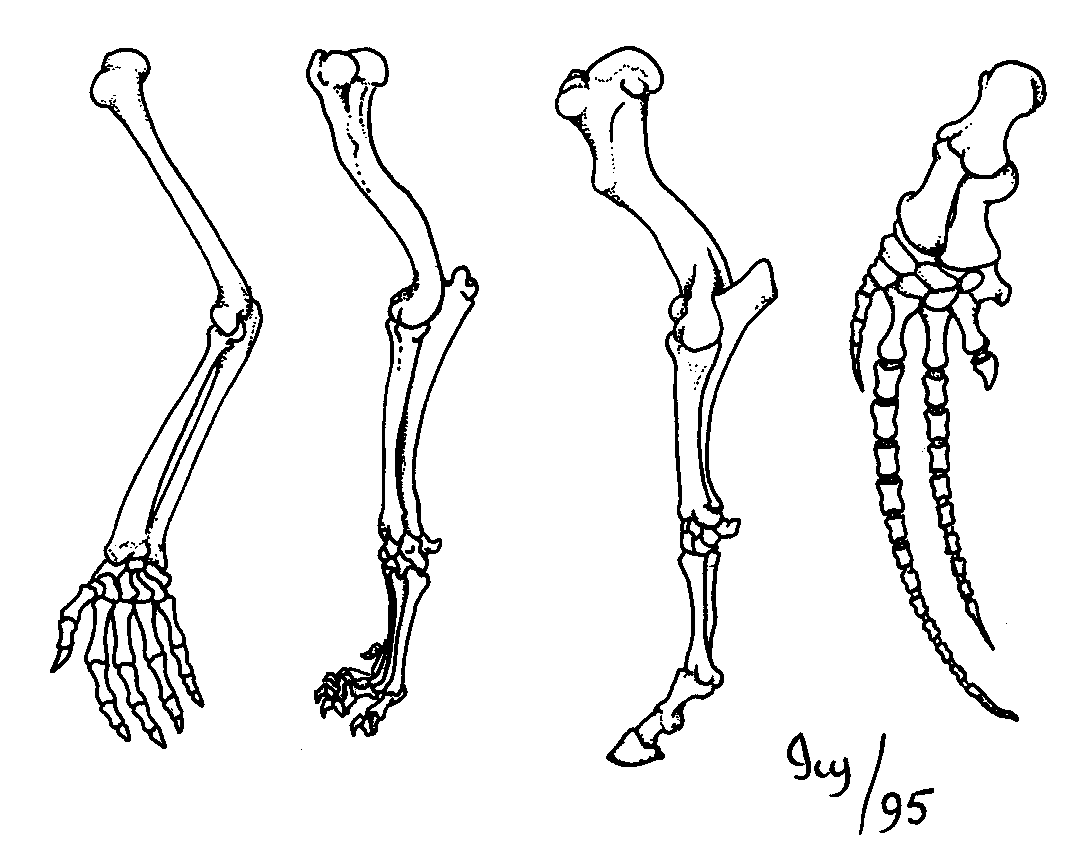
Structures with the same parts have different functions; suggests that organisms share a common ancestry
a)
vestigial structures
b)
homologous structures
c)
adaptive radiation
d)
fossil
10.
Inherited trait that helps an organism survive is a(n) __________.
a)
Fossil
b)
Adaptation
c)
Ancestor
d)
Natural selection
11.
Where the better adapted organisms survive to pass traits along to offspring.
a)
Evolution
b)
Natural Selection
c)
Extinction
d)
Artifical Selection
12.
Why are advantageous traits more likely to be passed onto offspring?
a)
Because they are more likely to survive and reproduce.
b)
Because they come from dominant alleles.
c)
Because they come from recessive alleles.
d)
Because the trait is an acquired phenotype.
13.
Which best describes mutations?
a)
Always helpful
b)
Always harmful
c)
Can be helpful or harmful
d)
Always neutral
14.

Whales are aquatic mammals that contain a pelvis (hip) bone. Even though it does not aid in its movement, the function must have been used by a common ancestor of the whale. Thus, the pelvis is referred to as a(n)

a)

vestigial structure

b)

analogous structure

c)

homologous structure

15.
The ability of an organism to survive and reproduce in its specific environment 
a)
diversity.
b)
evolution
c)
adaptation
d)
 fitness
16.
Genetic differences between organisms of the same species
a)
Variation
b)
Adaptation
c)
Behavior
d)
Environment
17.

Based on the image, why are these similar looking birds now considered different species, even though they have a common ancestor?

a)

all these birds could swim, so they went to different continents to evolve

b)

their environments changed over time, so they had to adapt to those environment

c)

the birds acquired the new traits while trying to adapt to their new environments

d)

there were fewer species of birds in the past, now there are more

18.
____________ believed that those organisms that were best suited for their environment would survive and pass on their beneficial traits to their offspring. 
a)
Darwin
b)
Lamarck
c)
Watson
d)
Mendel
19.

A hurricane wipes out half the population of blue jays in Cape Hatteras, North Carolina. This is an example of?

a)

Natural Selection

b)

Mutation

c)

Genetic Drift

d)

Gene Flow

20.

Mutations are important because ____.

a)

they bring genetic variation needed for a population to evolve

b)

mutations are not important

c)

they bring about benefits for the individual not the population

d)

they bring death of the organism in which they develop

21.

The science of naming and classifying is called

a)

Classology

b)

Taxonomy

c)

Genetics

d)

Biology

22.

The scientific name Felis domesticus indicates that ________ is the species name.

a)

Felis

b)

domesticus

c)

Felis and domesticus

d)

Feline

23.

All kingdoms except Archebacteria and Eubacteria have cells that are

a)

eukaryotic

b)

prokaryotic

c)

enclosed in a cell wall

d)

without a nucleus

24.

Organisms in the kingdom _______ are described as plant-like, animal-like, and fungus-like.

a)

Fungi

b)

Animalia

c)

Plantae

d)

Protista

25.

Some Protozoa, like the __________ move by pseudopods, which are flowing extensions of the cell.

a)

paramecium

b)

mushroom

c)

yeast

d)

amoeba

26.

Beneficial fungi include decomposers, those used in food production, and

a)

those that cause ringworm

b)

those that produce the antibiotic penicillin

c)

slime mold

d)

poisonous mushrooms

27.

Organisms that coannot make their own food are considered

a)

semitrophs

b)

heterotrophs

c)

autotrophs

d)

multicellular

28.

Plant cells have cell walls made of cellulose but fungi have cell walls made of _____.

a)

chitin

b)

cellulose

c)

lipids

d)

semipermeability

29.

Nonvascular plants do not have ______

a)

vessels (xylem and phloem)

b)

chloroplasts

c)

cell walls

d)

water

30.

Green algae are in the Protista kingdom and are thought to be the ancestors of the _________ kingdom.

a)

Fungi

b)

Animalia

c)

Eubacteria

d)

Plantae

31.

The classification level _______ is the most specific among these choices.

a)

kingdom

b)

phylum

c)

genus

d)

order

32.

The Kindgom Animalia contains _______ organisms

a)

unicellular

b)

multicellular

c)

prokaryotic

d)

semicellular

33.

Unicellular organisms that can live in extreme conditions such as hot springs, hydrothermal vents, and acidic environments are part of the Domain and Kingdom _____.

a)

Eubacteria

b)

Bacteria

c)

Archaebacteria

d)

Protista

34.

Bacteria are classified according to their ______.

a)

size

b)

shape

c)

symmetry

d)

color

35.

The word Bacilli means _____

a)

rod-shaped

b)

spiral-shaped

c)

heart-shaped

d)

sphere-shaped

36.

Identify the type of root system shown on the right.

a)

tap root

b)

fan root

c)

fibrous root

37.

What does the vacular tissue phloem transport?

a)

water

b)

nutrients

c)

waste

38.

What do you call the porelike openings that allow gases to enter and leave the leaf?

a)

chlorphyll

b)

stomata

c)

xylem

d)

phloem

39.

What type of tropism is this plant demonstrating?

a)

Phototropism

b)

Gravitropism

c)

Thigmotropism

40.

Is this a picture of a gymnosperm or an angiosperm?

a)

Gymnosperm

b)

Angiosperm

41.

The stamen is the ______ part of the flower

a)

male

b)

female

42.
This is the top part of the pistil of a flower which receives the pollen grains; germination happens here.
a)
petal
b)
sepal
c)
filament
d)
stigma
43.

What group of plants makes up the majority of plant species?

a)

ferns

b)

gymnosperms

c)

angiosperms

d)

moss, hornworts, and liverworts

44.

Liverworts, hornworts, and moss are all ____________

a)

vascular plants

b)

nonvascular plants

c)

ferns

45.
During the lytic infection by a virus, the host cell is-
a)
destroyed
b)
copied
c)
passed on to the lysogenic cycle
d)
not affected
46.
Which statement regarding viruses is true?
a)
a virus can only reproduce inside of a living cell
b)
viruses do not contain DNA
c)
viruses are unicellular
d)
viruses are generally larger than cells
47.
The process of converting nitrogen into a form plans can use is known as nitrogen
a)
conjugation
b)
sterilization
c)
fixation
d)
decomposition
48.
What is Flagella?
a)
A tail like structure that help protist move
b)
Hair like fibers that help protist move
c)
A place where spores are kept
d)
A fake foot that help protist move
49.
A mushroom growing on the forest floor gets most of its energy by:
a)
eating insects
b)
eating moss
c)
absorbing sunlight
d)
absorbing nutrients
50.
A hidden virus in the lysogenic cycle...
a)
cannot attach to a host cell
b)
becomes part of the host cell's genetic material
c)
immediately takes over the cells functions
d)
attaches to but does not enter the cell
51.

Bacteria go through this asexual reproduction process.

a)

budding

b)

binary fission

c)

sporulation

d)

regeneration

52.
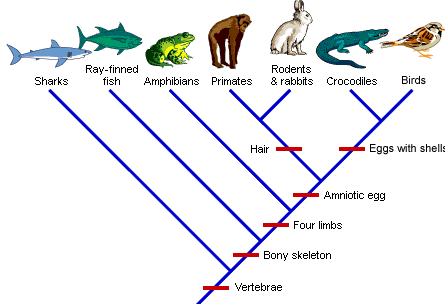
According to this cladogram, sharks are MOST closely related to which organism? 
a)
Amphibians
b)
Ray finned fish
c)
Crocodiles
d)
Birds
53.

How many options should every branch in a dichotomous key have?

a)

1

b)

2

c)

3

d)

4

54.
Which kingdoms are prokaryotic?
a)
Archaebacteria and Animalia
b)
Eubacteria and Archaebacteria
c)
Fungi and Protista
d)
Plantae and Eubacteria
55.
Identify the kingdom...
Microscopic unicellular organism found in a mud puddle.  Organism's DNA is contained in a nucleus and it moves by beating tiny hairs in the water.

a)
Archaebacteria
b)
Eubacteria
c)
Protista
d)
Fungi