
 Worksheets
Final Exam Review
Total questions: 140
Worksheet time: 2hrs 5mins


A story that has a script, characters, and stage directions is called....
procedural text
drama
poetry
novel
This genre provides true facts and information about different subjects. I can include charts and graphs.
non-fiction
fiction
drama
poetry
Heirloom : Inherited ::
ship : wooden
sermon : religious
newspaper : popular
coupon : valuable
Fame : Obscurity ::
peace : harmony
music : art
knowledge : wisdom
sorrow : joy
Locker : Storage ::
telephone : communication
wallet : cash
pencil : paper
cabinet : cereal
Conclusion: Essay ::
theme: song
meal: dessert
parade: party
scene: play
Active : Idle ::
challenging : difficult
dramatic : tragic
brief : lengthy
scholarly : studious
Hasty : Patience ::
unskilled : magic
terrified : logic
unqualified : credentials
gullible : belief
toothpaste: pharmacy :: money:
dollars
drugstore
teeth
bank
Devout : Religious ::
hyper : energetic
depressed : angry
fit : strong
cruel : strange
Hero : Gallant :: Villan :
catastrophic
languid
malicious
sullen
cell : divide :: seed :
seedling
germinate
forest
embryo
model : clothes :: demonstrate :
fashion
procedure
illustrate
demonstration
view : scene :: hear :
heard
ear
perceptible
sound
amateur : professional :: fiction :
books
story
whimsy
nonfiction
alteration : clothing :: revision :
rewrite
sight
version
manuscript
dearth : scarcity :: abundance :
material
quantity
excess
charity
decipher: decode :: evade:
read
capture
confuse
escape
What is the definition of theme?
A universal truth, a sentence stating the lesson/essage the author tries to reveal to the audience
Events that occur within the story
Author's reason for writing the story
Location of the stories
Three flies notice an overturned honey pot. Two of the flies decide to land in the honey and start eating it. But the oldest fly stays back. The two flies tease the older fly, but then get stuck in the honey.
What is the theme of this story?
Some prizes aren't worth it.
Overreacting leads to illness.
Insects value food over safety.
Always send a tester.
Susie was waiting for Tina to arrive in the crowded lunch room. She looked through the crowd to see if she could spot Tina from afar. Tina was standing in an area all by herself. She had a perplexed look on her face, as there were no other seats available. Thankfully, Susie had saved her a seat, and all was well.
What is the theme?
Lunch is best when it's crowded.
Be nice.
Friendship comes in many forms.
Susie is nice.
Jim was stacking boxes at work. There was a certain height he had to reach. He stretched his body, but could not reach to place the final box at the top. Bill happened to see Jim struggling and came to his rescue, since he was a foot taller.
What is the theme?
Teamwork can accomplish a goal.
Tall people are the best.
Work hard to reach a goal.
People can be like boxes.
The three-year-old peered down from the diving board and looked back at his mother behind him. His knees began to buckle as he took another step forward. "Splash!"
What is the theme?
It takes courage to accomplish your goals.
You should never give up.
It takes loyalty to reach your dreams.
People make sacrifices for others.
She sobbed for hours trying to think of a way out of having to tell her father she wrecked her new car. After stewing over it for quite some time, she called her father on his cell phone. "Thank you," he said.
What is the theme?
Sometimes, crying is good for you.
It's important to be honest.
Driving a car is a big responsibility.
Experiencing loss/grief is difficult.
Trust
Which is it?
Theme Topic
Moral
Main Idea
Theme Statement
What is the end of the plot called?
Rising Action
Climax
Resolution
Exposition
What is the most suspenseful, dramatic part of the plot? This is the "turning point" where the main character battles the main conflict.
Falling Action
Exposition
Rising Action
Climax
Conflict that occurs with an outside force is called...
Internal Conflict
Chaotic Conflict
External Conflict
Outside Conflict
Conflict that occurs within a character's own mind (such as guilt, insecurities, a tough decision) is called...
Inside Conflict
Internal Conflict
External Conflict
Extra Conflict
If a character is trying to survive in a tornado, this would be...
Character vs Nature
Character vs Self
Character vs Character
Character vs Society
If a character is trying to make a big decision about leaving their job or not, this is an example of...
Character vs Nature
Character vs Society
Character vs Character
Character vs Self
If a character is accused of a crime they did not commit and trying to prove their innocence, this is an example of...
Character vs Self
Character vs Character
Character vs Nature
Character vs Society
If a character gets into a screaming match with their bully, this is an example of...
Character vs Character
Character vs Society
Character vs Nature
Character vs Self
What is the beginning of the plot called? This is where the setting and main characters are typically introduced.
Trigger/Hook
Rising Action
Exposition
Resolution
What part of the plot is typically the longest? This is where the conflict builds up.
Falling Action
Climax
Rising Action
Trigger/Hook
Character vs Self is an...
Internal Conflict
External Conflict
Character vs Nature, Character vs Society, and Character vs Character are all...
External Conflicts
Internal Conflicts
What is an example of an INTERNAL CONFLICT that Melinda faces?
The Basketball Pole throwing potatoes at Melinda in the cafeteria
Rachel mouthing “I hate you” to Melinda as she walks by
Melinda not knowing where to sit on the bus
Mr. Neck giving Melinda demerit for wandering the halls
Which is an example of an EXTERNAL CONFLICT that Melinda experiences?
Melinda’s inability to speak up for herself and tell the truth
Melinda having her hair yanked by a girl on the bleachers
Melinda throwing her mirror in the closet because she cannot face herself
Melinda thinking people are always whispering about her.
What is the part of the plot between the climax and the resolution called? This is where the loose ends get tied up.
Rising Action
Falling Action
Trigger/Hook
Exposition

Which sentence is an example of indirect characterization?
Mrs. Loveday was happy Kentucky won the football game.
Mrs. Loveday leaped up and shrieked with joy when Kentucky won the football game.
Mrs. Loveday watched the football game.
Mrs. Loveday ate nachos while watching the football game.
Characterization is the way an author reveals what a character is like and how the character changes throughout the story.
true
false
sometimes true
There is no such thing as characterization.
Daniel likes to help others. He often volunteers at the homeless shelter and he frequently brings an extra lunch to school to give to a friend. If anyone ever needs help, Daniel is one of the first people to volunteer. He would rather give a present than to get one. The character trait that best describes Daniel is...
Obedient
Loyal
Charming
Generous
The king glared at the scroungy, boy before him. "How dare you steal from the king's court!" he gruffly exclaimed. The trembling boy begged for forgiveness. He explained how he had no home, no food, and no where to turn. "Send him to the dungeons!" the king shouted angrily. The character trait that best describes the king is...
greedy
cruel
nagging
loud
It was Tanner's first day at his new school. When his teacher introduced him to the class, he tried hard to make eye contact, but he ended up looking down at the floor.
A character trait for Tanner is --
compliant
accommodating
shy
brash
A character who has fully developed personality is
a round character
a flat character
a static character
a dynamic character
The confident woman strode into the pub and took the usually shy Seamus by surprise. Despite his generally reserved nature, he got up the nerve to offer her his seat at the bar.
direct characterization
indirect characterization
“Mr. Bingley was good-looking and gentlemanlike; he had a pleasant countenance, and easy, unaffected manners.” - Pride and Prejudice, Jane Austen
direct characterization
indirect characterization
She gently knelt down and stretched out her hand to help her friend return to her feet after she fell on the field.
direct characterization
indirect characterization
What is the theme?
What is the theme?
What is the main difference between THEME and CENTRAL IDEA.
Theme is a universal lesson and central idea is what an article is about.
Theme is what an article is about and central idea is the universal lesson it teaches.

What is the best question to ask yourself when you are trying to find the central idea of an article?
Who is the main character?
What is the main event?
What is one important detail?
What point is the author trying to make?
What is the central idea?

Native Americans dried strips of meat, pounded it into a paste, and then mixed it with fat. Sometimes they added berries and sugar. Then they pressed it into small cakes. They called these cakes pemmican. Pemmican didn't spoil, and it provided lots of energy for people traveling or going hunting. Today explorers still carry and eat this food.
What is the central idea?
who uses pemmican today
what can be put into pemmican
how pemmican was prepared by Native Americans.
why people eat pemmican today
There are many fun things to do at the beach. Swimming is one thing that can be done at the beach. Snorkeling is another thing that can be enjoyed. Playing beach volleyball can be a lot of fun. It is also fun to look for shells. Some people simply like to sunbathe.
What is the central idea?
There are many fun things to do at the beach.
It is also fun to look for shells.
Some people simply like to sunbathe.
Going to the beach to swim can be fun.
Soccer players learn many skills when playing soccer. Soccer players learn how to dribble and pass the ball. They also learn how to control the ball so they can eventually score. Most importantly, soccer players learn how to work together with their teammates.
What is the central idea?
They also learn how to control the ball so they can eventually score.
Soccer players learn how to dribble.
They learn how to work together as teammates.
Soccer players learn many skills when playing soccer.
A penny for your thoughts? If it's a 1943 copper penny, it could be worth as much as fifty thousand dollars. In 1943, most pennies were made out of steel since copper was needed for World War II, so the 1943 copper penny is ultra-rare. Another rarity is the 1955 double die penny. These pennies were mistakenly double stamped, so they have overlapping dates and letters. If it's uncirculated, it'd easily fetch $25,000 at an auction. Now that's a pretty penny.
What is the main idea of the paragraph?

What is the main idea of this paragraph?

A work of fiction can have more than one theme.
Unlike the topic of literature, a theme ...
can be expressed in one word
always shows the setting
is always stated directly in the text
cannot be just one word
An author usually does not state the theme in the story. You must use clues and infer the author's idea.

Poems are arranged in lines. Lines can be ___________.
A single word
A sentence
A part of sentence
All of the above

Groups of lines are called ______________.
Sentences
Stanzas
Tony Danzas
Line groupings

_________ is the repetition of vowel sounds.
Rhythm
Onomatopoeia
Alliteration
Rhyme

__________ is the repetition of consonant sounds in words that are close together.
Rhyme
Alliteration
Hyperbole
Metaphor

__________ a comparison of two unlike things, using the words "like" or "as".
Metaphor
Simile
Synonym
Hyperbole

____________ is a comparison of two unlike things, but does not use the words "like" or "as".
Simile
Synonym
Personification
Metaphor

__________ is the process of giving human qualities to something that isn't human.
Personification
Hyperbole
Simile
Metaphor

_________ is a big exaggeration, usually with humor.
Simile
Metaphor
Hyperbole
Personification

What figurative language is used in this sentence?
"The sun was calling my name with its glowing, warm rays of light"
Metaphor
Personification
Refrain
Hyperbole

What figurative language is used in this sentence?
"The boy was a statue when the train passed him by"
Simile
Refrain
Personification
Metaphor

What figurative language is used in this sentence?
Gilbert and Gus gulped and gasped for air as they fought over the squeaky toy.
Rhyme
Simile
Alliteration
Personification

What figurative language is used in this sentence?
"The boy was as fast as a rocket as he sped by on his bicycle"
Simile
Metaphor
Hyperbole
Personification

What are words or phrases repeated throughout the poem?
rhyme scheme
rhythm
repetition
rhyme


How is poetry written? (structure)
a) Sentences & paragraphs
b) Sentences
c) Lines & paragraphs
d) Lines & stanzas

George could never do anything right. He was usually late for school, and throughout the day, he was late for every activity. If the teacher said it was time for reading, he took out his math book. When it was time for math, he took out his independent reading book.
What is the TONE of this passage?
disapproving
encouraging
angry

The sky was dark with heavy rain clouds, and a cold wind blew in from the lake. The trees shivered, losing the last of their leaves, and people ran from their cars to their houses, avoiding spending any time outside.
What is the MOOD of this passage?
hurried
dreary
cheerful

What does this metaphor mean?
"The words flew off the page."
The ink came off the paper.
The words became birds.
Someone is reading very quickly.
Someone is reading about things that fly.

What does this personification mean?
"The few stars in the tar black sky stared down at her menacingly."
The stars have faces and are looking at her.
She's scared.
It is pitch black outside.
The night is dark and creepy.

What does this hyperbole mean?
"He did say that he loves her so much he'd die without her."
He wants to keep her in his life.
He doesn't want to lose her because he'll die.
He is very hurt by what she did.
He needs her to live.
Which of the following is the proper way to use parenthetical citation?
"This point has been argued before" (Frye).
"This point has been argued before." (Frye)
"This point has been argued before." (Frye).
Which of the following is correct?
Fry argues, "this is the main problem" (Frye).
Fry argues, "this is the main problem."
Fry argues, "this is the main problem." (Frye)
You should not put the author's name in parentheses if you state it in your sentence.
True
False
Which of the following is a proper citation in a work cited page?
"In Forecasting Their Emotions, Most People Flunk Out." Foreman, R. New York Times, 16 Feb. 1999. www.nytimes.com
Foreman, R. "In Forecasting Their Emotions, Most People Flunk Out." New York Times, 16 Feb. 1999. www.nytimes.com
New York Times. "In Forecasting Their Emotions, Most People Flunk Out." Foreman, R. 16 Feb. 1999. www.nytimes.com
What do you do if there's no published date for your text?
Leave it off your work cited.
Write (n.d.) instead.
Write (et al.) instead.
In your essay itself, titles of novels, films, and television shows should be:
in italics
underlined.
in quotes.
What's the correct order for your paper heading?
Your name, teacher name, class, date
Your name, date, class, teacher
Your name, date, teacher, class
How should you begin each paragraph?
By adding two spaces with the space bar.
By adding space between paragraphs using the "enter" key.
By indenting with the "tab" key.
What is the purpose of MLA formatting?
To torture high school students with a pointless system of random rules created by teachers for their own, morbid, amusement, and to create easier ways for teachers to hurt students' grades for their own sick pleasure.
To make papers more standardized and easier to read.
In your essay, the titles of shorter works like songs, poems, short stories, and short films should be:
in quotes
in italics
underlined

What does the C stand for in RACE?
Cites relevant evidence from the text to support conclusions and provides appropriate context
Commentary explaining why answer is correct
Cat ate my homework
Cites relevant evidence from the text to provide appropriate context
How would you restate the question, "How does the author create a feeling of sympathy?"
Did you ever wonder how an author creates sympathy?
The author of this text creates a feeling of sympathy by...
Sometimes authors create sympathy
Sympathy is a feeling that authors can create

The part of RACE where you use part of the question to begin your paragraph.
Restate
Answer
Explain
Cite

Which sentence starter is appropriate when you're explaining your evidence?
This is significant because...
The author states...
The author points out...
In conclusion...
This is an example of a phrase that would begin which letter?
Ultimately, all in all, and therefore are examples of strong
restate and answer transition words
ways to introduce cites
summary/conclusion transition words
ways to explain your cite
The part of RACE where you add your own thoughts to add to the quotes you have chosen to include.
Restate
Cite
Answer
Explain
When do we use the RACE strategy?
When the question requires a written response and asks you to use evidence or details from the text.
When the question is multiple choice and you need to look for evidence from the text.
When the question requires you to look back into the text to find the answer.
When you are answering a True or False question that requires you to look back into the text for evidence or details.
The part of RACE where you find a quote and copy it word for word from the text using quotation marks or put the quote in your own words mentioning that the author or passage states something
Answer
Explain
Cite
Restate
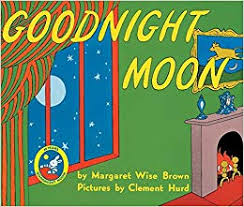
Restate the question to answer in a complete sentence.
When you were little, what was one of your favorite stories?
A favorite story from childhood was.....
Wonder was one of my favorite stories when I was little.
I have many favorite stories and one of them is.....
You would use this phrase for which part of RACE -
"This quote demonstrates..."
Restate
Answer
Cite
Explain
How would you restate the question, "Why was Michael motivated to get a good grade?"
So he would get on the A honor roll.
Michael was motivated to get a good grade because...
He was motivated to get a good grade because...
Michael was motivated...

Restate the question to answer in a complete sentence.
What does your class do on Tuesdays immediately after lunch?
On Tuesdays immediately after breakfast the class....
On Tuesdays immediately after lunch the class ....
What our class does immediately after lunch is .....
Which restate/answer statement is set up correctly?
I think characters can be both protagonists and static characters.
Yes, the protagonist can be a static character.
Characters can be both protagonists and static characters.
I believe a protagonist cannot be a static character.
Which is a correct restate and answer of the following prompt: Many studies show yearlong school is more beneficial to students than having summers off. Do you agree or disagree? Use text evidence to support your answer."
I do not agree yearlong school is more beneficial than having summers off.
Yearlong school is more beneficial to students than having summers off.
Yes I think yearlong school is better than just having summers off so students don't forget information.
No
What do you do for the E's in the RACE format? Select as many as apply.
You will explain how your evidence from the text supports your answer.
You can use your own background knowledge and connections you made from your own experience.
You will look back to the text to find specific examples that support your answer.
Turn the question into a statement and answer it fully.
Playing games can help people cope during difficult times. Which two ideas about Candyland would be the best pieces of text evidence to support this idea?
Many parents purchased Candy Land to keep their children’s boredom at bay. It quickly became Milton Bradley’s best-selling game".
Eleanor Abbott would surely be pleased to know that her “sweet little game” has delighted so many generations of children.
"Most of the kids in polio ward with Abbott had never spent much time away from their families."
(On playing Candyland) “They could visit a world where the worst thing that could happen was to get stuck in the Molasses Swamp for a turn or two.”
As Eleanor Abbott looked around the hospital ward, what she saw was heartbreaking: row after row of beds occupied by children.
Which restate/answer statement is set up correctly?
I think characters can be both protagonists and static characters.
Yes, the protagonist can be a static character.
Characters can be both protagonists and static characters.
I believe a protagonist cannot be a static character.

The "S portion of RACES helps to conclude your writing. Which is an appropriate introduction(s) for your closing? *Check all that apply!
Therefore
Consequently
It is obvious that
As you can see

