
 Worksheets
7th Grade Science Benchmark Review
Total questions: 20
Worksheet time: 30mins
Name
Class
Date
1.
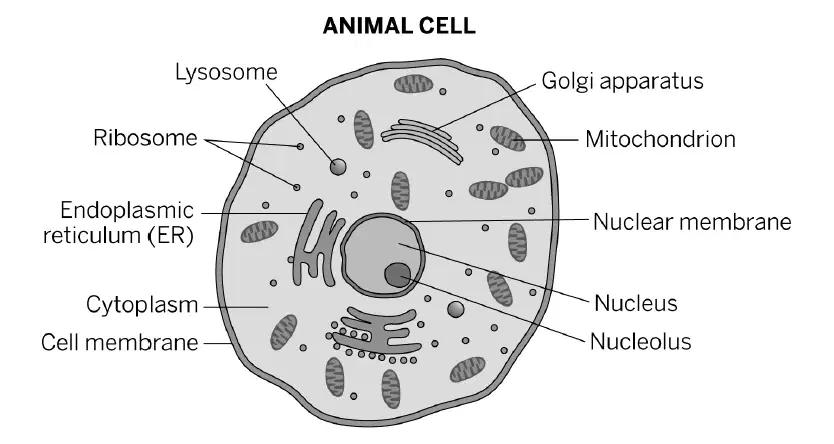
Animal cells have structures that perform specific functions in the cell. Mitochondria are organelles that float within the cell. Because they produce most of the cell’s energy, mitochondria are nicknamed the “powerhouse of the cell.”
Which of the following types of cells would have the greatest number of mitochondria?
a)
a. skin cell
b)
b. blood cell
c)
c. muscle cell
d)
d. fingernail cell
2.
Plants rely on the process of photosynthesis to grow and reproduce. What resources do they need for this process?
a)
a. energy from the sun, water, and carbon dioxide in the air
b)
b. matter from the sun, water, and carbon dioxide in the air
c)
c. matter from the sun; energy from water and carbon dioxide in the air
d)
d. energy from the sun; matter from water and carbon dioxide in the air
3.
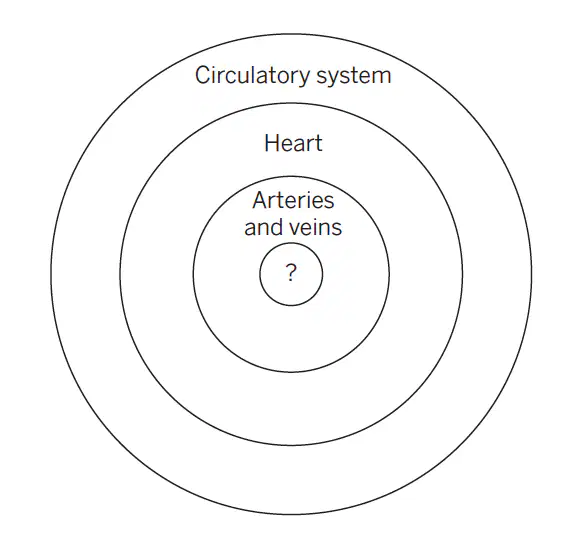
A student is making a model of the cardiovascular system, showing the different components, or levels, that make up this system.
Which component of the system is indicated by the question mark (?) in the model?
a)
a. blood cells
b)
b. heart cells
c)
c. respiratory cells
d)
d. cells of other organs
4.
Humans rely on sensory receptors to interpret messages about their surroundings. Sensory receptors respond to mechanical, physical, or chemical stimuli. There are different kinds of sensory receptors for detecting different kinds of stimuli. Chemoreceptors are specialized nerve cells that pick up chemical stimuli, such as smells or the pH level of foods. Such stimuli tell the brain and body to react a certain way to protect the body.
If a person in a controlled test is introduced to a safe chemical stimulus, what is the MOST logical prediction you could make?
a)
a. The person will bat the eyelids to push the chemicals away with the eyelashes.
b)
b. The person will plug the nose to shield the body from offensive chemical smells.
c)
c. The person will cover the ears to protect the ears from chemicals in loud noises.
d)
d. The person will bite the nails to keep the chemical from seeping into the fingers.
5.
A biologist is observing an organism under a microscope and concludes that it is a unicellular organism.
Which of the following observations provides evidence that this organism must be unicellular, not multicellular?
a)
a. it can make its own food.
b)
b. It can move on its own.
c)
c. It cannot be seen without a microscope.
d)
d. It performs all functions to maintain life.
6.
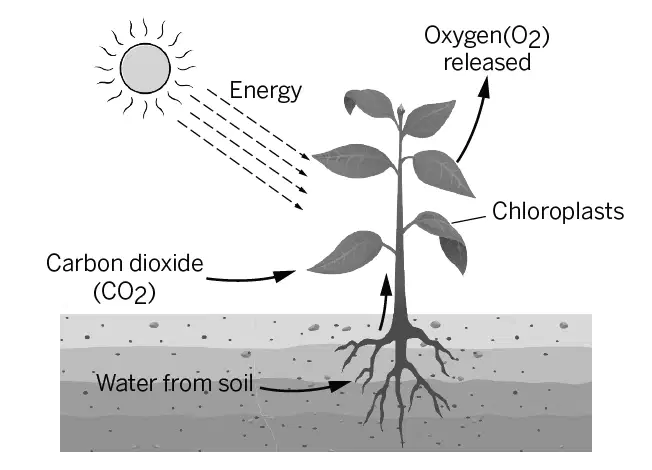
Below is a model of a plant.
Plants use the energy they obtain from the sun to make sugar molecules, which help the plants grow. How could a student add to this model to show where the sugar molecules fit in?
a)
a. by drawing the sugar molecules as an input of energy from the sun
b)
b. by drawing the sugar molecules as an input of energy from water in the soil
c)
c. by drawing the sugar molecules as an output of energy from within the chloroplasts
d)
d. by drawing the sugar molecules as an output of energy from the released oxygen
7.
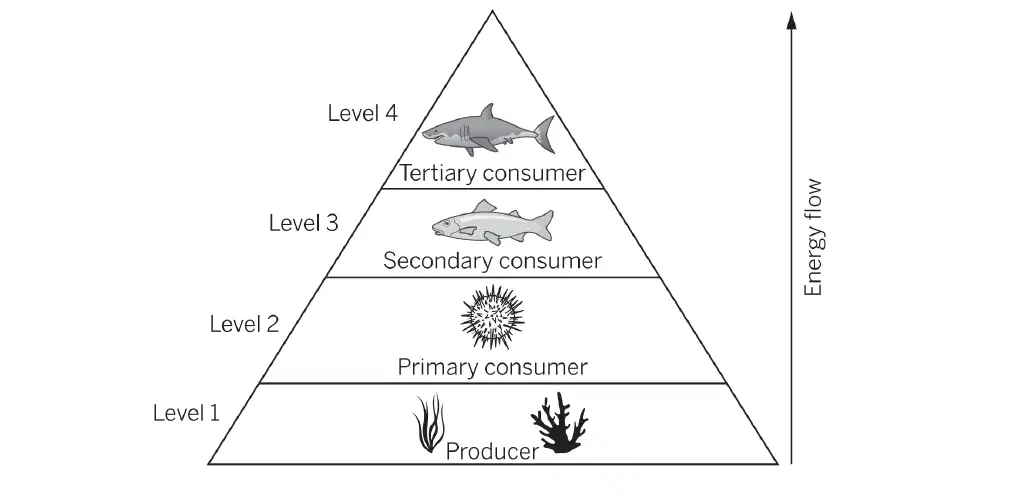
This energy pyramid shows the flow of energy in an aquatic food chain. Choose the statement that correctly describes the flow of energy in this diagram.
a)
a. Consumers in the pyramid transfer their energy back to the sun after they die.
b)
b. Plants at the bottom of the pyramid get their energy from the soil they grow in.
c)
c. As you move up the pyramid, there is less energy at each level.
d)
d. Each level of consumer needs to make up for the decrease in energy by absorbing energy from the sun.
8.
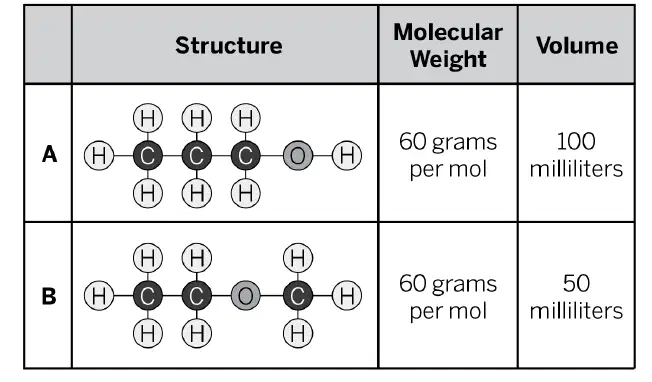
Susan has two clear, colorless liquids, Liquid A and Liquid B. She needs to determine whether they are the same substance.
Based on the information in the table, are Liquid A and Liquid B the same substance?
a)
a. No, Liquid A and Liquid B have different volumes.
b)
b. Yes, Liquid A and Liquid B have the same molecular weight.
c)
c. Yes, the molecules of Liquid A and Liquid B have the same number of atoms.
d)
d. No, the atoms of the molecules of Liquid A and Liquid B are arranged differently.
9.
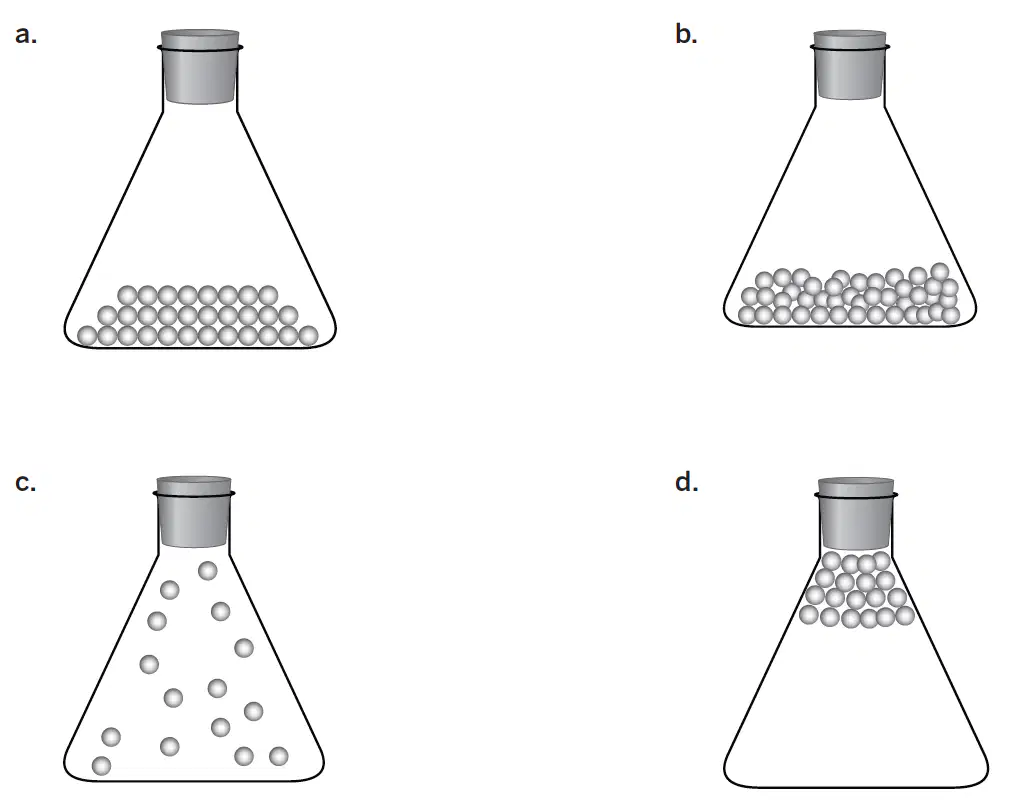
Students are studying various forms of matter. They just finished studying solids, liquids, and gases. Now they must draw a model that represents their observations.
Which model BEST represents what happens to gas molecules in a closed container?
a)
A
b)
B
c)
C
d)
D
10.

Below is a picture of the rock strata of a mountain.
What can you infer about the layers in this picture?
a)
a. The rock layers at the top of the mountain are the oldest.
b)
b. The rock strata can provide an absolute time scale of Earth’s history.
c)
c. The rock strata can be used to understand relative dates in Earth’s history.
d)
d. The rock layers in the mountain are made out of materials that are the same age.
11.
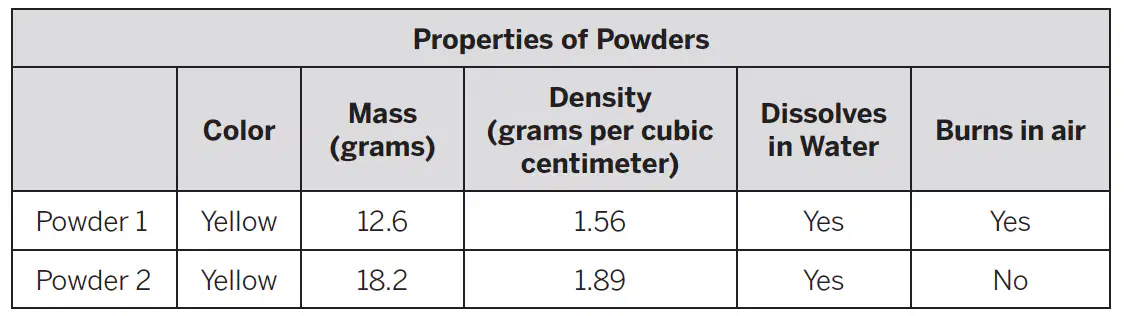
David has two yellow powders, Powder 1 and Powder 2. He collected data on some properties of these powders. His data are summarized in the table below.
Which property CANNOT be used to determine whether the two powders are the same substance?
a)
a. mass
b)
b. density
c)
c. burns in air
d)
d. dissolves in water
12.
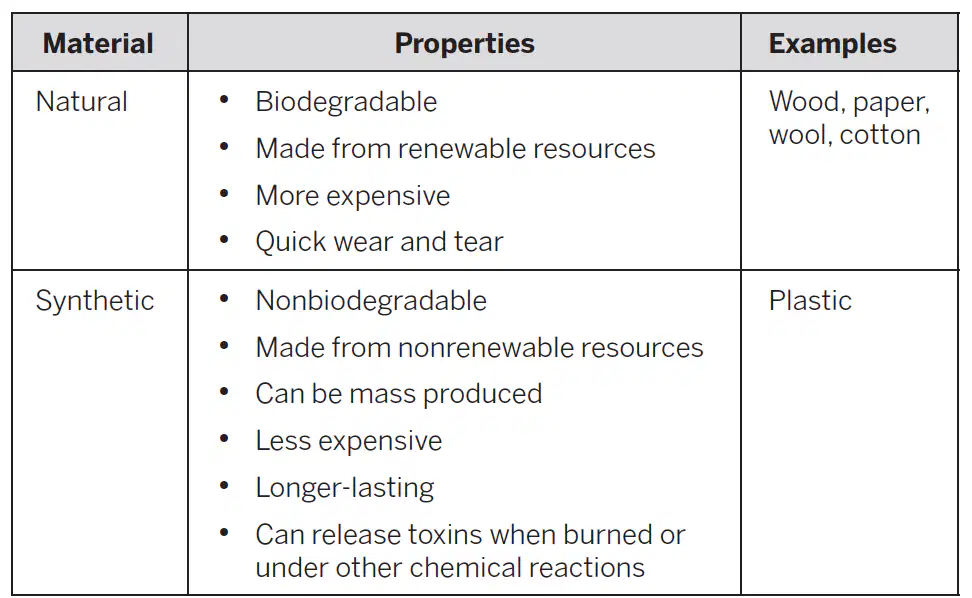
Isabella and her best friend are starting their own clothing company. They want to specialize in using environmentally friendly fabrics. Isabella is in charge of doing research and consults a variety of different sources to ensure accuracy of the data. She puts together a table to help better understand the properties of natural and synthetic materials.
Based on the information obtained, what does Isabella communicate to her friend about the materials?
a)
a. Synthetic materials can be reused and recycled to have less of an impact on the environment.
b)
b. Synthetic materials are better for the environment because they do not use up renewable natural resources.
c)
c. Synthetic materials can cause more harm to the environment than natural materials but will be less expensive to purchase.
d)
d. Synthetic materials are engineered by people to have no chemical reactions and to mimic the same properties as natural materials.
13.
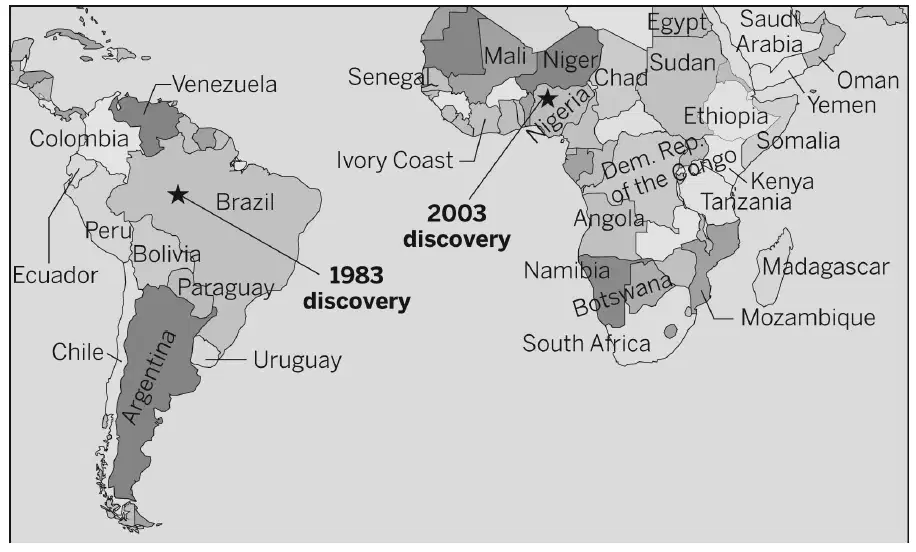
In 1983, a team of scientists discovered a fossilized bone of a giant bird when excavating land in Brazil. After studying the fossil, the team thought that the bird was unique to South America but had been extinct for millions of years. Many years later, another fossil from the same giant bird was found in Nigeria. The two fossils were formed in rock that was very similar to one another.
Look at the land masses on the map. What can the scientists conclude?
a)
a. The land masses were once connected.
b)
b. These were two different types of giant birds, even if their fossils look identical.
c)
c. The fossils date to different time periods and appear in separate regions.
d)
d. The giant bird migrated to South America, because the bones were later found in Nigeria.
14.
Which of the following statements about rock formation is the most accurate?
a)
a. All rock types will form under similar conditions but they will have distinct properties.
b)
b. Similar processes in different areas will result in rock types with different properties.
c)
c. Different processes in different areas can result in a variety of rock types.
d)
d. Rocks of the same type result from different processes in similar areas.
15.

Which model best represents conservation of matter in a chemical reaction?
a)
A
b)
B
c)
C
d)
D
16.
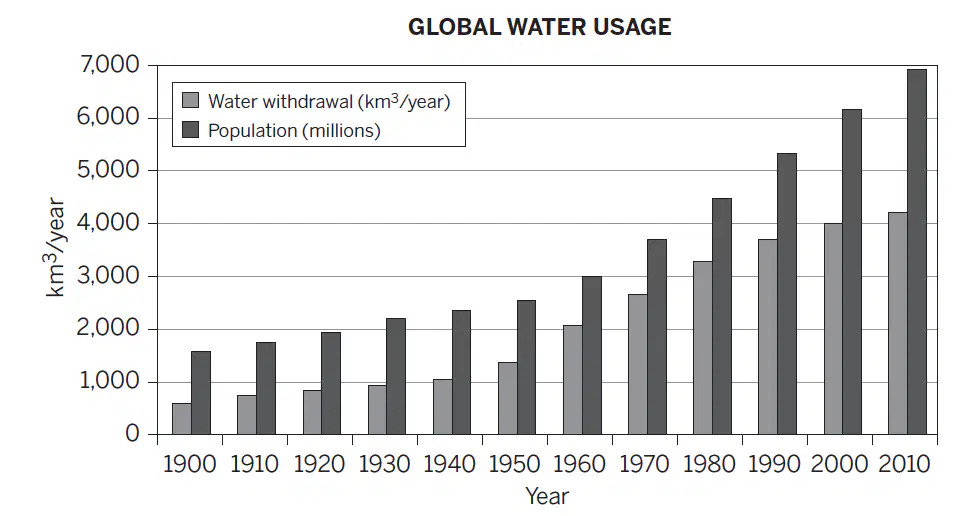
A science class is studying Earth’s water supply and global usage. The students collect data and put it into a graph, shown below.
Based on their findings, what can the students infer about water usage?
a)
a. Water usage will continue to increase at the same rate that the population is increasing.
b)
b. Even if the population stops growing, the water usage around the globe will continue to rise.
c)
c. Growing populations worldwide are correlated with the Earth’s water supply being used at increasing amounts.
d)
d. The amount of water being used does not match the number of people in the world, so no connections can be made between population and water usage.
17.
Jalen combines two substances in science class. Once combined, only one of the two substances is visible. When he placed this combination into a filter, substance 1 stayed in the filter while substance 2 went through it. Which of the following claims regarding Jalen’s combination is the most accurate?
a)
a. This combination is not a mixture because he cannot see one of the substances.
b)
b. The combination is a mixture because the substances can be separated.
c)
c. The combination is not a mixture because the substances can be separated.
d)
d. The combination is a mixture only because he cannot see one of the substances.
18.
A team of scientists prepares to study the flow of a river through a desert canyon for the next 10 years. The scientists think that the water is contributing to weathering and erosion of the canyon.
What kind of data should the scientists collect as evidence to support their explanation?
a)
a. Measure the water levels to see if less water can make the same changes in the canyon.
b)
b. Record the measurements of distinct parts of the canyon to see if those areas change over the years.
c)
c. Measure the temperature of the water to see if the water temperature becomes slightly warmer or cooler.
d)
d. Take samples of the water that is flowing into the canyon. Test the samples in a lab to see whether the water and particles that make it up change over the allotted time.
19.

Scientists have collected a lot of information about human activities and their impact on the environment. Some of that information is contained in the data table. Humans use fossil fuels for many things including heat, electricity, and gas for cars. Burning fossil fuels causes carbon dioxide (CO2) to enter the atmosphere.
Based on patterns in these data, what do you predict might happen if the population increases every year up to 2050?
a)
a. Carbon dioxide emissions would continue to decrease, and therefore, may decrease the level of climate change.
b)
b. Carbon dioxide emissions would continue to increase, and therefore, may decrease the level of climate change.
c)
c. Carbon dioxide emissions would continue to increase, and therefore, may increase the level of climate change.
d)
d. Carbon dioxide emissions will likely not change, and therefore, no change in levels of climate change will occur.
20.

Traffic in a big city is getting worse due to a sudden population increase. The mayor decides to build roads through a few of the city’s parks to help the traffic flow better.
An environmental scientist living in the city decides to conduct a study to determine the effects of these roads.
She observes two parks for one year. During that year, the city did not build any new roads through Park A. The city built three new roads through Park B.
The results of her observations are displayed in the table below.
What can the environmental scientist conclude from her findings?
a)
a. Human expansion into natural areas did not impact the environment.
b)
b. As human populations expanded into natural areas, they negatively impacted the environment.
c)
c. Human expansion into natural areas impacted the environment in both positive and negative ways.
d)
d. As human populations expanded into natural areas, they positively impacted the environment.
100 %

