Wayground logo

Free Printable Worksheets

Font size

S
M
L
XL
Worksheets

ES: Unit 4 LC3 Review

Total questions: 21

Worksheet time: 24mins
Name
Class
Date
1.
What is the energy source for the water cycle?
a)
the sun
b)
the earth
c)
water
d)
the moon
2.
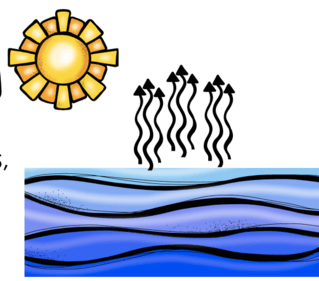
What part of the water cycle does this picture show?
a)
condensation
b)
precipitation
c)
evaporation
3.
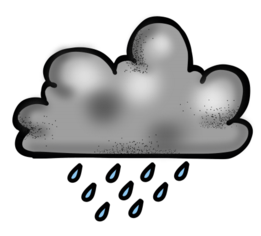
What part of the water cycle does this picture show?
a)
condensation
b)
precipitation
c)
evaporation
4.
What is evaporation?
a)
The part of the water cycle when the sun heats up water, turning it from a liquid into water vapor or steam. It rises from the ground into the air.
b)
The part of the water cycle when the water vapor in the air gets cold. The water turns back into a liquid and forms clouds.
c)
The part of the water cycle when clouds get heavy and can no longer hold the liquid water. This causes the water to fall from the sky to the earth as rain, snow, sleet, or hail.
5.
What is condensation?
a)
The part of the water cycle when the sun heats up water, turning it from a liquid into water vapor or steam. It rises from the ground into the air.
b)
The part of the water cycle when the water vapor in the air gets cold. The water turns back into a liquid and forms clouds.
c)
The part of the water cycle when clouds get heavy and can no longer hold the liquid water. This causes the water to fall from the sky to the earth as rain, snow, sleet, or hail.
6.
What is precipitation?
a)
The part of the water cycle when the sun heats up water, turning it from a liquid into water vapor or steam. It rises from the ground into the air.
b)
The part of the water cycle when the water vapor in the air gets cold. The water turns back into a liquid and forms clouds.
c)
The part of the water cycle when clouds get heavy and can no longer hold the liquid water. This causes the water to fall from the sky to the earth as rain, snow, sleet, or hail.
7.
What is it called when plants give off water vapor as a waste product?
a)
condensation
b)
evaporation
c)
sublimation
d)
transpiration
8.
The process in which sediments, soil and rocks are added to a land form or land mass.
a)
erosion
b)
deposition
c)
mouth
d)
divide
9.
An area which drains into a common river system.
a)
watershed
b)
tributary
c)
drainage divide
d)
riparian zone
10.
As the current in a stream becomes stronger, what will happen to its erosional power?
a)
it will increase
b)
it will decrease
c)
it will stay the same
d)
it will increase then decrease
11.

Which letter has a higher velocity?

a)

A

b)

B

12.

Which of the following is NOT one of the three assessments performed in order to determine the overall health of a stream?

a)

Analytical Assessment

b)

Biological Assessment

c)

Chemical Assessment

d)

Physical Assessment

13.

Biological assessments are primarily based on

a)

level of biodiversity

b)

health of the critters in the stream

c)

number of trees along the stream banks

d)

pH of the stream

14.

Dissolved oxygen levels are one measurement taken during a chemical assessment. The percentage of dissolved oxygen is dependent on

a)

decomposition of organisms

b)

photosynthesis of vegetation in streams

c)

cellular respiration of fish and aquatic life

d)

interchange of oxygen between atmosphere and hydrosphere

15.

Streams having an array of different velocities and depths is considered

a)

good physical health

b)

poor physical health

16.

Measurement of the amount of free hydrogen ions in the water

a)

dissolved oxygen

b)

pH

c)

turbidity

d)

conductivity

17.

Measurement of the cloudiness of water

a)

dissolved oxygen

b)

pH

c)

turbidity

d)

conductivity

18.

The higher the level of electrical conductivity of water,

a)

the more healthy the stream.

b)

the less healthy the stream.

19.
The entire area drained by a river and its tributaries is called a 
a)
Delta
b)
Watershed
c)
Valley
d)
Floodplain
20.

A body of water that has high turbidity will be what?

a)

Cloudy

b)

Clear

c)

Acidic

d)

Basic

21.

The measurement of soil, silt, and other material that is suspended in water is called

a)

turbidity

b)

salinity

c)

Pesticide

d)

Watershed