wayground logo

Free Printable Worksheets

Font size

S
M
L
XL
Worksheets

A1 Final Exam Review - Chapters 7, 8, 9

Total questions: 115

Worksheet time: 6hrs 27mins

Name
Class
Date
1.

What is the value of (243)35\left(-243\right)^{\frac{3}{5}}  

a)

-27

b)

-3

c)

3

d)

27

2.
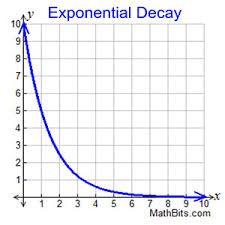
Is the pictured graph growth, decay, or linear or none?  
a)
Growth
b)
Decay
c)
Linear
d)
None
3.
Identify the y-intercept (initial value) in the function f(x)=13(.27)x
a)
(.27)x
b)
.27
c)
13
d)
3.51
4.
Simplify the exponential expression.
a)
2x6y12
b)
2x5y7
c)
8x6y12
d)
8x5y7
5.
What type of function is f(x)=2(1/7)x ?
a)
Exponential Growth
b)
Linear
c)
Exponential Decay
d)
None of the Abovee
6.
What movie is this picture from?
a)
Snow White
b)
Beauty & the Beast
c)
Lion King
d)
Little Mermaid 
7.
What is the domain of f(x) = 5x?
a)
-∞ ≤ x ≤ ∞
b)
-∞ ≤ y ≤ ∞
c)
x > 0
d)
y > 0
8.
What is the common difference?
5, 13, 21, 29
a)
8
b)
7
c)
5
d)
13
9.
Simplify:
a)
2√12
b)
4√12
c)
4√3
d)
16√3
10.
Simplify:  √28
a)
7√2
b)
2√7
c)
4√7
d)
2√14
11.
Simplify:
a)
4√30
b)
√4√30
c)
√2√30
d)
2√30
12.
Simplify:
a)
3√10
b)
√10
c)
9√10
d)
√30
13.
Simplify:
a)
240
b)
300
c)
340
d)
360
14.
Simplify:
a)
A
b)
B
c)
C
d)
D
15.
Simplify: √(28xy²)
a)
2y√(7x)
b)
√(28xy²)
c)
y√(28x)
d)
7x√(2y)
16.
√(45x⁴y⁷)
a)
3x²y³√5
b)
9x²y³√(5y)
c)
3x²y³√(5y)
d)
3x⁴y⁷
17.
Simplify:
a)
2
b)
4√3
c)
2√3
d)
4
18.
Simplify:      √121p5r7s4?
a)
11prs √pr
b)
11p4r6s√pr
c)
11p2r3s√pr
d)
11p2r3s2
19.
√98 + 5√2
a)
8√3
b)
12√2
c)
7√2
d)
7√3
20.
2√5 + 4√5 =
a)
6√10
b)
8√10
c)
8√5
d)
6√5
21.
Simplify 
-2√2-3√8-√5
a)
 -8√2-√5
b)
-8√2-√9
c)
-14√3-√7
d)
-2√4-√3
22.
Simplify
a)
√5
b)
-3√6
c)
√6
d)
6
23.
Simplify
a)
9
b)
5√2 + 2
c)
10√2
d)
2√2 + 3√30
24.

Simplify completely.

a)

8√3xy

b)

y√24xy

c)

8y√3xy

d)

8√24x

25.
What is the conjugate of the expression:
a)
2 + 3√7
b)
2 - 3√7
c)
-√7
d)
√7
26.
What is the square root symbol called?
a)
Radicand
b)
Radical
c)
The house
d)
It doesn't have a name
27.
The number under the radical sign or square root sign  is called the ______.
a)
radical sign
b)
radicand
c)
factor
d)
exponent
28.
Simplify. 
a)
5x8y10√10x
b)
5x4y5√10x
c)
5x4y5√2x
d)
5√2x9y10
29.

Explain why the radical expression is or is not in simplified form?

a)

The expression is simplified because the radicand contains no fractions

b)

The expression is simplified because the radicand has no​ perfect-square factors other than 1.

c)

The expression is not in simplified form because a radical appears in the denominator of a fraction.

d)

The expression is not simplified because it contains a fraction.

30.
a)
b)
c)
d)
31.

A radical express is in simplified form when which of the following conditions are met?

a)

The index n is as small as possible.

b)

The radicand contains no factors (other than 1) that are nth powers of an integer or polynomial.

c)

The radicand contains no fractions.

d)

No radicals appear in a denominator.

32.
Is the equation linear, exponential or neither?
a)
Linear
b)
Exponential
c)
Neither
33.
Is the equation linear, exponential or neither?
a)
Linear
b)
Exponential
c)
Neither
34.
In an exponential function, what does the 'a' represent? 
a)
SLOPE
b)
RATE OF CHANGE
c)
Y-INTERCEPT
d)
COMMON RATIO
35.
In an exponential function, what does the 'b' represent? 
a)
SLOPE
b)
RATE OF CHANGE
c)
Y-INTERCEPT
d)
COMMON RATIO
36.
Identify the common ratio (multiplier) of the function f(x)=2(4)x.
a)
2
b)
4
c)
(2)x
d)
8
37.
Identify the y-intercept (initial value) of the function f(x)=2(4)x.
a)
2
b)
4
c)
(2)x
d)
8
38.
What function type models this graph?
a)
Exponential Growth
b)
Exponential Decay
c)
Linear 
d)
None of the above
39.

A population of bees starts out with 10 bees and doubles every day.

a)

y=10(2)xy=10\left(2\right)^x

b)

y=10(2)x2y=10\left(2\right)^{\frac{x}{2}}

c)

y=2(10)xy=2\left(10\right)^x

d)

y=10(12)xy=10\left(\frac{1}{2}\right)^x

40.

A NCAA tournament starts out with 64 teams. Every round half the teams are eliminated.

a)

y=64(2)xy=64\left(2\right)^x

b)

y=64(12)2y=64\left(\frac{1}{2}\right)^2

c)

y=64(12)xy=64\left(\frac{1}{2}\right)^x

d)

y=64(2)x2y=64\left(2\right)^{\frac{x}{2}}

41.

The population of carp is cut in half every day. The population starts out with 1500 carp.

a)

y=1500(12)xy=1500\left(\frac{1}{2}\right)^x

b)

y=1500(2)xy=1500\left(2\right)^x

c)

y=1500(12)x2y=1500\left(\frac{1}{2}\right)^{\frac{x}{2}}

d)

y=12(1500)xy=\frac{1}{2}\left(1500\right)^x

42.

Which equation is an exponential equation?

a)

y=3x+15y=3x+15

b)

y=0.5x+10y=0.5x+10

c)

y=3(2)xy=3\left(2\right)^x

d)

y=30010xy=300-10x

43.

Write an exponential function to model the situation. Then solve.

The cost of tuition at a college is $12,000 and is increasing at a rate of 6% per year. What will the cost be after 4 years?

a)

C(t) = 12000(1.06)t ; $3149.72

b)

C(t) = 12000(.06)t ; $3149.72

c)

C(t) = 12000(.06)t ; $1472.95

d)

C(t) = 12000(1.06)t ; $15149.72

44.

A particular type of cell triples in number every hour. Which function can be used to find the number of cells present at the end of h hours if there are initially 6 of these cells?

a)

f(h) = 3(6)h

b)

f(h) = 6xh

c)

f(h) = 6(3)h

d)

f(h) = 3(6h)

45.

The amount of cola in a soda machine decreases by a rate of 5% each hour. The amount of cola in the machine was originally 75 gallons.

Which function models the amount of cola in gallons after h hours?

a)

f(h) = 75(-5)h

b)

f(h) = -5(75)h

c)

f(h) = .95(75)h

d)

f(h) = 75(.95)h

46.

Write an exponential function to model the situation. The value of a car is $18000 and is depreciating at a rate of 12% per year.

a)

V(t) = .88(18000)t

b)

V(t) = .12(18000)t

c)

V(t) = 18000(.88)t

d)

V(t) = 18000(.12)t

47.
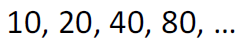
Find the common ratio for the geometric sequence.
a)
10
b)
1/2
c)
2
d)
4
48.

What are the next 3 terms in the following geometric sequence:

512, 256, 128, ___, ___, ___, ...

a)

1024, 2048, 4096

b)

32, 8, 2

c)

64, 32, 16

d)

92, 66, 38

49.
Find the common ratio: 64, -16, 4, -1, ...
a)
r = -8
b)
r = -1/4
c)
r = -4
d)
r = 4
50.
Determine whether the sequence is arithmetic, geometric, or neither.
a)
arithmetic
b)
geometric
c)
neither
51.
Determine whether the sequence is arithmetic, geometric, or neither.
a)
arithmetic
b)
geometric
c)
neither
52.

Which of the following recursive formulas represents the given sequence.


7, 14, 28, 56, 112, ...

a)

a1=7a_1=7 , an=a(n1)+7a_n=a_{\left(n-1\right)}+7

b)

a1=7a_1=7 , an=a(n1)7a_n=a_{\left(n-1\right)}\cdot7

c)

a1=7a_1=7 , an=a(n1)2a_n=a_{\left(n-1\right)}\cdot2

d)

a1=7a_1=7 , an=a(n1)+14a_n=a_{\left(n-1\right)}+14

53.
What is the degree classification of this polynomial?
x²+4x-8
a)
binomial
b)
trinomial
c)
quadratic
d)
cubic
54.
What is the leading coefficient of the following polynomial?
5x²-3x+6
a)
2
b)
-3
c)
5
d)
6
55.
Find the sum. 
(3 - 2x + 2x2) + (4x - 5 + 3x2)
a)
7x - 7x + 5x2
b)
5x+ 2x - 2
c)
5x2
d)
5x2 + 6x + 8
56.
(x +2)(x + 3)
a)
x2 + 5x + 6
b)
x2 + x + 6
c)
x2 + 5x + 5
d)
x2 + 6x + 6
57.
(2x - 1)(x + 2)
a)
2x2 + 3x - 2
b)
2x2 - 5x - 2
c)
2x2 + 3x + 2
d)
2x2 - 5x + 2
58.
Classify the polynomial and give the degree:
5x3y2
a)
Monomial, 3
b)
Uninomial, 3
c)
Uninomial, 5
d)
Monomial, 5
59.
What is the GCF in this polynomial?
3x²+6x-18
a)
2
b)
3
c)
6
d)
18
60.
What is the Area?
a)
2x2 - 3x - 18 inches2
b)
2x2 + 3x + 18 inches2
c)
2x2 + 9x - 18 inches2
d)
2x2 - 9x - 18 inches2
61.

If a rectangular field has a length of x+7x+7  and a width of  4x24x-2  ,  write an expression for the length of fencing to go around the outer edges.

a)

5x+55x+5  

b)

10x+1010x+10  

c)

Why do we need fences?

d)

4x2144x^2-14  

62.
Subtract the following polynomials:
(2x³+6x²+4x-2)-(x³+4x²-x)
a)
x³+2x²+5x-2
b)
x³+10x²+3x-2
c)
3x³+2x+4x-3
d)
3x³+10x²-3x-2
63.
Find the sum.
(2x2 + 5x - 7) + ( 3 - 4x2 + 6x)
a)
2x+ 3x +1
b)
-2x- 11x -4
c)
2x2 + 5x -7
d)
-2x2 + 11x -4
64.

(2x + 5y - z) + (-6x - 4y + 7z)

a)

-4x +6y + 6z

b)

4x + y + 6z

c)

-4x - y + 6z

d)

-4x + y + 6z

e)

None of these

65.

(2x + 5y - z) + (-6x - 4y + 7z)

a)

-4x2 +6y2 + 6z2

b)

4x + y + 6z

c)

-4x2 - y2 + 6z2

d)

-4x + y + 6z

e)

None of these

66.
Factor x2-20x+51
a)
(x-17)(x+3)
b)
(x+17)(x+3)
c)
(x+17)(x-3)
d)
(x-17)(x-3)
67.
Factor x2-x-72
a)
(x-9)(x+8)
b)
(x+9)(x-8)
c)
(x+9)(x-8)
d)
(x-9)(x-8)
68.
8r3 + 16r2
a)
4r2(2r + 4)
b)
8r2(r + 2)
c)
8(r3 + r2)
d)
4(r3 + 2r2)
69.
Factor:
x2 - 9
a)
(x + 3)(x - 3)
b)
(x + 3)2
c)
(x - 3)2
d)
(x+3)(x+3)
70.
x- 400
a)
( x - 200) ( x + 200) 
b)
( x + 20) ( x + 20) 
c)
Prime
d)
( x - 20) ( x + 20) 
71.
x+ 81
a)
Prime
b)
( x - 9 ) ( x + 9 ) 
c)
( x + 9 ) ( x + 9 ) 
d)
( x - 9 ) ( x - 9 ) 
72.
Factor Completely: 4x² - 20x + 25
a)
(4x - 25) (x -1)
b)
(2x + 5) (2x - 5)
c)
(2x - 5)²
d)
(4x - 5) (x - 5)
73.

x4 - 36

a)

(x + 6)(x - 6)

b)

(x + 3)(x - 3)(x2 + 6)

c)

prime

d)

(x2 - 6)(x2+ 6)

74.
Factor Completely.  
8x3 - 18x
a)
2x(4x2-9)                                    
b)
(4x2+3)(2x-3)
c)
2x(2x+3)(2x-3)
d)
PRIME
75.
Factor Completely: 16q3-48q2+36q
a)
4q(2q-3)2
b)
4q(2q+3)2
c)
4(4q3-12q2+9q)
d)
4q(2q-3)(2q+3)
76.

Factor completely:

3x2 + 18x +15

Hint: Factor GCF first.

a)

3(x2 + 6x + 5)

b)

(x + 5)(x + 1)

c)

3(x + 5)(x + 1)

d)

Prime

77.
Is this a perfect square trinomial?
x2 + 16x + 64
a)
Yes
b)
No
78.
Is this a perfect square trinomial?
x2 + 18x + 9
a)
Yes
b)
No
79.
Is this a perfect square trinomial?
x2 + 10x + 100
a)
Yes
b)
No
80.
Find the missing value "c" to create a perfect square trinomial:
x2 + 2x + ___ 
a)
4
b)
3
c)
2
d)
1
81.

Determine if 16h2 - 9a2 is the difference of two squares and if it is, what are those factors?

a)

The expression is not a difference of squares. It is prime.

b)

No, its not. The factors are

(4h + 3a)2

c)

Yes it is. The factors are

(4h + 3a) (4h - 3a)

82.
Solve the system of linear and quadratic equations using substitution:
y = 5
y = 2x2 - 16x + 29
a)
(6, 5) and (2, 5)
b)
(2, 6)
c)
(6, 2)
d)
(5, 6) and (5, 2)
83.
Given the system of equations:
y = x2 + 3x - 5
y = x + 3
When x = -4, what is the value of y?
a)
-1
b)
1
c)
7
d)
-33
84.

Solve the equation by graph: y=x23x+2y=x^2-3x+2  

a)

-1 and -2

b)

No Solution

c)

2

d)

1 and 2

85.

Determine how many roots:

a)

One Solution

b)

Two Solutions

c)

No Solutions

d)

Infinitely Many Solutions

86.

Determine how many solutions:

a)

One Solution

b)

Two Solutions

c)

No Solutions

d)

Infinitely Many Solutions

87.

Determine the solutions of the graph:

a)

No Solutions

b)

(-3, 0) and (-1, 0)

c)

Infinity Many Solutions

d)

(-1, 0)

88.

Determine how many zeros:

(a)  

89.

When will a quadratic equation have no solution?

a)

When it does not equal 0.

b)

When there is a negative in the square root.

c)

When there is a bx term.

d)

When there is no product/sum numbers.

90.

Which of the following cannot be solved with the Square Root method?

a)

x2-9=0

b)

x2-15=0

c)

x2-9x=0

d)

6x2-15=0

91.

What is the first step to solving x2-9x=10 with Factoring?

a)

Look for 2 numbers whose sum is -9 and product is 10.

b)

Subtract 10 from both sides.

c)

Divide -9 by 2 and square the answer.

d)

Look for 2 numbers whose sum is 10 and product is -9.

92.

When using the Quadratic Formula method, what are a, b, and c for the equation: 9x2-x+7=2?

a)

a=9, b = -1, c =7

b)

a=1, b = 0, c =7

c)

a=9, b = -1, c =5

d)

a=9, b = 7, c =2

93.

When using the Completing the Squares method, what number would fill in the blank:


x2+12x ______ = 8 + _______

a)

6

b)

36

c)

12

d)

16

94.

Using the Square Root method, what is the first step to solving the equation: 8x2+9=10

a)

Subtract 10 from both sides

b)

Divide by 8

c)

Subtract 9 from both sides

d)

Take the square root of both sides.

95.

When using the Quadratic Formula method, what are a, b, and c for the equation: 9x2-x= 0?

a)

a=9, b = -1, c =0

b)

a=1, b = 0, c =0

c)

a=9, b = 0, c =0

d)

a=9, b = 1, c =0

96.

Which method will work well for ANY quadratic equation?

a)

Factoring

b)

Square Root

c)

Completing the Sqare

d)

Quadratic Formula

97.
When factoring
x2 - 4x + 4 = 20,
what goes in the blank?
(x - __ )2 = 20
a)
4
b)
2
c)
8
d)
20
98.
What is one of the solutions to this equation?
(2x - 1)2 = 49
a)
7
b)
-7
c)
-4
d)
-3
99.
Solve the following equation by completing the square:
n2 - 2n - 3 = 0
a)
{3 and-1}
b)
{4 and -4}
c)
{5 and -3}
d)
{8 and -7}
100.
Solve the following equation by completing the square:
n2 = 18n + 40
a)
{11 and -11}
b)
{16 and 2}
c)
{20 and -2}
d)
{10 and -4}
101.
Complete the square.
x2 + 6x + ____
a)
x2 + 6x + 9
b)
x2 + 6x - 36
c)
x2 + 6x + 36
d)
x2 + 6x - 9
102.
Which of the following is not the same as "solution"?
a)
x-intercept
b)
roots
c)
zeros
d)
y-intercept
103.
Which of the following equations matches standard form of a quadratic?
a)
ax + by = c
b)
y = a(x - h)2 + k
c)
y = ax2 + bx + c
d)
y = mx + b
104.
What should you do first in solving this equation?
x2 + 6x - 13 = 3
a)
Get factored form
b)
Write down: a=1, b=6, c=-13
c)
Make it equal 0 by subtracting 3 on each side
d)
Type it all in a calculator.
105.
Which method is most efficient to solve:
8x2  -  5x  = 0
a)
Square Roots
b)
Greatest Common Factor (GCF)
c)
Complete the Square
d)
Quadratic Formula
106.
Which method is MOST EFFICIENT to solve:
8x2  -  6  = 0
a)
Square Root Method
b)
Greatest Common Factor (GCF)
c)
Complete the Square
d)
Quadratic Formula
107.
Which method is MOST EFFICIENT to solve:
5x2  -3x - 7  = 0
a)
Square Root Method
b)
Greatest Common Factor (GCF)
c)
Complete the Square
d)
Quadratic Formula
108.
Can this quadratic be solved by BOTH square root method AND difference of squares?
16x2 - 25 = 0
a)
Yes!
b)
No - just square root method
c)
No - just difference of squares method
109.
The discriminant is
a)
ax2  + bx  +  c
b)
- b/2a
c)
b2 - 4ac
d)
b2 + 4ac
110.
When should you decide to Complete the Square?
a)
When the a value is larger than 1
b)
When the middle term is odd
c)
When a = 1 and the middle term is even
111.

b24b+4=0b^2-4b+4=0  

a)

x = -2

b)

x = 2

c)

no real solution

d)

x = -2 and 2

112.

m25m14=0m^2-5m-14=0  

a)

x = 7 and -2

b)

x = 7 and 2

c)

x = -7 and -2

d)

x = -7 and 2

113.

If there are no real solutions, the discriminant is

a)

zero

b)

a postive number

c)

a negative number

d)

a perfect square

114.
When f(x) = 4x+8 and
g(x) = x+3, find
f(x) * g(x). 
a)
4x2+24
b)
4x2+20x+24
c)
4x2+12x+24
d)
4x2+4x+24
115.
When f(x) = x2+9 and g(x) = x-9, find f(x)-g(x). 
a)
x2+x+9
b)
x2-x+9
c)
x2-x
d)
x2-x+18