
 Worksheets
Civil Literacy Final Section 1
Total questions: 78
Worksheet time: 46mins
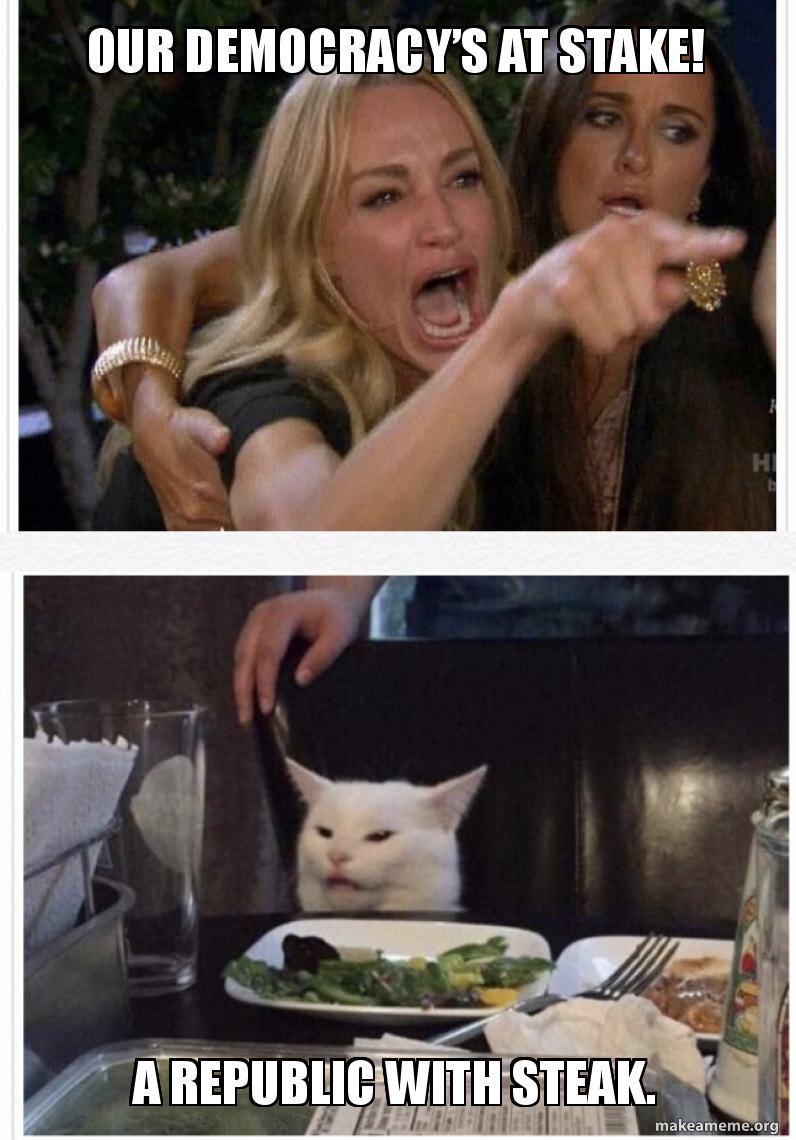
What is the difference between a democracy and a republic?
In a Democracy, people are represented by someone else. In a Republic, people get a direct say in government.
In a Republic, people are represented by someone else. In a Democracy, people get a direct say in government.
In a Democracy, people get a direct say in government. In a Republic, people are ruled by a King.
In a Republic, people are represented by someone else. In a Democracy, the government is based around religious law.
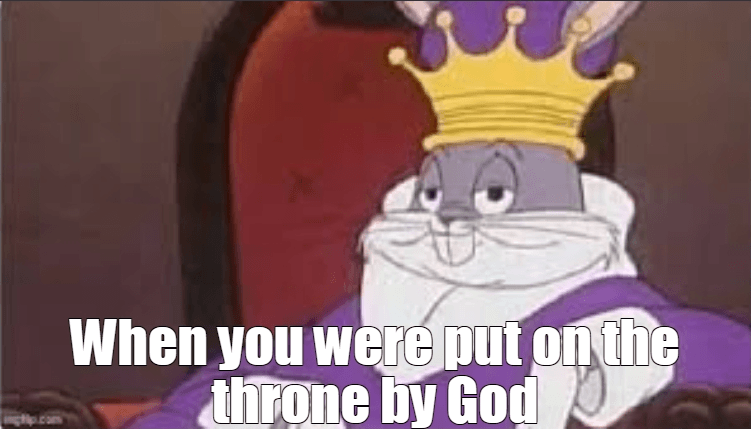
Which political theory held that God created the state, and God had given those of "royal birth" the right to rule?
Common Law
Natural Rights
Divine Right Theory
Social Contract Theory
Which political theory argues that the state arose out of a voluntary act of free people and that the state exists only to serve the will of the people?
Force Theory
Evolutionary Theory
Divine Right Theory
Social Contract Theory
In this form of government, citizens have lots of power and actively participate in government.
authoritarian
autocracy
oligarchy
democracy
In this form of government, citizens vote directly on laws.
direct democracy
representative democracy
We hold these truths to be self-evident, that all men are created equal, that they are endowed by their Creator with certain unalienable Rights, that among these are Life, Liberty and the pursuit of Happiness.
Executive Branch
Judicial Branch
Declaration of Independence
Constitution of the United States
What are Checks and Balances
it makes people check their bank accounts and balance their check books.
it makes sure that each branch of government doesn't become too powerful
it makes sure that each branch of government reduces its power and force congress to take over in an emergency.
it makes people check their news outlets to keep an eye on the government.
What is the purpose of the 10th Amendment?
Increased the power of the president
Limits the powers of the federal government
Force aliens to live in area 51
Encourage more amendments to be made

What were the Articles of Confederation?
The first system of government after the Revolution
written by Madison about the Constitutional Convention
Used to declare Independence from England
document written by Abraham Lincoln that freed the slaves

What is the main purpose of the Bill of Rights?
to limit the power of the federal government
to outline the responsibilities of elected officials
to guarantee political rights needed in any democracy
to balance power among the levels of government

This individual helped write the Federalist Papers, negotiated a treaty with Britain and became the 1st Chief Justice of the Supreme Court.
John Jay
Charles Carroll
Benjamin Rush
John Hancock
What was the main reason why Daniel Shays rebelled against the new U.S. Government?
The Articles of Confederation could not tax and therefore raise revenue
There had to have a consensus to change The Articles of Confederation
The Articles of Confederation could not enforce treaties made with other countries
The Articles of Confederation did not allow the federal government to regulate interstate trade
In a dictatorship, where does the ultimate power come from?
the dictator
the police
the people
representatives
Which Amendment to the US Constitution defines what citizenship is?
5th Amendment
1st Amendment
14th Amendment
2nd Amendment
If someone isn't born in the United States, what process must they go through to become a citizen?
Naturalization
Immigration
Citizenship
None of the above
Which of the following is an example of a civic duty?
Getting a drivers license
Registering to vote
Paying taxes
Participate in political campaigns
Which of the following is both a right and a responsibility
Voting in an election
Obeying the law
Celebrating a religious holiday
Getting good grades in school
Which person would need to go through the naturalization process to become a United States citizen?
a girl born in Canada to two Canadian parents
a girl born in German to parents who are U.S. citizens
a boy born in Puerto Rico to parents who are not U.S. citizens
twins born on a U.S. military base
All of the following are characteristics of an authoritarian regime EXCEPT
Censorship
Minority Rules
Command Economy
Limited Government
Which of the following is NOT a characteristic of a democratic government?
Limited Government
Rule of Law
Government controlled media
Free, Fair and Competitive Elections
One explanation for very low rates of immigration from 1941 to 1950 is
countries around the world were experiencing an economic upturn.
Foreigners no longer thought the US was a better place to be.
World War I made migration difficult.
World War II made migration difficult.
Which of the following is true about immigration at the turn of the 20th century?
Large numbers of immigrants were coming from Canada
Most immigrants were coming from western European nations.
Large numbers of immigrants were coming from eastern European nations.
Immigration was at an historic low.
Historically, what was one of the reasons people practiced Civil Disobedience?
Citizens didn't like a politician
Citizens didn't like having a democracy
There were too many laws being made
Laws were unfair to people of different races/ ethnicities


Study the image above. Which of the following should you place on the line labeled "F?"
Judicial
Executive
Supremacy
Legislative
Which of the following statements is true of the legislative branch?
It has two sections, the House of Representatives and the Senate.
It is responsible for meetings with foreign leaders to make treaties.
It contains the president, vice president, and heads of federal offices.
It makes sure that the courts in every state follow national laws.
To "execute" the laws means to
Interpret the laws
Create the laws
Make new laws
Carry out the laws
A young lawyer wishes to work in the federal government to improve society. The lawyer is 32 years old, a natural-born U.S. citizen, and living in Kansas since birth. Which position could voters elect the lawyer to fill?
Supreme Court justice
Senator
Vice president
President
Which branch of government has the power to pardon people found guilty of federal crimes?
Executive
Military
Legislative
Judicial
The division of power between the federal government and state governments is called
The United States
the Supremacy Clause
the Necessary and Proper Clause
Federalism
This says that Federal law is to be followed if there is a conflict between a state law and federal law.
reserved powers
Supremacy Clause
denied powers
Regulating trade with foreign countries (imports) is a(n)
National Power
Concurrent Power
State Power
Which document establishes a federal system of government in the United States?
The Bill of Rights
The Constitution
The Declaration of Independence
The Bible
A court order requiring explanation to a judge why a prisoner is being held in custody
Writ of Habeas Corpus
Bills of Attainder
Ex Post Facto Laws
Due Process of Law
Criminal Laws
Civil Laws
Military Laws
Juvenile Laws
Where do most legal actions happen?
local court
state court
federal court
What are the three basic functions of the court system?
Settle disputes, interpret the laws, create expectations for future actions
Judge criminals, punish people, set boundaries
establish rules, create laws, punish criminals
The common law system developed in _______ when there were few written laws and judges decided cases on their own sense of fairness.
America
England
France
Germany
Feds ask for PRIOR RESTRAINT (ability to censor something before it is published) to stop publishing the Pentagon Papers. This freedom of the press case led to a ruling that the government may not censor information unless it revels secrets involving national security.
NY Times v. U.S. (1971)
Brown v. Board of Education (1954)
Baker v. Carr (1961)
Engel v. Vitale (1962)
A case about Presidential appointments originally, this case created one of the most important precedents in history. The SCOTUS rules that it may ultimately decide if laws are constitutional or not, establishing the principle of JUDICIAL REVIEW.
Roe v. Wade (1973)
Schenck v. U.S. (1919)
Shaw v. Reno (1993)
Marbury v. Madison ( 1803)
Students at a high school were recently suspended for wearing religious symbols on their clothing. What Supreme Court case could the students use to defend their position?
Plessy v. Ferguson
Tinker v. Des Moines
Bush v. Gore
Gideon v. Wainwright
Lemon v Kurtman
Gideon v Wainwright
US v Nixon
Brown v Board of Ed
Which of these statements best explains why school officials are allowed to search a student’s locker without a search warrant?
It is illegal for police officers to enter school property
All constitutional rights are denied to students who are under 21 years of age
School officials are part of local police departments
It is considered necessary for protection of other students


Which court case determined that segregation of Mexican American students in TEXAS was illegal?
Mendez v. Westminster
Delgado v. Bastrop
Edgewood v. Kirby
White v. Regester
The power of the judicial branch to review the actions of the executive and legislative branches and determine whether or not they are unconstitutional (this includes laws passed by Congress); the U.S. Supreme Court case Marbury v. Madison established this power
judicial review
executive review
legislative process
due process
What did the Supreme Court decide in the Korematsu V. US case?
Because the United States was at war, racial discrimination is constitutional
Racial discrimination is unconstitutional
The president should be impeached
Korematsu was right to deny the executive order
political party
a group who seek to control government by winning elections and holding office
bipartisan
supported by two political parties
partisanship
strong loyalty to a party and its policy views
coalition
an alliance of groups who come together to form a majority and control government
ideological
a set of beliefs in social, economic, and political matters
the range of political views
political spectrum
bipartisanship
political parties
partisanship
What type of system do we have in the u.s.?
Two Party System
Three Party System
Bicameral System
Congressional System
Social welfare programs, government regulation of business practices, and programs to improve the status of minorities are most associated with which political party?
Republican Party
Democratic Party
Libertarian Party
Green Party
What is at stake in this year's mid-term elections? (Choose all that apply)
Control of Congress
Who will be President
State Elections for Governor
Elections for Supreme Court Justices
What is the most important function of the national convention?
writing the party's platform
adopting the party's rules
advancing State and local candidates
picking the party's presidential candidate
What is the term for voting?
suffrage
duty
responsibility
apathy
What is a list of candidates?
ballot
polling place
apathy
voter turnout rate
What amendment to the U.S. Constitution gave women the right to vote?
15
19
24
26
25th
14th
26th
12th
In the 1700s and 1800s, only people who owned _____ were eligible to vote,
citizenship cards
property
registration cards
slaves
They can spend unlimited money on campaigns
They do not have to disclose donors
They are limited in the amount they can contribute
They are regulated by the IRS not FEC
are not regulated by the Federal Election Committee
are allowed to coordinate with candidates
Can receive unlimited donations and spend as much as they want
cannot use express advocacy

Minorities faced barriers to voting such as poll taxes, literacy tests, intimidation, and scare tactics.
True
False
If there is a tied vote in the Senate the President of the Senate can break it. Who gets to break the vote today?
Joe Biden
Mitch McConnel
Kamala Harris
Nancy Pelosi
What position is considered the most influential/powerful in the Senate?
President Pro Tempore
Majority Leader
President of the Senate
Speaker
What Congressional Leadership position is responsible for making sure that Congressmembers stay "in-line" with the party vote.
Senior Committee Chairs
Minority Leaders
Whips
Majority Leaders
What other position does the President of the Senate hold?
President of the United States
United States Attorney General
Secretary of State
Vice President of the United States

