
 Worksheets
GREEK ARCHITECTURE
Total questions: 71
Worksheet time: 40mins
pertaining to ancient Greek history, culture, and art, especially "before" the time of Alexander the Great
Etruscan
Hellenic
Hellenistic
Ancient Greek
pertaining to Greek history, culture, and art from the time of Alexander the Great’s death in 323 BC.
Entruscan
Hellenic
Hellenistic
Minoan
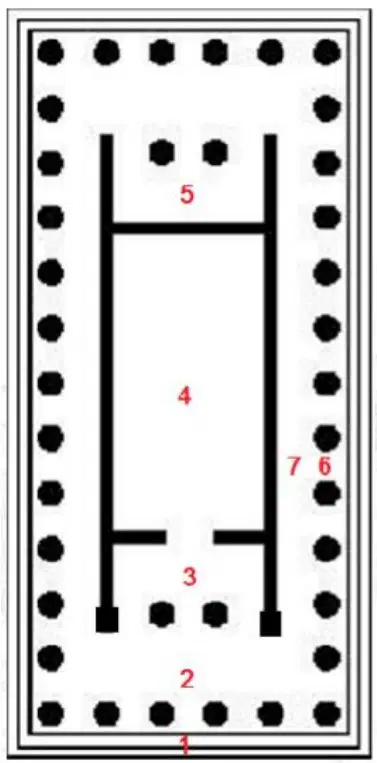
What is 1
Stylobate
Pronaos
Naos
Stereobate
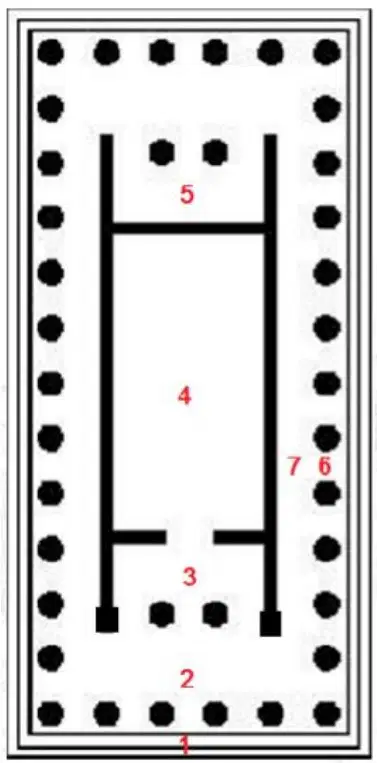
What is 2
Stereobate
Stylobate
Epinaos
Anta
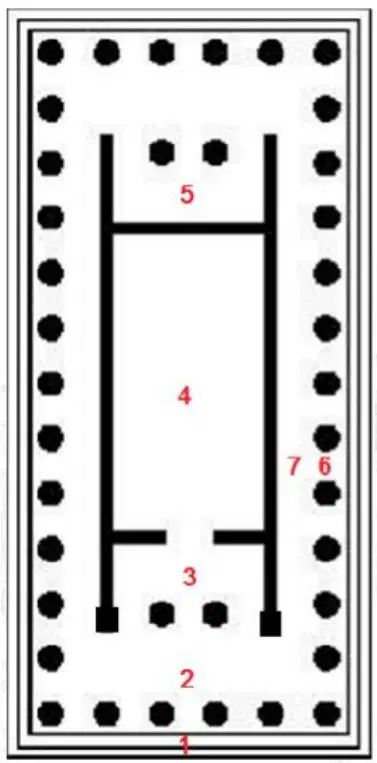
What is 3
Pteron
Naos
Pronaos
Anta
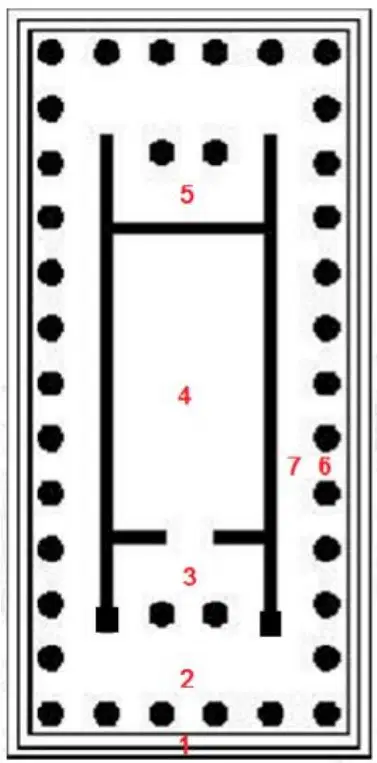
What is 4
Pteron
Pronaos
Naos
Pteroma

What is 5
Anta
Naos
Epinaos
Pteron
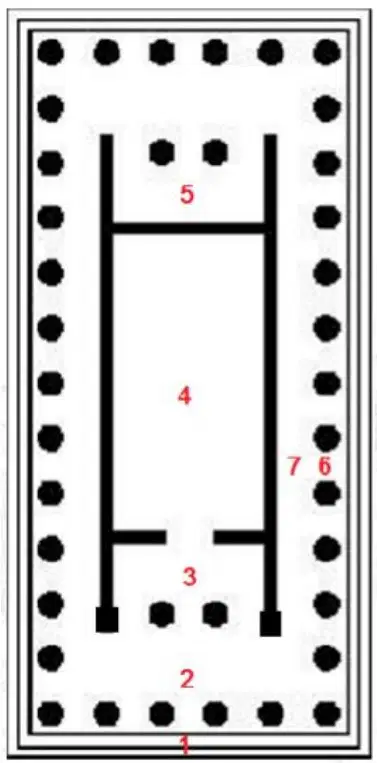
What is 6
Anta
Stereobate
Pteroma
Pteron
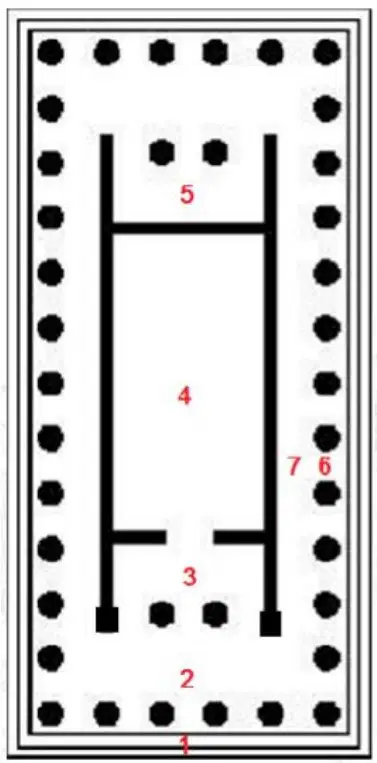
What is 7
Stylobate
Anta
Pteroma
Pteron
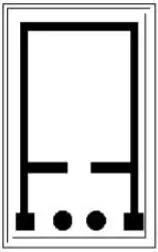
In Antis
Amphi-antis
Prostyle
Amphi-prostyle
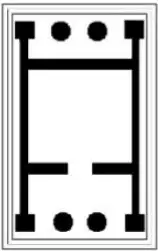
In Antis
Amphi-antis
prostyle
amphi-prostyle

In Antis
Amphi-antis
Prostyle
Amphi-prostyle
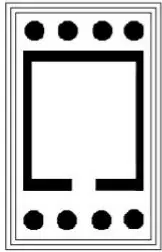
In Antis
Amphi-antis
Prostyle
Amphi-prostyle
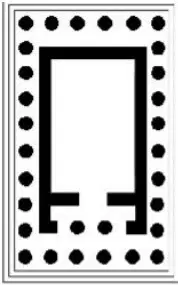
Dipteral
Peripteral
Psedo-peripteral
Pseudo-Dipteral

Dipteral
Peripteral
Psedo-periptal
pseudo-dipteral

Dipteral
Peripteral
Psedo-periptal
Pseudo-dipteral

Dipteral
Peripteral
pseudo-periptal
pseudo-dipteral
Masonry technique was well developed. Comprised of boulder-like stones, used in fortifications, to coarse or fine ashlar of heavy blocks.
Greek
Roman
Aegean
Mycenae

1. horizontal section of a classical order that rests on the columns, usually composed of a cornice, frieze and architrave.
Entablature
Pediment
Tympanum
Acroterium
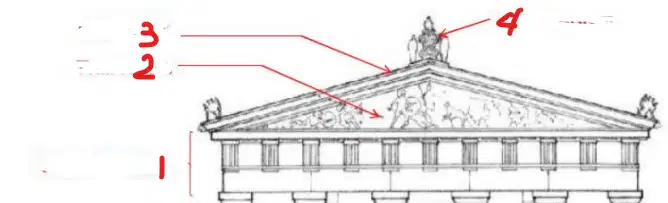
2. the triangular space enclosed by the horizontal and raking cornices of a pediment, often recessed and decorated with sculpture.
Entablature
Tympanum
Pediment
Acroterium
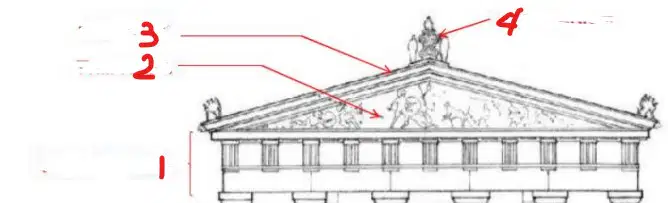
3. a wide and low-pitched gable surmounting a colonnade or a major division of a façade.
Pediment
Acroterium
Entablature
Tympanum

4. a pedestal for a sculpture or ornament at the roof apex or at each of the lower corners of a pediment.
Tympanum
Entablature
Acroterium
Pediment
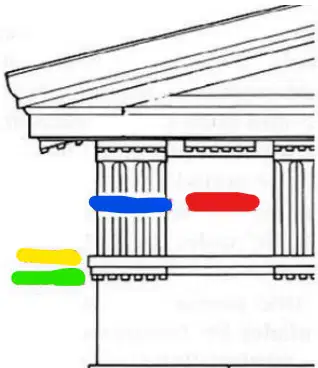
Red: any of the panels, either plain or decorated
Regula
Triglyph
Metope
Taenia
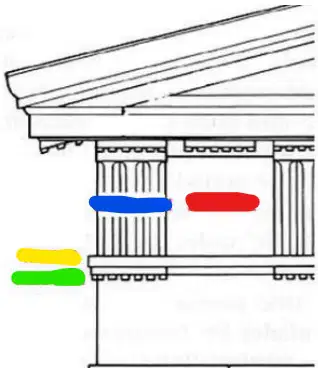
Blue
Triglyph
Regula
Metope
Taenia
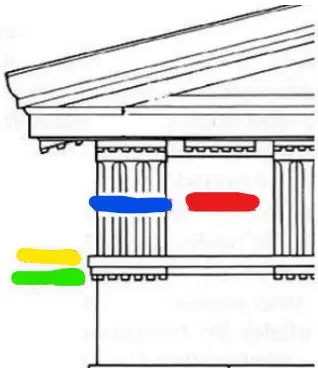
Yellow: a raised band or fillet separating the frieze from the architrave on a Doric entablature.
Regula
Triglyph
Metope
Taenia
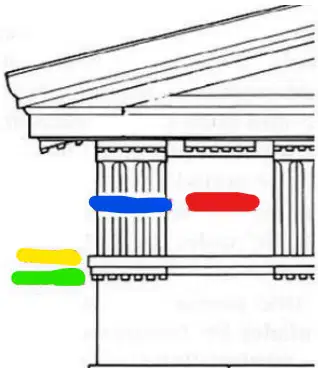
Green: corresponding to a triglyph above and from which the guttae are suspended.
Regula
Triglyph
Metope
Taenia
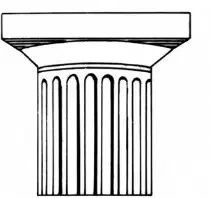
oldest and simplest of the five classical orders and was developed in Greece in the 7th century BC and later imitated by the Romans.
Doric
Ionic
Composite
Corinthian
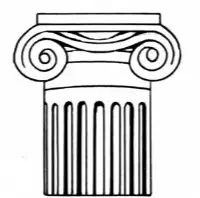
Developed in the Greek colonies of Asia Minor in the 6th century BC characterized especially by the spiral volutes of its capital
Doric
Ionic
Composite
Corinthian
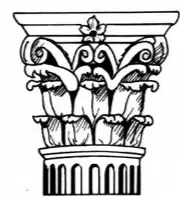
The most ornate of the 5 classical orders, developed by the Greeks in the 4th century BC
Doric
Ionic
Composite
Corinthian

Red: the flat slab forming the top of a column capital
Abacus
Necking
Annulet
Flute
Yellow: the upper part of a column, just above the shaft and below the projecting part of the capital.
Abacus
Necking
Annulet
Flute
Orange: the prominent circular moulding supporting the abacus.
Annulet
Necking
Echinus
Flute
Orange: the prominent circular moulding supporting the abacus.
Annulet
Necking
Echinus
Flute
Blue: a rounded channel or groove.
Annulet
Necking
Echinus
Flute
Green
Annulet
Necking
Echinus
Flute

Pink: series of closely spaced, small, rectangular blocks forming a moulding or projecting beneath the coronas.
Volute
Fascia
Cathetus
Dentils
Black: one of the three horizontal bands making up the architrave in the Ionic order.
Volute
Fascia
Cathetus
Dentils
green: a spiral, scroll-like ornament, as one on the capital of the Ionic, Corinthian and Composite orders.
Volute
Fascia
Cathetus
Dentils
grey
Volute
Fascia
Cathetus
Dentils
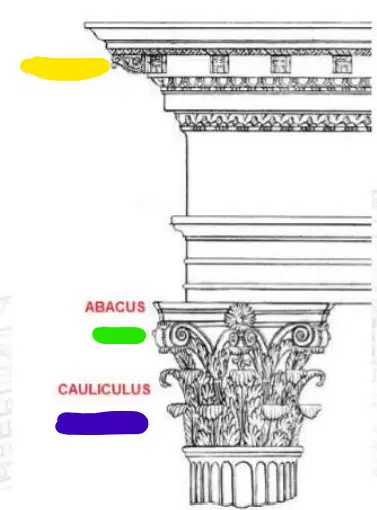
Yellow: an ornamental bracket, usually in the form of a scroll with acanthus, used in series beneath the corona.
Dentils
Modillion
Helix
Acanthus
Green: a spiral ornament, as any of the volutes spring.
Dentils
Modillion
Helix
Acanthus
Blue: an ornament, as on the Corinthian capital, pattered after the large, toothed leaves of a Mediterranean plant of the same name.
Dentils
Modillion
Helix
Acanthus
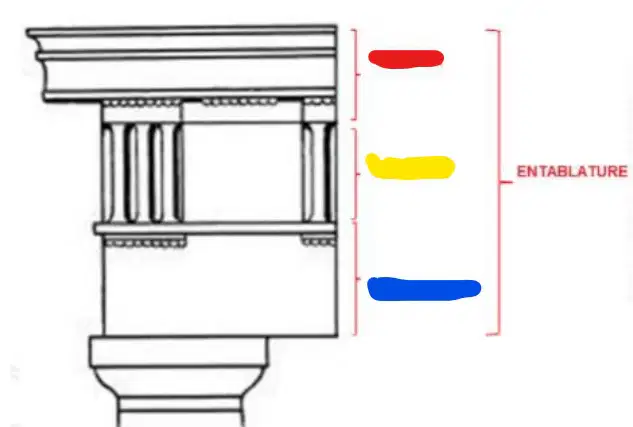
Red: the uppermost member of a classical entablature
Corona
Frieze
Architrave
Cornice
Yellow: the middle part of the entablature, often decorated with sculpture in low relief.
Corona
Frieze
Architrave
Cornice
Blue: the lowermost division of a entablature, resting directly on the column capitals.
Corona
Frieze
Architrave
Cornice
a cylindrical support in classical architecture, consisting of a capital, shaft, and usually a base, either monolithic or built up of drums the full diameter of the shaft.
c (a)
the treated upper end of a column, crowing the shaft and taking the weight of the entablature or architrave
c (a)
the central part of a column between the capital and the base.
s (a)
lowermost portion of a column
b (a)
a construction upon which a column is elevated
p (a)
the part of pedestal between the base and the cornice or cap.
d (a)
the usually square slab beneath the base of a column
p (a)
a narrow part of the surface of a column left between adjoining flutes.
f (a)
Highest and most defensible part of an ancient Greek city. It is where temples, treasuries, and important civic buildings are settled.
(a) , Athens
It was the gateway into the acropolis.
Propylaea
Pinacotheca
Odeion
Erechtheion
picture / painting gallery
Propylaea
Pinacotheca
Odeion
Erechtheion
most embellished, complex and the last of the Periclean buildings. It is best known for its "caryatid" porch on the south facing the Parthenon.
caryatids- woman figure columns
Propylaea
Pinacotheca
Odeion
Erechtheion
a kindred type to the theatre, where musicians perform.
Propylaea
Pinacotheca
Odeion
Erechtheion
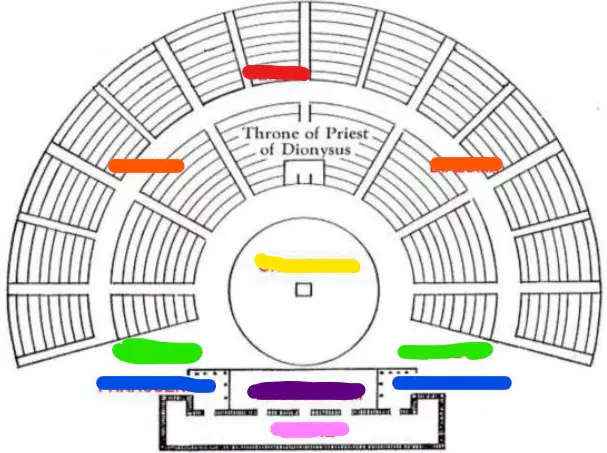
Red: a wedge-shaped section of seats between two stepped passageways.
Skene
Proscenium
Cercis
Diazoma
Orange: an aisle between the lower and upper tiers of seats, concentric with the orchestra and the outer wall and communicating with the radial aisles.
Skene
Orchestra
Cercis
Diazoma
Yellow: center
Parodos
Orchestra
Cercis
Diazoma
Blue: the two wings flanking and projecting forward from the skene of a theatre containing the apartments of the actors
Parodos
Orchestra
Parascenium
Proscenium
Violet: front part of the stage where actors performed.
Parodos
Skene
Parascenium
Proscenium
Pink: faces the audience, forming the background before which performances were given.
Cercis
Skene
Parascenium
Proscenium
Town square, center of social and business life
Stoa
Agora
Prytaneion
Bouleuterion
A long colonnaded building and was used for public places and shelters at religious shrines.
Stoa
Agora
Prytaneion
Bouleuterion
a senate house for the chief dignitaries of the city. A place where distinguished citizens will be entertained
Stoa
Agora
Prytaneion
Bouleuterion
a council house and a covered meeting place for elected councils.
Stoa
Agora
Prytaneion
Bouleuterion
A race course where games in ancient Greece were celebrated
Odeion
Stadium
Hippodrome
Palaestra
for horse and chariot racing.
Odeion
Stadium
Hippodrome
Palaestra
An ancient Greek wrestling school
Odeion
Stadium
Hippodrome
Palaestra

