
 Worksheets
09. Urban Change in the UK - London and Nottingham Sustainable
Total questions: 52
Worksheet time: 35mins
Describe the location of London
South East of England, on the River Thames
South West of England, on the River Thames
North West of England, on the River Thames
South of England, on the River Severn
Which of the following are examples of London’s international importance
5 major international airports which encourages trade and tourism
London bus network
Cross rail
Congestion charge
Which of the following are good examples of social opportunities for a HIC city (London)
Lots of high paid jobs in the city
Lots of green spaces
Cultural mix, London is one of the most diverse cities in the world (festivals & restaurants from different cultures).
Congestion charge
What is meant by the term urban sprawl
More urban greening
Development in transport
The building of less homes in some areas
The outward growth of a city
Identify a pull factor to an urban area (a)
What is meant by the term urban sprawl
More urban greening
Development in transport
The building of less homes in some areas
The outward growth of a city
Which of these is a social benefit of regeneration (a)
What is rural-urban migration?
The movement of people from towns and cities into the countryside.
The movement of people from LICs to HICs.
The movement of people from one country to another.
The movement of people from countryside areas into towns and cities.
What is a greenfield site?
Areas of land that haven't been built on before.
Areas in the city that have been build on previously and are now derelict.
Land that has strict planning controls designed to prevent urban sprawl.
What is a brownfield site?
Areas of land that haven't been built on before.
Areas in the city that have been build on previously and are now derelict.
Land that has strict planning controls designed to prevent urban sprawl.
What EU regulations does London regularly break?
Air quality due to high levels of methane.
Air quality due to high levels of carbon dioxide.
Air quality due to high levels of nitrogen dioxide.
What does rural mean?
A built-up place, eg a town or city.
An area of countryside.
A city with over 10 million people living in it.
The movement of people from the countryside to the city.
How many languages are spoken in London?
100
150
200
300
What percentage of London’s land is either gardens, public green space or water?
25%
40%
65%
70%
How much of the UK's GDP does London generate?
12%
15%
23%
25%
What best describes what the site was like BEFORE the regeneration begin
Brownfield site
Greenfield site
Which of these problems had to be overcome before the building could begin? There is more than one answer.
Some landowners protested and had to be removed
The land had to be bought by one owner (the ODA)
Farmland needed to be cleared
Land polluted by industry had to be decontaminated
Approximately how much did the Olympic games cost?
£9.3 million
£9.3 billion
£2 billion
£93 billion
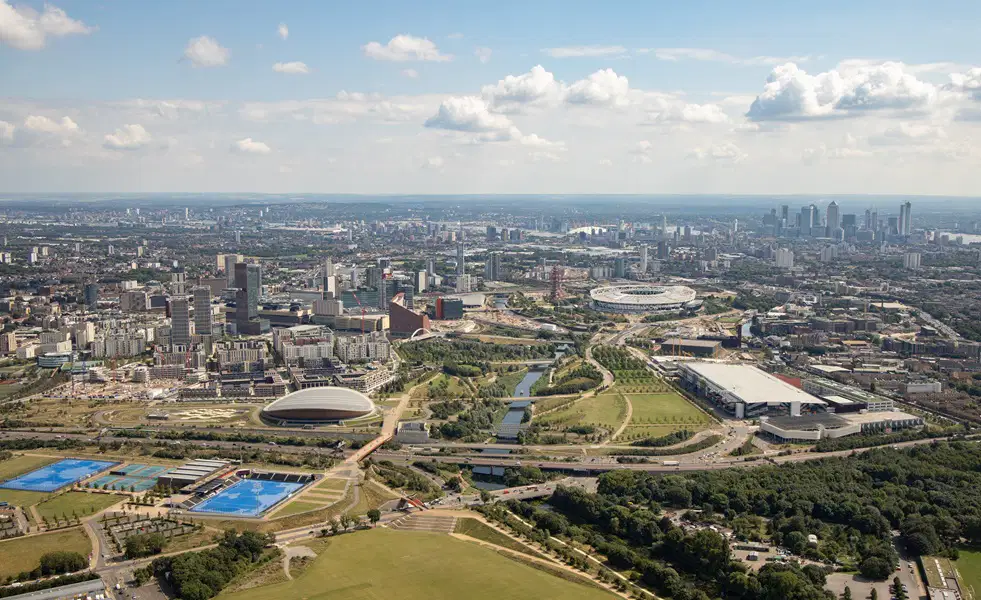
What were the social, environmental and economic benefits of the Olympic Park Regeneration Project
Social
New schools, including 2000 new school places were created
Environmental
The old industrial area was cleaned, making the area much safer for people
Economic
£9.3 Billion was invested and created 5000 new jobs
London has an air pollution issue, how many premature deaths are there due to air pollution?
100
2000
4000
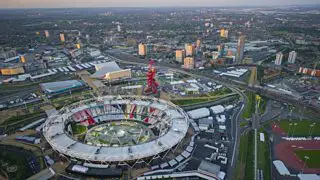
Match the Benefit to the category for the Olympic Park Regeneration Project
Social
1,100 new affordable houses built
2000 new school places
Employment fell during 2012
Environmental
Improvement of a brownfield site with land that was dangerous
Economic
3000 new jobs generated
£9 billion of investment

What does this pie chart indicate about London's waste management?
Most of London's waste is successfully recycled. However almost a quarter still reaches landfill.
Most of London's waste goes directly into landfill and isn't recycled
A higher proportion of London's waste goes into non-recycling
How has urban change created social and economic challenges in London?
Employment
The pay that people receive for
work doesn’t meet the cost of living
Housing
Cost of houses is now huge, at approximately £660,000, £400,000 more than the national average
Cultural integration
Many people of different language can make integration challenging
Gentrification
This has meant poor areas are now unaffordable to live and pushed poor people out of their homes
How has urban change created environmental challenges in London?
Dereliction
Enfield and Croydon have very high levels of empty houses - these are falling down
Building on greenfield sites
Natural habitats have been built on for housing
Air quality
Every part of London exceeds the European guidelines for CO2 and NO2
Nottingham City Transport (NCT) has had (a) worth of investment. NCT now has over (b) (c) busses, leading to 3 million (d) car journeys in the city per year. Additionally, the increased tram network allows people to travel across Nottingham by tram. Nottingham has also invested in electric bikes and scooters allowing for (e) choice of sustainable transport
What additional features has Nottingham done to improve sustainability?
Water management
Dual flush water toilet installed across all businesses by law
Air quality
Reduced CO2 emissions by 44% through a program of home insulation across Nottingham
Waste recycling
Nottingham Uni is the 2nd best Uni at waste recycling in the UK
Green spaces
Wollaton Park and the Arboretum in Nottingham is one of a number of green spaces that are free
Which of the following are good examples of social opportunities for a HIC city (London)
Lots of high paid jobs in the city
Lots of green spaces
Cultural mix, London is one of the most diverse cities in the world (festivals & restaurants from different cultures).
Congestion charge
Which of the following are examples of urban greening in London?
Economic migration
Cultural mix (lots of restaurants)
Green roof tops, common in new developments
Parks closing down
Since 1801 London's population has...
halved
decreased
reached over 8 million
reached 5 million
London is often referred to as being very culturally diverse...
TRUE
FALSE
Which of these is an advantage of building on greenfield sites?
Natural habitats may be destroyed
Increases urban sprawl
Land is cheaper in rural areas
Valuable farmland is lost
Which of these is a disadvantage of building on brownfield sites?
Reduces the need for urban sprawl
New developments can improve the urban environment
Ground may need to be decontaminated first
Sites are available after industrial decline.
When we talk about the East End of London where are we referring to - tick all those that apply (3 in total)
Stratford
Westminster
Green Park
Newham
Queen Elizabeth Olympic Park
Which of these have been removed from the Olympic Park Site?
Old factories & industrial areas
Derelict sites
new sports venues
Electricity pylons
What is the name of the main housing village in the Olympic Park in which 40% of houses are affordable?
South Village
West Village
The Village
East Village
How much was invested in improving infrastructure in and around the Olympic Site?
£9 million
£50 million
£9 billion
£5 billion

Number 7. on the picture represents which sustainable goal?
Quality Education
Gender Equality
Clean Water and Sanitation
Affordable and Clean Energy

Number 11. on the picture represents which sustainable goal?
Decent Work and Economic Growth
Industry, Innovation and Infrastructure
Reduced Inequalities
Sustainable Cites and Communities
Which borough of London is Stratford located in?
Knightsbridge
Newham
Barnet
Uxbridge
Why did Stratford get regenerated?
It was the most deprived borough in London
For the 2016 Olympic Games
The borough won lottery money for the regeneration
For the 2012 Olympic Games
When did the regeneration of the city start?
2010
2011
2012
2013
What does urbanisation mean?
the movement of people from the countryside to towns and cities
the movement of people out of cities to the countryside
an increase in the percentage of people living in towns and cities
an increase in the percentage of people moving to the countryside
What is a brownfield site?
Areas in which urban development has already occurred and can be replaced e.g. disused factories in the Inner City.
Areas that have been painted green.
Areas in which no urban development has yet occurred.
Areas that have been painted brown.
How are rooftop gardens sustainable?
They reduce flooding
They help absorb co2 and naturally fight climate change
They encourage biodiversity by creating ecological corridors
All the above
Where does most of the energy come from in East Village?
The National Grid
Combined heat and power energy stations
Renewable energy

East Village is in London. It is our case study on sustainable (a) living.
10 hectares of (b) have been created, containing hundreds of newly planted trees and ponds. These provide habitats for (c) .
There are new, modern apartments. These have been constructed to a high standard of energy efficiency and (d) .
(e) have been included on residential blocks, providing habitats for wildlife as well as slowing the flow of surface run-off from rain.
Why are green roofs good for the environment?
They absorb rainwater, reduce urban heat, improve air quality and provide a habitat for wildlife.
They attract pests
They contribute to the greenhouse effect
They increase air pollution
How can green roofs help reduce air pollution?
They attract more harmful particles
They absorb carbon dioxide and filter out harmful particles.
They have no effect on air pollution
They release more carbon dioxide into the air
What are the benefits of green roofs?
Thermal insulation, reduction of urban heat islands, rainwater retention, creation of habitats for flora and fauna, improved air quality, etc.
Reduced biodiversity
Increased energy consumption
Increase in greenhouse gas emissions

