

wayground logo

Free Printable Worksheets

NEW

Font size

S
M
L
XL
Worksheets

Africa Exam Review

Total questions: 55

Worksheet time: 45mins

Name
Class
Date
1.
Pass books:
a)
were required of all South Africans
b)
were required of all black South Africans
c)
were required of all black South African male adults
d)
were required in South Africa for all its citizens
2.
Afrikaners are:
a)
black SA majority
b)
white SA majority
c)
black SA minority
d)
white SA minority
3.

Who was Nelson Mandela?

a)

Resisted apartheid and was put into prison. First black president of Rwanda.

b)

South African Hotel manager that saved tons of lives during the genocide.

c)

South African president who ended apartheid. Freed many blacks who were imprisoned for protesting the apartheid government.

d)

South African Rugby Team Captain. Became a symbol of unity between the blacks and whites of South Africa.

4.
When a stronger country uses the resources of a weaker country to enrich the stronger country.
a)
Discrimination
b)
Colonialism
c)
Apartheid
d)
Racism
5.
When was South Africa's first truly free elections?
a)
1994
b)
1988
c)
1996
d)
1979
6.
Who was the first black president of South Africa?
a)
P.W. Botha
b)
Paul Rusesabagina
c)
Nelson Mandela
d)
F.W. de Klerk
7.
Which tribe was the biggest in Rwanda?
a)
Hutu
b)
ANC
c)
Boer
d)
Tutsi
8.
How long was the Rwandan Genocide?
a)
1 year
b)
100 days
c)
 Half a year
d)
40 days
9.
Who started the killing in the Rwandan Genocide?
a)
Tutsi rebels
b)
Twa resistance 
c)
Belgians wanting control in Rwanda again
d)
Hutu radicals
10.
When Rwanda was colonized, which tribe was given more privilege?
a)
Hutu
b)
ANC
c)
muslims 
d)
Tutsi
11.
Why were the Tutsis given more power/privilege by the Belgium when they were colonized?
a)
There were seen to have more power than the other tribes in all of Africa
b)
They looked more 'European'
c)
They had more money 
d)
All of the above
12.
In 1994, genocide occurred in Rwanda. Genocide means:
a)
the random extermination of various individuals
b)
the systematic annihilation of a variety of unconnected people
c)
the chance extermination of a group of people
d)
the systematic extermination of a group of people
13.
Which term correctly identifies "apartheid"?
a)
ruled by a king 
b)
a two house legislature
c)
legal separation of races 
d)
ruled by an European colonial country
14.
European countries colonized Africa because 
a)
They heard about Africa's resources from explorers
b)
They were looking for raw materials and cheap labor
c)
Thought African was uncivialized and could be taken advantage of 
d)
All of the Above
15.
What was the MAIN reason European countries colonized Africa?
a)
They wanted to spread Christianity.
b)
They were looking for trade routes.
c)
The continent would provide large amounts of land.
d)
They needed the natural resources.
16.
The belief that acquiring colonies for raw materials will create a stronger country is called ____.
a)
apartheid
b)
imperialism
c)
nationalism
d)
communism
17.
What was apartheid?
a)
segregation of races in Kenya
b)
segregation of races in Somalia 
c)
segregation of races in South Africa
d)
segregation of races in Rwanda
18.
Which of these would a black South African had to have done during apatheid?
a)
carry a passbook
b)
see a doctor
c)
vote for government officials
d)
attend a white school
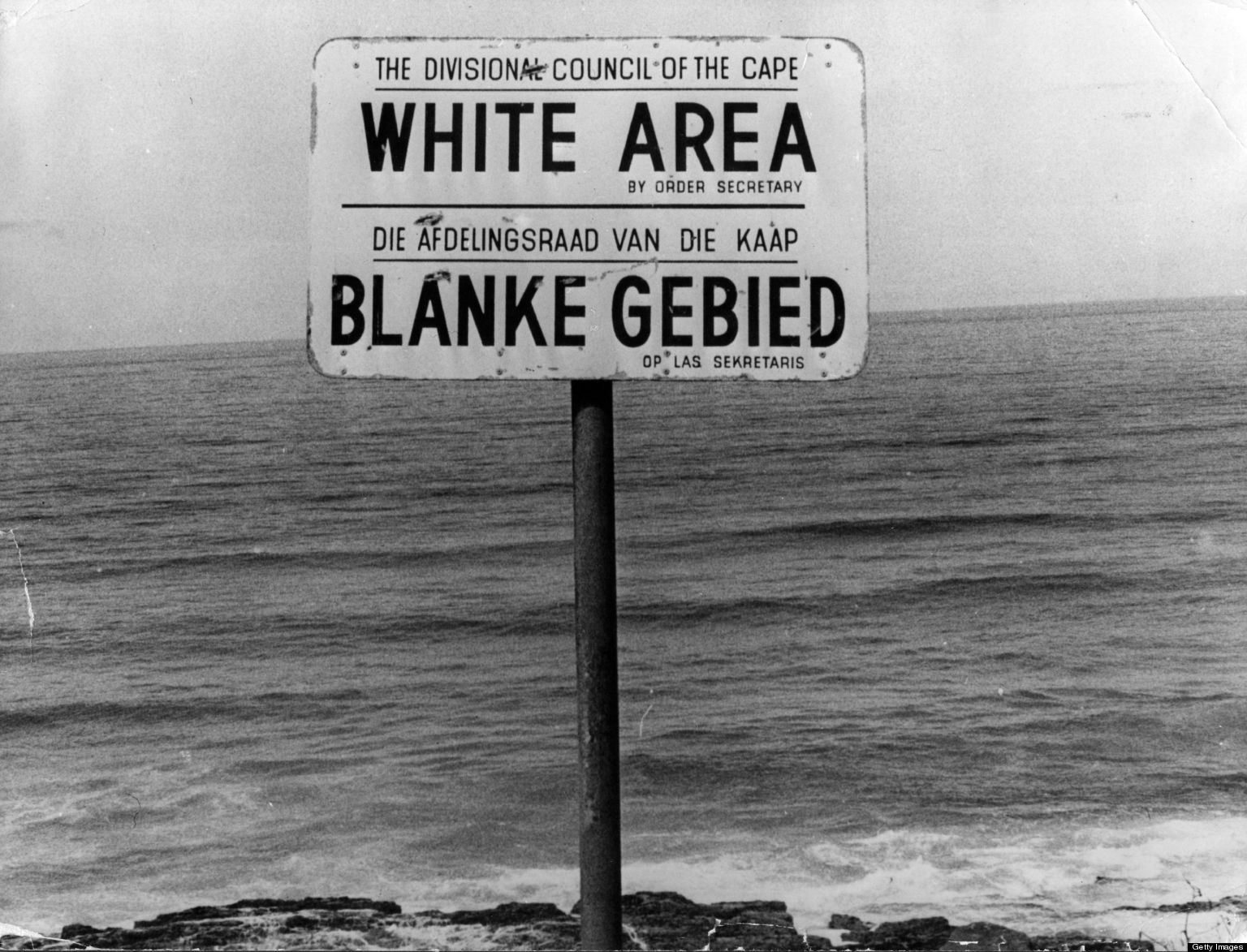
19.
In what African country would you likely have seen this sign during 1975? (Click text to reveal the picture)
a)
Nambia
b)
Egypt
c)
United States
d)
South Africa
20.
Why did the National Party pass apartheid laws in 1948? 
a)
To gain independence from the British
b)
To imprison Nelson Mandela
c)
To boost the sale of gold and diamonds
d)
To maintain white control of the country
21.
What consequence did Mandela face for his actions?
a)
He was given a prison sentence but didn't have to serve it.
b)
He was tried, found guilty, and sentenced to hang.
c)
He was exiled to the United States.
d)
He was imprisoned for 27 years.
22.
European imperialism of Africa, from 1880-World War I, is known as
a)
Spheres of Influence
b)
Scramble for Africa
c)
World War I
d)
French Revolution
23.
How many, approximately, died in the Rwandan genocide?
a)
2 million
b)
5 million
c)
Unknown
d)
1 million
24.

The capital of Rwandan is:

a)

Burundi

b)

Kigali

c)

Tanzania

d)

Nairobi

25.

The Rwandan genocide took place in:

a)

1991

b)

1998

c)

1994

d)

1992

26.

What was important about the year 1994 for South Africa?

a)
Mandela elected to president; South Africa begins to adopt segregation
b)
First election open to all races; Mandela elected 1st black president
c)
South Africa is free from Britain; Mandela is freed from prison
d)
Mandela and de Klerk won the Nobel Peace Prize; Mandela becomes first South African black lawyer
27.
Which of the following natural resources are nonrenewable?
a)
Water
b)
Animals
c)
Natural gas
d)
Wind
28.
Which group includes ALL renewable resources?
a)
Coal, trees, water, oil
b)
Water, wind, sun, plants
c)
Minerals, sun, natural gas, water
29.

Things we take from the environment and use are called:

a)

rocks

b)

natural resources

c)

energy

d)

dangerous

30.

Which of the following describes non-renewable resources?

a)

Nature can replace them within our lifetime.

b)

This resource cannot be replaced within our lifetime.

c)

Wind power is an example of a non-renewable resource.

d)

Trees and plants are non-renewable resources

31.

Pick the correct term to the definition: Total value of goods and services within a country’s borders?

a)

GDP Per capita

b)

Per capita

c)

GDP--Gross domestic product

d)

Literacy rate

32.

It is one of the indicators to get the HDI.

a)

Life expectancy

b)

Costumes

c)

Surface of the house

33.

Why was the system of apartheid set up in South Africa?

a)

to give all people of South Africa the right to vote

b)

to create industrial jobs for rural South Africans

c)

to separate the races and discriminate against non-whites

d)

to create an education system that would modernize the country

34.

When European countries were trying to get as much land as possible in Africa... what was that called?

a)

Apartheid

b)

the Mau Mau rebellion

c)

Scramble for Africa

d)

the Pan African movement

35.

Why were Europeans interested in Africa?

a)

wide variety of physical features for tourism

b)

wide variety of wildlife

c)

rich cultural and religious traditions

d)

rich natural resources

36.

How did Nelson Mandela resist apartheid before he went to prison?

a)

he was elected to political office and was able to create change within the government

b)

he was involved with the African National Congress and used violent methods to resist apartheid

c)

he was involved with the Pan African Union using non-violent boycotts

d)

he called on the support of the U.S. to enforce embargoes on S. African goods

37.

Why has conflict and civil war occurred in many African nations after independence?

a)

colonial powers tried to re-establish colonies

b)

many leaders in Africa supported Communism

c)

some African leaders tried to conquer all of Africa

d)

European powers set artificial political boudaries

38.

During the 1800s, the ___________ colonized Africa

a)

Americans

b)

Europeans

c)

Asians

d)

Australians

39.

What was the central purpose of South Africa’s apartheid policy?

a)

Sustainable development

b)

Conflict Resolution

c)

Division of Labor

d)

Racial Segregation

40.
What is a natural resource?
a)
Resources we get from our house
b)
Resources we get from people
c)
Resources we get from nature
41.

The rate at which a group of people within a nation can read, or write, or the rate at which people attend secondary schools or colleges

a)

Literacy rate

b)

Standard of living

c)

GDP Per capita

d)

GDP

42.

What is the Human Development Index?

a)

The health of an individual.

b)

A set of statistics or numbers that rank countries by their development.

c)

The country a person lives in,

d)

The number of preventable diseases in a country.

43.

Which one is NOT a factor when determining the HDI of a country?

a)

Education

b)

Health

c)

Income

d)

Miltary Size

44.

The closer the HDI is to 0, the _____ developed the country is.

a)

less

b)

more

45.

Angola has a life expectancy age of 44, literacy (can read and write) is at 58% of the population and an average income of $4,941 a year. What type of country is Angola?

a)

Developed Country (Most developed)

b)

Developing Country (Middle)

c)

Less Developed Country (Least developed)

46.

Resource curse is the tendency of resource rich country to have unstable economic and undemocratics institution.

a)

True

b)

False

47.

Which African country is this?

a)

Angola

b)

Libya

c)

Algeria

d)

Morocco

48.

Which African country is this?

a)

Angola

b)

Zambia

c)

Botswana

d)

Zimbabwe

49.

Which African country is this?

a)

Ethiopia

b)

Egypt

c)

Libya

d)

Chad

50.

Which African country is this?

a)

Madagascar

b)

Falkland Islands

c)

Canary Islands

d)

Mozambique

51.

Which African country is this?

a)

Niger

b)

Angola

c)

Chad

d)

Nigeria

52.

Which African country is this?

a)

Somalia

b)

Senegal

c)

South Africa

d)

Ethiopia

53.

Which African country is this?

a)

Botswana

b)

Mozambique

c)

South Africa

d)

Zimbabwe

54.

Which region is marked by letter A?

a)

Sahara

b)

Sahel

c)

Rainforest

d)

Savanna

55.

Which physical feature is number 3?

a)

Lake Victoria

b)

Nile River

c)

Niger River

d)

Congo River
