wayground logo

Free Printable Worksheets

Font size

S
M
L
XL
Worksheets

IPC - Physics Semester Exam Review

Total questions: 31

Worksheet time: 28mins

Name
Class
Date
1.
What is the top of a wave?
a)
trough
b)
crest
2.
What is the bottom of a wave?
a)
trough
b)
crest
3.
What is the distance between crests or troughs?
a)
amplitude
b)
wavelength
4.
What is the height of a wave?
a)
amplitude
b)
wavelength
5.
The frequency of a wave is measured in __________________. 
a)
inches
b)
hertz
c)
periods
d)
eras
6.
What number represents the wavelength?
a)
1
b)
2
c)
3
d)
4
7.
1.  A wave has frequency of 50 Hz and a wavelength of 10 m. What is the speed of the wave?
a)

500 m/s

b)

50 m/s

c)

5 m/s

d)

0.5 m/s

8.
1.  A wave has frequency of 5 Hz and a speed of 25 m/s. What is the wavelength of the wave?
a)

25 m

b)

125 m

c)

5 m

d)

25 m/s

9.
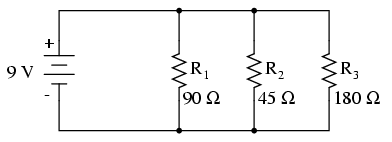
This is an example of a _______ circuit
a)
open
b)
series
c)
parallel
d)
square
10.
This is an example of a ______ circuit
a)
Series
b)
Parallel
c)
Open
d)
Dihexihedral
11.
Acceleration is produced when a force acts on a mass. The greater the mass (of the object being accelerated) the greater the amount of force needed (to accelerate the object).
a)
Newton's 1st Law
b)
Newton's 2nd Law
c)
Newton's 3rd Law
d)
None of them
12.
An object at rest will remain at rest unless acted on by an unbalanced force. An object in motion continues in motion with the same speed and in the same direction unless acted upon by an unbalanced force.
a)
Newton's 1st Law
b)
Newton's 2nd Law
c)
Newton's 3rd Law
d)
None of them
13.
This law is often called "the law of inertia."
a)
Newton's 1st Law
b)
Newton's 2nd Law
c)
Newton's 3rd Law
d)
None of them
14.
What is the equation for Newton's 2nd law?
a)
a = bc
b)
F = m/a
c)
F = ma
d)
a = b/c
15.
When mass is 10 kg, acceleration is 2 m/s/s, what is force?
F = ma
a)

5 N

b)

20 N

c)

8 N

d)

12 N

16.

A force of 250 N is applied to an object that accelerates at a rate of 5 m/sec2.  What is the mass of the object?

a)

100kg 

b)

1,250kg

c)

50kg

d)

5kg

17.
What is the equation to calculate speed?
a)
speed = distance/time
b)
speed = time/distance
c)
speed = time x distance 
d)
speed = speed/time 
18.
A car travels 30 miles/hr for 3 hours, calculate the distance it will travel
a)

90 miles

b)

10 miles

c)

600 miles

d)

90 km

19.
What is speed?
a)
how far you go
b)
how much distance is covered over a period of time
c)
how fast you accelerate
d)
the change in the location of a object
20.
What is the speed of an object that travels 60 meters in 4 seconds?
a)

240 m/s

b)

15 m/s

c)

0.067 m/s

d)

15 mph

21.
What two kinds of heat transfer are represented?
a)
stove→pot=radiation pot→egg=conduction
b)
stove→pot=conduction pot→egg=radiation
c)
stove→pot=convection pot→egg=conduction
d)
stove→pot=conduction pot→egg=convection
22.
Conduction can only occur between two objects when –
a)
one object is less dense than the other.
b)
both objects are in physical contact with each other.
c)
one of the objects is made of a metal.
d)
both objects are exactly the same temperature.
23.

What type of heat transfer takes place in liquids and gasses?

a)

Conduction

b)

Convection

c)

Radiation

d)

Thermal Equilibrium

24.
Which natural resource is a renewable energy resource?
a)
coal
b)
oil (petroleum)
c)
natural gas
d)
sun
25.

What is the mass of an object that creates 33,750J of energy by traveling at 30m/s?

(a)  

26.

Moving a book to a lower shelf decreases its potential energy

a)

True

b)

False

27.
Click to look at the picture. 
The picture is an example of _____ .
a)
gravity
b)
potential energy
c)
kinetic energy
d)
friction
28.
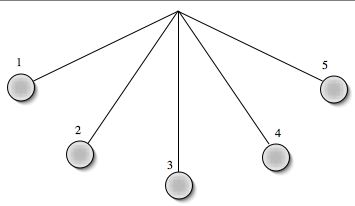
When a pendulum swings, at which point is potential energy at its greatest?
a)
1
b)
2
c)
3
d)
4
29.

At which point of the roller coaster is potential energy the greatest?

a)

W

b)

X

c)

Y

d)

Z

30.

If there is no friction on this track, at which point would the coaster have the most kinetic energy?

a)

A

b)

B

c)

C

d)

D

31.

What would be the potential energy of a book with a mass of 3.5 kg sitting on a table .7 meters above the ground.

a)

12 J

b)

24 J

c)

2.5 J

d)

5 J