wayground logo

Free Printable Worksheets

Font size

S
M
L
XL
Worksheets

Unit 3 Practice Test

Total questions: 82

Worksheet time: 50mins

Name
Class
Date
1.

What is the correct interpretation? (a)  

Choose from the below words
I work over there in San Francisco.
I live over there in Oakland.
Do you live in San Francisco?
Do you work in Oakland?
2.

What is the correct interpretation? (a)  

Choose from the below words
Is your house new or old?
Do you live in a new or old house?
Your house is new.
Is your house big or small?
3.
What is the correct interpretation?
a)
Where is the teacher's lab?
b)
I need to meet with the students. Where is the lab?
c)
I need to see the teacher. Where is the lab?
d)
I want to see the teachers. Where is the office?
4.
What is the correct interpretation?
a)
Go up the stairs to find the soda machine.
b)
Upstairs, 2nd floor, near the soda machine.
c)
Upstairs, 2nd door, near the candy machine.
d)
Go up the stairs and you'll be on the second floor.
5.

What is the correct interpretation? (a)  

Choose from the below words
Put the drink by the table.
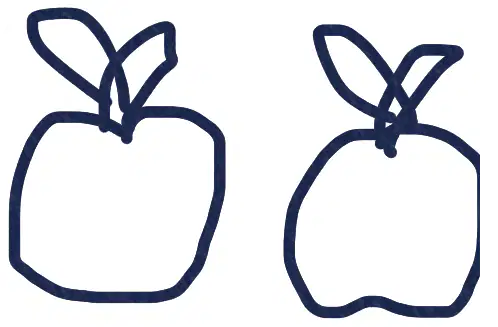
Put the apply in the trash can.
Put the soda in front of the desk.
Put the apple under the table.
6.

What is the correct interpretation? (a)  

Choose from the below words
YOU GO-TO WORK HOW-MANY MINUTES?
YOU DRIVE-TO SCHOOL HOW?
YOU GO-TO WORK HOW-MANY HOURS?
YOU GO-TO SCHOOL HOW-MANY MINUTES?
7.
What is the correct interpretation?
a)
It takes 8 minutes to walk to school.
b)
School to work is 7 minutes
c)
Work to school is 8 minutes.
d)
Work to school is 8 hours.
8.
Write the correct answer
9.
What would be the correct answer?
a)
a.
b)
b. Zelda
10.
What would be the correct answer?
a)
a.
b)
b.
c)
c.
d)
d.
11.
What would be the correct answer?
a)
a.
b)
b.
c)
c.
d)
d.
12.
What would be the correct answer?
a)
a. 3 hours
b)
b. 6 hours
c)
c.
d)
3 minutes
13.

Write the correct answer

(a)  

14.
What would be the correct answer?
a)
a.
b)
b. cat
15.
Write the correct answer.
16.
What are the steps for giving directions when you are on the same floor?
a)
1) Leave room, hallway 2) Draw route with facials (show distance0 3) Door (number or which side of hallway)
b)
1) Upstairs or downstairs 2) number +floor 3) what it is near
c)
1) Different building 2) Exit building 3) Point using real-world reference
d)
1) Leave room, hallway 2) Different building 3) what it is near
17.
What are the steps for giving directions when you are on a different floor?
a)
1) Upstairs or downstairs 2) Different building 3) Trace route
b)
1) Upstairs or downstairs 2) number +floor 3) what it is near
c)
1) Different building 2) Exit building 3) Point using real-world reference
d)
1) Leave room, hallway 2) Draw route with facials (show distance0 3) Door (number or which side of hallway)
18.
What are the steps for giving directions when you are in a different building?
a)
1) Upstairs or downstairs 2) number +floor 3) what it is near
b)
1) Leave room, hallway 2) Different building 3) Door (number or which side of hallway)
c)
1) Different building 2) Exit building 3) Point using real-world reference
d)
1) Leave room, hallway 2) Draw route with facials (show distance0 3) Door (number or which side of hallway)
19.
What face shape can be used to show something is far away?
a)
cs (tilt your head, clench teeth, turn head to the dominant side with cheek almost touching shoulder)
b)
mm (tilt your head, purse your lips slightly)
c)
ah (tilt your head, squint your eyes, open your mouth slightly)
20.
What face shape can be used to show something is a moderate distance?
a)
mm (tilt your head, purse your lips slightly)
b)
cs (tilt your head, clench teeth, turn head to the dominant side with cheek almost touching shoulder)
c)
ah (tilt your head, squint your eyes, open your mouth slightly)
21.
What face shape can be used to show something is a very near?
a)
mm (tilt your head, purse your lips slightly)
b)
ah (tilt your head, squint your eyes, open your mouth slightly)
c)
cs (tilt your head, clench teeth, turn head to the dominant side with cheek almost touching shoulder)
22.

What face shape can be used to show something is large? (a)  

Choose from the below words
cha
oo
mm
23.

What face shape can be used to show something is medium in size? (a)  

Choose from the below words
cha
mm
oo
24.
What face shape can be used to show something is small?
a)
oo
b)
mm
c)
cha
25.
What is meant by spatial agreement?
a)
Spatial agreement is when you agree with the question that someone is giving you. You change your movement based on the reaction.
b)
Spatial agreement is when a verb is modified to match established locations. The movement changes to agree with locations.
c)
Spatial agreement is when a noun is modified to match the verb. The movement is changed to match the person who is signing.
26.
How should you respond to yes / no questions and why?
a)
Don't ever answer yes/no. Make sure you answer the what question fully to show you are interested.
b)
Just answer yes/no with a smile or a frown. Doing this shows you are polite
c)
Answer yes/no with match head movement and then finish with a complete sentence. If you just answer yes/no it appears you aren't interested in the conversation.
27.
What are the steps to describing pets?
a)
1) Use your body to describe the pet: main color and it's markings 2) Give it's name 3) Indicate it's relative size.
b)
1) Tell what kind of pet 2) Indicate it's relative size 3) Use your body to describe the pet: main color and distinctive markings
c)
1) Indicate it's relative size 2) Tell what kind of pet 4) Use your body to describe the pet: main color and distinctive markings.
d)
1) Give it's name 2) Tell what kind of pet 3) Indicate it's relative size using your body.
28.
How do Deaf people have a visual way of living.
a)
all of the above
b)
a. Deaf-friendly environment, open spaces (walls don’t block, easily visible, mirrors placed
c)
b. Open spaces (walls don't block, easily visible, mirrors placed strategically)
d)
c. video phones / webcams
e)
d. Use ASL signing
29.
What are the cultural norms for speaking in the presence of a Deaf person?
a)
a, b, and e
b)
a. Sign to the best of your ability to show courtesy and respect.
c)
b. If a non-signing person is with you and the Deaf person, you relay the information.
d)
c. Don't sign unless you are very skilled.
e)
d. Speak slowly and loudly so the Deaf person can figure out what you are saying.
30.
What are the five strategies you can use when asking for the sign?
a)
Ask your teacher how to sign the word, list items in a category, use opposites, describe/act out, and draw the object.
b)
Use opposites, list items in a category, fingerspell the word, make up your own sign, and text the word.
c)
Fingerspell the word, draw the object, text the object, write it down, and point to the object.
d)
Point to the object, use opposites, list items in a category, draw the object, and describe / act out
31.
What is the correct interpretation?
a)
Did you grow up speaking French?
b)
You grew up signing French.
c)
I grew up speaking 9 languages.
d)
Did you grow up in France?
32.
What is the correct interpretation?
a)
You grew up speaking both Spanish and English
b)
You can speak Spanish and English
c)
Did you grow up speaking English or Spanish?
d)
I grew up speaking both Spanish and English
33.
What is the correct interpretation?
a)
This person likes to drink milk.
b)
This person likes to drink orange juice.
c)
This person likes to drink orange soda.
d)
Does this person drink orange soda?
34.
What is the correct interpretation?
a)
You want to travel to the mountains.
b)
I want to go hiking and camping.
c)
I have to travel and go camping.
d)
I want to travel and go camping.
35.
What is the correct interpretation?
a)
The woman is sitting with her chin on her hand over there.
b)
The man is sitting with his head resting on his fist over there.
c)
I think I know the man over there.
d)
A man is seriously thinking about going there.
36.
What is the correct interpretation?
a)
That man likes eating red apples.
b)
That woman hates red apples.
c)
That man hates eating red apples.
d)
That woman likes eating pink apples.
e)
My dad is over there. He hates red apple food.
37.
Which drawing matches the description?
a)
a
b)
b
c)
c
d)
d
38.
Which drawing matches the description?
a)
a
b)
b
c)
c
d)
d
39.
Which drawing matches the description?
a)
a
b)
b
c)
c
d)
d
40.
Which drawing matches the description?
a)
a
b)
b
c)
c
d)
d
41.
Which drawing matches the description?
a)
a
b)
b
c)
c
d)
d
42.
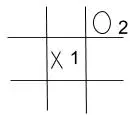
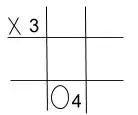
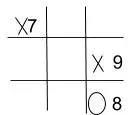
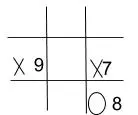
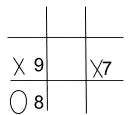
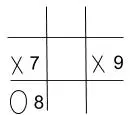
which drawing matches the tic-tac-toe board?
a)
a
b)
B
c)
C
d)
D
43.
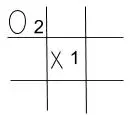
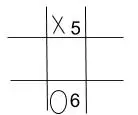
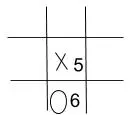
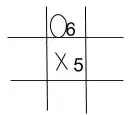
which drawing matches the tic-tac-toe board?
a)
a
b)
b
c)
c
d)
d
44.
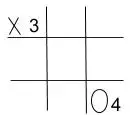
which drawing matches the tic-tac-toe board?
a)
a
b)
b
c)
c
d)
d
45.
which drawing matches the tic-tac-toe board?
a)
a
b)
b
c)
c
d)
d
46.
Who won the tic-tac-toe game?
a)
Tie
b)
X
c)
O
47.

Write the numbers being signed.

(a)  
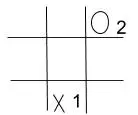
48.

Write the numbers being signed.

(a)  

49.

Write the numbers being signed.

(a)  
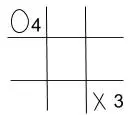
50.

Write the numbers being signed.

(a)  
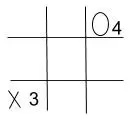
51.

Write the numbers being signed.

(a)  

52.

Write the numbers being signed.

(a)  

53.

Write the numbers being signed.

(a)  

54.

Write the numbers being signed.

(a)  

55.

Write the numbers being signed.

(a)  

56.

Write the numbers being signed.

(a)  

57.
What does the question-maker face look like?
a)
Brows up, lean forward, hold last sign.
b)
brows up
c)
brows down
d)
Brows down, lean forward, hold last sign.
58.
When is the question-maker face used?
a)
wh-word questions
b)
rhetorical questions
c)
Yes / No Questions
d)
who questions
59.
How is the question-maker face different from the WH-Face?
a)
WH-Face- brows areup and used for WH-Questions. Question-maker face brows are down and used for yes/no questions.
b)
WH-Face- brows are down and only used when you already know the answer.
c)
the question maker face turns a sentence into a question.
d)
WH-Face- brows are down and used for WH-Questions. Question-maker face brows are up and used for yes/no questions.
60.
What are the five strategies you can use when asking for the sign? (choose 5)
a)
Point to the object
b)
Use opposites
c)
Describe / Act out
d)
List items in a category
e)
Draw the object
61.
Explain how you use dominant and non-dominant hands for one handed signs
a)
Use dominant hand to sign or fingerspell. Do not use the non-dominant hand.
b)
Use both hand in the same way (mirroring each other).
c)
Dominant hand moves and non-dominant hand is the base which doesn’t typically move.
62.
Explain how you use dominant and non-dominant hands for two-handed symmetrical signs.
a)
Use dominant hand to sign or fingerspell. Do not use the non-dominant hand.
b)
Use both hand in the same way (mirroring each other).
c)
Dominant hand moves and non-dominant hand is the base which doesn’t typically move.
63.
Explain how you use dominant and non-dominant hands for two-handed non-symmetrical signs.
a)
Use dominant hand to sign or fingerspell. Do not use the non-dominant hand.
b)
Use both hand in the same way (mirroring each other).
c)
Dominant hand moves and non-dominant hand is the base which doesn’t typically move.
64.

Which of the following is NOT a correct way to negotiate a signing environment?

a)

D. Pause in front of two people signing as to make sure you don't interrupt their conversation, then when they acknowledge you, hunch over and walk through.

b)

A. Walk through two people signing: don’t hunch over.

c)

B. Use touch: press shoulder/upper back to show the person you would like them to move.

d)

C. Ask person to move: press shoulder or get attention to ask to move.

e)

A, B, and C

65.
Why does Gallaudet University hold a special place in the Deaf World?
a)
Only college/university for Deaf people.
b)
President Lincoln signed the charter for Gallaudet University.
c)
In 1988 had Deaf President Now movement where Deaf students and faculty shut down the school and demanded the next president be Deaf.
d)
all of the above
66.
How might a Deaf person make a connection with you as you have a conversation?
a)
all of the above
b)
A. They might ask your first and last name
c)
B. They might ask you where you are taking ASL
d)
C. They might ask your teacher’s name
e)
D. They might ask why you are learning ASL
67.
What is the correct interpretation?
a)
Where is the paper?
b)
Who has the paper?
c)
When will you write the paper?
d)
Where is the book?
68.
What is the correct interpretation?
a)
What is a chair?
b)
Who has that name?
c)
Nice to meet you
d)
What is your name?
69.
What is the correct interpretation?
a)
What is your name
b)
Nice to meet you
c)
Two people greet each other
d)
My name is
70.
What is the correct interpretation?
a)
Who is Sam?
b)
Who is Sean?
c)
My name is San
d)
My name is Tam
71.
What is the correct interpretation?
a)
Where is the book?
b)
Where is the paper?
c)
What is a book?
d)
What is on this paper?
72.
What is the correct interpretation?
a)
name
b)
letter
c)
shape
d)
number
73.
What is the correct interpretation?
a)
name
b)
letter
c)
shape
d)
number
74.
What is the correct interpretation?
a)
twirl/spin
b)
stand
c)
sit
d)
jump
75.
What is the correct interpretation?
a)
twirl/spin
b)
stand
c)
sit
d)
jump
76.
What is the correct interpretation?
a)
open the door
b)
door
c)
close the door
d)
window
e)
open the window
77.
What is the correct interpretation?
a)
a
b)
b
c)
c
d)
d
78.
What does the WH-face look like?
a)
Furrow brows together, lean head forward slightly without breaking eye contact, hold the last sign.
b)
Eye brows raised, lean head forward slightly without breaking eye contact, hold the last sign.
c)
lean head backward slightly without breaking eye contact
d)
look confused
79.
How do you identify a person?
a)
1) gender 2) hair color 3) point at the person
b)
1)Brief description 2)gender 3)hair color 4) glance at the person
c)
1) Clothing description 2) Hair color 3) point out the person and glance at the person at the same time
d)
1) Gender 2) Brief description 3) point out the person and glance at the person at the same time
80.
What are the three culturally appropriate ways to get the attention of others? Choose 3
a)
Tapping: Tap their shoulder or upper arm gently but firmly 2-3 times.
b)
Waving- The size of the wave corresponds to the distance between the waver and the other person.
c)
Using an intermediary- A signer is not close enough to get his/her attentions. The intermediary will either tap or wave to get the person’s attention and direct them to look at the signer.
d)
Touching: Hold your hand on their shoulder until they look at you.
e)
Waiting- Stand next to the person and stare at them letting them know you want to talk to them.
81.
As you are learning ASL, what are important things to remember?
a)
All of the above
b)
Build a language community: try not to miss class.
c)
Maintain a signing environment in the classroom, during breaks, before class begins, and whenever Deaf people are present.
d)
Minimize reliance on English as you listen or converse in ASL
e)
Focus on meaning rather than individual signs
82.
What are some of the ways Deaf people might communicate with others?
a)
all of the above
b)
A) Signing
c)
B) gestures
d)
C) writing or typing
e)
D) Third person (interpreter)