
 Worksheets
End of 8th Grade Science 22-23
Total questions: 152
Worksheet time: 2hrs 0mins
Compare the forces that occur when a grocery cart collides with a parked car.
The cart puts a bigger force on the car
The car puts a bigger force on the cart
The forces are equal and in the same direction.
The forces are equal in size and opposite in direction.
A student crashed a blue cart into a block three different ways, all at fast speed. One time the cart had 0 washers, one time it had 4 washers and one time it had 8 washers. In which case was the force on the cart largest?
When the cart had 0 washers
When the cart had 4 washers
When the cart had 8 washers
It was always the same force
Two football players are running towards each other and they crash. Player 1 is larger and player 2 is smaller. Which player exerts the biggest peak force?
Player 1
Player 2
The forces on both players are the same size
A free body diagram
Shows an object in space
Shows all of the objects in a collision
shows all the forces acting on an object
shows how fast an object is moving
The force of an object is determined by its
Acceleration
Density
Volume
Mass
The momentum of an object depends upon the object's ___________&_____________.
size and shape
mass and speed
mass and veloctiy
mass and energy
The momentum of an object depends upon the object's ___________&_____________.
size and shape
mass and speed
mass and veloctiy
mass and energy

What does velocity tell us about an object?
its speed and direction
its force
its momentum
its speed

How many laws did Newton make?
Newton made 5 Laws
Newton made 3 Laws
Newton made 2 Laws
Newton made 1 Law

What number is the law of Inertia law number 1, 2, or 3?
Law number 1
Law number 2
Law number 3
Law number 4

What is an example of law number 3?
A soccer ball won't move unless kicked
For every reaction there is a equal and opposite reaction
A full grocery cart requires more force to push than an empty cart

In Newtons first law a pencil on a table will remain there unless (a) .

Is the 3rd law the law of Action?
True
False

Is the 2nd law the law of Learning?
True
False

"A soccer ball will not move until it's kicked" Is that an example of law # 1, 2, or 3?
#1
#2
#3

Which is an example of law number 1 (Law of Inertia)?
Several dogs pulling a sled makes it to accelerate more quickly than just one dog pulling it.
A pencil on a desk will stay there until picked up.

Isaac (a) .

True or False? Isaac Newton originally was going to make 5 laws.
True
False

What does the law of acceleration mean?
The change of velocity.
Staying in place.
How to ride a bike.
Eating candy.

Bonus Questions
When was Isaac Newton Born?
July 14, 1983
December 25, 1642
October 31, 1712
May 4, 1997

Bonus Question
When did Isaac Newton Die?
June 18, 2010
September 2, 2010
June 23, 2010
March 31, 1727

Bonus Question
What age was Isaac Newton when he died?
72 years old
11 years old
3 years old
53 years old
84 years old

What was Isaac Newton?
Mathematician, Astronomer, Scientist, and Author.
Scientist, Dog Walker, School Teacher
FBI Agent, Scientist, Daveed!!!!!
Stay at home parent, Bill Nye, Rick Sanchez
One important characteristic of sound waves is that they are ___________________ waves.
mechanical
short
ultraviolet
primary
Sound waves must travel through ___________________.
air
a medium
an outward area
a short
Sound waves can NOT travel through
Air
Water
Earth
space
The sound that we actually hear is the vibration of molecules.
True
False
Longitudinal waves means that the disturbance of the wave travels in different directions as the wave.
True
False
This is a visual of a sound wave. It is an example of _____________________ wave.
a mechanical
a longitudinal
both a mechanical and longitudinal
If there is a loud noise in your house, the sound travels through
the air
the air and the wall
the air, the wall, the floor
the air and most everything in the house
If there is a loud noise in space, the sound travels through
the space particles
small atoms in space
space is a vacuum, so nothing
What is the source of a sound wave?
Electricity
Vibration
Light waves
Tiny nuclear explosions
The intensity of a sound wave is equal to the sound power (P) divided by the _______.
Area
Time
Distance
Energy
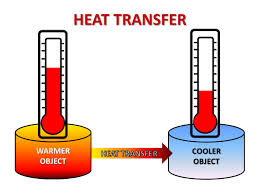
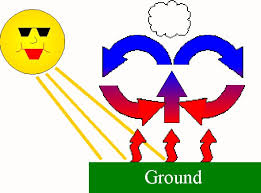




movement of energy that occurs due to differences in temperature and density
radiation
conduction
convection
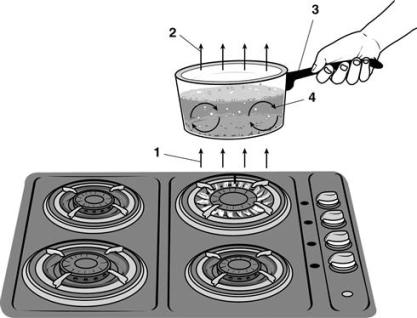
A crayon placed on a dark driveway in bright sunlight melted into a colorful puddle. What caused the crayon to melt?
Solar radiation heated the driveway and then heat transferred to the crayon by conduction.
Solar radiation heated the driveway and then heat transferred to the crayon by radiation.
Solar convection heated the driveway and then heat transferred to the crayon by radiation.
Solar convection heated the driveway and then heat transferred to the crayon by conduction.
What does the Big Bang Theory tell us
About the popular television show.
the entire universe was once condensed in the form of primeval atom, or a dense mass.
how the universe began.
Most scientists believe the Big Bang Theory explains which of the following questions?
How our planets and moons formed
How our universe began
How the sun turns hydrogen into helium
How fast light travels through space
Which scientists was responsible for coining the phrase “Big Bang?”
Fred Doyle
Albert Einstein
Sir Isaac Newton
Edwin Hubble
Which statement is true?
The galaxies are moving toward us.
The galaxies are moving away from us.
The universe remains static or unchanged in motion.
None of the above
Light emitted from a star or galaxy can be separated into a band of colors, called a ________.
Red Shift
Wave Length
Spectrum
Microwave
As galaxies move away from our galaxy
a shift on the electromagnetic spectrum
(EMS) is noticed. This phenomena is
called _____________.
redshift
blueshift
unshift
blackshift
How does Cosmic Microwave Background Radiation support the Big Band Theory?
Microwaves are found everywhere in the universe.
Microwaves occurred at the time of the Big Bang
Microwaves are useful in our everyday lives
Only A & B
How does the abundance of hydrogen and helium support the Big Bang Theory.
Hydrogen and helium are elements on the Periodic Table
Hydrogen and helium are in the same ratio throughout the universe.
Hydrogen and helium have many current uses today
Which statement is true about the Big Bang Theory? Choose all that apply.
It should appear longer because of a redshift.
the universe formed by the rapid expansion of space from a point 10–20 billion years ago
The universe is expanding because light from faraway stars and galaxies is shifting towards the blue colors.
When stars and galaxies move farther away from each other, we say that the universe is expanding and that this is due to a shift in the frequency of light coming from these light sources.

What is the correct order for the formation of our solar system?
1,2,3,4
2,3,4,1
2,4,3,1
1,3,4,2
How would the planets move if the Sun disappeared?
The planet would stop moving because gravity is no longer affecting it.
The planet would move for a little while longer, but then stop.
The planet would move in a straight line in the direction it had been traveling, because of its inertia.
The planet would stop moving, but then start moving again because it would attach to another celestial object or planet.
The orbital speeds of planets closer to the Sun will be faster than planets farther away because.....
The gravity decreases as the distance between the objects increase.
The gravity increases as the distance between the objects decrease.
The gravity increases as the mass of the object increases.
The gravity between the objects decrease as the objects warm up.
How do scientists believe gravity influenced the formation of the planets in our solar system?
A large cloud of gas and dust ignited into a planet.
Gravity pulled the planets out of the Sun.
A large explosion created the planets.
Large pieces of debris clumped together to form planets.
What are the steps of the Nebular Theory?
Step 1: A tiny point rapidly expanded
Step 2: Helium was compressed into stars
Step 3: The stars explode and turn into planets
Step 1: Gravity pulled together atoms in a nebula
Step 2: Nuclear fusion occurred and a star is born
Step 3: Smaller clumps around the star formed into planets
Step 1: The solar system formed because of the Big Bang
Step 2: Our solar system was the first one
Step 3: Dark energy is pushing other solar systems away
Step 1: Gaseous planets will orbit the Sun slower
Step 2: Rocky planets will orbit the Sun faster
Step 3: The Sun will vaporize all the inner planets
Which to things affect the strength of gravitational pull?
Distance and Weight
Heat and Density
Mass and Distance
Gas and Dust
What causes the tides?
The Moon and the Sun's gravity
The Earth and the Sun's gravity
Jupiter and Saturn's gravity
The inner planets gravity
What does the Earth, Moon and Saturn have in common?
The Sun revolves around them.
Saturn orbits the Earth, and at the same time, the Moon revolves around the Earth.
They all revolve in elliptical orbital paths around the Sun due to gravity.
They all have life on them.
How does the Moon's gravity cause the rise and fall of Earth's ocean levels?
The Sun's gravitational force "pulls" on both the Earth and the Moon at different times.
Earth revolves on its axis, which causes ocean levels to rise facing the Moon.
Since the Moon has more mass than Earth, the Moon's gravity causes tides.
The Moon's gravitational force "pulls" on the oceans

Gravity is affected by
mass and distance
shape and color
volume and density

The pull of gravity decreases when the distance between two objects
Increases
Decreases

This shows
Size difference between the planets accurately
Distance between the planets accurately
Both size and distance accurately
What is the center of our solar system?
The sun
Earth
Jupiter
Saturn
Our Solar System_________
Has 8 planets that are very close together
Has 8 planets, but is mostly empty space
Has 9 planets that are very close together
Has 9 planets, but is mostly empty space
Why is making a model of the solar system difficult?
Don't have the right materials
The solar system is so big and the objects in it are so small in comparison
There are too many parts in a model
Because the science concepts are too difficult


What is a light year?
It is the LUMINOSITY of the Sun compared to other stars.
Like a regular year, only with less calories.
It is the DISTANCE light travels in one year.
It is the TIME it takes light from the Sun to get to the Earth.
It takes light about ___ to reach the Earth from the Sun.
8 seconds
8 minutes
8 days
8 years


Completed in 24 hours
Rotation
Revolution
Completed in a year
Rotation
Revolution
The earth spins at a constant speed, always in the same direction.
Rotation
Revolution


In the diagram below, the Northern hemisphere would be in what season at position A?
Fall or Autumn
Spring
Winter
Summer
During a summer solstice the America, the southern hemisphere experiences
a vernal equinox
the autmunal equinox
a summer solstice
a winter solstice
Why is summer warmer than winter?
The hemisphere experiencing summer is tilted more directly toward the sun
During summer, the entire planet is closer to the sum
The sun radiates more energy during the summer
The earth spins slower on its axis during the summer
6. When the northern hemisphere has summer...
...the southern hemisphere has winter.
...the southern hemisphere has spring.
...the southern hemisphere has autumn.
Which hemisphere do we live in?
Northern Hemisphere
Southern Hemisphere
Western Hemisphere
Eastern Hemisphere

Based on the diagram, which season would the northern hemisphere be experiencing?
Winter
Spring
Summer
Fall
Which diagram models a hypothetical situation in which every location on Earth would have 12 hours of daylight and 12 hours of darkness per day?


Which of these changes would likely occur if the rate of Earth's rotation on its axis increased?
The length of the seasons would be longer.
The length of the seasons would be shorter.
The length of a day would be shorter.
The length of a day would be longer.

The beginning of autumn in North American is in September, but the beginning of autumn in South America is in March. The diagram shows a picture of the Earth, the sun, and the moon on one day in September and another in March. Why does autumn start in different months of the year in North America and South America?
Earth's orbit around the sun is not a perfect circle.
North America has a larger landmass than South America.
The moon has a greater pull on South America than North America.
Earth's axis has a 23.5 degree tilt.

Students in a science class in Marfa, Texas, made a poster with a diagram to represent seasonal change in the Northern hemisphere. Which statement best describes conditions for Earth at position 1 in the diagram?
There are an equal number of hours of daylight and nighttime in the Northern hemisphere, and the north pole is tilted away from the Sun.
The Northern hemisphere has the fewest hours of daylight, and the Earth's axis does not tilt at this position.
There are an equal number of daylight and nighttime hours in this position because the Earth is not tilted in this position.
The Northern hemisphere has the fewest hours of daylight, and the north pole is tilted away from the Sun.


What moon would you expect to see on March 23rd?


What is the missing lunar phase?
Third Quarter
Waxing Crescent
New Moon
Waning Gibbous

Use the calendar to predict the moon phase on March 9th.
New Moon
Full Moon
Third Quarter
First Quarter
Use the calendar to predict the moon phase on March 26th.
Waxing Crescent
Waning Crescent
Waning Gibbous
Waxing Gibbous
Use the calendar to predict the moon phase on March 30th.
New Moon
Full Moon
Third Quarter
First Quarter


