
 Worksheets
5th Grade Science SOL 7 Days
Total questions: 70
Worksheet time: 38mins
Potential energy is the energy an object has due to its:
Position
Motion
Temperature
Atomic Structure
Kinetic energy is the energy an object has due to its:
Position
Motion
Temperature
Atomic structure





Which passenger has the most potential energy?
A
B
C
D

The formula for calculating the gravitational potential energy in an object is shown above. Which object will have the largest value for its GPE
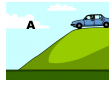
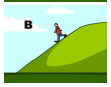
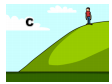
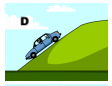
If these are all moving at the same speed, the vehicle with the greatest KE would be
(Think about their sizes)


Determine whether the following example is Potential Energy (PE) or Kinetic Energy (KE):
flashlight turned off
Potential Energy
Kinetic Energy
The ability to cause change or the ability to do work is...
Fuel
Thermal
Energy
Joules


Which of the following has kinetic energy?
a rock poised for a fall
an archer's bow that is drawn back
a rolling bowling ball
A spring that has been compressed


Identify whether work is done or not in the picture
Yes
No

A push or pull that acts on an object is called
Work
Force
Energy
Momentum
(a) is done when a force is applied
The equation for work is
work = power x mass
work = power / time
work = force x distance
work = distance x time

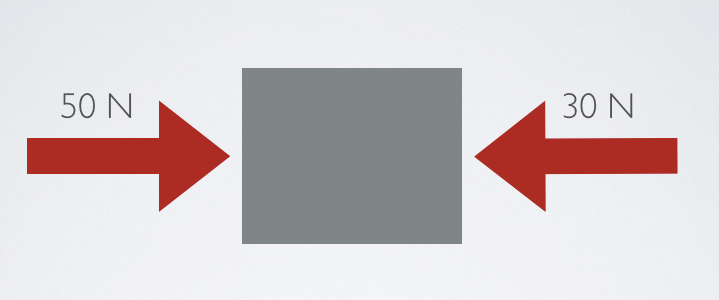


Balanced or unbalanced?
(a)

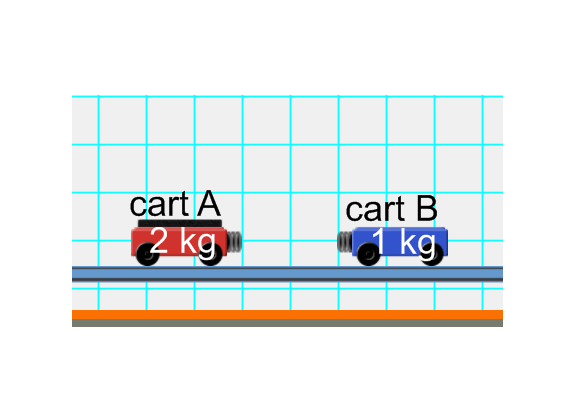
In the collision simulator, what happens when the red carts' mass is 3 kg and the blue carts' mass is 1 kg?
They both bounce backward.
The red cart bounces backward.
The blue cart pushes the red cart.
The blue cart bounces backward.

Two balls are pushed towards each other and they collide.
How might the energy of Ball A change as it collides with Ball B?
Ball A and B will stay the same.
Ball B will transfer some of its energy to Ball A.
Ball A will take all the energy and Ball B will have none.
The energy from ball B will be destroyed.

Which object has the most energy?
plane
baseball
car
runner

Moving objects will not stop unless acted upon by an unbalanced force.
True
False

The theory that states that energy may change form, but it cannot be created or destroyed is called the _______________________.
Conservation of Energy
energy transfer
gravity
contact force
Electrical → Mechanical → Sound
Which device were the students most likely observing?


What kind of energy is being shown in the picture?
Light
Gravitational
Potential
Kinetic

Which two points have the same potential energy?
U & V
S & T
T & X
S & X

What happens as the ball on the pendulum goes from center to the right in the diagram?
Kinetic energy increases while potential energy decreases
Potential energy increases as kinetic energy decreases
Potential energy increases as kinetic energy increases
Potential and Kinetic energy is lost

How does energy change?
The cart has more kinetic energy at the top than when it is going down the hill.
The cart has potential energy at the top while kinetic energy increases going down.
The cart has potential energy that is lost going down the hill.
The cart has kinetic energy at the top of the hill and no potential energy.

How does energy transfer as the ball is bouncing?
Kinetic, Potential, Potential, Kinetic
Potential, Potential, Kinetic, Kinetic
Kinetic, Kinetic, Potential, Potential
Potential, Kinetic, Kinetic, Potential

Before fruit falls from a tree, how does energy flow?
Potential - Kinetic - Sound
Light - Kinetic - Heat
Potential - Sound - Heat
Solar - Kinetic - Heat

Which two types of energy are seen in a roller coaster?
Kinetic & Potential
Potential & Light
Kinetic & Thermal
Kinetic & Chemical

Which position has the most kinetic energy?
1
2
3
4

Which position has the highest potential energy?
1
2
4
6
Planet P is also known as the greenhouse planet. It rotates from east to west. Which of the following is Planet P?
Mercury
Venus
Saturn
Mars
Which of the following planets is a giant planet?
Mercury
Venus
Earth
Saturn
____________ does not have atmosphere.
Mercury
Saturn
Jupiter
Mars
Which planet has the strongest gravitational force?
Mercury
Mars
Saturn
Jupiter
Which planet has the lowest density?
Saturn
Mercury
Venus
Mars
Which planet is the hottest in the Solar System?
Mercury
Venus
Mars
Neptune
Which of the following planets rotates on its side?
Mercury
Jupiter
Uranus
Neptune
Which planet is the coldest?
Mercury
Earth
Jupiter
Neptune

・This rocky planet is the 3rd planet from the sun.
・It has 1 moon.
・It has water and an atmosphere.
Sun
Earth
Mercury
Mars

・This gas giant is the 7th planet from the sun.
・It is the 3rd largest planet.
・It is tilted on its side.
Saturn
Jupiter
Mars
Uranus

・This gas giant is the 5th planet from the sun.
・It is the largest planet in our solar system.
・It is known for its red spot.
・It has 62 moons.
Jupiter
Mars
Venus
Neptune

・This gas giant is the farthest from the sun.
・It has 13 moons.
・It is known as the windiest planet.
Tatooine
Pluto
Neptune
Mars

・This rocky planet is the 4th planet from the sun.
・It has 2 moons.
・It is known as the “Red Planet.”
Moon
Mercury
Venus
Mars

・This rocky planet is the 2nd planet from the sun.
・It has no moons.
・It is the hottest planet.
・It is similar in size to Earth.
Venus
Mars
Earth
Mercury

・This gas giant is the 6th planet from the sun.
・It is famous for its rings.
・It has at least 53 moons.
Mercury
Jupiter
Saturn
Venus

・This rocky planet is the closest planet to the sun.
・It is the smallest planet in our solar system.
・It has no moons.
Earth
Mercury
Saturn
Pluto

Mercury, Venus, Earth and Mars are closer to the sun.
They are the __________________.
Inner Planets
Outer Planets
Mercury, Venus, Earth and Mars are
gas giants with no solid ground
terrestrial (rocky) planets with solid ground

