wayground logo

Free Printable Worksheets

NEW

Font size

S
M
L
XL
Worksheets

Science STAAR Review

Total questions: 75

Worksheet time: 3hrs 43mins

Name
Class
Date
1.
Safety is
a)
not necessary.
b)
sometimes important
c)
preventing injury, hurt or loss.
2.
An instrument that uses a lens to make tiny things look larger-
a)
ruler
b)
scale
c)
microscope
3.
What tool is used to find the temperature at which water boils?
a)
graduated cylinder
b)
hot plate
c)
stopwatch
d)
thermometer
4.
What safety tool can we use to protect our eyes? 
a)
gloves
b)
microscope 
c)
flip flops 
d)
goggles
5.
If these boys are pulling with the same amount of force.  What will happen?
a)
The boy in blue will win.
b)
They will not move at all.
c)
The boy in red will win.
d)
Both will fall down.
6.
Why is person B having a hard time moving down the hill?
a)
Person B has more friction than person A.
b)
Person B has the same friction as person A.
c)
Person B is out of shape.
d)
Person B has less friction has person A.
7.
What is motion?
a)
It's like the ocean
b)
Any change in an animal or person's position.
c)
Motion is like acting
d)
Any change in an object or person's position.
8.
What is a PUSH or PULL of an object?
a)
Motion
b)
Force
c)
Friction
d)
Gravity
9.

Which force pulls objects towards the center of the earth?

a)

Gravity

b)

Friction

10.
If all the trees on Earth were destroyed, what would be the effect on humans?
a)
there would be a lack of food
b)
there would be a lack of oxygen
c)
there would be a lack of fresh water
d)
there would be a lack of carbon dioxide
11.
The class decided to have a terrarium.  The teacher says it is important to include both plants and animals.  Why is it necessary to include both plants and animals?
a)
plants provide food for the animals and animals provide water for the plants
b)
plants provide water for the animals and animals provide food for the plants
c)
plants provide carbon dioxide for the animals and animals provide oxygen for the plants
d)
plants provide oxygen for animals and the animals provide carbon dioxide for the plants
12.

The main source of energy for all life comes from ____.

a)

the Earth

b)

the moon

c)

the Sun

d)

the food we eat/make

13.
The earth is tilted on its _____
a)
line
b)
equator
c)
axis
d)
core
14.
Earth does a complete revolution every _______
a)
10 years
b)
12 hours
c)
24 hours
d)
365 days
15.
The earth rotates every
a)
24 hours
b)
15 hours
c)
365 days
d)
hour
16.
How many moons does earth have
a)
2
b)
5
c)
9
d)
1
17.
How long does it take for the moon to go through all moon phases
a)
day
b)
week
c)
month
d)
year
18.
The earth is the only planet that
a)
supports life
b)
has water
c)
contains humans
d)
all of the above
19.
What does the tilt of the earth cause?
a)
heating
b)
Seasons
c)
Atmosphere
d)
Years
20.
How many planets are there in our solar system?
a)
4
b)
8
c)
12
d)
7
21.
Whats the 5th planet in our solar system
a)
pluto
b)
earth
c)
mars
d)
jupiter
22.
How many planets are there in our solar system?
a)
4
b)
8
c)
12
d)
7
23.

Which of the these is correct?

a)

Earth revolves around the Sun

b)

Sun revolves around Earth

c)

Moon revolves around the Sun

d)

Sun revolves around the moon

24.

Which of the these is correct?

a)

Earth revolves around the Sun

b)

Sun revolves around Earth

c)

Moon revolves around the Sun

d)

Sun revolves around the moon

25.

The sun...

a)

rises in the east, sets in the west

b)

rises in the west, sets in the east

c)

rises in the north, sets in the south

d)

rises in the south, sets in the north

26.

The star at the center of our solar system is called

a)

the Moon

b)

the Sun

c)

the Andromeda

d)

Beetlejuice

27.
The Sun, eight planets, and thousands of stars make up the 
a)
outer planets
b)
inner planets
c)
solar system
d)
light years
28.
A combination of pure substances, not in fixed amounts, that can be easily separated.is a
a)
MIXTURE
b)
COMPOUND
c)
ATOM
d)
PARTICLE
29.
This is a mixture of two or more substances in which one or more of these substances (solutes) is dissolved in another substance.
a)
COMPOUND
b)
MOLECULE
c)
SOLUTION
d)
SOLVENT
30.
A solution is a mixture of one or more substances _________ evenly into another substance.
a)
dissolved
b)
evaporated
c)
carried
d)
split
31.
Coffee is a 
a)
solution
b)
mixture
32.
A fruit salad is a 
a)
solution
b)
mixture
33.
To separate noodles from water what method should you use?
a)
filtration with a strainer
b)
boiling while it is cooking
c)
magnet for the noodles
34.
Which mixture separation method would work with picking up nails?
a)
filtration 
b)
magnet
c)
boiling/evaporation
d)
sorting physically
35.
To dissolve in water.
a)
solubility
b)
density
c)
mixture
d)
evaporation
36.
Salt dissolves in water like ----
a)
Pepper dissolves in water
b)
Sugar dissolves in water
c)
Rocks dissolve in water
d)
Seeds dissolve in water
37.
What kind of energy is represented in this picture?
a)
Thermal
b)
Potential
c)
Nuclear
d)
Mechanical
38.
The ability to do work is
a)
power
b)
energy
c)
thermal
d)
kinetic
39.
The ability to do work is
a)
power
b)
energy
c)
thermal
d)
kinetic
40.
What kind of energy is represented in this picture?
a)
Thermal
b)
Chemical
c)
Electrical
d)
Sound
41.
What is an example of light energy?
a)
A bird chirping
b)
The sun 
c)
A girl running
d)
An oven
42.
What is an example of thermal energy?
a)
A can
b)
A heater 
c)
A bed
d)
A girl
43.

What energy form is being used?

a)

Sound

b)

Thermal

c)

Light

d)

Mechanical

44.
This is when light bounces back off a surface.
a)
Refraction
b)
Transmission
c)
Reflection
d)
Absorption
45.
This is when light bends as it passes through a surface.
a)
Refraction
b)
Transmission
c)
Reflection
d)
Absorption
46.
This is the order of the colors on the light spectrum.
a)
Red, Violet, Orange, Indigo, Yellow, Blue, Green
b)
Violet, Indigo, Blue, Green, Yellow, Orange, Red
c)
Red, Orange, Yellow, Green, Blue, Indigo, Violet
47.
This type of electrical circuit does not allow electricity to flow through.
a)
Open Circuit
b)
Closed Circuit
48.
This type of electrical circuit does allow electricity to flow through.
a)
Open Circuit
b)
Closed Circuit
49.
A material in which electrons are able to move easily
a)
Circuit
b)
Insulator 
c)
Resistance 
d)
Conductor 
50.
A material in which electrons are not able to move easily 
a)
Circuit 
b)
Insulator 
c)
Resistance 
d)
Conductor
51.
When creating a circuit, what type of energy flows out of the battery?
a)
heat energy
b)
electrical energy
c)
light energy
d)
mechanical energy
52.
Will the light bulb in this circuit light and why/why not?
a)
yes, because it has two batteries
b)
no, because the switch is open
c)
yes, because it is in a circuit
d)
no, because the bulb is burned out
53.
What is the power source in this circuit?
a)
Lightbulb
b)
Switch
c)
Wires
d)
Battery
54.

Find the correct definition of the underlined word, glacier.

a)

a narrow stretch of land connecting two larger areas

b)

a large natural stream of water that runs through the land

c)

a large, thick body of slow moving ice

d)

a narrow stretch of water joining two larger bodies of water
55.
What is weathering?
a)
A type of climate
b)
A transport of sediment
c)
The breakdown of rock
d)
The aging of rock
56.
What continues to shape canyons?
a)
fast moving water
b)
slow moving water
c)
rocks weathering
d)
rocks eroding
57.
What does erosion mean?
a)
to break apart
b)
to settle in new spot
c)
to move
d)
to sit still
58.
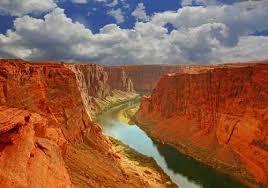
What land form is this?
a)
plain
b)
valley
c)
mountain
d)
canyon
59.
The following are agents of erosion EXCEPT...
a)
wind
b)
water
c)
ice
d)
fire
60.
What landform is this?
a)
valley
b)
delta
c)
river
d)
canyon
61.
What are the three states of matter?
a)
sticky, soft, and short
b)
solid, liquid, gas
c)
solid, liquid, oil
d)
sticky, solid, liquid
62.
Observations of an object: mass, magnetism, physical state, sink/float, color, shape, and size are all .....
a)
Physical State
b)
Matter
c)
Physical Properties
63.
You can measure ______ with grams.
a)
mass
b)
volume
c)
conductivity
d)
melting point
64.
Mass, relative density, solubility, color, texture, state of matter, conductivity, etc.
a)
Physical state
b)
Insulators
c)
Physical Properties 
d)
Inferences
65.

If an object sinks in water, it is more dense.

a)

True

b)

False

66.

If an object floats in water, it is less dense.

a)

False

b)

True

67.
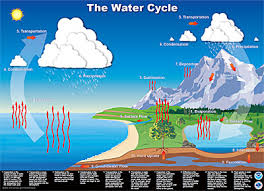
What does this picture show?
a)
weather
b)
climate
68.
Changes from minute-to-minute, hour-to-hour, day-to-day
a)
Climate
b)
Weather
69.
What is the water cycle?
a)
the 3 forms of water
b)
the movement of water on, above, or below the surface of the Earth
c)
when water melts
d)
when clouds form
70.
Which stages does liquid water from the ocean turn into water vapor?
a)
condesantion
b)
evaporation
c)
precipitation
d)
run off
71.
What are the 3 main fossil fuels?
a)
Coal, Oil, and Gasoline
b)
Coal, Oil, and Natural Gas
c)
Electricity, Gasoline, Petroleum
d)
Coal, Oil, Non-renewable Resources
72.

What most likely happened to the dead plants and animals?

a)

They were eaten by scavengers.

b)

They were washed away by water.

c)

They became fossil fuels.

d)

They became an underground aquifer.

73.

Which statement correctly describes the transfer of energy in a food chain in this wetland?

a)

Energy is transferred from hawks to shrews to grasshoppers to marsh grasses.

b)

Energy is transferred from marsh grasses to crickets to hawks to frogs.

c)

Energy is transferred from grasshoppers to crickets to frogs to hawks.

d)

Energy is transferred from cattails to crickets to shrews to hawks.

74.

What is the difference between learned behavior and inherited trait?

a)

Learned behaviors are taught, and inherited traits are passed down from parent to child.

b)

Learned behaviors take years to acquire, and inherited traits take only a short time.

c)

Learned behavior are difficult to accomplish, and inherited traits are easy to accomplish.

d)

Learned behaviors are passed down from parent to child, and inherited traits are taught to children.

75.

What is an adaptation?

a)

A behavior that helps an animal survive.

b)

The food that animal eats.

c)

How energy moves in a food web.

d)

How animals evolve throughout time.