
 Worksheets
English II Final Exam
Total questions: 125
Worksheet time: 2hrs 34mins
What is textual evidence?
My opinion after reading.
Proof in the article.
A word-for-word quote from the article/story followed by an in-text citation.
A made-up quote I add to my answer.
What is the second step to writing a paragraph with textual evidence?
Support
Cite
Explain
Answer
What is textual evidence?
My opinion after reading.
Proof in the article.
A word-for-word quote from the article/story followed by an in-text citation.
A made-up quote I add to my answer.
What is the second step to writing a paragraph with textual evidence?
Support
Cite
Explain
Answer
When answering a question using textual evidence, what does my support look like?
It is another answer.
It is my opinion.
It is a word-for-word quote from the article/story followed by an in-text citation.
It is a concluding statement.
Before I can include my textual evidence, what do I need to add?
A citation.
My opinion.
A concluding statement.
A lead to introduce the quote.
What is another way to define textual evidence?
An answer to the question.
My paraphrased version of the article.
A word-for-word quote from the article/story followed by an in-text citation.
My opinion of the article.
What do I include in my in-text citation?
A period.
Parenthesis.
The title of the article.
The page number and/or the author's last name in parenthesis with a period outside of the parenthesis.
What is the acronym used to answer a writing prompt with textual evidence?
RASE
RACE
RASC
RASCP
After I answer the question, what step do I need to complete before my explanation?
Cite textual evidence.
Another answer.
Elaboration.
My opinion.
What does the in-text citation need to include?
Author's first and last name.
The page number.
The website.
The author's last name and page number.
What step comes after citing textual evidence?
Explain how the textual evidence supports the answer.
Check for unclear pronouns.
Another piece of evidence.
My answer.
The first step of the RACE process is?
Proper nouns
Restate the question
More evidence
Prove it
Michael woke up with a start. Someone was banging at the front door. Heavy footsteps clomped over the bare boards of the hallway. A shouting of voices. Jacko's familiar growl, then the front door slammed shut. Michael shivered and pulled the thin blanket closer around his shoulders. Through the cracked glass of the curtainless window, the sky looked gray and dirty. A groan from the other mattress told him that Toby was awake as well.
Which of the following would be considered formal textual evidence?
Michael was trying to sleep
Toby is Michael's brother
Michael and Toby were cold
"the sky looked gray and dirty"
Which words help describe the setting?
She hadn't meant to come down onto the beach. She'd meant to sit at the top of the ramp till the other kids had left the street, till she could walk home from school in peace without strangers staring at her, but somehow the bird seemed to urge her to come down.
Which textual evidence best describes Emily's thoughts and feelings?
Which line in the text tells you that Max is upset becuase it is raining?
What does the acronym R.A.C.E. mean?
Reach, Answer, Call, Evidence
Restate, Alter, Cite, Explain
Redo, All, Cars, Everywhere
Restate, Answer, Cite, Explain
As long as your textual evidence explains your point clearly, you do not need to elaborate on it.
True
False
What is the acronym used to answer a writing prompt?
RASE
RACE
RASC
RASCP

Textual evidence is when we use information from the text to support our answers.
True
False

When you use someone else's ideas, you DON'T have to cite the text.
True
False

Citing the text means to give credit to the author that wrote the text.
True
False

What word or phrase means stating the author and page number from a source when using a direct quotation or paraphrasing?
text
direct quotation
paraphrasing
in-text citation

What word or phrase means the practice of taking someone else's work and passing it off as your own?
in-text citation
plagiarism
direct quotation
paraphrasing
Websites that end with .org, .edu, or .gov
What 3 things should an introduction include?
Quote, Question, and Analysis
Title, Author, and Summary of text
Hook, Introduction of text, Thesis
Claim, Counterclaim, Rebuttal
Where should you place the thesis statement?
first sentence in intro
second sentence in intro
last sentence in intro
at the beginning of each body paragraph
How many pieces of text evidence should be in EACH body paragraph?
one
only two
two or more
none
How many sentences of analysis should follow EACH piece of evidence?
none
one
only two
two to four
Which statement is NOT true of your body paragraphs?
You should have more evidence than analysis
You should have more analysis than evidence
You should blend your evidence and analysis together
You should use transition words throughout your body paragraphs
To write in order to pass final exams
To write a paper scholarly
To write using proper English language
To avoid copy pasting from the Internet
Which of the following is an example of a metaphor?
The water glistened like a star in the night.
The snow was a white blanket on the normally green grass.
Her stare was cold as ice.
The dove represents peace on earth.
Which of the following is an example of imagery?
Playing sports is a lot of fun.
The boy bounced the ball.
The young boy excitedly ran to the ball.
The ball was a deep red, like that of a fire truck, glistening in the bright sun.
Which of the following is an example of a simile?
Her hair shined like the sun.
The snowflakes danced in the wind.
Her hair was a flowing river.
The delicious ice cream made her jump for joy.
Which of the following is NOT an example of irony?
A marriage counselor files for divorce
A fire station burned down
An old man has a heart attack
Someone posts on Facebook about how dumb Facebook is
Which of the following is an example of alliteration?
BOOM!
The soda can exploded in my hand like a rocket ship going into space.
Her skin was as soft as a baby's.
The purple pants were perfect on the professor.
Which of the following is an example of repetition?
CRASH!
The bright red cardinal flew majestically over the snow-peaked mountain.
I recall the time when Lincoln was president, before slavery was ended, before the Civil War.
I think I can, I think I can, I think I can.
Which of the following is an example of personification?
The wind howled in the dark night sky.
The trees were a beautiful color, like the bright orange of sunset.
Her hair was dark as night.
His mother yelled at him like a banshee.
Which of the following is correct?
Foreshadowing - when an author goes back in time to describe an event / Flashback -when an author gives clues as to what will happen
Foreshadowing - giving human-like traits to non-human things / Flashback - when an author gives clues as to what will happen
Foreshadowing - when an author gives clues as to what will happen / Flashback - comparison of two unlike things using like or as
Foreshadowing - when an author gives clues as to what will happen / Flashback - when an author goes back in time to describe an event
Which font must be used for a paper to be in MLA format?
Chalkduster
Times New Roman
Comic Sans
Papyrus
What should the spacing be in an MLA formatted essay?
2.0
1.5
1.0
0.5
What is the font size for most MLA documents?
10
12
14
16
What should be at the top left of the first page of a MLA document?
the heading
the page number
the title
the first sentence
What is included in the first line of the heading?
the date
the teacher's name
the class and period
your name
True or False.
In an MLA document, titles should be underlined.
True
False
True or False. The first line of each paragraph should be indented 1/2 inch from the 1 inch margin. This can be done by using the tab key.
True
False
Where do the page numbers go?
at the top left corner of each page
at the bottom middle of each page
at the top right corner of each page
at the bottom left of each page
How should the date be written?
August 1, 2019
1 August 2019
2019 August 1
2019 1 August
Choose the answer choice that uses correct MLA format.
"It was a bright cold day in April, and the clocks were striking thirteen." (Orwell 1).
"It was a bright cold day in April, and the clocks were striking thirteen," (Orwell 1).
"It was a bright cold day in April, and the clocks were striking thirteen" (Orwell 1).
"It was a bright cold day in April, and the clocks were striking thirteen" (Orwell, 1).
Choose the answer choice that uses correct MLA format.
"Why is a raven like a writing desk?" (Carroll, 23)
"Why is a raven like a writing desk?" (Carroll 23).
"Why is a raven like a writing desk," (Carroll 23)?
"Why is a raven like a writing desk? (Carroll, 23)".
Knowing how to cite sources is important because
it lets you add specific details
it avoids plagiarism
it makes you look more credible
all of these
What is a Works Cited page?
A page that lists info about you.
A page at the end of your paper that lists all of your sources.
A page where you list your favorite quotes or songs.
The assignment rubric.
What is an example of deliberate plagiarism?
Buying or downloading a paper that someone else has written and passing it off as your own.
Writing in your diary.
Brainstorming Ideas
Buying the same shirt as your friend.
True or false? Information that is not considered common knowledge needs to be cited.
True
False

What is an in-text citation?
A traffic ticket
A citation in a bibliography
a shortened citation at the end of a sentence in a paragraph
a text message on your phone

What two pieces of information should be included in the in-text citation?
Page numbers, URL
First letter of the author's last name and page numbers
Article title and author
Author's last name and page number

When do you need an in-text citation?
After every sentence
For your own ideas
Words taken from someone else (paraphrase or direct quote)
You are quoting an article with page numbers. Which in-text citation is correct?
Smith claims that "many students struggle with MLA citation" (Smith 14).
Smith claims that "many students struggle with MLA citation" (14).
Citing sources can be complicated, and "many students struggle with MLA citation" (14).
Citing sources can be complicated, and "many students struggle with MLA citation" (Smith).
The __________ introduces readers to the characters and setting of a story
exposition
expulsion
resolution
rising action
What is the definition of plot?
The lesson of a story
The sequence of events in a story
The turning point of a story
The conflict of a story
Which detail best describes the rising action?
The turning point of a story
Complicates the conflict
Shows how the conflict is resolved
The most intense part of a story
What is the climax of a story?
the turning point of the story
the main problem of the story
the beginning of the story
the point when the conflict is resolved
Which list shows the plot elements in the correct order?
exposition, falling action, climax, rising action, inciting incident, resolution
exposition, falling action, inciting incident, rising action, climax, resolution
exposition, inciting incident, rising action, climax, falling action, resolution
rising action, inciting incident, falling action, exposition, climax, resolution
The story's time and place is the...
tone
plot
setting
voice

Which part of the story follows the climax and begins to resolve the conflict?
setting
falling action
resolution
force
Explain why the setting is important to the plot of the story?
The setting introduces the characters of the story.
The setting describes when and where the story takes place. It also sets the tone.
The setting describes the problem in the story.

What part of the diagram is 1?
Rising Action
Falling Action
Inciting Incident
Exposition

What part of the diagram is 3?
Climax
Exposition
Falling Action
Rising Action

What part of the diagram is 4?
Climax
Exposition
Inciting Incident
Resolution

What part of the diagram is 5?
Exposition
Inciting Incident
Falling Action
Rising Action

What part of the diagram is 6?
Rising Action
Climax
Inciting Incident
Resolution
What is direct characterization?
The process by which the personality of a fictitious character is revealed through the character's speech, actions, appearance, etc.
The process by which the narrator tells the audience what the personality of the character is.
What is indirect characterization?
The process by which the narrator tells the audience what the personality of the character is.
The process by which the personality of a fictitious character is revealed through the character's speech, actions, appearance, etc.
"We did it! We did it! We did it!" Mei boasted, slapping her hand against the table, scattering toast crumbs, knocking aside teaspoons and almost smearing the butter in her zeal.
"Whoa!" her brohter exclaimed, startled. "Well congratulations!"
Mei stood up and triumphantly strutted around the kitchen, transforming her walk around the breakfast table into a victory parade.
Her brother laughed, suprised and amused. "Who are you, and what have you done with me sister, Mei?" he teased.
Based on the passage, what can you infer about the main character Mei?
Read the following passage from a story:
Mercy snorted. She should have known better than to challenge Victoria. Of all Mercy's friends, Victoria talked loudest, ran fastest, and took the most risks. She bragged about the time she convinced her older brothers to spend a weekend building her a fort. Mercy liked to call Victoria "Buster". "Because you are always busting things up," she laughed. Victoria wore the nickname with pride.
Based on the passage, which of the following is one of Victoria's traits?
Based on the following description of Dee, which inference can you make about her? “She used to read to us without pity; forcing words, lies, other folks’ habits, whole lives upon us two, sitting trapped and ignorant underneath her voice.”
She knew how important it was to educate her mother and sister.
The stories she told were meant to frighten her family and keep them awake at night.
Dee found many ways to show her mother and sister that she was smarter than they were.
Because she could read so well, Dee probably would make a fine teacher.
How the READER feels when reading a poem
Mood
Tone
Imagery
Analysis
The author's feeling about the poem- created through words and phrases
Mood
Tone
Idea
Theme
The author's message or lesson learned in the poem
Topic
Theme
Answer
Fable
I come with no wrapping or pretty pink bows.
I am who I am, from my head to my toes.
I tend to get loud when speaking my mind.
Even a little crazy some of the time.
I'm not a size 5 and don't care to be.
You can be you and I can be me.
I try to stay strong when pain knocks me down.
And the times that I cry are when no one's around.
To error is human or so that's what they say.
Well, tell me who's perfect anyway.
Source: https://www.familyfriendpoems.com/poem/be-proud-of-who-you-are
What would be a theme of this poem?
Source:
Love conquers all
Nobody is perfect
Handwork pays off
It's okay to be wrong

A truth, lesson or message about life in a poem or other literary text.
poet
poem
theme
mood

What is the mood of this poem?
happy
surprised
sad
angry
What is the difference between Tone and Mood?
There isn't one
They are too similar to notice a difference.
Mood is how the poem makes you (the reader) feel, tone is how the author feels or wants you to feel.
Mood is how the author feels or want you to feel, tone is how the poem makes you (the reader) feel.
"Wow! With a top speed of one hundred fifty miles per hour, that car can almost fly!"

"You must be sitting in your seat before the bell rings," ____________ Mrs. Walker.
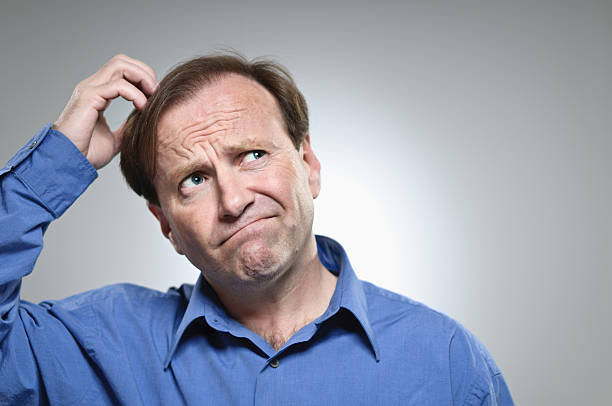
What mood does this photograph create?
concern
surprise
confusion
sadness
A warm fire crackled in the fireplace, and the chairs gathered around it were large and soft. A deep, luxurious carpet greeted cold toes with a comforting embrace, while the huge pillows thrown about the floor suggested it would be okay to stretch out for a while to warm up.
What word best describes the mood of this passage?
welcoming
tense
silly
cold

