
 Worksheets
US History Final Practice Test
Total questions: 62
Worksheet time: 31mins
These are reasons why the colonists declared independence against Great Britain in 1776. Select all that apply.
unfair taxes
they were not given a say in government
everyone had the right to vote
Boston Massacre
The Declaration of Independence says that people are endowed by their Creator with certain unalienable rights (i.e. cannot be taken away). What are those rights?
life
liberty
pursuit of happiness
bear arms
True or False: The Declaration of Independence says that people have the right to rebel against the government if it doesn't protect their rights.
True
False
True or False: The colonists fought France during the Revolutionary War for Independence
True
False
True or False: The British empire won the Revolutionary War.
True
False
This document is the rulebook for the government and lists our rights and responsibilities.
Declaration of Independence
Constitution
Federalist Papers
Mayflower Compact
What does Congress do?
pass laws
enforce laws
interpret laws
What does the President, his Cabinet (advisors) and federal agencies do?
pass laws
enforce laws
interpret laws
What does the Supreme Court have the power to do?
pass laws
enforce laws
interpret whether or not laws are constitutional
True or False: Federal laws are supreme; they trump state laws.
True
False
What is the idea that each branch of government can "check" or limit the power of the other branches.
separation of power
checks and balances
legislative branch
federalism
The federal government is divided into three branches. Each branch has their own separate powers. What is this idea called?
checks and balances
separation of powers
federalism
constitution
True or False: Congress passes laws and is part of the judicial branch
True
False
Think of the leader of the executive branch as like the chief EXECUTIVE officer (CEO) of a company. Who is in charge of the executive branch and is the face of America, so to speak?
president
supreme court
congress
vice president
The _________ branch consists of federal courts as well as the highest court in the land, the Supreme Court. They aJUDICate laws to settle disputes.
judicial
executive
legislative
What are some of the freedoms we have in the 1st amendment?
speech
religion
assembly
press
What is the name of the 1st 10 amendments to the Constitution?
Constitution
Declaration of Independence
Bill of Rights
Federalist Papers
Which of the following rights do you have as an American citizen? Select all that apply.
right to bear arms
protection against unreasonable searches and seizures of your property
no cruel or unusual punishment for a crime
right to a trial by a jury of your peers
Which of the following presidents owned enslaved people?
Andrew Jackson
John Adams
Thomas Jefferson
George Washington
Which of the following factors led up to the Civil War?
slavery
election of Abraham Lincoln
westward expansion
all of the above
In the ____________ decision, the Supreme Court ruled black people would never become citizens. This angered the abolitionists and was a factor that led up to the Civil War.
Harriet Tubman
Dred Scott
Abraham Lincoln
Thurgood Marshall
What is the name of the event where pro-slavery and anti-slavery Americans tried to influence the vote on whether or not to allow slavery in these new states, thus breaking out in violent conflict?
Bleeding Kansas
Kansas-Nebraska Act
Missouri Compromise
Wounded Knee
The following sources are considered primary sources
diary
letter
newspaper article
photo
film
The following are considered secondary sources...
textbook
research paper
diary
photo
If you were writing a research paper on nurses during the Civil War, you would want to include at least _____ of sources.
1
2
3
4
When details from historical sources match up, they ___________ one another.
corroborate
define
mix well with
bias
This is the following definition to which word? When the writer/creator of a source is strongly slanted towards or against something (i.e. an event, person, or regime) because of the context they live in, making the source unbalanced, prejudiced, and one sided by using positive or negative language and/or the omission (leaving out) of facts
corroboration
bias
secondary source
primary source
True or False: The Civil War began before the South seceded from the Union
True
False
True or False: When the South seceded from the Union (United States), they formed their own country called the Confederate States of America
True
False
True or False: Abraham Lincoln is elected president before the South secedes from the Union.
True
False

What is #1 on the map?
Original 13 Colonies
Louisiana Purchase
Texas Annexation
Treaty of Paris 1783
What is #2 on the map?
Gadsden Purchase
Louisiana Purchase
Texas Annexation
Treaty of Paris 1783
What is #3 on the map?
Gadsden Purchase
Louisiana Purchase
Texas Annexation
Treaty of Paris 1783
What is #4 on the map?
Florida (Spanish) Cession
Louisiana Purchase
Texas Annexation
Treaty of Paris 1783
What is #5 on the map?
Mexican Cession
Louisiana Purchase
Texas Annexation
Treaty of Paris 1783
What is #6 on the map?
Mexican Cession
Louisiana Purchase
Texas Annexation
Oregon Country
What is #7 on the map?
Mexican Cession
Louisiana Purchase
Texas Annexation
Oregon Country
What is #8 on the map?
Mexican Cession
Louisiana Purchase
Texas Annexation
Gadsden Purchase
What is #2 on the map?
Land gained from Great Britain through Treaty of Paris in 1783
Land gained from France in 1803 for $15 Million
Land gained by annexing the Republic of Texas in 1845
Land gained from Mexico in 1853 for $10 Million

What region is highlighted in purple on this map?
Midwest
Pacific
Northeast
Southeast

What region is highlighted in pink on this map?
Midwest
Pacific
Northeast
Southeast

What region is highlighted in yellow on this map?
Midwest
Pacific
Northeast
Southeast

What region is highlighted in red on this map?
Southwest
Rocky Mountains
Noncontiguous

Which region is this?
Midwest
Southwest
Southeast
West
What were the advantages the South had in the war? (Check all that apply).
Military leadership (better generals)
Larger army
Fighting in familiar territory
More railroad lines

Where would you MOST LIKELY find an abolitionist?
North
South
Border states

An abolitionist wants to
spread slavery
fight for the South (Confederacy)
withdraw from the Union
end slavery

Who was elected President in 1860 that led to the secession of 11 southern states?
Abraham Lincoln
Ulysses S. Grant
Jefferson Davis
Robert E. Lee

Which statement BEST explains President Abraham Lincoln's original reason for fighting the Civil War?
President Lincoln wanted to end all slavery everywhere in the US
President Lincoln wanted to preserve the Union
President Lincoln wanted to punish the South for their rebellion
When was the Civil War?
1861-176
1861-1865
1870-1876
2015-2019

Based on the pictograph, predict which side would win the war because it had more resources.
Union (North)
Confederates (South)
Western Territories
Which map shows the Union?
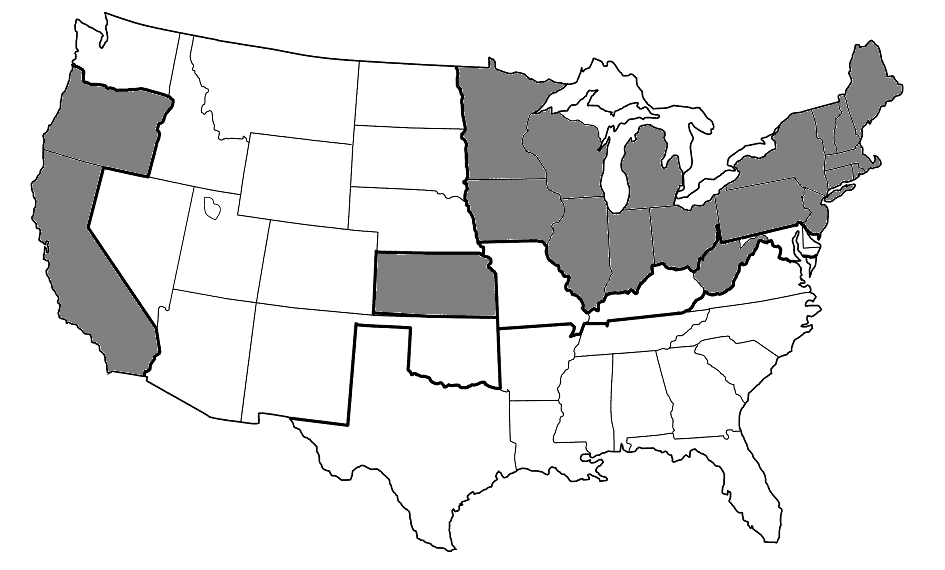
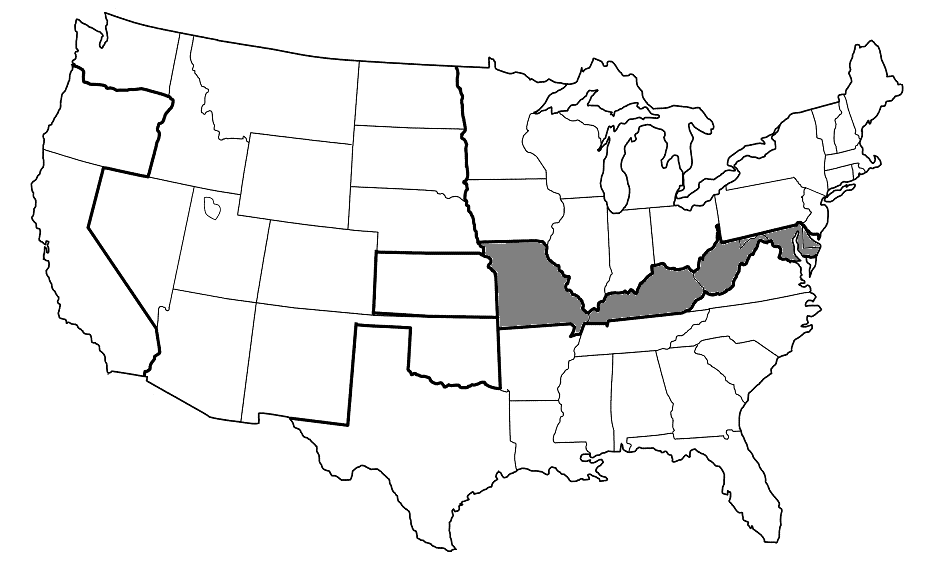
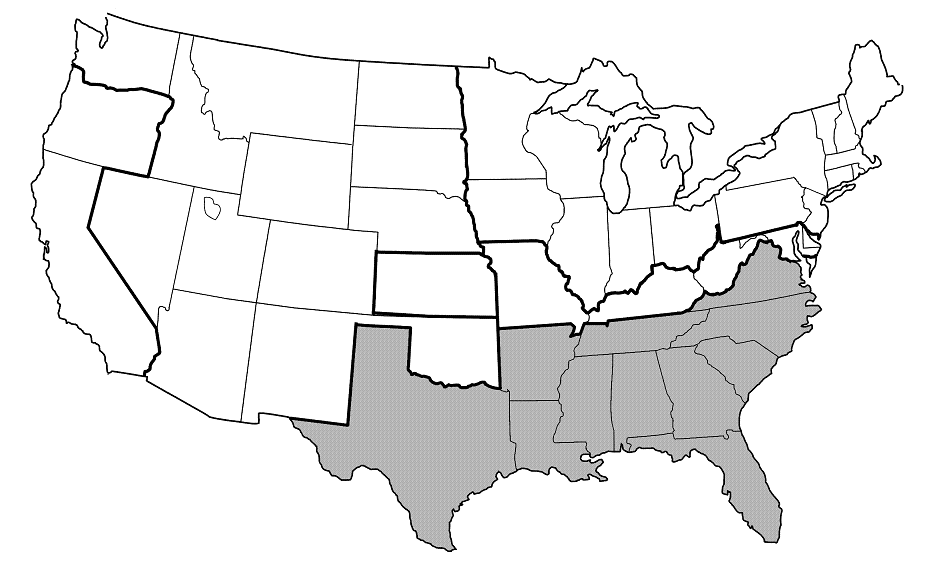
Which map shows the Union Border States?
Which map shows the Confederate States?
The North was also known as ___.
The Union
The Confederacy
The Border States
The Remaining States
States that stayed in the Union but continued to allow slavery were known as ___.
The Union
The Confederacy
Border States
States of Confusion
________________ was a law enforced by then President Andrew Jackson to remove all
native Americans from the south.
Immigration
Indian Removal Act
Indian Wars
Mexican American War
designated areas where native Americans were relocated to.
Native land
Frontier Reservation
Manifest Destiny
Indian Reservation
the order by Abraham Lincoln in which he freed all slaves in the
Confederate States of America.
Gettysburg Adress
First Inaugural Address
Emancipation Proclamation
Second Inaugural Address
Law that allowed slave owners find runaway slaves and bring them back to their plantation.
Fugitive Slave act
Runaway slave act
Underground Railroad
Ex slave act

