
 Worksheets
Unit 6 - N. Africa, SW Asia, Central Asia
Total questions: 55
Worksheet time: 33mins
What is true about the fresh water supply in Southwest Asia?
desalinization plants make fresh water cheaply
fresh water is plentiful and easily accessed
fresh water resources are evenly distributed in the region
many conflicts in the region are about access to limited fresh water
Which country in SW Asia has an economy known for chemicals, clothing, machinery, and high-tech equipment?
Iran
Iraq
Israel
Lebanon

Identify the country shaded green with the purple arrow.
Iraq
Iran
Saudi Arabia
Kuwait
What are the three major religions found in Southwest Asia / North Africa?
Christianity
Judaism
Buddhism
Islam
Which North African country has petroleum products and phosphates as their major exports?
Libya
Saudi Arabia
Egypt
Algeria
A government run by religious leaders, or a theocracy is found in which country?
Iraq
Israel
Saudi Arabia
Iran
Why aren't drip irrigation and desalination used more often in Southwest Asia?
people don't want this technology
drip irrigation is not effective in a hot, dry climate
desalination is a failed technology
these technologies are very expensive to use

Which North African country is labeled "A"?
Morrocco
Algeria
Libya
Egypt
What are the two most valuable natural resources in Southwest Asia?
gold and diamonds
sand and dirt
water and oil
bugs and candy
Which of the religions below are monotheistic?
Christianity
Islam
Buddhism
Judaism
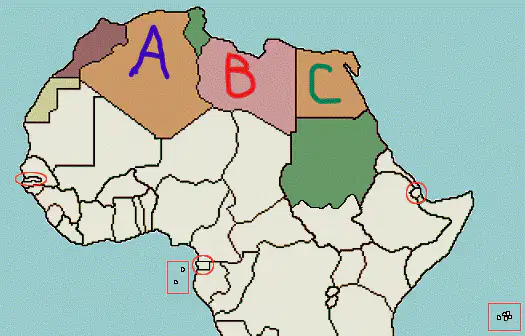
Which country is labeled "C"?
Egypt
Saudi Arabia
Libya
Sudan
Which of the following choices are true of Egypt's Nile River?
The Nile is an important source of irrigation water
The Nile is an important trade and transportation route
The Nile River connects to the Tigris-Euphrates River systems
Egypt generates hydroelectric power from the Nile
What is the most common type of farming practice in Southwest Asia?
Southwest Asia does not have any farming
all farms in Southwest Asia are government owned
large scale plantation type with a single crop
subsistence farming (survival)
Which of the following is not an ethnic group?
Christians
Kurds
Persians
Arabs

Identify the country labeled "A"
Edgyp
Iraq
Saudi Arabia
Syria
Which of the following choices are true of Islam?
Very few people in SW Asia are Muslim
It is the most practiced faith in SW Asia
The holy book of Islam is called the Quran
A person who practices Islam is called a Jew
Cairo, a city of 11 million people is the capital of ____.
Iran
Iraq
Egypt
Kazakhstan
Which country produces the most oil in Southwest Asia / North Africa?
Iran
Saudi Arabia
Iraq
Israel
Why is it important for countries rich in oil to also develop non-oil industries?
Oil will be around forever, so developing other industries is not needed
Oil is a finite resource and will eventually run out
The value of oil fluctuates which can impact the economy
It is not wise to have the economy of a country dependent on one product

Identify the country labeled "B"
Iraq
Iran
Israel
Jordan
What do the Central Asian countries have in common?
They are Islamic countries that were once part of the Soviet Union
The wealthy city of Dubai is located where the countries meet
The Tigris and Euphrates Rivers flow through the countries
They have many valuable resources but harsh environments
Arabic, Farsi, Hebrew, and Turkish are four common languages of this region. People learned _________ because it was the language of the Quran. As this religion grew, one language became most prevalent.
Arabic
Farsi
Hebrew
Turkish
Which of the following countries make up the Caucasus countries?
Turkey
Azerbaijan
Georgia
Armenia
Which of the following are positive effects of the Aswan High Dam in Egypt?
farmers need to use chemical fertilizers since the natural silt is stuck behind the dam wall
farmers are able to produce more than one crop each year
the dam controls flooding so water levels are consistent
salt water from the Mediterranean Sea has backed up into the Nile River
Which religion has five pillars or expectations of it's members?
Judaism
Islam
Muslim
Christianity

Identify the country labeled "C"
Iraq
Iran
Pakistan
Algeria
What is monotheism?
the belief in many gods
the belief that Jews deserve their own nation
the belief in one god
the belief in Santa
Which of the following choices are true regarding population in the region of North Africa, Southwest Asia, and Central Asia?
Inadequate housing and transportation are a result of rapid population growth
Overcrowding and not enough jobs are a result of rapid population growth
The population of this region is decreasing which will cause an imbalance in the population pyramid
The population of this region is growing rapidly
Which of the choices below illustrate beliefs Jews, Christians, and Muslims share?
They are monotheist
They believe people should obey God's will
They are polytheist
They believe God created the universe
Many of the largest cities in Southwest Asia are located on or near ___.
deserts
large grasslands
major rivers
mountain ranges
Which of the following statements are true of SW Asian peoples lifestyles?
Most people in oil-rich nations are nomadic herders in the desert
Most people in oil-rich nations work as subsistence farmers
Most people live in urban areas and are wealthy, especially in oil-rich nations
Most people live on prosperous pineapple plantations
Throughout the Middle East, oil industry wealth has fueled a growing clash between
educated people and uneducated people
Christians and Jews
the United States and Great Britain
traditional Islamic values and Western materialism

Look at the map. Why are certain areas so densely populated?
Densely populated areas have more access to a water source and resources
Densely populated areas are where there are less resources available to people
Densely populated areas have more access to desert which makes travel easier
There is no reason that explains why some areas are more populated than others
Which important waterways (historically as well as today) are found in Iraq?
Nile River
Tigris River
Euphrates River
Aral Sea
Which of the follow are factors contributing to fresh water scarcity?
pollution
population growth
desalination
climate change
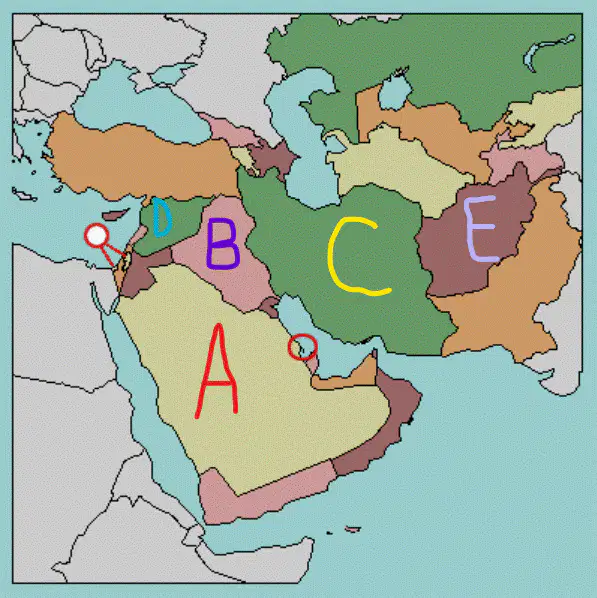
Identify the country labeled "D"
Israel
Jordan
Syria
Lebanon
Which of the following is true of the Strait of Gibraltar?
it links the Mediterranean Sea with the Atlantic Ocean
it separates Europe from Asia
it links the Mediterranean Sea and Black Sea
it separates Europe from Africa
Which of the following statements are true of water in North Africa / SW Asia?
Water is abundant
Water is scarce
People are not managing this resource effectively
People in this region are exporting their surplus water
Which of the following choices are true of "salt" in this region?
Too much salt can destroy farmland
When water for crops evaporates too quickly, salt is left behind
Salt is a natural mineral and great quantities enrich the soil
An excess of salt is an essential part of a healthy human diet

Identify the country labeled "E"
Pakistan
Saudi Arabia
Iran
Afghanistan
Which of the following are problems cities in the region face due to rapid population growth?
overcrowding
inadequate housing
lack of transportation
an abundance of jobs
Which of the following is an example of a natural fertilizer that enriches the soil?
steppes, which are dry, grassy plains
silt, which was once deposited by the Nile River
shadoof, which is a hand-operated device for lifting water
sea shore, which is land that borders an ocean or sea
Which of the following choices are true of Armenia?
The people primarily practice the Jewish faith and many synagogues are located here
The country is located on top of many faults resulting in devastating earthquakes
It is landlocked and one of the Caucasus Republics
The Nile River flows through the land and allows farmers to grow crops
The Israelis of Israel have been in conflict with the ________ for decades over the control of land.
Saudi Arabians
Egyptians
Kurds
Palestinian Arabs
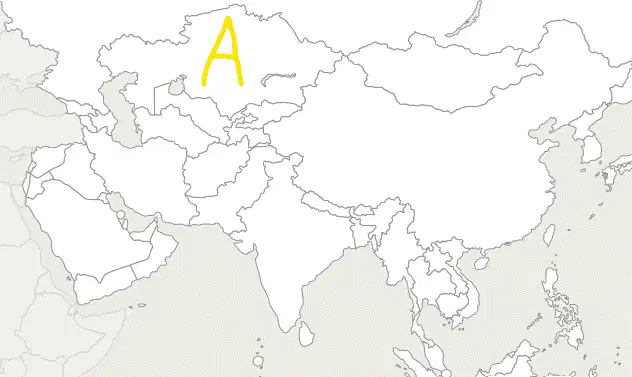
Identify the country labeled "A"
Kazakhstan
Uzbekistan
Afghanistan
Iran
Which of the following choices are true regarding Saudi Arabia and women's roles?
Tansu Ciller was the first prime minister of Saudi Arabia
Saudi Arabian women cannot drive or vote
a robe, veil, and male relative are required of Saudi Arabian women in public
Saudi Arabia has numerous leadership and career opportunities for women
The Quran is the holy book of ___.
Jews
Muslims
Christians
all monotheistic faiths
Which of the following statements are true of the Maghreb?
The Maghreb countries are Iran, Iraq, and Israel
The people of the Maghreb countries are a mix of Arab and Berber ancestry
The people of the Maghreb countries speak Arabic and practice Islam
The Maghreb countries are Tunisia, Algeria, and Morrocco

Identify the country surrounded in orange.
Iran
Lebanon
Jordan
Israel
Trade sanctions placed against Libya by the U.S. and U.N. caused what change?
Libya stopped supporting terrorism
Libya traded with countries not part of the United Nations
Libya ended their quest for nuclear weapons
Libya's partnerships with other countries improved after they changed

Identify the Central Asian country framed in purple
Turkmneistan
Pakistan
Uzbekistan
Kazakhstan
Why must farmers in the Nile Valley use expensive chemical fertilizers?
the Nile River's annual floods wash away fertilizers
the farmers are growing more rice
the Nile River is drying up
the Aswan High Dam blocks the flow of silt down the river
Which of the following statements are true of Uzbekistan's environment?
the climate is dry and growing thirsty crops such as cotton strains the environment
heavy production of the cash crop cotton has harmed the environment
the deforestation of the regions tropical rainforests have damaged the environment
the river waters that once fed the Aral Sea have been diverted for irrigation
Muammar al-Qaddafi was the leader of ____.
theocratic government of Iran
dictatorship Libya
constitutional monarchy Saudi Arabia
Iraq's republic
Which of the following are true of oil's importance in the region?
oil is not as important as timber in the region
countries with oil have prosperous economies
it is the most valuable economic resource
profits from oil have made many countries very wealthy

