
 Worksheets
SALOM JELEK
Total questions: 109
Worksheet time: 1hrs 26mins
An electronic calculator is a small, portable electronic device used to perform both arithmetic operations and complex mathematical operations.
The first solid electronic calculator was created in the 1960 s, building on the extensive history of tools such as the abacus (developed around 2000 BC), and the mechanical calculator (developed in the 17th century AD). It was developed in parallel with the analog computers of the day.
In addition to general purpose of calculators, there are those designed for specific markets, for example, there are scientific calculators which include trigonometric and statistical calculations. Some calculators even have the ability to do computer algebra. Graphing calculators can be used to graph functions defined on the real line, or higher dimensional Euclidean space.
According to the text, what is the usage of calculator?
To count numbers
To play music
To write numbers
To make notes about numbers
to check time
An electronic calculator is a small, portable electronic device used to perform both arithmetic operations and complex mathematical operations.
The first solid electronic calculator was created in the 1960s, building on the extensive history of tools such as the abacus (developed around 2000 BC), and the mechanical calculator (developed in the 17th century AD). It was developed in parallel with the analog computers of the day.
In addition to general purpose of calculators, there are those designed for specific markets, for example, there are scientific calculators which include trigonometric and statistical calculations. Some calculators even have the ability to do computer algebra. Graphing calculators can be used to graph functions defined on the real line, or higher dimensional Euclidean space.
When does the mechanical calculator developed?
17th Century
1960
2000 BC
2007
1986
An electronic calculator is a small, portable electronic device used to perform both arithmetic operations and complex mathematical operations.
The first solid electronic calculator was created in the 1960s, building on the extensive history of tools such as the abacus (developed around 2000 BC), and the mechanical calculator (developed in the 17th century AD). It was developed in parallel with the analog computers of the day.
In addition to general purpose of calculators, there are those designed for specific markets, for example, there are scientific calculators which include trigonometric and statistical calculations. Some calculators even have the ability to do computer algebra. Graphing calculators can be used to graph functions defined on the real line, or higher dimensional Euclidean space.
What is the meaning of “extensive” in the second paragraph?
big
outer
loyal
capacious
inside
An electronic calculator is a small, portable electronic device used to perform both arithmetic operations and complex mathematical operations.
The first solid electronic calculator was created in the 1960 s, building on the extensive history of tools such as the abacus (developed around 2000 BC), and the mechanical calculator (developed in the 17th century AD). It was developed in parallel with the analog computers of the day.
In addition to general purpose of calculators, there are those designed for specific markets, for example, there are scientific calculators which include trigonometric and statistical calculations. Some calculators even have the ability to do computer algebra. Graphing calculators can be used to graph functions defined on the real line, or higher dimensional Euclidean space.
It was developed in parallel with the analog computers of the day. The underlined word refers to ...
the electronic device
the solid electronic calculator
the mechanical calculator
the portable electronic
the extensive history
An electronic calculator is a small, portable electronic device used to perform both arithmetic operations and complex mathematical operations.
The first solid electronic calculator was created in the 1960s, building on the extensive history of tools such as the abacus (developed around 2000 BC), and the mechanical calculator (developed in the 17th century AD). It was developed in parallel with the analog computers of the day.
In addition to general purpose of calculators, there are those designed for specific markets, for example, there are scientific calculators which include trigonometric and statistical calculations. Some calculators even have the ability to do computer algebra. Graphing calculators can be used to graph functions defined on the real line, or higher dimensional Euclidean space.
What is the main idea of paragraph 3?
Electronic calculators are vary
Calculators are designed for specific markets
There are many kinds of calculators based on the purpose
There is computer algebra
Scientific calculators are trigonometric and statistic
A laptop is a kind of computer unit which has the same function as a PC (Personal Computer), but it’s smaller, lighter and of different sizes. Nowadays, most people choose laptops for several reasons.
A laptop is a portable device. This portability is very helpful for our work, study and other activities. We do not need complicated cable installations to activate a laptop. With a laptop, we can do our work anytime and anywhere.
Moreover, a laptop allows us to access the internet in public places which provide free access called hot spot areas. Some people like to use this facility to carry out their tasks.
Finally, a laptop consumes energy more efficiently than a PC does. This device uses a rechargeable battery as a source of electric energy. So, if we prefer using a laptop, it means that we support the government program to save energy. That’s why a laptop has become very popular recently.
What is the purpose of the text above?
To describe about a laptop
To inform the readers about a laptop
To give opinions about a laptop
To tell the story about a laptop
To retell the experience about using a laptop
A laptop is a kind of computer unit which has the same function as a PC (Personal Computer), but it’s smaller, lighter and of different sizes. Nowadays, most people choose laptops for several reasons.
A laptop is a portable device. This portability is very helpful for our work, study and other activities. We do not need complicated cable installations to activate a laptop. With a laptop, we can do our work anytime and anywhere.
Moreover, a laptop allows us to access the internet in public places which provide free access called hot spot areas. Some people like to use this facility to carry out their tasks.
Finally, a laptop consumes energy more efficiently than a PC does. This device uses a rechargeable battery as a source of electric energy. So, if we prefer using a laptop, it means that we support the government program to save energy. That’s why a laptop has become very popular recently.
A public place where we can have free access to the internet is …
Free access
Hot spot
Internet installation
Laptop facility
Hot spot area
A laptop is a kind of computer unit which has the same function as a PC (Personal Computer), but it’s smaller, lighter and of different sizes. Nowadays, most people choose laptops for several reasons.
A laptop is a portable device. This portability is very helpful for our work, study and other activities. We do not need complicated cable installations to activate a laptop. With a laptop, we can do our work anytime and anywhere.
Moreover, a laptop allows us to access the internet in public places which provide free access called hot spot areas. Some people like to use this facility to carry out their tasks.
Finally, a laptop consumes energy more efficiently than a PC does. This device uses a rechargeable battery as a source of electric energy. So, if we prefer using a laptop, it means that we support the government program to save energy. That’s why a laptop has become very popular recently.
A laptop has become very popular because …
It is portable
It allows us to use internet
It gives several benefits to the user
It doesn’t need complicated cable installation
We can do our work with it anytime anywhere
A laptop is a kind of computer unit which has the same function as a PC (Personal Computer), but it’s smaller, lighter and of different sizes. Nowadays, most people choose laptops for several reasons.
A laptop is a portable device. This portability is very helpful for our work, study and other activities. We do not need complicated cable installations to activate a laptop. With a laptop, we can do our work anytime and anywhere.
Moreover, a laptop allows us to access the internet in public places which provide free access called hot spot areas. Some people like to use this facility to carry out their tasks.
Finally, a laptop consumes energy more efficiently than a PC does. This device uses a rechargeable battery as a source of electric energy. So, if we prefer using a laptop, it means that we support the government program to save energy. That’s why a laptop has become very popular recently.
“ …a laptop allows us….” (paragraph 1 line 1)
The underlined word has the opposite meaning with …
permits
forbids
gives
enables
provides
A laptop is a kind of computer unit which has the same function as a PC (Personal Computer), but it’s smaller, lighter and of different sizes. Nowadays, most people choose laptops for several reasons.
A laptop is a portable device. This portability is very helpful for our work, study and other activities. We do not need complicated cable installations to activate a laptop. With a laptop, we can do our work anytime and anywhere.
Moreover, a laptop allows us to access the internet in public places which provide free access called hot spot areas. Some people like to use this facility to carry out their tasks.
Finally, a laptop consumes energy more efficiently than a PC does. This device uses a rechargeable battery as a source of electric energy. So, if we prefer using a laptop, it means that we support the government program to save energy. That’s why a laptop has become very popular recently.
From the text we know that ….
A laptop is usually more expensive than a PC
More people like a laptop better than a PC
More people like a PC better than a laptop
For a mobile person a laptop is more handy than a PC
A laptop is cheaper now than it was before
A camera is an optical instrument for recording images, which may be stored locally, transmitted to another location, or both. The images may be individual still photographs or sequences of images constituting videos or movies. The functioning of the camera is very similar to the functioning of the human eye.
A camera may work with the light of the visible spectrum or with other portions of the electromagnetic spectrum. A still camera is an optical device which creates a single image of an object or scene, and records it on an electronic sensor or photographic film. All cameras use the same basic design: light enters an enclosed box through a converging lens and an image is recorded on a light-sensitive medium.
A shutter mechanism controls the length of time that light can enter the camera. Most photographic cameras have functions that allow a person to view the scene to be recorded, allow for a desired part of the scene to be in focus, and to control the exposure so that it is not too bright or too dim.
A movie camera or a video camera operates similarly to a still camera, except it records a series of static images in rapid succession, commonly at a rate of 24 frames per second. When the images are combined and displayed in order, the illusion of motion is achieved.
What kind of text is it?
Narrative
Descriptive
Report
Recount
Biography
A camera is an optical instrument for recording images, which may be stored locally, transmitted to another location, or both. The images may be individual still photographs or sequences of images constituting videos or movies. The functioning of the camera is very similar to the functioning of the human eye.
A camera may work with the light of the visible spectrum or with other portions of the electromagnetic spectrum. A still camera is an optical device which creates a single image of an object or scene, and records it on an electronic sensor or photographic film. All cameras use the same basic design: light enters an enclosed box through a converging lens and an image is recorded on a light-sensitive medium.
A shutter mechanism controls the length of time that light can enter the camera. Most photographic cameras have functions that allow a person to view the scene to be recorded, allow for a desired part of the scene to be in focus, and to control the exposure so that it is not too bright or too dim.
A movie camera or a video camera operates similarly to a still camera, except it records a series of static images in rapid succession, commonly at a rate of 24 frames per second. When the images are combined and displayed in order, the illusion of motion is achieved.
What is the purpose of this text?
To retell the past event
To entertain the reader
To describe a camera generally
To persuade people to buy camera
To promote a camera to the reader
A camera is an optical instrument for recording images, which may be stored locally, transmitted to another location, or both. The images may be individual still photographs or sequences of images constituting videos or movies. The functioning of the camera is very similar to the functioning of the human eye.
A camera may work with the light of the visible spectrum or with other portions of the electromagnetic spectrum. A still camera is an optical device which creates a single image of an object or scene, and records it on an electronic sensor or photographic film. All cameras use the same basic design: light enters an enclosed box through a converging lens and an image is recorded on a light-sensitive medium.
A shutter mechanism controls the length of time that light can enter the camera. Most photographic cameras have functions that allow a person to view the scene to be recorded, allow for a desired part of the scene to be in focus, and to control the exposure so that it is not too bright or too dim.
A movie camera or a video camera operates similarly to a still camera, except it records a series of static images in rapid succession, commonly at a rate of 24 frames per second. When the images are combined and displayed in order, the illusion of motion is achieved.
The function of camera is described in paragraph …
1
2
3
2 and 3
1 and 2
A camera is an optical instrument for recording images, which may be stored locally, transmitted to another location, or both. The images may be individual still photographs or sequences of images constituting videos or movies. The functioning of the camera is very similar to the functioning of the human eye.
A camera may work with the light of the visible spectrum or with other portions of the electromagnetic spectrum. A still camera is an optical device which creates a single image of an object or scene, and records it on an electronic sensor or photographic film. All cameras use the same basic design: light enters an enclosed box through a converging lens and an image is recorded on a light-sensitive medium.
A shutter mechanism controls the length of time that light can enter the camera. Most photographic cameras have functions that allow a person to view the scene to be recorded, allow for a desired part of the scene to be in focus, and to control the exposure so that it is not too bright or too dim.
A movie camera or a video camera operates similarly to a still camera, except it records a series of static images in rapid succession, commonly at a rate of 24 frames per second. When the images are combined and displayed in order, the illusion of motion is achieved.
From the text, we know that …
Camera is only used for taking a picture
A camera can work with the light of the visible spectrum
A movie camera or a video camera operates differently to a still camera
A still camera is an optical device which creates a single image of many objects
Camera is invented by Thomas Edison
A camera is an optical instrument for recording images, which may be stored locally, transmitted to another location, or both. The images may be individual still photographs or sequences of images constituting videos or movies. The functioning of the camera is very similar to the functioning of the human eye.
A camera may work with the light of the visible spectrum or with other portions of the electromagnetic spectrum. A still camera is an optical device which creates a single image of an object or scene, and records it on an electronic sensor or photographic film. All cameras use the same basic design: light enters an enclosed box through a converging lens and an image is recorded on a light-sensitive medium.
A shutter mechanism controls the length of time that light can enter the camera. Most photographic cameras have functions that allow a person to view the scene to be recorded, allow for a desired part of the scene to be in focus, and to control the exposure so that it is not too bright or too dim.
A movie camera or a video camera operates similarly to a still camera, except it records a series of static images in rapid succession, commonly at a rate of 24 frames per second. When the images are combined and displayed in order, the illusion of motion is achieved.
The word rapid in par.4 has similar meaning like…
Fast
Slow
Abundant
Massive
Long
Mickey Mouse
1Mickey Mouse was not Walt Disney’s first successful cartoon creation, but he is certainly his most famous one. 2It was on a cross-country train trip from New York to California in 1927 that Disney Land first drew the mouse with the big ears. 3Supposedly, he took his inspiration from the tame field mice that used to scamper into his old studio in Kansas City. 4No one is quite sure why he dressed the mouse in the now-familiar shorts with two buttons and gave him the yellow shoes. 5But we do know that Disney had intended to call him Mortimer until his wife Lillian intervened and christened him Mickey Mouse.
6Capitalizing on the interest in Charles Lindbergh, Disney planned Mickey’s debut in the short cartoon Plane Crazy, with Minnie as a co-star. 7In the third short cartoon, Steamboat Willie, Mickey was whistling and singing through the miracle of the modern soundtrack. 8By the 1930s Mickey’s image had circled the globe. He was a superstar at the height of his career. 9Although he has received a few minor changes throughout his lifetime, most notably the addition of white gloves and the alterations to achieve the rounder forms of a more childish body, he has remained true to his nature since those first cartoons. 10Mickey is appealing because he is nice. 11He may get into trouble, but he takes it on the chin with a grin. He is both good-natured and resourceful. 12Perhaps that was Disney’s own image of himself. 13Why else would he have insisted on doing Mickey’s voice in all the cartoons for twenty years? When interviewed, he would say, “There is a lot of the mouse in me.” 14And that mouse has remained one of the most pervasive images in American popular culture.
Which of the following is the main topic of the passage?
The image of Mickey Mouse
The life of Walt Disney
The history of cartoon
The definition of American culture
Mickey Mouse
1Mickey Mouse was not Walt Disney’s first successful cartoon creation, but he is certainly his most famous one. 2It was on a cross-country train trip from New York to California in 1927 that Disney Land first drew the mouse with the big ears. 3Supposedly, he took his inspiration from the tame field mice that used to scamper into his old studio in Kansas City. 4No one is quite sure why he dressed the mouse in the now-familiar shorts with two buttons and gave him the yellow shoes. 5But we do know that Disney had intended to call him Mortimer until his wife Lillian intervened and christened him Mickey Mouse.
6Capitalizing on the interest in Charles Lindbergh, Disney planned Mickey’s debut in the short cartoon Plane Crazy, with Minnie as a co-star. 7In the third short cartoon, Steamboat Willie, Mickey was whistling and singing through the miracle of the modern soundtrack. 8By the 1930s Mickey’s image had circled the globe. He was a superstar at the height of his career. 9Although he has received a few minor changes throughout his lifetime, most notably the addition of white gloves and the alterations to achieve the rounder forms of a more childish body, he has remained true to his nature since those first cartoons. 10Mickey is appealing because he is nice. 11He may get into trouble, but he takes it on the chin with a grin. He is both good-natured and resourceful. 12Perhaps that was Disney’s own image of himself. 13Why else would he have insisted on doing Mickey’s voice in all the cartoons for twenty years? When interviewed, he would say, “There is a lot of the mouse in me.” 14And that mouse has remained one of the most pervasive images in American popular culture.
What distinguished Steamboat Willie from earlier cartoons?
Better color
A sound track
Minnie Mouse as co star
The longer format
Mickey Mouse
1Mickey Mouse was not Walt Disney’s first successful cartoon creation, but he is certainly his most famous one. 2It was on a cross-country train trip from New York to California in 1927 that Disney Land first drew the mouse with the big ears. 3Supposedly, he took his inspiration from the tame field mice that used to scamper into his old studio in Kansas City. 4No one is quite sure why he dressed the mouse in the now-familiar shorts with two buttons and gave him the yellow shoes. 5But we do know that Disney had intended to call him Mortimer until his wife Lillian intervened and christened him Mickey Mouse.
6Capitalizing on the interest in Charles Lindbergh, Disney planned Mickey’s debut in the short cartoon Plane Crazy, with Minnie as a co-star. 7In the third short cartoon, Steamboat Willie, Mickey was whistling and singing through the miracle of the modern soundtrack. 8By the 1930s Mickey’s image had circled the globe. He was a superstar at the height of his career. 9Although he has received a few minor changes throughout his lifetime, most notably the addition of white gloves and the alterations to achieve the rounder forms of a more childish body, he has remained true to his nature since those first cartoons. 10Mickey is appealing because he is nice. 11He may get into trouble, but he takes it on the chin with a grin. He is both good-natured and resourceful. 12Perhaps that was Disney’s own image of himself. 13Why else would he have insisted on doing Mickey’s voice in all the cartoons for twenty years? When interviewed, he would say, “There is a lot of the mouse in me.” 14And that mouse has remained one of the most pervasive images in American popular culture.
The word ‘pervasive’ in the last line could be best be replaced by
well-loved
widespread
often copied
expensive to buy
Mickey Mouse
1Mickey Mouse was not Walt Disney’s first successful cartoon creation, but he is certainly his most famous one. 2It was on a cross-country train trip from New York to California in 1927 that Disney Land first drew the mouse with the big ears. 3Supposedly, he took his inspiration from the tame field mice that used to scamper into his old studio in Kansas City. 4No one is quite sure why he dressed the mouse in the now-familiar shorts with two buttons and gave him the yellow shoes. 5But we do know that Disney had intended to call him Mortimer until his wife Lillian intervened and christened him Mickey Mouse.
6Capitalizing on the interest in Charles Lindbergh, Disney planned Mickey’s debut in the short cartoon Plane Crazy, with Minnie as a co-star. 7In the third short cartoon, Steamboat Willie, Mickey was whistling and singing through the miracle of the modern soundtrack. 8By the 1930s Mickey’s image had circled the globe. He was a superstar at the height of his career. 9Although he has received a few minor changes throughout his lifetime, most notably the addition of white gloves and the alterations to achieve the rounder forms of a more childish body, he has remained true to his nature since those first cartoons. 10Mickey is appealing because he is nice. 11He may get into trouble, but he takes it on the chin with a grin. He is both good-natured and resourceful. 12Perhaps that was Disney’s own image of himself. 13Why else would he have insisted on doing Mickey’s voice in all the cartoons for twenty years? When interviewed, he would say, “There is a lot of the mouse in me.” 14And that mouse has remained one of the most pervasive images in American popular culture.
The word ‘appealing’ in bold is closest in meaning to
attractive
famous
exceptional
distinguishable
Mickey Mouse
1Mickey Mouse was not Walt Disney’s first successful cartoon creation, but he is certainly his most famous one. 2It was on a cross-country train trip from New York to California in 1927 that Disney Land first drew the mouse with the big ears. 3Supposedly, he took his inspiration from the tame field mice that used to scamper into his old studio in Kansas City. 4No one is quite sure why he dressed the mouse in the now-familiar shorts with two buttons and gave him the yellow shoes. 5But we do know that Disney had intended to call him Mortimer until his wife Lillian intervened and christened him Mickey Mouse.
6Capitalizing on the interest in Charles Lindbergh, Disney planned Mickey’s debut in the short cartoon Plane Crazy, with Minnie as a co-star. 7In the third short cartoon, Steamboat Willie, Mickey was whistling and singing through the miracle of the modern soundtrack. 8By the 1930s Mickey’s image had circled the globe. He was a superstar at the height of his career. 9Although he has received a few minor changes throughout his lifetime, most notably the addition of white gloves and the alterations to achieve the rounder forms of a more childish body, he has remained true to his nature since those first cartoons. 10Mickey is appealing because he is nice. 11He may get into trouble, but he takes it on the chin with a grin. He is both good-natured and resourceful. 12Perhaps that was Disney’s own image of himself. 13Why else would he have insisted on doing Mickey’s voice in all the cartoons for twenty years? When interviewed, he would say, “There is a lot of the mouse in me.” 14And that mouse has remained one of the most pervasive images in American popular culture.
What does the author mean by the statement in lines
“Although ............. first cartoons”?
The current version of Mickey Mouse is different in every way from the early cartoons.
The original Mickey Mouse was one of the first cartoon characters.
In the first cartoons, Mickey Mouse looked more like a child.
The personality of Mickey Mouse has not changed over the years.
Mickey Mouse
1Mickey Mouse was not Walt Disney’s first successful cartoon creation, but he is certainly his most famous one. 2It was on a cross-country train trip from New York to California in 1927 that Disney Land first drew the mouse with the big ears. 3Supposedly, he took his inspiration from the tame field mice that used to scamper into his old studio in Kansas City. 4No one is quite sure why he dressed the mouse in the now-familiar shorts with two buttons and gave him the yellow shoes. 5But we do know that Disney had intended to call him Mortimer until his wife Lillian intervened and christened him Mickey Mouse.
6Capitalizing on the interest in Charles Lindbergh, Disney planned Mickey’s debut in the short cartoon Plane Crazy, with Minnie as a co-star. 7In the third short cartoon, Steamboat Willie, Mickey was whistling and singing through the miracle of the modern soundtrack. 8By the 1930s Mickey’s image had circled the globe. He was a superstar at the height of his career. 9Although he has received a few minor changes throughout his lifetime, most notably the addition of white gloves and the alterations to achieve the rounder forms of a more childish body, he has remained true to his nature since those first cartoons. 10Mickey is appealing because he is nice. 11He may get into trouble, but he takes it on the chin with a grin. He is both good-natured and resourceful. 12Perhaps that was Disney’s own image of himself. 13Why else would he have insisted on doing Mickey’s voice in all the cartoons for twenty years? When interviewed, he would say, “There is a lot of the mouse in me.” 14And that mouse has remained one of the most pervasive images in American popular culture.
What did Disney mean when he said, “There is a lot of the mouse in
me?”
He was proud of the mouse that he created.
He knew that the mouse would be a famous creation.
He created the mouse with many of his own qualities.
He had worked very hard to create the mouse.
Mickey Mouse
1Mickey Mouse was not Walt Disney’s first successful cartoon creation, but he is certainly his most famous one. 2It was on a cross-country train trip from New York to California in 1927 that Disney Land first drew the mouse with the big ears. 3Supposedly, he took his inspiration from the tame field mice that used to scamper into his old studio in Kansas City. 4No one is quite sure why he dressed the mouse in the now-familiar shorts with two buttons and gave him the yellow shoes. 5But we do know that Disney had intended to call him Mortimer until his wife Lillian intervened and christened him Mickey Mouse.
6Capitalizing on the interest in Charles Lindbergh, Disney planned Mickey’s debut in the short cartoon Plane Crazy, with Minnie as a co-star. 7In the third short cartoon, Steamboat Willie, Mickey was whistling and singing through the miracle of the modern soundtrack. 8By the 1930s Mickey’s image had circled the globe. He was a superstar at the height of his career. 9Although he has received a few minor changes throughout his lifetime, most notably the addition of white gloves and the alterations to achieve the rounder forms of a more childish body, he has remained true to his nature since those first cartoons. 10Mickey is appealing because he is nice. 11He may get into trouble, but he takes it on the chin with a grin. He is both good-natured and resourceful. 12Perhaps that was Disney’s own image of himself. 13Why else would he have insisted on doing Mickey’s voice in all the cartoons for twenty years? When interviewed, he would say, “There is a lot of the mouse in me.” 14And that mouse has remained one of the most pervasive images in American popular culture.
The first image of Mickey Mouse is described as all of the following EXCEPT
he was dressed in shorts with two buttons
he had big ears
he wore yellow shoes
he was wearing white gloves
Mickey Mouse
1Mickey Mouse was not Walt Disney’s first successful cartoon creation, but he is certainly his most famous one. 2It was on a cross-country train trip from New York to California in 1927 that Disney Land first drew the mouse with the big ears. 3Supposedly, he took his inspiration from the tame field mice that used to scamper into his old studio in Kansas City. 4No one is quite sure why he dressed the mouse in the now-familiar shorts with two buttons and gave him the yellow shoes. 5But we do know that Disney had intended to call him Mortimer until his wife Lillian intervened and christened him Mickey Mouse.
6Capitalizing on the interest in Charles Lindbergh, Disney planned Mickey’s debut in the short cartoon Plane Crazy, with Minnie as a co-star. 7In the third short cartoon, Steamboat Willie, Mickey was whistling and singing through the miracle of the modern soundtrack. 8By the 1930s Mickey’s image had circled the globe. He was a superstar at the height of his career. 9Although he has received a few minor changes throughout his lifetime, most notably the addition of white gloves and the alterations to achieve the rounder forms of a more childish body, he has remained true to his nature since those first cartoons. 10Mickey is appealing because he is nice. 11He may get into trouble, but he takes it on the chin with a grin. He is both good-natured and resourceful. 12Perhaps that was Disney’s own image of himself. 13Why else would he have insisted on doing Mickey’s voice in all the cartoons for twenty years? When interviewed, he would say, “There is a lot of the mouse in me.” 14And that mouse has remained one of the most pervasive images in American popular culture.
The paragraph following the passage most probably discusses
the history of the cartoons
other images in popular culture
Walt Disney’s childhood
the voices of cartoon characters
Mickey Mouse
1Mickey Mouse was not Walt Disney’s first successful cartoon creation, but he is certainly his most famous one. 2It was on a cross-country train trip from New York to California in 1927 that Disney Land first drew the mouse with the big ears. 3Supposedly, he took his inspiration from the tame field mice that used to scamper into his old studio in Kansas City. 4No one is quite sure why he dressed the mouse in the now-familiar shorts with two buttons and gave him the yellow shoes. 5But we do know that Disney had intended to call him Mortimer until his wife Lillian intervened and christened him Mickey Mouse.
6Capitalizing on the interest in Charles Lindbergh, Disney planned Mickey’s debut in the short cartoon Plane Crazy, with Minnie as a co-star. 7In the third short cartoon, Steamboat Willie, Mickey was whistling and singing through the miracle of the modern soundtrack. 8By the 1930s Mickey’s image had circled the globe. He was a superstar at the height of his career. 9Although he has received a few minor changes throughout his lifetime, most notably the addition of white gloves and the alterations to achieve the rounder forms of a more childish body, he has remained true to his nature since those first cartoons. 10Mickey is appealing because he is nice. 11He may get into trouble, but he takes it on the chin with a grin. He is both good-natured and resourceful. 12Perhaps that was Disney’s own image of himself. 13Why else would he have insisted on doing Mickey’s voice in all the cartoons for twenty years? When interviewed, he would say, “There is a lot of the mouse in me.” 14And that mouse has remained one of the most pervasive images in American popular culture.
The word ‘those’ in bold refers to
cartoons
forms
gloves
changes
At the age of sixty-five, Laura Ingalls Wilder began writing a series of novels for young people based on her early experiences on the American frontier. Born in the state of Wisconsin in 1867, she and her family were rugged pioneers. Seeking better farm land, they went by covered wagon to Missouri in 1869, then on to Kansas the next year, returning to Wisconsin in 1871, and traveling on to Minnesota and Iowa before settling permanently in South Dakota in 1879. Because of this constant moving, Wilder's early education took place sporadically in a succession of one-room schools. From age thirteen to sixteen, she attended school more regularly, although she never graduated.
At the age of eighteen, she married Almanzo James Wilder. They bought a small farm in the Ozarks, where they remained for the rest of their lives. Their only daughter, Rose, who had become a nationally ow known journalist, encouraged her mother to write. Serving as agent and editor, Rose negotiated with Harper's to publish her mother's first hook, Little House in the Big Woods. Seven more books followed, each chronicling her early life on the plains. Written from the perspective of a child, they have remained popular with young readers from many nations. Twenty years after her death in 1957, more than 20 million copies had been sold, and they had been translated into fourteen languages. In 1974, a weekly television series, "Little House on the Prairie," was produced, based on the stories from the Wilder hooks.
What is the main topic of the passage?
American pioneer life
Children’s literature
A weekly television series
Wilder’s career
At the age of sixty-five, Laura Ingalls Wilder began writing a series of novels for young people based on her early experiences on the American frontier. Born in the state of Wisconsin in 1867, she and her family were rugged pioneers. Seeking better farm land, they went by covered wagon to Missouri in 1869, then on to Kansas the next year, returning to Wisconsin in 1871, and traveling on to Minnesota and Iowa before settling permanently in South Dakota in 1879. Because of this constant moving, Wilder's early education took place sporadically in a succession of one-room schools. From age thirteen to sixteen, she attended school more regularly, although she never graduated.
At the age of eighteen, she married Almanzo James Wilder. They bought a small farm in the Ozarks, where they remained for the rest of their lives. Their only daughter, Rose, who had become a nationally ow known journalist, encouraged her mother to write. Serving as agent and editor, Rose negotiated with Harper's to publish her mother's first hook, Little House in the Big Woods. Seven more books followed, each chronicling her early life on the plains. Written from the perspective of a child, they have remained popular with young readers from many nations. Twenty years after her death in 1957, more than 20 million copies had been sold, and they had been translated into fourteen languages. In 1974, a weekly television series, "Little House on the Prairie," was produced, based on the stories from the Wilder hooks.
Laura Ingalls Wilder began writing novels
when she was a child on the frontier
right after she moved to the Ozark
when she was a young mother
after her sixty-fifth birthday
At the age of sixty-five, Laura Ingalls Wilder began writing a series of novels for young people based on her early experiences on the American frontier. Born in the state of Wisconsin in 1867, she and her family were rugged pioneers. Seeking better farm land, they went by covered wagon to Missouri in 1869, then on to Kansas the next year, returning to Wisconsin in 1871, and traveling on to Minnesota and Iowa before settling permanently in South Dakota in 1879. Because of this constant moving, Wilder's early education took place sporadically in a succession of one-room schools. From age thirteen to sixteen, she attended school more regularly, although she never graduated.
At the age of eighteen, she married Almanzo James Wilder. They bought a small farm in the Ozarks, where they remained for the rest of their lives. Their only daughter, Rose, who had become a nationally ow known journalist, encouraged her mother to write. Serving as agent and editor, Rose negotiated with Harper's to publish her mother's first hook, Little House in the Big Woods. Seven more books followed, each chronicling her early life on the plains. Written from the perspective of a child, they have remained popular with young readers from many nations. Twenty years after her death in 1957, more than 20 million copies had been sold, and they had been translated into fourteen languages. In 1974, a weekly television series, "Little House on the Prairie," was produced, based on the stories from the Wilder hooks.
The author mentions all of the following as events in the life of Laura Ingalls Wilder EXCEPT
She went west by covered wagon.
She graduated from a one-room school.
he married Almanzo Wilder.
She had one daughter.
At the age of sixty-five, Laura Ingalls Wilder began writing a series of novels for young people based on her early experiences on the American frontier. Born in the state of Wisconsin in 1867, she and her family were rugged pioneers. Seeking better farm land, they went by covered wagon to Missouri in 1869, then on to Kansas the next year, returning to Wisconsin in 1871, and traveling on to Minnesota and Iowa before settling permanently in South Dakota in 1879. Because of this constant moving, Wilder's early education took place sporadically in a succession of one-room schools. From age thirteen to sixteen, she attended school more regularly, although she never graduated.
At the age of eighteen, she married Almanzo James Wilder. They bought a small farm in the Ozarks, where they remained for the rest of their lives. Their only daughter, Rose, who had become a nationally ow known journalist, encouraged her mother to write. Serving as agent and editor, Rose negotiated with Harper's to publish her mother's first hook, Little House in the Big Woods. Seven more books followed, each chronicling her early life on the plains. Written from the perspective of a child, they have remained popular with young readers from many nations. Twenty years after her death in 1957, more than 20 million copies had been sold, and they had been translated into fourteen languages. In 1974, a weekly television series, "Little House on the Prairie," was produced, based on the stories from the Wilder hooks.
The word “sporadically” in bold is closest in meaning to
with great success
at irregular intervals
for a long time
in a very efficient way
At the age of sixty-five, Laura Ingalls Wilder began writing a series of novels for young people based on her early experiences on the American frontier. Born in the state of Wisconsin in 1867, she and her family were rugged pioneers. Seeking better farm land, they went by covered wagon to Missouri in 1869, then on to Kansas the next year, returning to Wisconsin in 1871, and traveling on to Minnesota and Iowa before settling permanently in South Dakota in 1879. Because of this constant moving, Wilder's early education took place sporadically in a succession of one-room schools. From age thirteen to sixteen, she attended school more regularly, although she never graduated.
At the age of eighteen, she married Almanzo James Wilder. They bought a small farm in the Ozarks, where they remained for the rest of their lives. Their only daughter, Rose, who had become a nationally ow known journalist, encouraged her mother to write. Serving as agent and editor, Rose negotiated with Harper's to publish her mother's first hook, Little House in the Big Woods. Seven more books followed, each chronicling her early life on the plains. Written from the perspective of a child, they have remained popular with young readers from many nations. Twenty years after her death in 1957, more than 20 million copies had been sold, and they had been translated into fourteen languages. In 1974, a weekly television series, "Little House on the Prairie," was produced, based on the stories from the Wilder hooks.
The word they in bold refers to
the plains
many nations
more books
young readers
At the age of sixty-five, Laura Ingalls Wilder began writing a series of novels for young people based on her early experiences on the American frontier. Born in the state of Wisconsin in 1867, she and her family were rugged pioneers. Seeking better farm land, they went by covered wagon to Missouri in 1869, then on to Kansas the next year, returning to Wisconsin in 1871, and traveling on to Minnesota and Iowa before settling permanently in South Dakota in 1879. Because of this constant moving, Wilder's early education took place sporadically in a succession of one-room schools. From age thirteen to sixteen, she attended school more regularly, although she never graduated.
At the age of eighteen, she married Almanzo James Wilder. They bought a small farm in the Ozarks, where they remained for the rest of their lives. Their only daughter, Rose, who had become a nationally ow known journalist, encouraged her mother to write. Serving as agent and editor, Rose negotiated with Harper's to publish her mother's first hook, Little House in the Big Woods. Seven more books followed, each chronicling her early life on the plains. Written from the perspective of a child, they have remained popular with young readers from many nations. Twenty years after her death in 1957, more than 20 million copies had been sold, and they had been translated into fourteen languages. In 1974, a weekly television series, "Little House on the Prairie," was produced, based on the stories from the Wilder hooks.
It can be inferred from the passage that
Laura Ingalls Wilder wrote scripts for the television series
The Wilders were not happy living in the Ozarks
Wilder’s daughter was not a successful writer
The wilder books have a universal appeal
What is the type of question of the following question?
The author mentions all of the following as events in the life of Laura Ingalls Wilder EXCEPT
Yes/No Question
Negative Factual Question
Inferential Question
Vocabulary Question
What is the type of question of the following question?
The word they in bold refers to
Pronoun Reference Question
Negative Factual Question
Inferential Question
Vocabulary Question
What is the type of question of the following question?
It can be inferred from the passage that
Pronoun Reference Question
Negative Factual Question
Inferential Question
Vocabulary Question
What is the type of question of the following question?
The word ‘appealing’ in bold is closest in meaning to
Pronoun Reference Question
Negative Factual Question
Inferential Question
Vocabulary Question
What is the type of question of the following question?
What distinguished Steamboat Willie from earlier cartoons
Factual Information Question
Negative Factual Question
Inferential Question
Vocabulary Question
What is the antonym of " miraculous " ?
wonderful
marvelous
ordinary
extraordinary
What is the antonym of " foreign " ?
native
oversea
unfamiliar
strange
What is the synonym of " scenic " ?
unattractive
normal
ordinary
picturesque
What is the synonym of " relax " ?
worry
irritate
agitate
feel at ease
What is the antonym of " accurate " ?
approximately
exact
correct
right
A person whose job is to give beauty treatments. ( beauty )
(a)
An expert in technology. ( technology )
(a)
A person, a company or a country that grows or makes food, goods, material. ( produce )
(a)
A small electronic device or piece of software for calculating with numbers. ( calculate )
(a)
A person who communicates something to others. ( communicate )
(a)
A person who comes from a different country. ( foreign )
(a)
What is the synonym of " appropriate " ?
inappropriate
suitable
unsuitable
irregular
The door __________________ by him now
is being opened
is opened
will be opened
was being opened
our homework ___________ yesterday
is done
were done
was done
has been done
The car ______________ by William tomorrow
has been repaired
is repaired
will be repaired
was repaired
English ____________ by him for one year
had been learned
was learned
have been learned
has been learned
French _______________ in Niger
is spoken
are spoken
is being spoken
were spoken
The telephone ________________ by Alexander Graham Bell
is being invented
is invented
was invented
will be invented
The bags _______________ by her mother right now
were packed
are packed
are being packed
is being packed
The computer __________ by Peter for one hour
have been used
has been used
is used
was used
The black bike ______________ by Tom at the moment
has been repaired
will be repaired
is repaired
is being repaired
Cricket _______________ in Australia
is played
was played
are played
have been played
My sister has ... avocado.
a
an
the
Angel wants ... ice cream.
a
an
the
I bought ... dress. ... dress is pink.
an, The
a, An
a, The
an, A
Look at ... sun. It is very bright.
a
an
the
This is ... one rupee note.
a
an
Sara has ... bag. ... bag is new.
an, The
a, An
a, The
an. The
I saw ... monkey and ... elephant
an, a
an, an
a, a
a, an

......oaths and rye can endure severe winter weather.
either
they are
both
both of
neither

The legal systems of most countries can be classified ....common law or civil law.
as either
either as
either to
to either
both

Fainting can result from either a lack of oxygen .... a loss of blood.
or
and from
or from
and
neither

Trumpeter Wynton Marsalis has won .... jazz and classical music.
also
together
the two
both
either

Truman Capote's in cold blood is neither journalistically accurate ......
a piece of fiction
nor a fictitious work
or written in a fictitious way
nor completely fictitious
a a piece of fiction

gravity not only causes bodies to fall ... increases their speed.
and to
and also
but also
and so
nor

A Baby's development is influenced by both heredity and ......
by environmental factors
environmentally
the influence of the environment
environment
in environmental

Prabu was late. So was Ratu.
Both Prabu and Ratu is late
Not only Prabu but also Ratu are late
Not only Prabu but also Ratu was late
Both Prabu and Ratu are late
Both Prabu and ratu were late

He didn't write. He didn't telephone.
He neither writes nor telephones
He either writes or telephones
He not only writes but also telephones
He both writes and telephones
He neither writes or telephones

Lina is fluent in English.She is also fluent in french.
Lina isn't fluent in both English and French
Lina is not only fluent in English but also in French
Lina is fluent in not only English but also French
Lina is fluent in both English and Arabic
Both Lina and Mira is fluent in English


I have a bad case of diarrhea
You should go to the hospital.
You should eat more tacos
Mr. Smith drives carefully _________. We feel safe.
too
enough

Audrey will be surprised! The prize is ________ big for her size!
too
enough

Are you brave _____________ to jump out of the plane?
not enough
enough
too

Not drinking _____________ water can bring health problems.
too much
not enough
enough
too

I don't know him well ______ to know if he will like this idea.
too
too quickly
not enough
enough

I'm not buying that. It's ______ expensive
too
enough
too very
too much

I wasn't ....... ......... to join the running club.
slow enough
too slow
fast enough

Do we have ___________ to finish the essay in class?
enough time
time enough
time so that

I hate musicals. They're .............
too boring
boring enough
enough boring

My wife speaks five languages, English, Armenian, Italian, Spanish, and Portuguese. She is ____ intelligent.
much
so that
so
enough

Which statement represents the picture?
The scholar brings too much books on his hands.
These books are not heavy enough for you to carry.
The books are too heavy to carry by yourself. Let me help you.
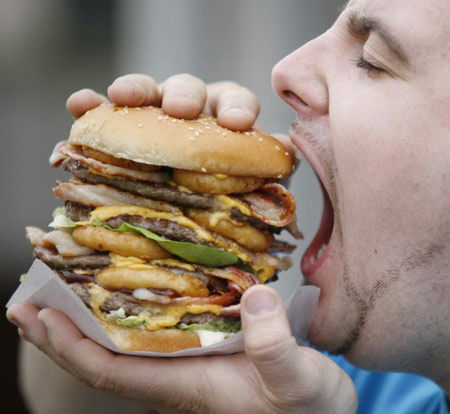
Which statement represents the picture?
Your mouth is too big to eat that burger.
The hamburger is too big to chew at once.
The hamburger is not big enough to make you full.

Which statement represents the picture?
You should drink enough water to keep hydrated.
Too many water will endanger your body cells.
The water is too much clear that I drink many.

Which statement represents the picture?
Simon and Jean are too sad to enjoy the movie.
The movie is interesting enough to get the audience's attention.
There are too popcorn to eat in this cinema.

Which statement represents the picture?
The tea is too much warm to drink.
The tea is warm enough to drink.
The teacup is not too warm to drink.

