
 Worksheets
Art III Final Exam Discovering Art History Ch. 1- 14
Total questions: 88
Worksheet time: 48mins

A3.6-When Was Expressionism Popular?
17th-18th
Century
18th-19th
Century
19th-20th
Century
20th-21st
Century
A3.3-Expressionist painter wanted to paint about...
happiness.
emotion.
poverty.
politics.

A3.4-Interpret this artwork-The Scream by Edvard Munch.
A 3.6-Choose the abstract painting.


A.3.6-Surrealism is...
artwork that depicts dream-like scenes and, or situations that would be bizarre or impossible in real life.
artwork that shows realistic paitnings and sculptures of people and places.
artwork that depicts nature in a way that is realistic.
A.3.11-Impressionists focused on what?
Light reflecting off objects
myths and religion
technical skills
beauty
A 3.6 One of the founders of Impressionism. He is known for lily pads and hay stacks.
Monet
Gauguin
Cezanne
Renior
A 3.6-What does the word "Impression" mean ?
The action of using someone or something as a model
An idea or feeling about something or someone
When you give an animal or object qualities or abilities that only a human can have
A comparison between two things that aren't alike but do have something in common
A 3. 6-This type of painting started in Northern Europe and slowly spread south to places like Italy. Because it is slow drying, the artist can make multiple corrections, and apply delicate glaze techniques which allow for a great degree of detail.
Fresco Painting
Gesso
Oil Painting
Watercolor Painting
A 3.6-Who is considered the greatest German artist of the Renaissance?
William Shakespeare
Geoff Kurst
Leonardo Da Vinci
Albrecht Durer
A 3.6-Which style is attributed to art of the NORTHERN RENASSIANCE?
Realism and international style
Classical Greek and Roman Art
A 3.6-What paint did Northern Artists use?
Tempera
Watercolor
Oil Paint
Fresco
A3.6-What does the Louvre serve as currently?
A government facility
A college
A theater
An Art Museum
A 3.6-The Renaissance was marked by a renewed interest in ____?
sports
Ancient Greek and Roman culture
Ancient Alaskan and Hawaiian culture
Greek food
A 3.6-The Renaissance started in the 14th century and flourished in _______ where there were abundant riches due to trades with the Ottoman Empire.
Hawaii
The Netherlands
France
Italy
A3.11-Humanism, which was intellectually what The Renaissance was based on, was all about __________.
the value of human beings and their capacities
conforming to the religious constructs of the Medieval Ages
weapons
cuisine
A 3.10-The Renaissance is most famous for its _______.
invention of the guillotine
invention of bricks
floppy hats with feathers in them
artistic achievements
A3.6______________ is a defining feature of Renaissance art.
dogs playing poker
The Mona Lisa
realistic looking clouds
linear perspective
A 3.6-_______ and _______ are considered the founding fathers of Renaissance art.
Donatello and Brunelleschi
Donatello and Michelangelo
Donatello and Master Shredder
Michelangelo and Danny Devito
A3.11-On Art History timeline, these art movements happened in this order______________.
Brie, guillotine, printing press,
finger painting, acrylic painting, oil painting
Rococco, Early Renaissance, High Renaissance
Medieval, Renaissance, Mannerism
A 3.3-The following are famed High Renaissance artworks:
the portrait painting of Mona Lisa, the statue of David, William Shakespeare's plays, Raphael's fresco The School of Athens
The McDonald's arches, The White House, Andy Warhol's Soup Cans
cave paintings, tiki masks, arrowheads
A3.3-Which artwork below is Michelangelo Di Buonarroti's David?


A3.3-What painting below is Leonardo Da Vinci's portrait of Mona Lisa?


A 3.6Which of the Renaissance Masters was considered a “Renaissance Man”?
Raphael
Leonardo da Vinci
Michelangelo
Donatello
A 3.6-Match the following

The Sistine Chapel Ceiling

The Last Supper

The Mona Lisa

La Pieta

A3.11-What kind of Drawing did Leonardo da Vinci have in his notebooks?
Human Anatomy Drawings
Inventions
Architecture (building designs)
All of the above
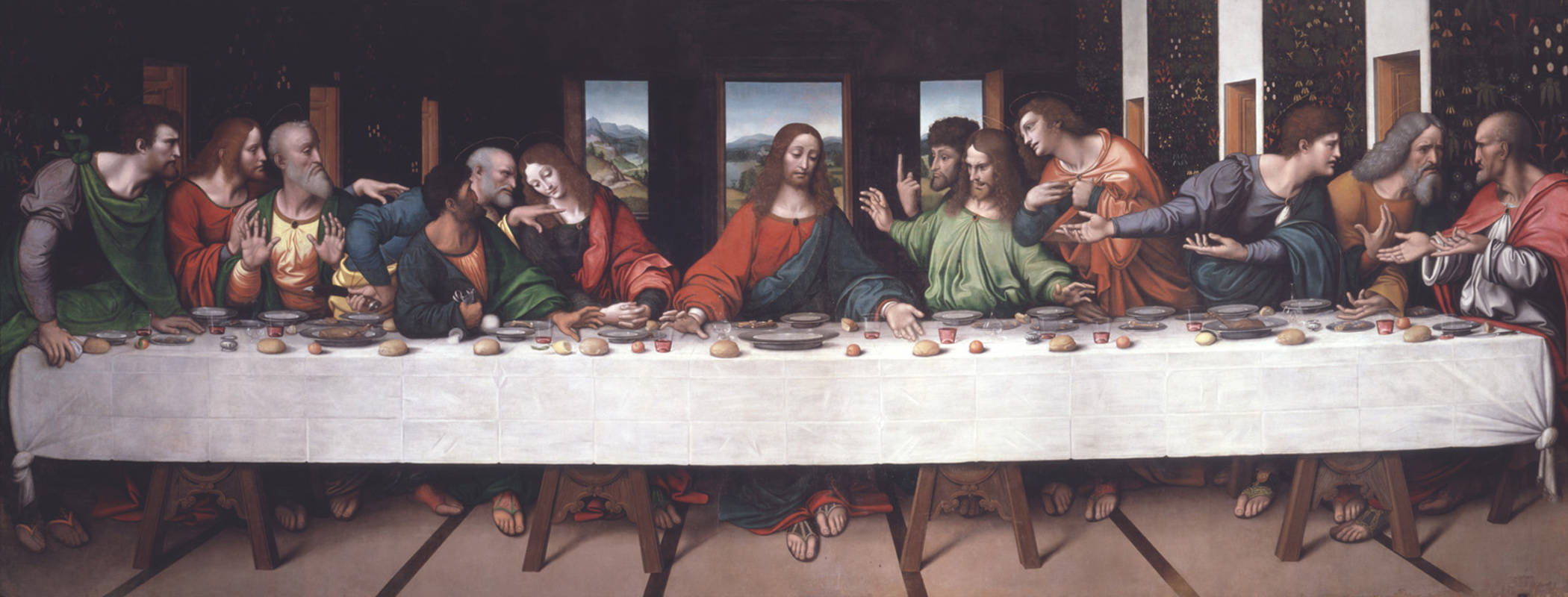
A3.6-Who painted "The Last Supper"?
Machiavelli
Botticelli
Kepler
Leonardo da Vinci

A3.3-______________ art was flat with rigid, emotionless figures, while ______________ art had full backgrounds with figures that showed emotion and detail.
Renaissance, Medieval
Renaissance, Classical
Classical, Medieval
Medieval, Renaissance

A3.3- What is featured in this image?
Last Supper
School of Athens
Four Horsemen of the Apocalypse
Durer, Self Portrait
A 3.3-How are classical and Renaissance statues alike?
Both focus on animal figures.
Both feature figures with clothing that appear still and without motion.
Both feature few details of human figures
Both feature realistic and lifelike poses.
A 3.12-Line, colors, values, shapes, texture, space, form, and mass are considered sensory properties.
True
False
A3.15-What are the media, tools, and equipment called which are used to make the work of art?
Media
Semi-Formal Properties
Sensory Properties
Technical Properties
A 3.12-Expressive properties are the characteristics of an artwork that cause us to respond to it with ________ and ________?
Feeling, Emotion
Feeling, Anxiety
Opinion, Emotion
Opinion, Feeling
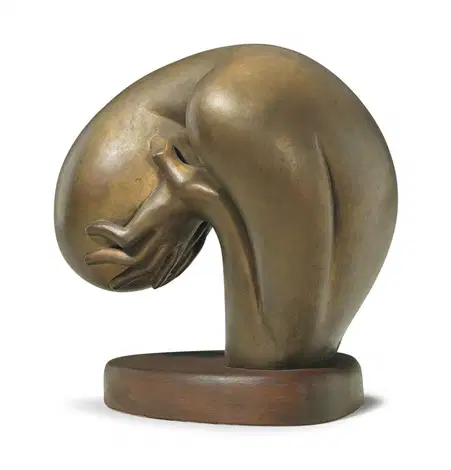
A3.12-Explain why this is an emotionalist statue and not a classic statue.

A3.12-Which Expressional Approach of art is Victor Vasarely's Painting "Edetta"
Emotional/Romantic
Intellectual/Classic

A3.11-What Major ancient religion originated in India around 2000 B.C.?
Hinduism
Islam
A3.3-Art made from perishable items like feathers, flowers, leather, grass, bark, and shells are found in
Western Artwork
Non-Western artwork.
A3.6-Oceanic Peoples of Papua New Guinea and Polynesia traditionally would paint on what surface?
Canvas
Bark
A3.6-Japanese and Chinese Painters traditionally painted on what surfaces?
Framed Surfaces
Tree Bark
Scrolls and Screens
Canvas
A3.13-What perspective technique is unique to non-western art
X-ray view of a subject
Using overlapping to show distance
Creating hazy areas to show distance.
A3.6-Hinduism and Buddhism both originated where?
Middle East
China
India
North America
A.3.11-What is one of the oldest religions in Japan?
Taoism
Confucianism
Shinto
A3.11-Which two countries influenced Japan?
Taiwan and Mongolia
Russia and China
China and Korea
India and Pakistan

A3.3-What do you call this type of art?
Woodblock Print
Sketching
Sculpture
Photography
A3.6-This refers to a style of Japanese woodblock print and painting from the Edo period, which means "pictures of the floating world."
Ukino-e
Ukiyo-e
Ukuno-e
Ukeri-e
A3.11-What allowed Japan to grow without the influence from other countries for centuries?
It is a communist country that did not allow outside influences, which was punishable by death.
Japanese people did not respect other cultures and thought they were better than anyone else.
It could not get any internet due to its location.
Its isolation in regards to its geography as an island and the rules that no one should leave or enter Japan for over 200 years.
A3.1-It is a technique of wax-resist dyeing applied to whole cloth and originated from Java, Indonesia.
Balat
Batik
Putik
Peklat

A3.11-What mountain range separates India from Asia?
Sierra Nevada Mountains
Mount Everest
Hindu Kush Mountains
Himalayas

A 3.6-A small round burial shrine erected over a grave site to hold relics of the Buddha
Bodhisattva
Stupa
Ukiyo-e
Yamato-e
A3.11-Why did Shah Jahan build the Taj Mahal?
As a palace for his wife, Mumtaz Mahal
As a tomb for his wife, Mumtaz Mahal
To honor the common people of the Mughal Empire
To match the accomplishments of his father
A 3.11-The Qin Emperors started building _______ to keep the Mongols out of China
The Great Wall
Ziggurats
Castles
The Grand Canal

A3.1-What is the name for a fine, white glassy clay?
greenware
Earthenware
Stoneware
Porcelain

A3.6-a tower several stories high with roofs curving slightly upward at the edges
scroll
pagoda
Bodhisattva
Yamato-e

A3.1-What is the Subject Matter of this artwork?
Portrait
Landscape
Still Life
Non-Representational

A3.1-What is the Subject Matter of this artwork?
Portrait
Landscape
Still Life
Non-Representational
A3.11-This is an animal or natural object which symbolizes a clan or family
Mana
Tapa
Totem
Moana
A3.3-What was the primary purpous of art from Oceania?
only aesthetic beauty
religious purposes
documentation
decoration
A3.11-The positioning of all mosques must be oriented towards...
Medina
Damascus
Mecca
Jerusalem

A3.1-What is the Subject Matter of this artwork?
Portrait
Landscape
Still Life
Non-Representational

A 3.3-What is the Purpose of this artwork? (Choose the best answer.)
Narrative
Ceremonial
Functional
Persuasive

A3.3-What is the Subject Matter of this artwork?
Portrait
Landscape
Still Life
Non-Representational

A3.3-This is an example of...
Self Portrait
Landscape
Still Life
Religious

A3.3-This painting is an example of which subject matter?
Portrait
Still Life
Religious
City Scape
A3.3-Which one of the following compositions of fish is ABSTRACT?


A3.8-The principle of art that indicates movement by the repetition of elements.
Balance
Variety
Rhythm
Unity
A3.8-The quality of wholeness or oneness that is achieved through the effective use of elements and principles of art.
Harmony
Unity
Variety
Emphasis
A3.8-Rules that govern how artists organize the elements of art.
Elements of art
Principles of art
Folk art
Contemporary art
A3.17-Human form in a work of art.
Sculpture
Figure
Landscape
Portrait
A3.2-All the materials and tools that make marks on surfaces.
media
grounds
white conte
paper quality

A3.14-What is a thin rod of graphite, comes in various degrees of hardness?
pencil
colored pencil
acrylic paint
markers

A3.14-What is a dry media made from carbon that is left behind after wood is burned.
soft pastels
oil pastels
charcoal
colored pencils

A3.14-Any paint that uses water as a solvent, has a transparent quality. What is this medium called?
acrylic paint
watercolor paint
gesso
paint pen
A3.16- A wet medium that makes a deep black mark, “india ink” is most widely used for drawing. What is this medium called?
marker
chalk pastels
pen & ink
oil pastels

A3.16-Pigments mixed with gum and water, and pressed into a dried stick form for use as crayons. This medium is can be considered a drawing & a painting medium. What is it?
marker
oil pastels
pencils
chalk/soft pastels

A3.16-This medium is pigment mixed with polymer (synthetic) binder and thinned with water. Which one is it?
marker
watercolor paint
acrylic paint
oil paint

A3.16-What is the medium.technique that used various papers media glued to a flat surface?
collage
shading
watercolor
graphite

A3.16-A technique involving the use of two or more artistic media, such as ink and pastel or painting and collage, that are combined in a single composition. What is this called?
pen & ink
crayon
mixed media

A 3.16- Any technique in which an image is printed from lines or textures scratched or etched into a metal plate. The plate is covered with ink, then wiped clean, leaving ink in the incised lines.
intaglio
relief
pull
matrix
A3.9-A type of relief print in which the image is cut into a piece of linoleum.
Linoleum Print
Monoprint
Lithograph
Etching
A3.9-A printing technique in which the image is drawn on a very flat slab of limestone (or a specially treated plate).
Linoleum Print
Monoprint
Lithograph
Collagraph

A3.2-Taking away or carving material to create a sculptural form
Subtractive
Additive
Manipulative
Mixed Media

A3.2-Building up or attaching pieces of material together to create a form or sculpture.
Functional
Assemblage
Additive
Manipulative
A3.2-Select all of the materials that can be used to create sculpture art below.
Bronze
Steel
wood
Ink
A3.6-What are mosaics?
abstract paintings of landscapes with small dots of color
images created using small, colored pieces of hard material
pictures created by cutting and flipping shapes from a black square of paper
A 3.11-Temple of Quetzalcoatl, 500-900
painted clay
architectural structure
cut and hammered gold
basalt sculpture
ceramic, white on red slip
Aztecs sculptors produced bas-relief calendar stones that illustrated the days of the week as well as Aztec history.
True
False
A3.6-Pre-Columbian architecture arches were called
Grand arches
Pyramid arches
Corbeled arches
Pre-Columbian arch
A 3.3-Which material is NOT used in creating traditional African art?
bones and feathers
metal
resin
wood

