
 Worksheets
Final Exam Review
Total questions: 100
Worksheet time: 2hrs 52mins


A cheetah can run briefly with a speed of 31.0 m/s. Suppose a cheetah with a mass of 47.0 kg runs at this speed. What is the cheetah’s kinetic energy?
1457 Joules
22,584 Joules
15 Joules
45,167Joules
The statement that "the energy within a system remains constant and cannot be created or destroyed, only transformed" best sums up _________.
Something Mr. Lance likes to say.
Life
Law of Conservation of Energy
The scientific method
Newton's Third Law
Gravitational potential energy depends on the strength of gravity, ________ and ________ of the object.
height and mass
friction and movement
mass and movement
height and friction
Which of the following is the correct equation for calculating an object's gravitational potential energy?
PE = mgh
PE = mg / h
PE = mg + h
PE = gh
What is the gravitational potential energy (GPE) of a 1 kilogram book that is 1 meter above the ground?
g = 9.8 m/s2
9.8 Joules
1.0 Joule
0.10 Joule
11.8 m/s2


The highest point on a wave is:
the crest
the trough
the top
the coast
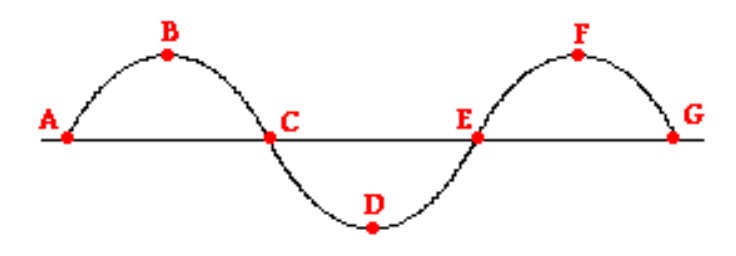
Which letter(s) represent the trough of the wave?
A
B & D
D
C & G
Mechanical waves usually travel fastest through:
solids
liquids
gases
When light passes through a prism, why do you see different colors?
Each color has a different wavelength, so they all bend at different angles
Because Stone Cold said so
Because the prism is magical and allows you see the colors


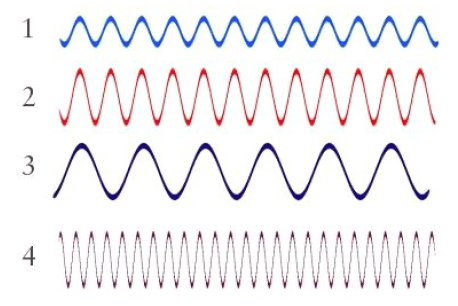
V=fλ
If the frequency is 5 Hz and the wavelength is 2 m, then what is the wave's velocity?
10 m/s
5/2 m/s
2/5 m/s
7 m/s
V=fλ
If the wave velocity is 20 m/s and the wavelength is 2 m, then what is the frequency?
10 Hz
40 Hz
0.1 Hz
V=fλ
If the velocity of the wave is 10 m/s and the frequency is 5 Hz, then what is the wavelength?
2 m
50 m
5 m
15 m
Which color has the longest waves?
red
orange
yellow
green
Which color has the shortest wavelengths?
yellow
green
blue
indigo
The portion of the electromagnetic spectrum that humans can see is called:
radio waves
visible light
gamma rays
x-rays
When wavelength increases...
energy decreases
energy increases
Which type of electromagnetic energy carries the least energy?
X-Rays
Visible Light
Ultraviolet
Microwaves
We perceive various wavelengths within the visible light spectrum as:
sound
color
time
smell
Which of the following is a unit for frequency?
Joules
Hertz
meters per second
seconds
If you see an object that is "red", what does this mean?
The object is absorbing only red wavelengths
The object is reflecting only red wavelengths
What are the parts of a longitudinal wave? SELECT TWO from the choices below
compression
crest
expansion
trough
Select the correct order of waves on the EMS from low to high energy
Radio, Micro, Infrared, Visible light, Ultraviolet, X-ray, Gamma
Gamma, X-ray, Ultraviolet, Visible light, Infrared, Micro, Radio
Visible light, Micro, Infrared, Ultraviolet, X-ray, Gamma, Radio
Micro, Radio, Visible light, Infrared, Ultraviolet, X-ray, Gamma
The areas of "expansion" between compressions of a longitudinal wave are called ________________.
stretches
reflection
rarefaction
frequency

Which type of electromagnetic radiation has the most energy?
x rays
gamma rays
radio waves
visible light
Which is true according to the Law of Reflection?
if light is not refracted, it is reflected
parallel rays of light remain parallel when they are reflected
the angle of reflection is twice the angle of incidence
the angle of incidence equals the angle of reflection
Which word best describes gamma rays?
weak
destructive
visible
harmless
What is the source of a sound wave?
Electricity
Vibration
Light waves
Tiny nuclear explosions
Longitudinal waves are comprised of:
compressions and rarefactions
crests and troughs
honey and vinegar
waves and matter
The pitch of a sound depends on its:
frequency
amplitude
intensity
loudness
The higher the frequency, the ____________ the wavelength.
longer
shorter
taller
bolder
A push or pull on matter from all directions is called . . .
speed
velocity
acceleration
force

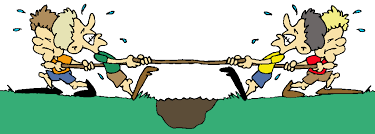


Which baseball would have more acceleration with the same amount of force?
Both baseballs would have the same acceleration
The larger ball would have a faster acceleration.
The larger ball would have a slower acceleration.
Neither ball would have any acceleration.

What happened between the 12th and 14th hour of the trip?
The car turned around to go home but their speed remained constant.
The car slowed down and sped back up
The car travelled at a constant velocity
The car was not moving since there was no change in position
With no forces acted upon it, an object at rest will stay at rest and an object in motion will stay in motion
Newton's 1st Law of Motion
Newton's 2nd Law of Motion
Newton's 3rd Law of Motion
The acceleration of an object depends on the net force and acting on it and the mass of the object. F = ma
Newton's 1st Law of Motion
Newton's 2nd Law of Motion
Newton's 3rd Law of Motion
For every action there is a reaction.
Newton's 1st Law of Motion
Newton's 2nd Law of Motion
Newton's 3rd Law of Motion
What type of force will it take to stop an object in motion?
Balanced
Magnetic
Gravitational
Unbalanced
Eli and Lacy each have soccer balls with the same mass. They both roll them as hard as they can and then measure the speed of each ball. Lacy rolls her ball exactly half as fast as Eli. What can you assume about the motion of the two balls?
Lacy's ball rolls twice as fast as Eli's ball.
Eli's ball rolls twice as fast as Lacy's ball.
Both balls roll the same speed.
Without knowing the mass we don't know the force.
What is acceleration?
How fast an object speeds up
How fast an object slows down
Tells us which way to move
What is velocity?
The speed of an object
The direction of an object
The speed and direction of an object

Velocity is different from speed because...
Velocity is distance/time. Speed is displacement/time.
Velocity is speed in a certain direction and can be positive or negative.
Speed is velocity in a certain direction. Both can only be positive.
Velocity is how much speed changes over time.

An elevator moves from rest to 2 m/s over 8 seconds. What is the elevator's acceleration?
16 m/s2
-8 m/s2
0.25 m/s2
2 m/s2

A horse accelerates from a velocity of 0m/s to 20 m/s in 3 seconds. What is the acceleration of the horse?
60 m/s2
6.67 m/s2
0.15 m/s2
30 m/s2

The clown walked 27 feet in 9 seconds. what was his velocity?
18 feet/sec
243 feet/sec
36 feet/sec
3 feet/sec

An old lady rolls down a hill at 3 meters/second. The hill is 36 meters long. How many seconds does it take the old lady to reach the bottom of the hill?
39 seconds
12 seconds
15 seconds
33 seconds


Distance and direction of an object's change in position from a starting point
displacement
distance
motion
reference point
Items with opposite charges _____ each other.
attract
repel
move
none of the above
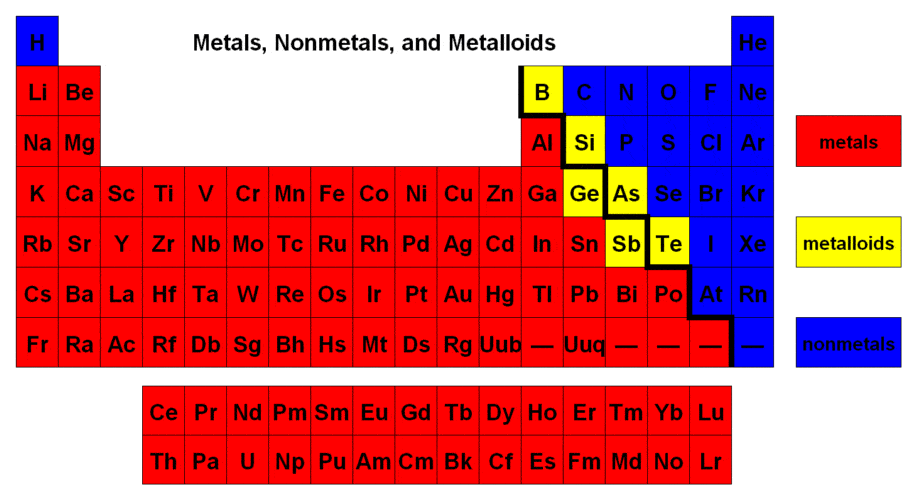
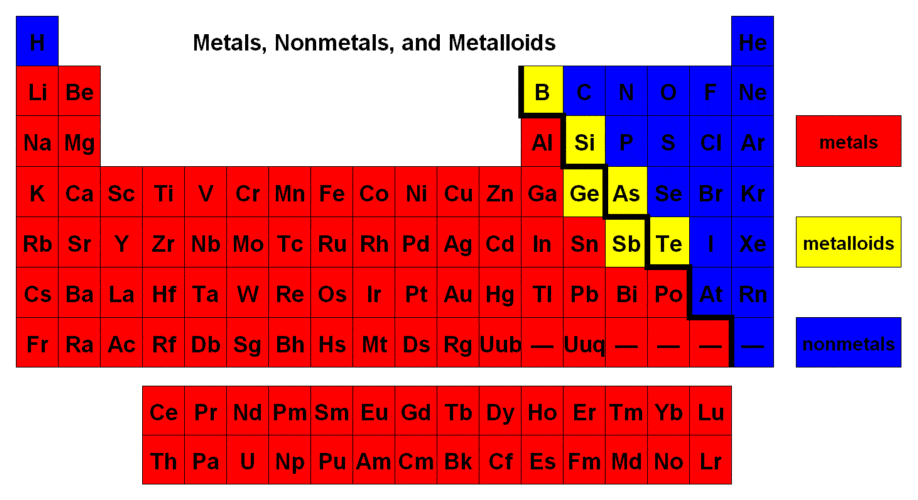
A covalent bond in which electrons are shared unequally is
polar.
polyatomic.
ionic.
a double bond.
In a nonpolar covalent bond, electrons are shared:
equally
unequally
between two metals
between a metal and a non-metal
Which of the following substances contains bonds that involve a transfer of electrons from one atom to another?
CO2
NH3
KBr
Cl2
What do we call the outermost electrons of an atom used in forming chemical bonds?
Neutrons
Ions
energy levels
Valence electrons
Which substance contains bonds that involve a sharing of electrons from one atom to another?
CuO
PO33-
KBr
FeCl2
What is the chemical formula for dinitrogen heptachloride?
N2Cl7
2N7Cl
2NCl7
N2Cl5
BeI2
Beryllium (II) iodide
Beryllium iodine
Beryllium iodide
Beryllium (I) iodide
When lithium and oxygen bond the formula is
LiO
OiL
Li2O
LiO2

