
 Worksheets
Biology Final Review
Total questions: 52
Worksheet time: 50mins
What is the term for each step in the transfer of energy and matter within a food web?
energy path
food chain
trophic level
food pyramid
Animals that get energy by eating the carcasses of other animals that have been killed by predators or have died of natural causes are called
scavengers
omnivores
heterotrophs
detritivores
Abiotic means living things.
TRUE
FALSE
Factors that can impact a population regardless of its density.
biotic factors
density-dependent factors
density-independent factors
abiotic factors
Factors that are affected by the number of individuals in an area.
biotic factors
density-dependent factors
density-independent factors
abiotic factors
What is the name of the molecule that holds genetic information?
Enzymes
Protein
DNA
Ribosome

To use this chart, you must ALWAYS use the sequence of
DNA bases
mRNA codons
tRNA anticodons
Randomly guess
Which step of protein synthesis happens at the ribosome?
Transcription
Translation
Skin color, hair texture, height, and lactose tolerance are examples of
Nucleotides
proteins
traits
DNA

Is this sequence of bases a part of DNA or RNA?
DNA
RNA
Which nitrogenous base is unique to RNA?
Uracil
Adenine
Thymine
Guanine
mRNA is created during which process?
DNA Replication
Transcription
Translation
Mitosis
A section of DNA that is the instructions for making a protein is called a
gene
cell
nucleus
sugar-phosphate backbone
Which is homozygous recessive?
GG
Gg
gg
none
A couple with no albinism but both are carriers has what chance of having an albino child?
0
25%
50%
75%
If you crossed a PP (purple) with a pp (white), what would the phenotypes be?
all white
all tall
all purple
1/2 white, 1/2 purple


Which of these types of species was NOT present in the Cretaceous time period?
Large Dinosaurs
Flying Reptiles
Large Mammals
Amphibians
Which of these types of species was abundant on the land in the Permian time period?
Small mammals
Flying Reptiles
Terrestrial Reptiles (Land reptiles)
Large Dinosaurs
Giant sloths, Giant Beavers, Mastodons, Wooly Mammoths and Sabertooth cats have 3 of the things listed below in common. Which of them is not true?
All were hunted to extinction by humans
They all dominated the Tertiary period.
They existed during the Quaternary period.
They were well adapted for the ice age.
series of genes that controls the differentiation of cells and tissues in an embryo
Hox Genes
Common Ancestor
Biogeography
Molecular Homology
Study of past and present distribution of organisms
Common Ancestor
Biogeography
Hox Genes
Stasis
remnant of a structure that may have had an important function in a species' ancestors, but has no clear function in the modern species.
Developmental Homolgy
Molecular Homology
Vestigial Structure
Hox Genes
An ancestral species from which later species evolved
Common Ancestor
Homology
Developmental Homolgy
Molecular Homology
Do all organisms eventually become fossils?
no, because only organisms that have hard parts will fossilize
yes, the fossil record is incomplete only because paleontologists have not yet found every fossil
no, because the conditions necessary to form fossils are relatively rare
yes, the fossil record is incomplete only because some fossils have been destroyed by rock cycle processes.
The fossil record provides evidence for which of the following?
evolution
the existence of past life forms
changes in past environments
all of the above
Which time came first on the Geologic Time Scale?
Cenozoic Era
Mesozoic Era
Paleozoic Era
Precambrian Time
Which animals have been around the longest?
Mammals
Reptiles
Amphibians
Fishes
Where do most amphibians spend the first part of their life cycle?
on land
in water
on a boat
in trees

Amphibians are ectothermic. This means they:
are active at night
they only live in swamps
can regulate their own body temperature
use the environmental temperature to control their body temperature

Amphibians breathe through their skin. What is this called?
Cutaneous respiration
circulation
pulmonary respiration
buccal respiration

As adults, amphibians are
carnivores
herbivores
omnivores
decomposers

Tadpoles typically feed on
plant matter
dog food
bacteria
frogs
How many alleles does a child get from each parent for a trait?
1
2
3
4
Aa, DD, Bb, yy are all examples of ---
genotypes.
phenotypes.
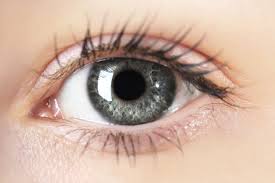
What you see, or the physical appearance of an organism, is called the ---
genotype.
phenotype.
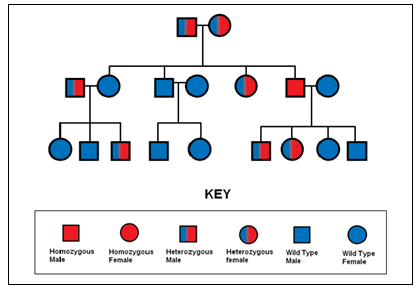
In a pedigree, which shape represents a male?
circle
square
Which gender has an X and a Y chromosome?
male
female

How many individuals are there in the 3rd generation?
1
2
4
6

What is the mode of inheritance shown here?
Recessive because it "skips" a generation
Dominant because it shows up in every generation


