
Font size
 Worksheets
Starter - Dhaka PD
Total questions: 12
Worksheet time: 12mins
What are the three different types of inquiry questions?
Factual
Closed
Conceptual
Debatable
Memorising
What type of question is
“How does work shape our identity?”
Factual
Conceptual
Debatable
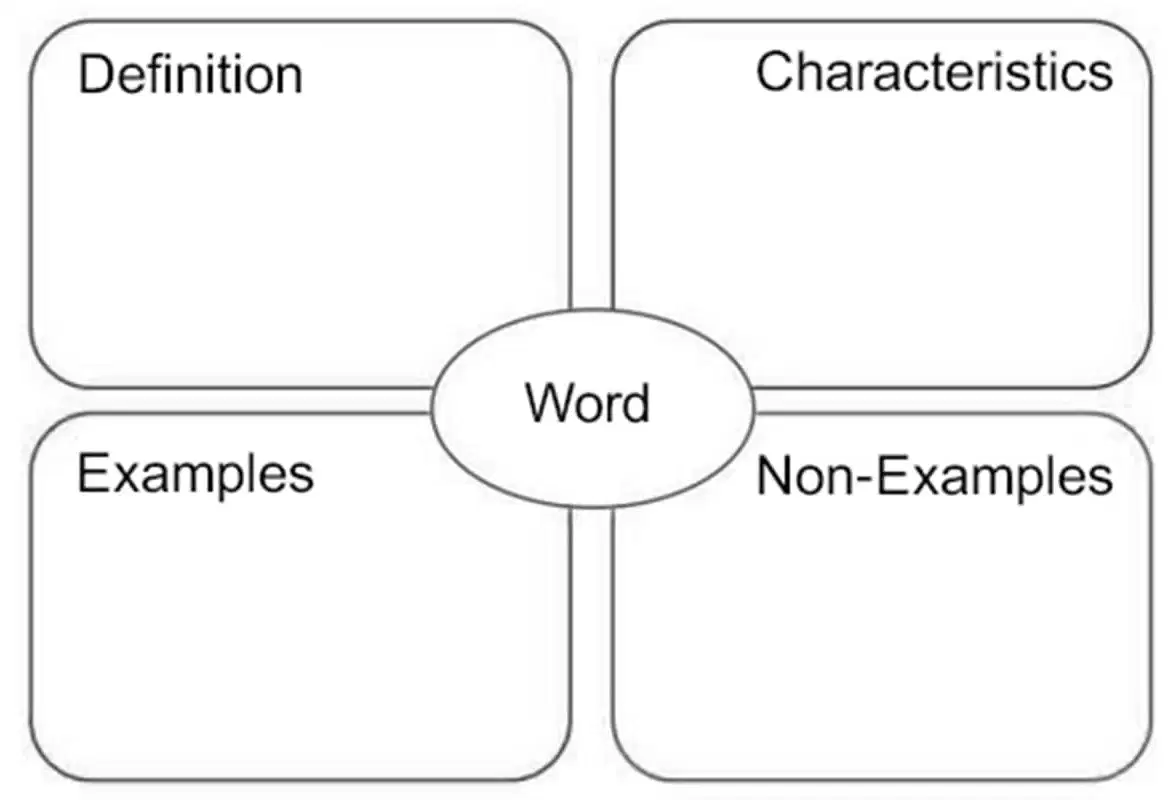
The Frayer model can be used to:
Introduce a concept
Define a word
Teach a procedure
All of the above
Match the following
a pre-determined set of steps or procedures to follow, usually with a specific goal or outcome in mind.
Structured Inquiry
provides a flexible framework that offers some structure while also allowing for student or researcher independence and exploration.
Guided Inquiry
grants individuals or researchers maximum freedom and autonomy in defining their research questions, methods, and outcomes. It encourages curiosity, creativity, and independent thinking.
Open Inquiry
Match the stage each stage of the AAA+ model with a definition
Teachers need to make students aware of important facts, events, or experiences to support their learning.
Awareness
Teachers help students see the relationships between different concepts or experiences so that they can develop a deeper understanding that can be applied to other situations.
Abstraction
Students should be able to use their understanding in different contexts to make sense of things or achieve specific goals.
Application
Students need opportunities to practice what they have learned until it becomes a natural skill.
Deliberate practice
What order do the stages of the AAA+ model come in
Awareness, Abstraction, Application, Deliberate Practice
Abstraction, Application, Deliberate Practice, Awareness
Application, Deliberate Practice, Awareness, Abstraction
Deliberate Practice, Awareness, Abstraction, Awareness
Categorize the following activities as either didactic or inquiry based:
How does the use of rubrics help with assessment?
Creates a common understanding of expectations
Helps identify what is missing and give constructive feedback on what could be improved
Using the same rubric over multiple opportunities helps show progress in learning e.g. in our PD session we used the same rubric for two reflection tasks.
All of the above
Giving feedback
Is just making a judgement and giving a grade/level
Is about identifying what has been done well,
Giving suggestions on how the student can improve next time
provoking further thinking
The learned capacity to carry out desired results, The ability to choose,and effectively and efficiently repeat a technique when needed
Skill
An identifiable process, procedure, protocol, routine, set of steps that: Can be deliberately taught and practiced; And that a student can use in order to demonstrate a skill indicator
Skill strategy
The skill is embedded in the content based learning experience or task
Implicit
Teaching and guiding students in learning a specific skill strategy through clear, unambiguous and detailed instruction on how to use the strategy.
Explicit
Label the ATL hierarchy diagram. What is each level called?
What are the elements of a good lesson plan?
Overall guiding question linked to a unit inquiry question
Lesson objectives which address knowledge, skills, understanding and values
Variety of lesson activities
Some sort of assessment of learning as the lesson progresses
All of the above

