
 Worksheets
science 204
Total questions: 112
Worksheet time: 1hrs 4mins

The ______ makes the day sky bright.
sun
clouds

The sun is a big _____.
star
cloud
The sun is bigger than the Earth.
True
False

When the sun goes down its called a ________________.
sunrise
sunset

If the Earth makes 1 spin around its called a _________________.
twirl
rotation
It is ____ when our part of the Earth faces the sun.
day
night

The earth axis is....
a short line
a wavy line
an imaginary line
Here are three statements - pick the one you agree with.
when the Sun is behind you your shadow is in front
when the Sun is behind you your shadow is also behind you
when the Sun is behind you there is no shadow
When does the Sun appear highest in the sky?
In the morning
In the midday
In the evening
Why is it that the Sun sometimes appears higher in the sky?
because the Sun moves
because the Earth spins
because sometimes it's hotter
Here are several statements about the Earth and the Sun. Tick THREE that you agree with.
the Sun rises in the east and sets in the west
the Earth goes around the Sun
the Sun goes around the Earth
the Earth spins on its own axis
the Sun goes across the sky in one direction one day and moves back the next day
Toby noticed that the shadow of the tree in his garden was not always in the same place.
What is the best explanation for this?
sometimes it was raining
the Sun moved
the position of the Sun in the sky changed
He also noticed that the length of the tree's shadow changed during the day.
When was the shadow at its longest?
at morning
at noon
in the afternoon
Why was the tree's shadow sometimes very long?
because the Sun was low in the sky
because the Sun was high in the sky
because the tree was covered in leaves

Look at these three pictures of the Sun causing a shadow of the house:
Which one do you think shows the Sun in the correct place?
A
B
C
What happens to the size of the shadow when you move an object closer to the light source?
its shadow gets bigger
its shadow gets smaller
its shadow stays the same size
Which of these are sources of light - things that produce light?
Tick all the ones you agree with.
stars
window
candle flame
the moon
torch
Henry walks to school every day. He notices that sometimes he has a shadow and sometimes he doesn't. Why is it that on some days he doesn't have a shadow?
because it is not sunny
because it is too sunny
because he is walking on the grass
When Henry walks back from school in the afternoon he notices that when he has a shadow it's often longer than it was in the morning. What do you think the reason for this might be?
he has grown during the day
it is hotter in the afternoon
the Sun is lower in the sky in the afternoon
Which TWO of these objects would be good to help protect ourselves from the sun?
dark glasses
a cup filled with water
a large hat
a large ice-cream
The Earth is...
round like a ring doughnut
flat like a pancake
a sphere like a beach ball
a cylinder like a can of soup
Which is true?
The moon is a source of light
The moon reflects light from the sun.
The sun is a...
planet
star
solar system
galaxy

Is the object shown above man-made or natural?
man-made
natural

Is the object shown below man-made or natural?
man-made
natural
Which of these materials is hard?
cotton
wood
paper
wool
stone
Which of these materials is soft?
cotton
wood
paper
wool
stone
Which of these is a source of light?


One of these is not a source of light


Some of these items do not produce light


Identify the natural sources of light


Which one is a man made source of light
The stars
The sun
Candle

This insect is a natural source of light. Can you tell what insect it is?
Mosquito
Dragon fly
Fire fly
Beetle

Which one of these is the most important source of light on earth?


Tick the light sources


Choose the shadow of the object


Tick the pictures that show darkness


What is our main source of light?
Lightbulbs
The Moon
The Sun
Computers
Which of these is a source of light?
A firefly
A drinking glass
Trees
The whiteboard
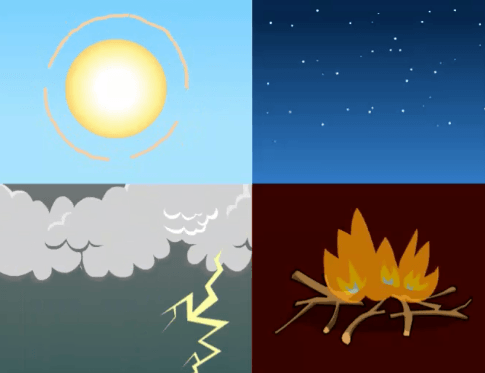

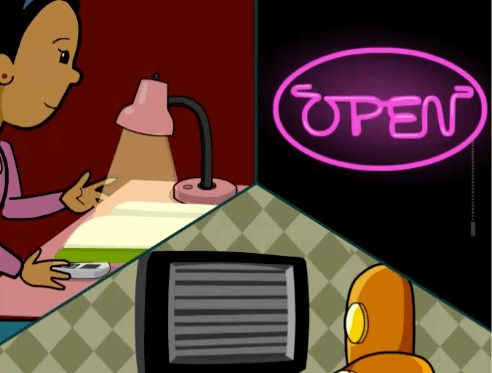

Light source
Not a light source
Natural
Man-made
The light received from candle is...
Natural Source of light
Artificial Source of light
Fireflies have artificial source of light
True
False
Electric bulb is this source of light
Artificial
Natural
Jelly fish are bio-luminescent and create their own light
False
True
Neon lamp is a Natural source of light
True
False
The Sun is a massive ball of fire. It is the major source of light for the earth
True
False
Moon produces its own light
True
False
Every star produces it own light
True
False
Fluorescent tube light, incandescent lamp and Neon lamp are examples of Natural Sources of Light
True
False

Before the light bulb was invented, people used (a) to light their homes.

Candles can be messy and (a)
Except for the light bulb, Thomas Edison developed more than ___ other inventions.
100
1,000
10,000
1,000,000
Apart from the light bulb, some of Edison's most famous inventions include the Voting Machine, Electric Battery and the ___
Movie Camera
Camera
Photo Booth
Digital Camera

Thomas Edison didn't like school.
TRUE
FALSE
His (a) helped him with his experiments.
As a kid, Edison was very ___
artistic
creative
curious
Edison tried to make the light bulb glow bright enough and long enough without it (a)
To find the perfect match for his light bulb, Edison experimented with different kinds of filaments. The best one was the ___ filament.
metal
platinum
copper
carbon
On 22nd October 1879, Edison ran his first successful test on the light bulb. The filament burnt strong and bright for a good (a) and a half hours.
How many light bulbs were created before Thomas Edison's light bulb?
13
23
The Savoy Theater in the city of Westminster was the first public building in the world to be entirely lit by electricity.
TRUE
FALSE
Edison tried ___ different materials to find the perfect filament.
47
470
4,700
47,000
One of the weirdest materials he tried was hair from a ___
beard
mustache
monkey
lion's mane

What part of the bulb is #1 pointing to?
glass
metal tip
base
ceramic insulator
What part of the bulb is #2 pointing to?
support wires
filament
glass support
ceramic insulator
What part of the bulb is #3 pointing to?
support wires
filament
glass support
ceramic insulator
What part of the bulb is #4 pointing to?
support wires
filament
glass support
ceramic insulator
What part of the bulb is #5 pointing to?
support wires
wire attachment point
base
ceramic insulator
What part of the bulb is #6 pointing to?
support wires
wire attachment point
base
ceramic insulator
What part of the bulb is #7 pointing to?
base
wire attachment point
metal tip
ceramic insulator
What part of the bulb is #8 pointing to?
base
wire attachment point
metal tip
ceramic insulator

What does the Earth revolve around?
Axis
Sun
Orbit
Moon
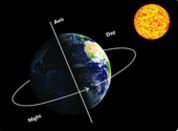
Day and night are caused by the ______________ of Earth on its axis
revolution
orbit
rotation
tilt of the axis
What causes the occurrence of day time?
When our part of the Earth faces away from the sun
When our part of Earth is under the sun
When our part of Earth is close to the sun
When our part of the Earth faces the sun

Based on the shadow, predict the time of the investigation?
12:00 p.m (noon)
8:00 p.m.
3:00 p.m.
7:00 a.m.

Which position of the sun will make the longest shadow?
A
B
C
A and B

When was this picture most likely taken?
Evening
Night
Noon
Morning
The sun appears to __________.
rise in the east
rise in the west
set in the west
set in the east

The right side refers to east. Predict the time of the day is on the illustration?
12:00 noon
5:00 in the afternoon
11:30 in the morning
7:00 in the morning
An imaginary line around which a sphere rotates
Rotation
Axis
North Pole
Orbit
The Sun rises in the _______ and sets in the West.
East
South
West
North

The sun is the largest star in the sky.
True
False


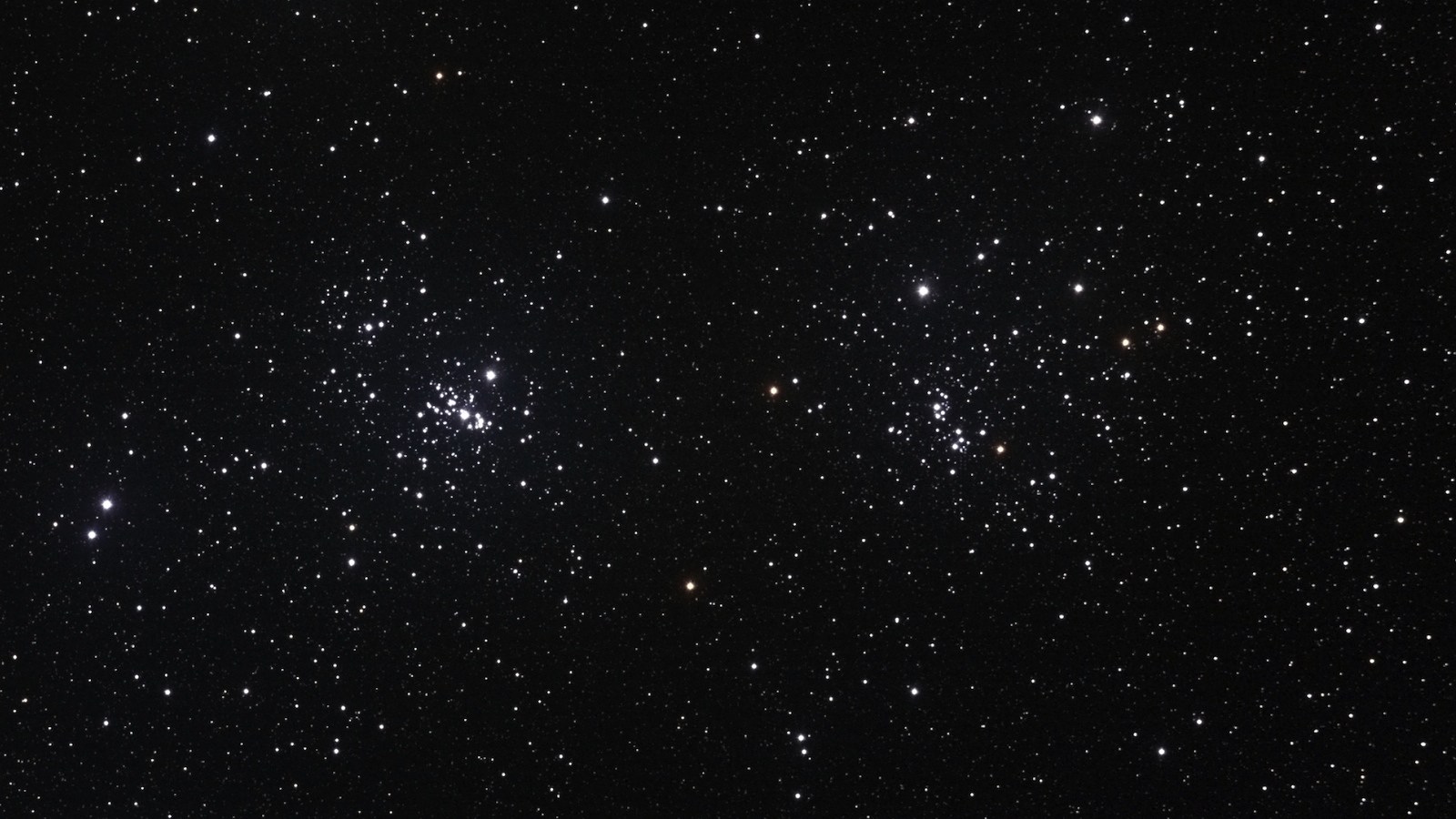
How long does it take the Earth to complete one orbit around the Sun?
365 days
28 days
3 years
24 hours
How long does it take for the moon to complete one orbit around Earth?
28 days
365 days
1 year
24 hours
If the earth didn't rotate on its axis. What would stop happening?
seasons
tides
day and night
moon phases


What object can NOT be seen in the night sky?
The moon
Stars
The sun
Clouds
Our Sun belongs to the galaxy know as the _____________________.
milky way
milky cookies
Solar system
Sunny space
The moon gets its light from _______.
airplanes
the Sun
the stars

There are ____________________ planets in our solar system.
7
8
9
10

