
 Worksheets
SCIENCE - 2nd Periodical Exam
Total questions: 117
Worksheet time: 2hrs 41mins
Which organ system includes the heart, blood vessels, and blood?
Digestive system
Circulatory system
Respiratory system
Muscular system
Major organs of the skeletal system
Muscles, tendons
Bones, joints
Marrow, periostium, nerves
Ribs, quadriceps, femur

What is the function of this system?
The protection of vital organs from injury
The production of hormones that regulate growth and metabolism.
The chemical breakdown of food into smaller pieces
The transport of nutrients, water, and oxygen to body cells.

What is the function of this system?
The protection of vital organs from injury
The production of hormones that regulate growth and metabolism.
The chemical breakdown of food into smaller pieces
The transport of nutrients, water, and oxygen to body cells.

What is the function of this system?
The protection of vital organs from injury
The production of hormones that regulate growth and metabolism.
The chemical breakdown of food into smaller pieces
The transport of nutrients, water, and oxygen to body cells.

What is the function of this system?
exchange gases with the air
breakdown molecules and absorb nutrients.
Provide support and movement for the body
Produce and secretes hormones which regulate metabolism, growth, and development.
A ____________________ that work together is called an organ system.
group of organs
group of systems
organs
systems

What is the main function of this organ system?
digestion of food
circulation of blood
communication
respiration
Which two organs are part of the digestive system? Tick two.
intestines
mouth
lungs
heart
spinal cord

The circulatory system are mostly made up of tubes called ________________.
blood vessels
intestines
esophagus
nerves
Which organ system transports important substances all over the body?
circulatory system
digestive system
nervous system
respiratory system
Which organ pumps blood?


Which is NOT a function of the respiratory system?
break down food
process oxygen
take out carbon dioxide

The nervous system helps different organ systems to ___________________.
communicate
work together
coordinate
all of these
The digestive proceses starts in the:
stomach
mouth
esophagus
liver
What does the digestive system do
Pumps blood throughout the body
Breaks down and handles food.
Helps you to breathe.
Helps your arms and legs to move.
The Two organs that remove oxygen from the air and pass it into your blood.
Lungs
Heart
Diaphragm
Larynx
Nose, trachea, lungs
Respiratory system
Endocrine system
Muscular system
Skeletal system

What are the levels of organization in plants?
Plants have cells, but not tissues.
Plants are made up of cells, tissues, organs, and organ systems
Plants contain cells and tissues, but not organs.

The body of a plant is made up of organs called roots, ________, and leaves.
vacuole
stems
cones

What does the reproductive system for a plant consist of?
flower and fruit
xylem and phloem
chloroplast and chlorophyll

Plants have two organ systems, the _________________ system and the root system.
vascular
seedless
shoot
non-vascular

The part of the plant
that is generally
under the ground
and in the soil
Reproductive System
Transpiration
Shoot System
Root System

The part of the plant
that is generally above the ground including stems, leaves, buds and reproductive structures
Stem System
Leaf system
Shoot system
Xylem

The tubes and support that transport water
and nutrients up, down and around in plants
Vascular System
Shoot System
Root System
Reproductive System

In general, leaves, roots, stems and flowers
Plant Systems
Plant Cells
Plant Organs
Plant Organisms

What are the functions of the roots? (Tick 2)
To take in and give out gases for the plant.
To absorb water and minerals from the soil.
To hold the plant firmly to the soil.
To make food for the plant.

What are the functions of the stem? (Tick 2)
To hold the leaves up so they can get light to make food.
To absorb water and minerals.
To support the plant.
To help the plant to take in and give out gases.

Ali took four identical plants, A, B, C and D, and removed some parts from each plant as shown in the table above.
Which plant will survive the longest?
A
B
C
D
Photosynthesis is _______________________.
how plants use sunlight to produce food
how plants release water to the air
how plants use sugars and oxygen to produce energy to grow

Are plants systems and why?
Yes because they have different parts that work together
Yes because they have different parts that do not work together
No because only humans are systems
What are the three basic parts of plants?
Leaves, sunlight, minerals
Leaves, stems, roots
Water, roots, stems
The leaves, stem, and roots must work together for the plant to survive
True
False
Which statement below describes how flowers allow plants to reproduce?
flowers create seeds once they are pollinated
flowers absorb sunlight and carbon dioxide to create seeds
flowers absorb water and sunlight to create seeds
flowers are pollinated by absorbing sunlight and then create seeds
This green pigment absorbs energy from sunlight
chloroplast
chlorophyll
chromosome
chloramphenicol
Where does photosynthesis occur in the plant?
In the stem
In all parts of the plant
In the leaves
In the flower
The shoot system consists of the following except:
upright stem
leaves
buds
roots

Which substance(s) enter the leaf as an ingredient for photosynthesis?
Glucose
Oxygen
Water
Carbon Dioxide

How do the green leaves make food for the plant?
By using water and carbon dioxide only
By using water, carbon dioxide and sunlight
By using carbon dioxide and sunlight only
By using sunlight only

How may parts does the shoot system have?
5 parts
4 parts
3 parts
2 parts

Which part is the stem in the shoot system of a plant?
Upper part
Lower part
Upper and lower part

Which part of the shoot system makes food for the plant?
the flowers
the stem
the leaves
the fruits
What are the parts of the shoot system? (Choose more than one)
Leaf
Stem
Flower
Fruit
Roots
What three things do plants need to make food for the plant?
Carbon dioxide
Oxygen
Water
Light energy
Sound energy

Which part labelled is part of the root system?
1
2
3
4

Does the picture of the dandelion show a tap root or fibrous root?
Tap root
Fibrous root

Does the picture of the grass show a tap root or fibrous root?
Tap root
Fibrous root

Does the picture of the carrot show a tap root or fibrous root?
Tap root
Fibrous root

Does the picture of the wheat show a tap root or fibrous root?
Tap root
Fibrous root

Tap root systems have
a large central root and smaller roots that come out of it
no roots at all
a bunch of small, thin roots that come directly from the stem
What are the two functions of the root system?
It helps hold the plant in the soil
It helps to make food
It helps to take in water and minerals from the soil
It helps to make seeds

Fibrous root systems have
a large central root and smaller roots that come out of it
no roots at all
a bunch of small, thin roots that come directly from the stem
A mode of reproduction where cells from one only one parent are used and no reproductive organs are involved.
Asexual reproduction
Sexual reproduction
It is a mode of reproduction in which a male organism's sperm fertilizes a female organism's egg outside of the female's body.
External fertilization
Internal fertilization
It is characterized by sperm fertilizing the egg within the female body.
Internal fertilization
External Fertilization
The union of sperm cell an egg cell.
fertilization
pollination
respiration
reproduction
When an egg cell and sperm cell successfully unites, a _______ is formed.
egg
zygote
sperm
none of the above
Animals that reproduce by laying eggs are called __________
viviparous animals
oviparous animals
__________ develop inside the parent's body and give birth to live offspring.
Viviparous animals
Oviparous animals

oviparous
viviparous
Dolphin is a/an _________ animal.
oviparous
viviparous

Identify the modes of reproduction of this animal.
Horse
Sexual Reproduction
Asexual Reproduction
both

Identify the type of fertilization of the this animal
Philippine Eagle
Internal Fertilization
External Fertilization
Which of the following animals is NOT born alive ?
dog
eagle
mouse
whale
What is a males cell (or gamete) called?
egg
sperm
worms
pollen
Most mammals have fertilized __________ that develop inside their mothers body
sperm
eggs
organs
King Kongs
Female cells (or gametes) are called __________?
sperm
pollen
eggs
seeds

Which type of metamorphosis is shown?
complete metamorphosis
incomplete metamorphosis

Which stage does this represent?
egg
larva
nymph
pupa

Which stage does this represent?
egg
larva
nymph
pupa

Which stage does this represent?
egg
larva
nymph
pupa

Which type of metamorphosis is represented?
complete metamorphosis
incomplete metamorphosis
How many stages are found in complete metamorphosis?
2
3
4
5
How many stages are found in incomplete metamorphosis?
2
3
4
5
Which correctly lists the stages of complete metamorphosis in order?
egg, larva, pupa, adult
egg, pupa, larva, adult
pupa, adult, egg, larva
larva, egg, adult, pupa
Which correctly lists the stages of incomplete metamorphosis in order?
egg, nymph, adult
egg, adult, nymph
nymph, adult, egg
adult, nymph, egg
Which stage is not a part of complete metamorphosis?
egg
larva
nymph
pupa
Which stage is not a part of incomplete metamorphosis?
adult
egg
larva
nymph
The focus of this worm-like stage is to eat as much as possible.
adult
egg
larva
nymph
Which stage of metamorphosis seems to be at rest?
adult
pupa
larva
nymph


What do frog and ladybug life cycles have in common? Both frogs and ladybugs spend time as -
A series of major changes in an animals body during it's life time is called...
Nymph
Metamorphosis
Larva
Heredity
Pupa
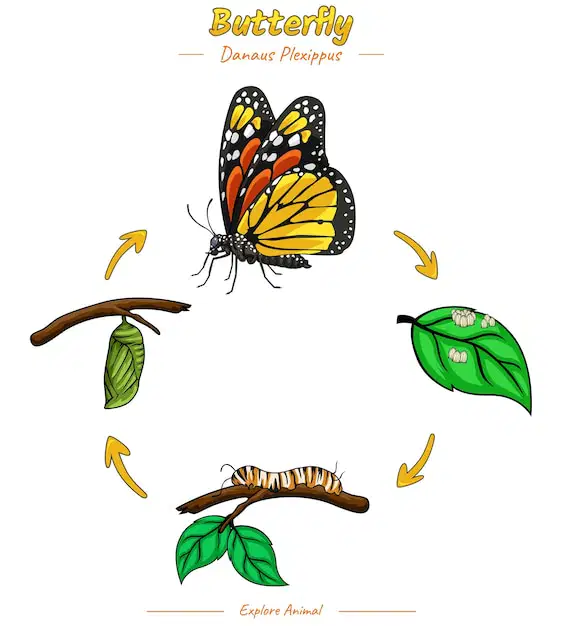
How many stages make up a butterfly life cycle?
What is the final stage of a butterflies life cycle?


Another word for caterpillar is
Metamorphosis
Pupa
Larva
chrysalis

List the stages of a frog's life cycle in order.
Mother, Froglet, Tadpole, Frog, Egg
Frog, Froglet, Tadpole, Adult
Egg, Tadpole, Tadpole with legs, Froglet, Frog
Tadpole, Egg, Frog, Froglet

What is the first stage of a frog's life cycle?
The last stage of a frogs life cycle is_________.
frog
froglet
tadpole without legs
tadpole with legs
The fourth stage of a frogs life cycle is_________.
tadpole with legs
froglet
tadpole without legs
frog
The third stage of a frogs life cycle is_________.
tadpole with no legs
tadpole with legs
froglet
frog
The second stage of a frogs life cycle is_________.
eggs
tadpole with no legs
tadpole with legs
froglet

