
 Worksheets
Describing Waves 1
Total questions: 20
Worksheet time: 10mins
Name
Class
Date
1.
What do waves transfer?
a)
Energy but not matter
b)
Energy and matter
c)
Matter but not energy
2.
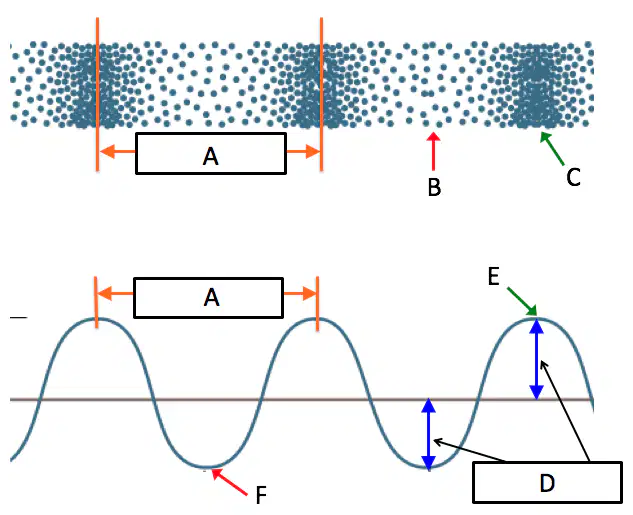
Which label shows a crest/peak?
a)
E
b)
A
c)
B
d)
C
e)
D
3.
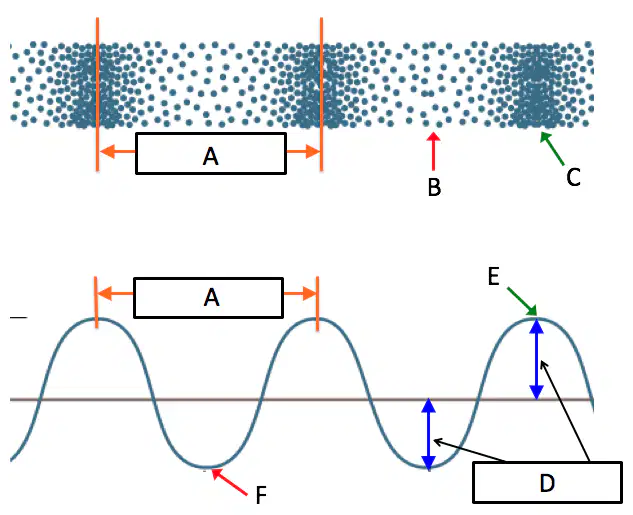
Which label shows a a centre of compression?
a)
C
b)
A
c)
B
d)
D
e)
E
4.
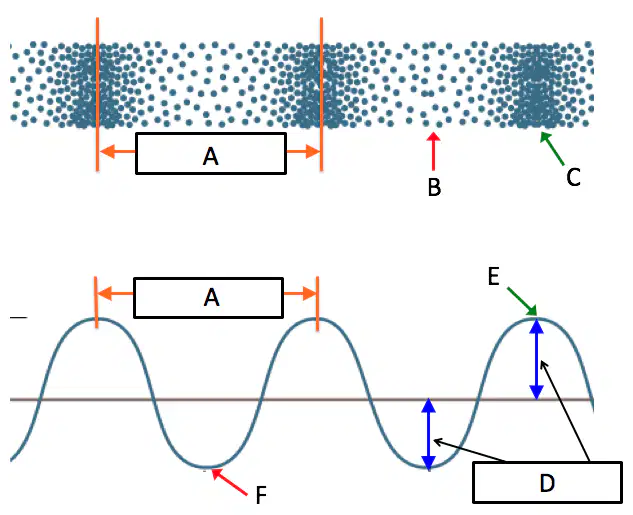
Which label shows a wavelength?
a)
A
b)
B
c)
C
d)
D
e)
E
5.
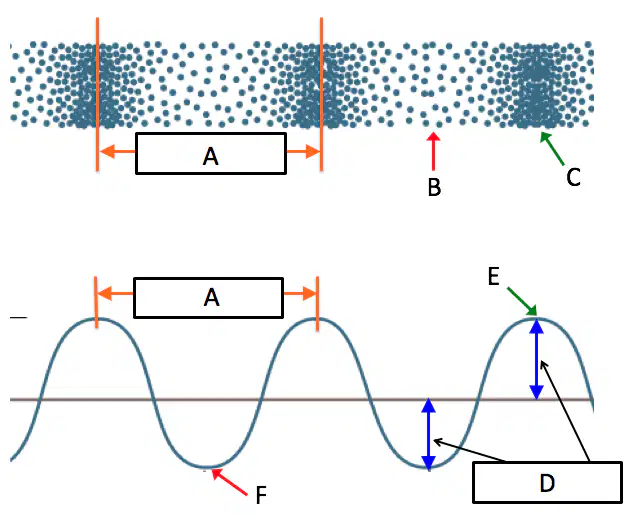
Which label shows the wave amplitude?
a)
D
b)
A
c)
B
d)
C
e)
E
6.
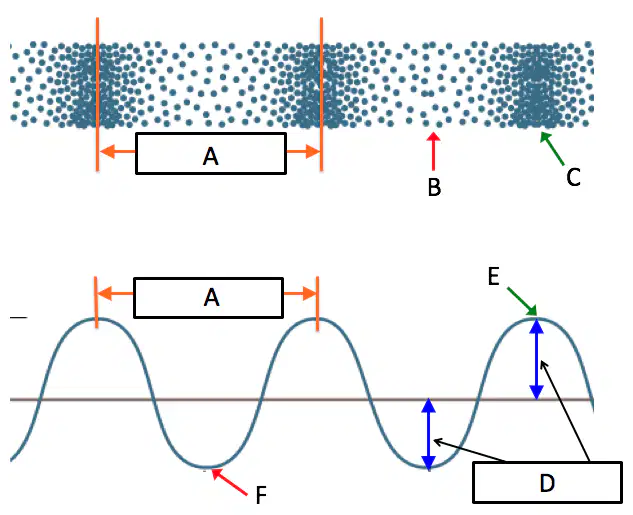
Which label shows a trough?
a)
F
b)
A
c)
B
d)
C
e)
D
7.
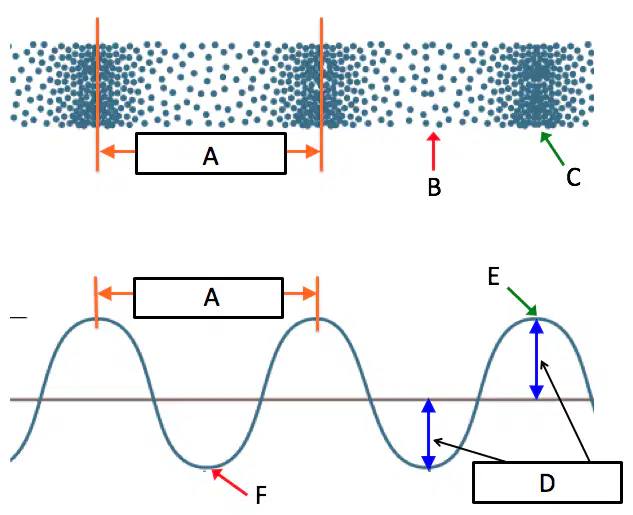
Which label shows a centre of rarefaction?
a)
B
b)
A
c)
C
d)
D
e)
E
8.
What kind of wave is sound?
a)
Longitudinal
b)
Transverse
c)
Helical
9.
What kind of wave is light?
a)
Longitudinal
b)
Transverse
c)
Helical
10.
What is the name of the distance from peak to peak of a wave?
a)
Wavelength
b)
Amplitude
c)
Frequency
11.
What is defined as 'The time it takes for 1 wave to pass a point'?
a)
Period
b)
Frequency
c)
Amplitude
12.
What are the oscillations like in a transverse wave?
a)
Parallel to the direction of the wave
b)
Perpendicular to the direction of the wave
c)
Up and down
d)
From right to left
13.
What are the oscillations like in a longitudinal wave?
a)
Parallel to the direction of the wave
b)
Perpendicular to the direction of the wave
c)
Up and down
d)
From right to left
14.
What is the difference between longitudinal and transverse waves?
a)
Longitudinal carries energy while transverse carries matter
b)
Particles in longitudinal waves vibrate at right angles to the direction the wave travels, particles in a transverse wave vibrate in parallel
c)
Particles in transverse waves vibrate at right angles to the direction the wave travels, particles in a longitudinal wave vibrate in parallel
d)
Longitudinal carries energy while transverse carries information
15.
What is an example of a transverse wave?
a)
sound
b)
light
c)
smell
d)
vapor
16.
What is defined as 'The number of waves that pass a point in 1 second'?
a)
Amplitude
b)
Frequency
c)
Period
17.
If the amplitude of light increases - we would detect this as.
a)
A change in colour
b)
An increase in brightness
c)
A decrease in brightness
d)
the light moving
18.
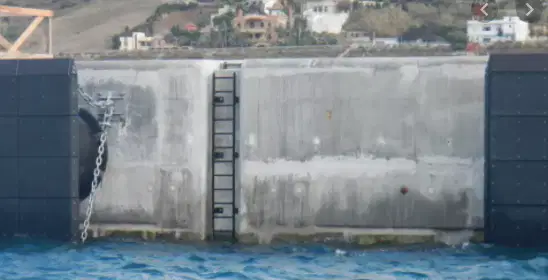
The tops of a sea wave pass a ladder on a harbor wall twice every second. What is the frequency?
a)
0.5 Hz
b)
1 Hz
c)
2 Hz
d)
10 Hz
19.
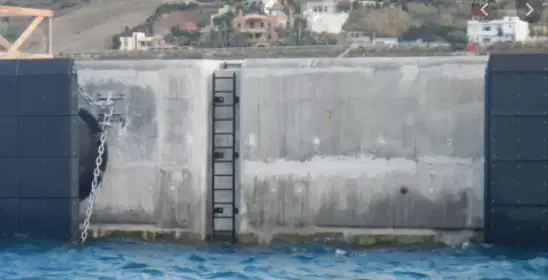
The tops of a sea wave pass a ladder on a harbor wall twice every second. What is the time period?
a)
0.5 second
b)
1 second
c)
2 second
d)
10 second
20.
What is the time period of a 40 Hz wave?
a)
40 Hz
b)
0.025 s
c)
0.4 s
d)
40 s
100 %

