
 Worksheets
2.B Review
Total questions: 171
Worksheet time: 3hrs 34mins
The study of historical records to find dates and make timelines is called
historiography
chronology
sociology
anthropology
A source that is original to the time period or created by someone who witnessed the event is called a
primary source
secondary source
OG source
best source
A prejudice for or against something is called
(Hint: prejudice means a preconceived opinion that is not based on reason or actual experience)
opinion
fact
bias
fake news
A source that was created after an event has taken place by people who did not participate is called a
primary source
secondary source
literature
fake news
The circumstances that form the setting of an event, idea, or statement are called
characters
action
corroboration
context
The customs, social institutions, and achievements of a group are called
culture
economics
society
politics
There can be many perspectives on the same event in history.
true
false

What kind of source is the Constitution of the United States?
primary source
secondary source

What kind of source is a textbook?
primary source
secondary source
What is a secondary source?
an artifact, a document, diary, manuscript, autobiography, a recording, or other source that was created at the time of study
created later by someone who did not experience first-hand or participate in the events researched
prejudice in favor of or against one thing, person, or group compared with another, usually in a way considered to be unfair
an educated guess based on evidence & prior knowledge
What is sphragistics?
the study of material remains
the study of coins and paper money
the study of ancient and historical handwriting
the study of seals
What is a primary source?
an artifact, a document, diary, manuscript, autobiography, a recording, or other source that was created at the time of study
created later by someone who did not experience first-hand or participate in the events researched
prejudice in favor of or against one thing, person, or group compared with another, usually in a way considered to be unfair
an educated guess based on evidence & prior knowledge
What is a decade?
a period of history with a particular feature or characteristic
a period of ten years
a period of a thousand years
a period of a hundred years
What is a millennium?
a period of history with a particular feature or characteristic
a period of ten years
a period of a thousand years
a period of a hundred years
What is perspective?
seeming reasonable or probable. credible, reasonable, believable, possible, conceivable
the quality of being trustworthy or of performing consistently well. dependability, sureness, trustworthiness
a particular attitude toward or way of regarding something; a point of view. outlook, view, viewpoint, position, stand, stance
What is codicology?
the study of inscriptions
the study of books as physical objects
the study of ancient and historical handwriting
family origins and history.
BCE means
Before Christian Era
Before Common Era
Before Christ's Era
Before Communication Era
CE means:
Common Era
Christian Era
Communication Era
Computer Era
Which hominid was the first to make and control fire?
Paleontologists study fossils which are...
plant or animal remains preserved in rock
Human remains in man-made trenches
Animal made remains in funeral pyres
Dinosaur culture of current animal kingdom
____________ allowed archaeologists to learn about the daily lives of Paleolithic humans.
cave art
agriculture
wooden plow
Before Common Era. The years before 0.
B.C.
A.D.
B.C.E.
C.E.
Common Era. The Common Era begins with year 0.
A.D.
B.C.
B.C.E.
C.E.
"Homo Sapiens" means:
Handy Human
Happy Human
Sad Human
Wise Human
Human beings first evolved in
Europe
Asia
Africa
South America
Objects made or used by humans, such as tools, weapons, pottery
Artifact
Culture
Animism
Fossil
Entire way of life that a people has developed over time (includes knowledge, art, beliefs, customs and values, etc. )
Artifact
Culture
Animism
Nomad
The “New Stone Age,” from about 8,000 BCE to about 3,000 BCE
Neolithic
Paleolithic
Mesolithic
Long period of time before the development of writing
Artifact
Prehistory
Fossil
Hominid
an amount beyond what is required, excess
more than what is needed or expected.
surplus
nomad
artifacts
able to produce a great deal of crops
hunter-gatherer
agriculture revolution
fertile
a period in which humans began to grow crops instead of gathering plants
cultural diffusion
agriculture revolution
domesticate
a person who moves from place to place
nomad
migration
hunter-gatherer
the ways people apply knowledge and tools to meet the needs
migration
domesticate
technology
the process by which cultures interact and ideas spread from one area to another
secondary source
cultural diffusion
hunter-gatherer
to grow and tend wild plants or animals
domesticate
nomad
migration
What is a set of shared beliefs about the world- one of the features of a civilization.
the arts
government
religion
job specialization
The economy of early villages and cities was based mainly on
trade
production of tools
farming
hunting and gathering
Establish rules and laws to protect the people of the civilization.
Government
Trade
Infrastructure
Arts
Which characteristic describes exchanging one item for another item?
Trade
Organized Religion
System of Tribute
Government

Ancient civilizations had complex labor systems with each person performing a specific task or job. What is this an example of?
Writing System
Central Government
Job Specialization
Religion

The invention of agriculture led to rapid population growth because:
farming led to a surplus of food
a surplus of food meant people could have larger families
both A and B
none of the above
Specialized workers were possible with the invention of agriculture because:
people had more time on their hands instead of looking for food
farming was super easy to do
farming was done mostly by animals now anyway
farming didn't lead to specialized workers in any way
The reason RECORD KEEPING or writing began is so that officials and traders could keep track of their laws and records of sale.
TRUE
FALSE
The role of technology in humans lives is:
to allow us to waste hours a day on our smart phones
to provide us with information immediately
to make our lives easier and better
to replace ourselves with robots one day
Which of the following are traits of civilization?
City Building
Complex Institutions
Record Keeping
Improved Technology
Specialized Workers
What is a TRAIT?
a characteristic or attribute of something
a complex multi-syllabic word that is hard to define
a machine that is powered by steam or electricity
a pathway in the woods
To protect farms and people, civilization built _____ with walls to shelter people.
Armies
cities
pyramids
writing
People could pass down information for other generations to build on and put laws in stone with _____________.
Songs
Writing
Cows
Agriculture
____________ defined how people acted with each other, e.g. slaves, religions leaders, merchants, farmers, etc.
Government
Writing
Social Structure
Religion
Greek word for a city-state-
polis
acropolis
hoplite
phalanx
rich landowners meaning “rule by important people” (versus an oligarchy - "rule by few”)
metic
aristocrat
tyrant
helot
Sparta was...
Persia
Athens
a warrior state
sparkling
foot soldiers elite corps of Greek army
helots
citizens
hoplites
metics
A phalanx was ....
a phalacy
formation of hoplites soldiers, 8 ranks deep
citizens who were men not born in Athens vs citizens
descendants of people who resisted Spartan rule
All is true about Persia except for...
lost a battle at Marathon
created an Empire
it was in a location now called Iran
it was a single closed city, surrounded by walls, area with acropolis and an agora
The Greeks adapted an alphabet from...???
Sparta
Linear A and B
the Phoenicians
Homer
This author wrote the Iliad and the Odyssey
Persia
Homer
Sparta
Polis
The time of Archaic Greece came after what time period?
Classical Greece
The time of Rome
The development of the Mycenaean Civilization
The Trojan War

The following information describes which battle of the Persian War: The final battle of the Persian War where Athens easily beat the army of the Persians (on land).
Thermopylae
Salamis
Plataea
Marathon
The following information describes which of the Persian Wars: Greeks led Persians into a narrow strait of water and then easily sank many Persian ships (because of their large size) causing the Persians to retreat.
Thermopylae
Salamis
Plataea
Marathon


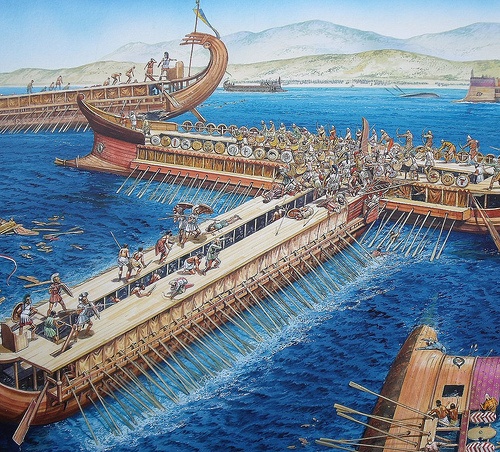


The Athenian general who led the Greek navy and devised the plan for the defense of Greece during the third Persian war was
Leonidas
Xerxes
Pheidippides
Themistocles

He was invaded Greece as revenge for his father's defeat at Marathon and to build a base for expansion into Europe.
Xerxes
Cyrus II (the Great)
Darius I
Who were Darius I and Xerxes?
Generals for the army of Sparta
Leaders of the city of Athens
The greatest of the Greek warriors
Emperors of Persia
Kings of Sparta
What was the PRIMARY cause of the Persian Wars?
The Greeks wanted to establish more colonies in Asia Minor.
They fought over control of the trade routes of the Aegean region.
The Greeks refused to allow the Persians to participate in the Olympic games.
The Persians wanted to punish the Greek city-states for supporting Ionia's revolt against the Persians.
The Ionian Revolt
480 B.C.
499-490 B.C.
490 B.C.
499-493 B.C.


Leonidas
Darius
Pericles
Cleisthenes
What was responsible for the tremendous fertility of the Nile River Valley?
Cows ran wild throughout the fields.
The river overflowed leaving a thick layer of black soil in the fields.
The Egyptians developed a system of growing crops without water.
The Egyptians did not develop agriculture, but rather relied on trade with other civilizations.

Which of the following civilizations is the Nile River Valley Civilization?
A
B
C
D
Unlike Mesopotamians who used 60, the Egyptians developed a number system based on what number?
25
1
60
10
What were built to protect pharaoh's bodies from theft and floods after death?
Shadoofs
Book of the Dead
Pyramids
Papyrus
Having a country's religious leader also be its political leader is called having a what?
Democracy
Theocracy
Oligarchy
Aristocracy
This geographical feature allowed Egyptians to develop a surplus of food and specialization leading to highly effective trade.
The Nile River
The Valley of the Kings
Tigris and Euphrates Rivers
The Western Desert
Which of the following medical advancements did the Egyptians NOT start?
Bandages
Setting bones
Splints
Aspirin
Which of the following were natural defenses of Egypt's Nile River Valley?
mountains, deserts, sea
cataracts, deserts, Nile Delta
cataracts, mudflats, deserts
canals, deltas, mudflats
Papyrus was used to create all of the following EXCEPT
mummy wrappings
sandals
paper
baskets
Which of the following was a contribution of Ancient Egypt?
Cuneiform
Number system based on 60
Sanskrit
Hieroglyphics
Who was directly beneath the Pharaoh on the Egyptian Social Class Pyramid?
Farmers and herders
Priests and nobles
Traders and artisans
Shopkeepers and scribes
An invention of ancient Egypt used for retrieving water from the Nile was called what?
Staff
Bucket
Pailoof
Shadoof
What was the "guidebook" used by ancient Egyptians for successful passage to the afterlife?
The Handbook of Ra
The Book of the Dead
The Book of the Living
Osiropaedia
A process for preventing decay in a dead body is called which of the following?
Hydroponics
Pharaohstification
Emblazoning
Embalming
Ancient Mesopotamia and Ancient Egypt shared a common belief system called monotheism.
True
False
Egyptian kings were called what?
Priests
Pharaohs
Bureaucrats
Scribes
What is the region called that is a curving strip of good farmland, which is between the Mediterranean Sea and the Persian Gulf?
Phoenicia
Assyria
Babylon
Fertile Crescent
What type of religious belief did the Mesopotamians and Egyptians have?
Mediterranean
Monotheism
Polytheism
Atheism
What are the two rivers that give Mesopotamia it's name?
Tigris and Euphrates
Nile and Indus
Tigris and Mississippi
Mississippi and Saluda
What did the Mesopotamians worship in?
ziggurats
mounds
mosques
churches
Which of the following Egyptian things are considered a primary source of history?
Cairo Museum
Camels that live by the pyramids today
The Great Pyramid
Discovering Our Past textbook
What was the Sumerian style of writing called (the earliest known writing system in the world?
Sanskrit
Hieroglyphics
Cuneiform
Cursive
What was a Sumerian city that governed itself called?
empire
town
urban
city-state
What is considered to be a secondary source artifact by historians?
The Great Pyramid
a ziggurat near the Euphrates River
a biography of Hammurabi
the Rosetta Stone
What were some of the inventions of the Sumerians?
the wheel, plow, sailboat, and bronze
bows and arrows, stone axe, and fire
bricks, spears, and clothes
electricity, kites, and steel tools
"An eye for an eye; a tooth for a tooth" is one of the basic ideas behind what set of laws?
Code of Hammurabi
Code of Sargon
Code of Nebuchadnezzar
Code of David
Who was the king of the Babylonian empire that was most famous for his code of laws?
Sargon
Nebuchadnezzar
Hammurabi
David
"If a seignior (noble) has knocked out the tooth of a seignior of his own rank, they shall knock out his tooth. But if he has knocked out a commoner's tooth, he shall pay one-third mina of silver." -Code of Hammurabi
Which idea of Babylonian society does this portion of the Hammurabi code of law reflect?
All men are created equal under the law
Fines were preferable to corporal punishment
Divisions existed between social classes
Violence was always punished with violence
What is a group of many lands under on ruler called?
empire
city-state
league
urban
Why were river valleys ideal for the development of the economy?
tourism in the desert
cultural exchange
trade and travel
mountain climbing
The river valley people were able to control the amount of water their crops received and protect themselves from floods by doing which of the following?
They left during the flooding season
They built dams, canals, and levees
They built houses on stilts
They could not control the flooding
How did the development of agriculture allow civilizations to move beyond daily survival with enough food to eat?
Domestication of plants and animals
Systematic agriculture and food surplus
Specialization and trade
All of the above
What is one way that the social structures of Mesopotamia and Egyptian civilizations were different?
Mesopotamia's upper class included priests, and Egypt's upper class did not.
Mesopotamia had warriors in the lower class, and Egypt had warriors in the upper class.
Mesopotamia had farmers in the middle class, but Egypt considered farmers to be in the lower class.
Egypt did not have slaves in the lower class.
What group of ancient Romans were hoping to gain more political power by getting rid of their king in 509 BCE and establishing a Republic?
Senate
Patricians
Plebeians
Etruscans
A dictator can rule for how long?
1 year
For life
6 months
2 years
The Forum in Ancient Rome is similar to what gathering place in Ancient Greece?
The Acropolis
The Colosseum
The Agora
Mount Olympus
In the 2nd Punic War, this leader from Carthage crossed the Alps to attack Rome.
Sulla
Hannibal
Circus Maximus
Scipio Africanus
Wars of expansion in led to ------>
Rome becoming the dominant power in the Mesopotamian region
Rome becoming the dominant power in the Aegean region
Rome becoming the dominant power in the Mediterranean region
Rome becoming the dominant power in the Middle Eastern region
Veto means (there are multiple correct answers)
to forbid
to prohibit
to encourage
to support
A government run by elected representatives best describes which type of government?
Dictatorship
Monarchy
Oligarchy
Republic
Select the statements that Ancient Romans believed to be true of Romulus and Remus
They were raised by a wolf as babies
They built a city in the spot where the wolf rescued them
Romulus killed Remus
They were descendants of Aeneas, who was from Troy


______________ became the leading power in the ______________ world.


The Roman civilization was founded near what river?
The Danube
The Arno
The Tiber
The Elba

The official code of laws for Rome was called:
Hammurabi's Code
The Twelve Tables
95 Thesis
10 Commandments


a grouping of tiny colored stone cubes set in mortar to create a picture or design
mosaic
fresco
parable
missionary
a picture painted directly on to a wall
mosaic
fresco
parable
missionary
This emperor heavily taxed Rome and killed his mother and wife.
Nero
Vespasian
Elagabalus
Trajan
Which Roman was disfigured, clumsy and under-rated by his family but was an effective and successful leader? He was murdered by his wife and doctor. Nero was his successor?
Claudius
Nero
Caligula
Julius Caesar

Which emperor conquered parts of Germania and Parthia?
Nero
Caligula
Marcus Aurelius
Constantine
Which emperor was considered one of the five "Good Emperors"?
Nero
Caligula
Marcus Aurelius
Constantine
Built a Bridge to expand across the Danube R.
Nerva
Trajan
Hadrian
Marcus Aurelius

