
NEW
Font size
 Worksheets
SEHS Paper 1 (3)
Total questions: 15
Worksheet time: 8mins
Which bones form part of the appendicular skeleton?
Sternum, clavicle, coccyx
Skull, clavicle, humerus
Clavicle, humerus, tibia
Skull, clavicle, sternum
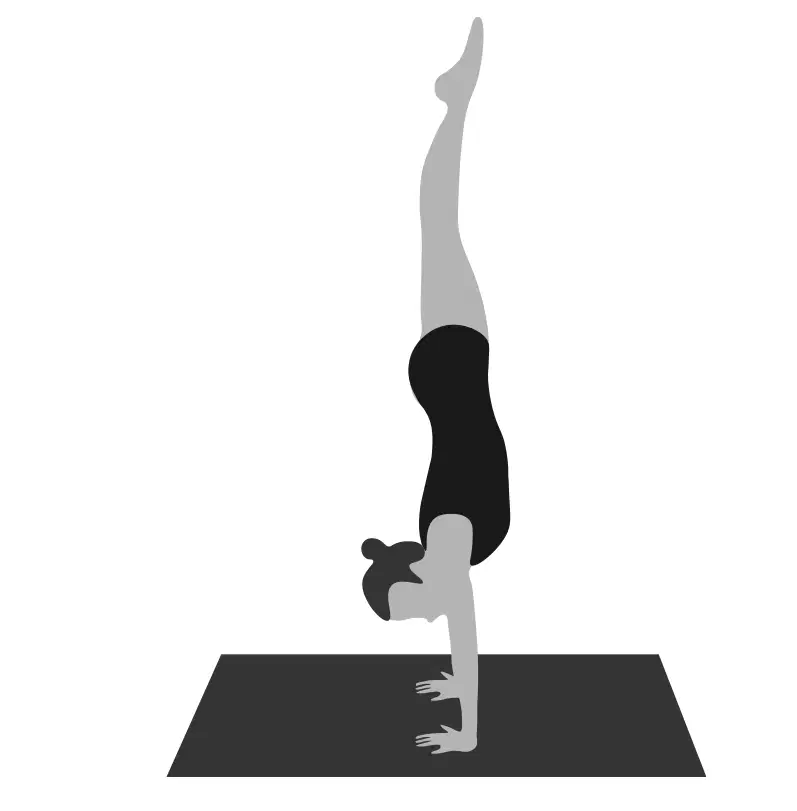
The diagram shows a gymnast performing a handstand. What is the position of the tarsals in relation to the femur?
Superior
Inferior
Lateral
Medial
What is the function of a ligament?
To attach muscle to bone
To attach bone to bone
To reduce friction
To secrete synovial fluid

The diagram shows average respiratory volumes. What happens to the expiratory reserve volume (ERV) when an athlete begins to run?
It increases until the residual volume is 0 litres.
It decreases.
There is no change.
It increases but is limited by residual volume.
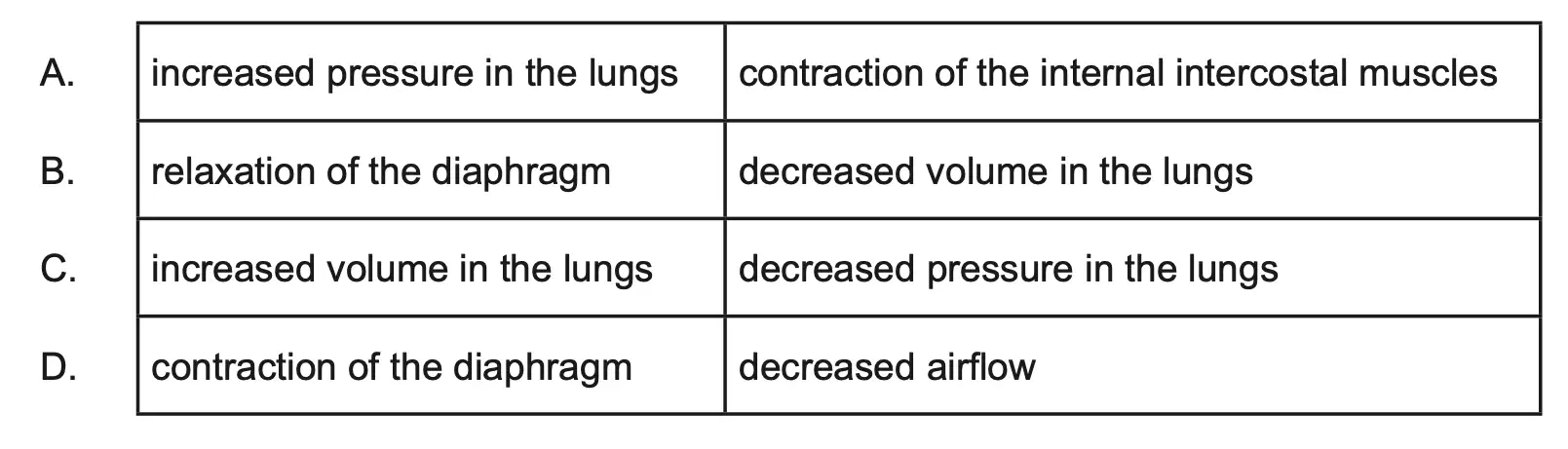
Which occurs during the inhalation phase of ventilation during exercise?
A
B
C
D
What blood vessel does the cardiovascular system use to send deoxygenated blood to the lungs?
The aorta
The vena cava
The pulmonary vein
The pulmonary artery

The diagram represents blood flow in the heart, muscle, brain and skin of an athlete
(i) at rest and (ii) at maximal exercise.
Which represents the blood flow for muscle when changing from rest to exercise?
A
B
C
D
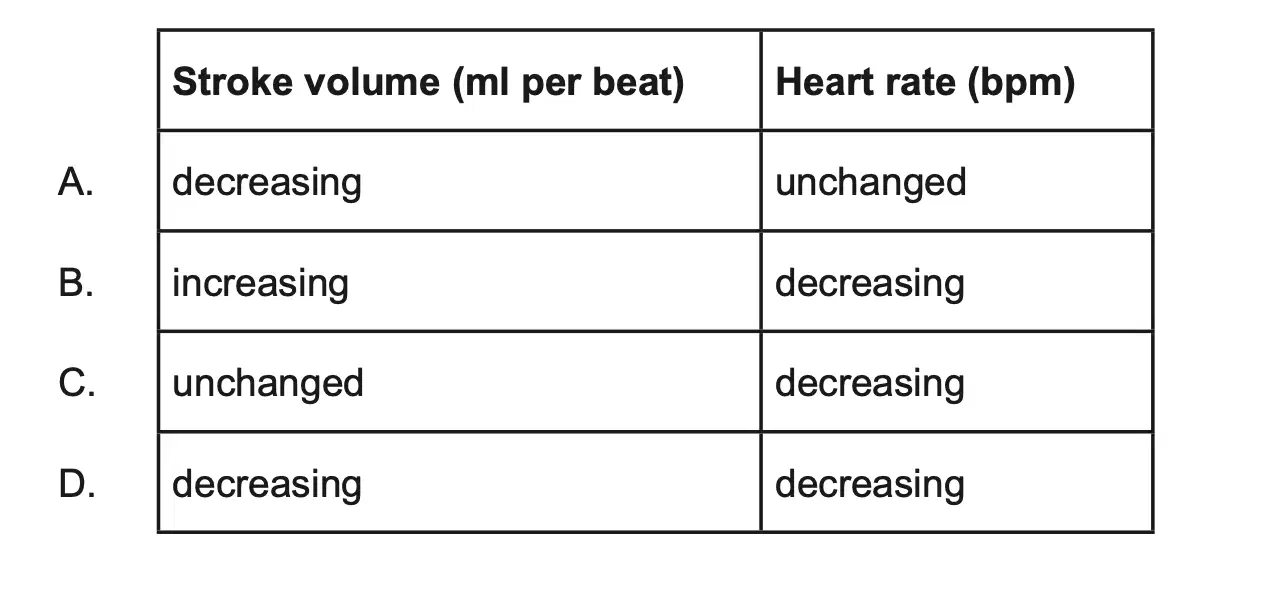
Which describes the cardiac output of an athlete recovering from strenuous exercise?
A
B
C
D
The maximal oxygen uptake of an athlete when tested on a treadmill is measured to be 53 ml kg–1 min–1. What happens to this measurement when using an arm ergometer?
It increases to 120 % – 130 %.
It decreases to 70 % – 80 %.
It remains unchanged.
It decreases to 20 % – 30 %.
In percentage terms, which provides the greatest source of carbohydrate for an athlete?
Avocado
Chicken
Potato
Olives
Which is formed from a catabolic reaction?
Glucose
Glycogen
Adipose tissue
Protein
Which process occurs when blood glucose levels are decreased?
Glycolysis
Lipolysis
Glycogenolysis
Glycogenesis
Which represents the production of adenosine triphosphate (ATP) via the aerobic glycolysis system?
PC + ADP → 1ATP + C
glucose → pyruvate → 2 ATP + lactate + H+
glucose → pyruvate + O2 → acetylCoA → Krebs cycle → electron transport chain → 38 ATP + H2O + CO2 + heat
ADP + P = ATP
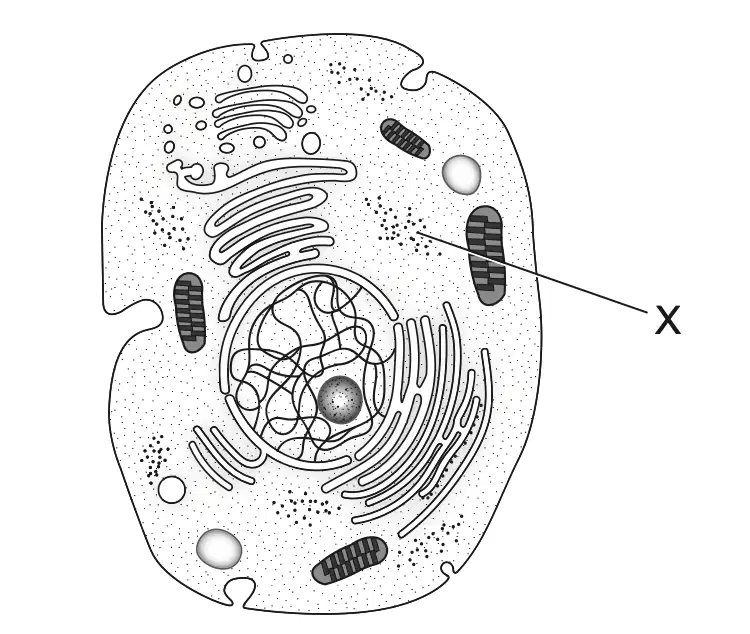
The diagram shows an animal cell. What is the function of X?
Protein synthesis
Controlling gene expression
Cell respiration
Ingestion and removal of waste
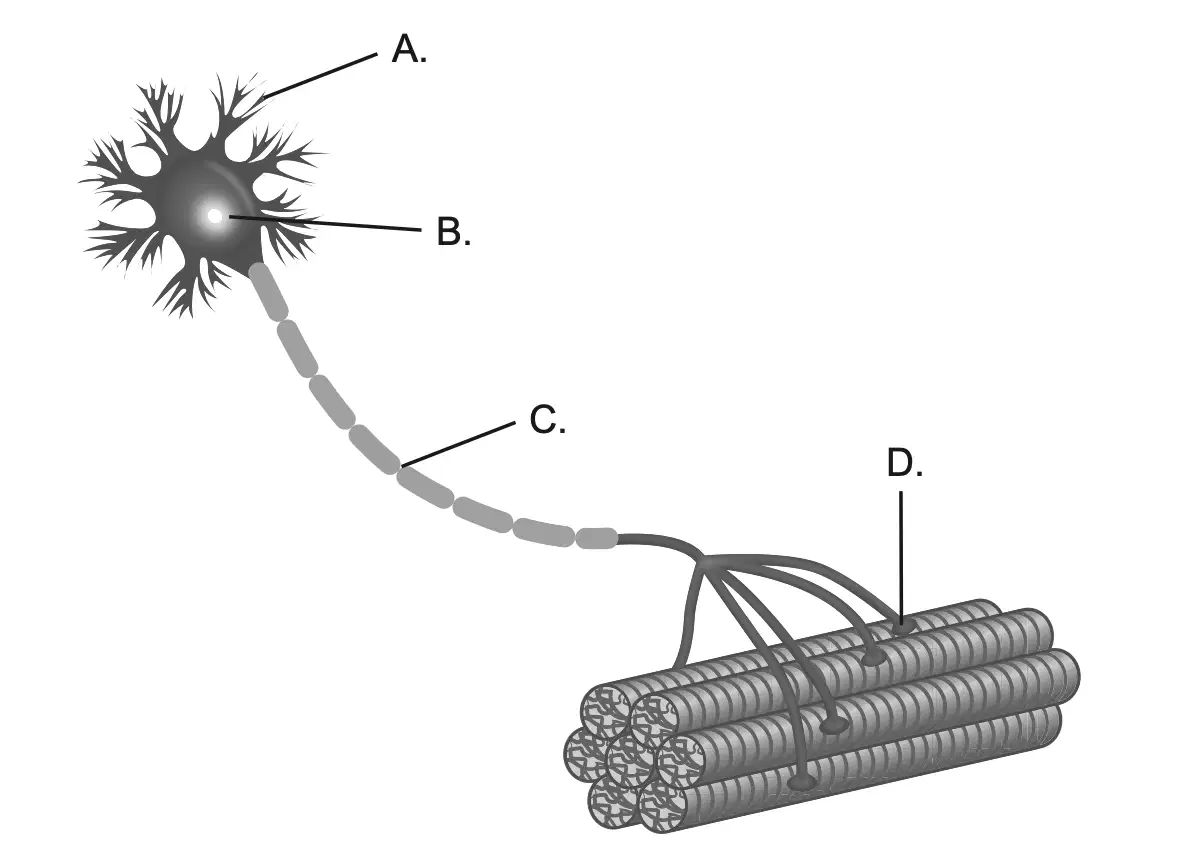
The diagram shows a motor unit. In which area does the neurotransmitter acetylcholine act?
A
B
C
D

